Migration and the African Diaspora

✊🏿AP African American Studies Review
Migration and the African Diaspora
✊🏿 AP African American Studies
Overview
Theme 1: Migration and the African Diaspora is one of the four course-long themes in AP African American Studies, and its job is to track how the movement of people, both forced and voluntary, built and reshaped African diaspora communities over time. Themes are the connective tissue of the course. They run through every unit like threads, so you are expected to recognize migration as a recurring pattern rather than a single event tied to one chapter.
This theme asks you to hold two ideas at once. First, that people of African descent were dispersed across the Americas, Europe, and Asia. Second, that Africa remained a point of origin and a symbol that continued to shape culture, art, identity, and politics long after the original movement happened. When you see this theme on the exam, you are usually being asked to connect a specific source or event back to the larger story of dispersal and community-building.
What Migration and the African Diaspora Means
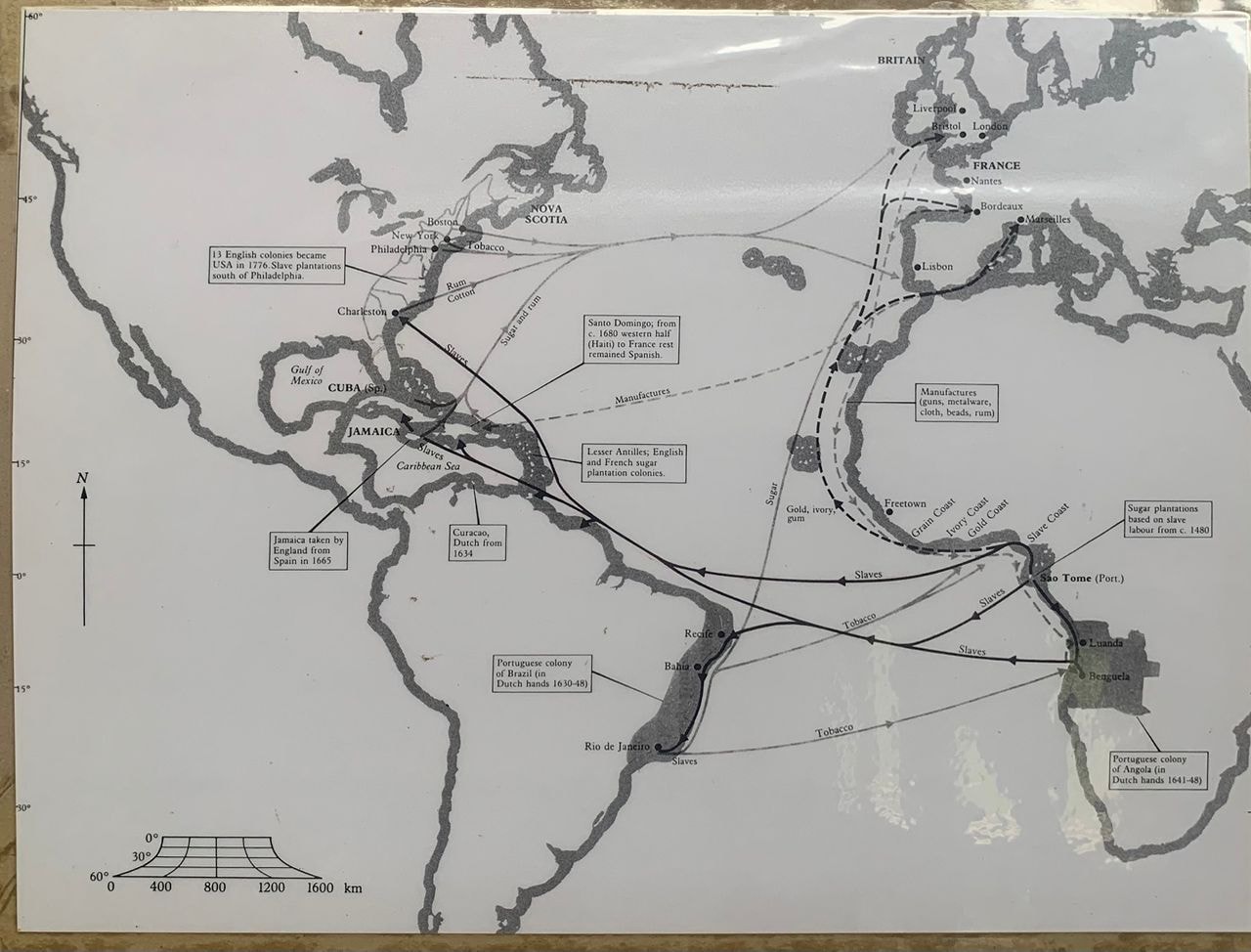
The word "diaspora" describes the movement and dispersal of a group from its place of origin to new locations. The African diaspora refers to communities of African people and their descendants who relocated beyond the African continent, including the Americas, Europe, and Asia. The concept holds Africa as the shared point of origin for diverse peoples of African descent.
The theme covers two kinds of migration, and the difference matters.
- Forced migration includes the transatlantic and domestic slave trades, where people were captured, sold, and moved against their will.
- Voluntary migration includes movements people chose or organized themselves, such as the Great Migration out of the South or Afro-Caribbean migration to the United States.
The core questions this theme pushes you to answer are: How did movement create new communities? How did those communities adapt, blend, and preserve culture in new places? And how did Africa continue to function as a symbol that influenced cultural practices, artistic expression, identities, and political organizing, often in very different ways for different groups?
What you should recognize is that Black communities across the diaspora are not a monolith. Migration produced divergent outcomes. The same idea of Africa as homeland could fuel a back-to-Africa political movement in one context and inspire a poem or musical form in another. Your job is to notice both the shared origin and the divergent results.
Migration and the African Diaspora Across AP African American Studies
This thread shows up in every unit. Here is how to track it from early African societies to the contemporary moment.
Unit 1 establishes the origin point. Before any dispersal, you study the African continent's varied landscape, its ethnolinguistic diversity, the Sudanic empires of Ghana, Mali, and Songhai, and the Kingdom of Kongo. These give you the cultures, religions, and political systems that migrating people carried with them. Topic 1.11 Global Africans introduces the diaspora concept directly, showing that African peoples moved and connected across regions even before the Atlantic slave trade.
Unit 2 is the heart of forced migration. You study departure zones in West and West Central Africa, capture and its impact on African societies, resistance on slave ships, slave auctions, and the domestic slave trade that moved enslaved people within the United States. You also see how dispersed people built new culture, formed maroon societies, and connected across the diaspora, including slavery and freedom in Brazil and the legacies of the Haitian Revolution.
Unit 3 centers voluntary migration within and into the United States. The Great Migration moved millions of Black Americans from the rural South to northern and western cities. Afro-Caribbean migration brought new communities and ideas. Both fed the New Negro Movement and the Harlem Renaissance, where artists envisioned Africa in poetry and where Marcus Garvey's Universal Negro Improvement Association organized around a return to and pride in Africa.
Unit 4 extends the diaspora globally and forward in time. The Negritude and Negrismo movements connected Black writers across France, the Caribbean, and Latin America. Anticolonialism linked African Americans to independence movements across Africa and the Caribbean. The unit closes with demographic and religious diversity in contemporary Black communities, much of it shaped by newer waves of African and Caribbean immigration, and with Afrofuturism reimagining Africa and the diaspora's future.
| Unit | Migration focus | Specific examples |
|---|---|---|
| Unit 1 | Origin point and early movement | Sudanic empires, Kingdom of Kongo, Global Africans |
| Unit 2 | Forced migration and new communities | Departure zones, domestic slave trade, maroon societies, Brazil, Haiti |
| Unit 3 | Voluntary migration within and into the US | Great Migration, Afro-Caribbean migration, UNIA, Harlem Renaissance |
| Unit 4 | Global diaspora and the future | Negritude and Negrismo, anticolonialism, contemporary diversity, Afrofuturism |
Key Concepts and Vocabulary
| Term | Meaning |
|---|---|
| Diaspora | The movement and dispersal of a group from its place of origin to new locations |
| African diaspora | Communities of African people and descendants living beyond the African continent |
| Forced migration | Movement against one's will, as in the slave trades |
| Voluntary migration | Movement people choose or organize themselves |
| Transatlantic slave trade | The forced shipment of captured Africans across the Atlantic |
| Domestic slave trade | The buying, selling, and forced relocation of enslaved people within the US |
| Departure zones | Regions of West and West Central Africa from which captives were taken |
| Maroon societies | Autonomous communities formed by people who escaped slavery |
| Great Migration | The early-to-mid 1900s movement of Black Americans from the South to northern and western cities |
| Afro-Caribbean migration | The movement of Caribbean people of African descent to the US |
| Universal Negro Improvement Association | Marcus Garvey's organization promoting Black pride and connection to Africa |
| Negritude | A literary and cultural movement among French-speaking Black writers affirming African heritage |
| Negrismo | A parallel movement among Spanish-speaking writers and artists |
| Anticolonialism | Movements opposing European colonial rule, linking diaspora communities |
| Afrofuturism | Art and thought that reimagines Black futures drawing on African and diaspora heritage |
| Point of origin | The idea of Africa as the shared ancestral home of diverse peoples of African descent |
| Cultural syncretism | The blending of traditions that occurs as dispersed groups adapt in new places |
How to Use This Theme on the Exam
Themes are how the exam rewards you for thinking across units, so treat Migration and the African Diaspora as a lens, not a single topic to memorize.
On multiple-choice questions, sources tied to this theme often ask you to identify the type of migration involved, the cause or effect of a movement, or how a community adapted after relocating. Read stimulus material for clues about whether movement was forced or chosen, and connect it to the larger diaspora pattern.
On short-answer questions, you may be asked to describe and explain a development related to migration, then connect it to a broader context. The theme helps you supply that broader context. For example, you can link the Great Migration to earlier forced migration or to later contemporary immigration.
For the document-based question and argumentation, this theme gives you ready evidence categories. An argument about Black identity, culture, or political organizing can draw on Africa as a symbol across multiple eras, from the Sudanic empires to Garvey to Negritude to Afrofuturism. That kind of cross-unit reach strengthens complexity.
For the individual student project, migration is a strong research lens. A project on a community, art form, or political movement can frame its topic in terms of dispersal, adaptation, and connection to Africa.
When you write, name the type of migration, the community it created, and what changed because of it. That structure aligns with how the theme is built.
Common Mistakes
- Treating migration as only the slave trade. Fix: remember the theme covers both forced and voluntary movement, including the Great Migration, Afro-Caribbean migration, and contemporary immigration.
- Treating the diaspora as the United States only. Fix: the African diaspora spans the Americas, Europe, and Asia. Bring in Brazil, Haiti, and the Negritude and Negrismo movements when relevant.
- Assuming Black diaspora communities are uniform. Fix: migration produced divergent outcomes, and the course stresses that Black communities are not a monolith. Note differences in experience and perspective.
- Forgetting Africa as a continuing symbol. Fix: Africa shaped culture, art, identity, and politics long after physical movement, from Harlem Renaissance poetry to Afrocentricity to Afrofuturism.
- Listing events without connecting them. Fix: the theme's value is the thread. Tie each example back to dispersal, adaptation, or shared origin.
- Confusing the domestic and transatlantic slave trades. Fix: the transatlantic trade moved people across the ocean, while the domestic trade moved enslaved people within the US after importation was banned.
Practice and Next Steps
- Build a one-page migration timeline that places forced and voluntary movements side by side from Unit 1 through Unit 4. Mark which were forced and which were voluntary.
- For each unit, write one sentence connecting a specific topic to dispersal, adaptation, or Africa as a symbol. Use the table above as a starting list.
- Practice an SAQ prompt that asks you to compare two migrations, such as the domestic slave trade and the Great Migration, by cause and effect.
- Collect three pieces of evidence showing Africa used as a symbol in different eras, for example a Sudanic empire, the UNIA, and an Afrofuturist work, and draft a thesis that uses all three.
- Review the related topic guides for the Great Migration, Afro-Caribbean Migration, Global Africans, and the Negritude and Negrismo Movements to see the thread in detail.
See Fiveable more often in Google
Mark Fiveable as a preferred source and Google is more likely to show you our guides in Top Stories, with a "preferred" badge in AI Mode and AI Overviews.