2.21 Legacies of Resistance in African American Art and Photography

✊🏿AP African American Studies Unit 2 Review
2.21 Legacies of Resistance in African American Art and Photography
✊🏿 AP African American Studies
2.1
African Explorers in the Americas
2.2
Departure Zones in Africa and the Slave Trade to the United States
2.3
Capture and the Impact of the Slave Trade on West African Societies
2.4
African Resistance on Slave Ships and the Antislavery Movement
2.5
Slave Auctions and the Domestic Slave Trade
2.6
Labor, Culture, and Economy
2.7
Slavery and American Law: Slave Codes and Landmark Cases
2.8
The Social Construction of Race and the Reproduction of Status
2.9
Creating African American Culture
2.10
Black Pride, Identity, and the Question of Naming
2.11
The Stono Rebellion and Fort Mose
2.12
Legacies of the Haitian Revolution
2.13
Resistance and Revolts in the United States
2.14
Black Organizing in the North: Freedom, Women's Rights, and Education
2.15
Maroon Societies and Autonomous Black Communities
2.16
Diasporic Connections: Slavery and Freedom in Brazil
2.17
African Americans in Indigenous Territory
2.18
Debates About Emigration, Colonization, and Belonging in America
2.19
Black Political Thought: Radical Resistance
2.20
Race to the Promised Land: Abolitionism and the Underground Railroad
2.21
Legacies of Resistance in African American Art and Photography
2.22
Gender and Resistance in Slave Narratives
2.23
The Civil War and Black Communities
2.24
Freedom Days: Commemorating the Ongoing Struggle for Freedom
In the 1800s, Black leaders like Frederick Douglass and Sojourner Truth used the new technology of photography to control their own image, counter racist stereotypes, and present themselves as citizens worthy of dignity and equal rights. Today, contemporary artists like Bisa Butler keep that tradition alive by drawing on Black aesthetic traditions to honor those leaders and connect African American history to Africa.
Why This Matters for the AP African American Studies Exam
This topic builds your skill in analyzing visual sources, which is a core part of AP African American Studies. You practice explaining how and why African American leaders used images on purpose, and how visual choices carry political meaning. That same thinking helps you read photographs, portraits, and artwork as evidence, connect them to bigger themes like resistance and citizenship, and trace continuity and change from the abolitionist era to contemporary art.
Key Takeaways
- African American leaders embraced photography to fight stereotypes and show themselves as people deserving of dignity, respect, and equal rights.
- Sojourner Truth sold carte-de-visite photographs of herself to fund abolitionist work, and her images centered Black women's leadership.
- Frederick Douglass was the most photographed man of the nineteenth century and used his portraits to project intellect and leadership.
- Photographs of formerly enslaved leaders like Harriet Tubman and Frederick Douglass mattered because they showed Black achievement and potential in freedom.
- Contemporary artists build on Black aesthetic traditions to blend historical, religious, and gender perspectives when they represent these leaders.
- The required Tubman photographs and Bisa Butler's quilted portrait show how visual representation of resistance continues across time.
Photography as Resistance
When photography spread in the nineteenth century, African American leaders saw its potential right away. Popular media was full of degrading caricatures of Black people, and photography gave leaders a way to control how they were seen.
By sitting for formal portraits, they presented themselves as dignified, intelligent, and respectable people who deserved equal rights. The choices were deliberate: serious expressions, elegant clothing, and composed poses all pushed back against stereotypes of Black inferiority. Then they shared these images to shape public opinion and support the fight for freedom.
Sojourner Truth's Carte-de-Visites
Sojourner Truth, a formerly enslaved woman who became an abolitionist and women's rights activist, used photography as a fundraising and activism tool.
- She sold carte-de-visite photographs of herself to raise money for the abolitionist cause.
- Her portraits projected strength, intelligence, and moral conviction, challenging racist portrayals of Black women.
- She also took part in speaking tours and recruited Black soldiers for the Union Army.
Her images showcased the centrality of Black women's leadership in the fight for freedom.
A carte-de-visite was a small, affordable photograph that became widely popular in the mid-nineteenth century. Because they were cheap and easy to share, they let activists like Truth get their image and message in front of many people.
Frederick Douglass's Photographic Legacy
Frederick Douglass, a formerly enslaved man who became one of the most influential abolitionists, was the most photographed man of the nineteenth century. He understood that photography could reshape the story people told about Black identity.
Douglass believed photographs offered visual proof of African American dignity and intelligence. He used his portraits to present himself as a statesman and intellectual and to challenge racist depictions. In his images he appeared well-dressed with a serious, composed look, refusing to play into stereotypes that cast Black people as unintelligent or subservient.
Photos of formerly enslaved African Americans like Douglass and Harriet Tubman were especially powerful because they demonstrated Black achievement and potential through freedom.
Required Sources
Photographs of Harriet Tubman Throughout Her Life
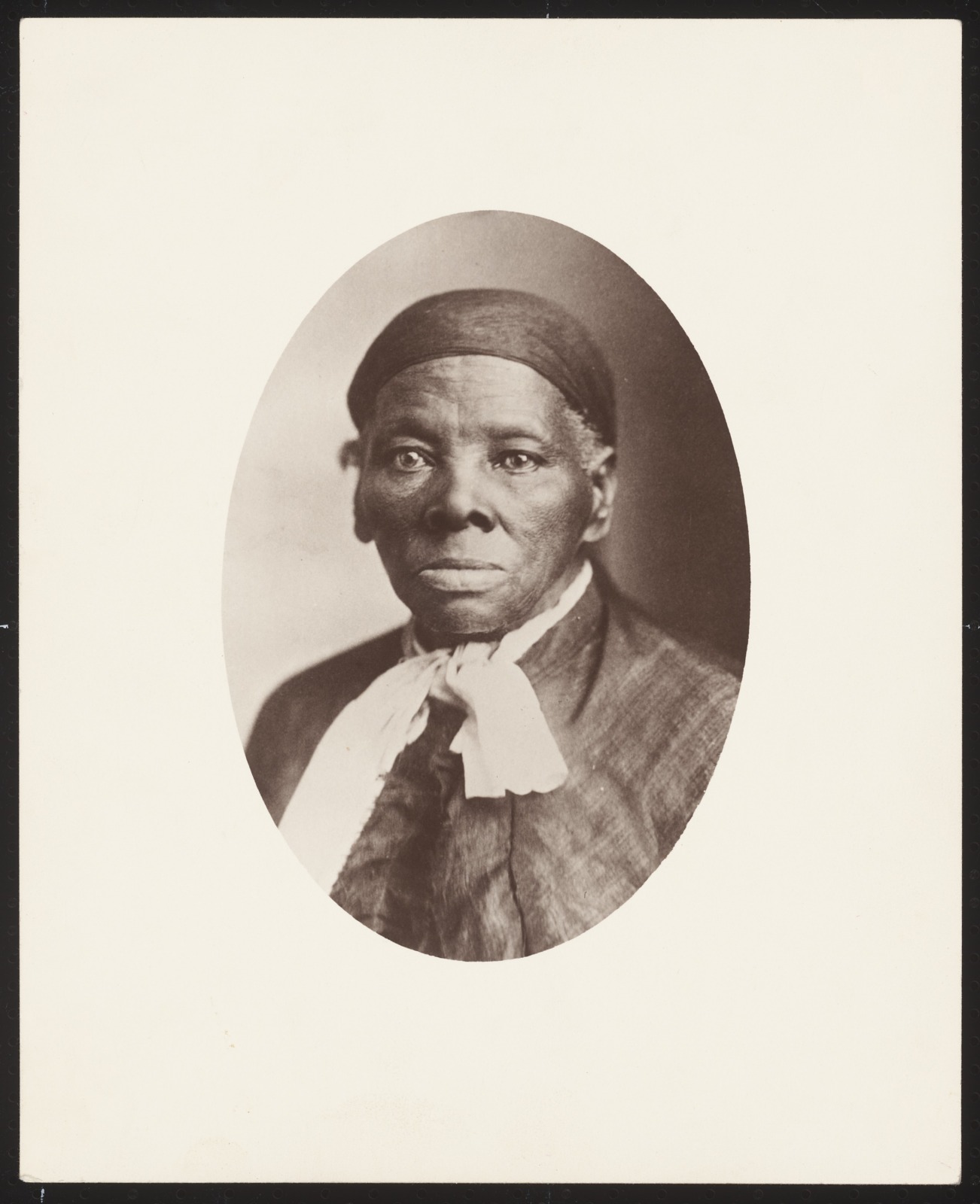
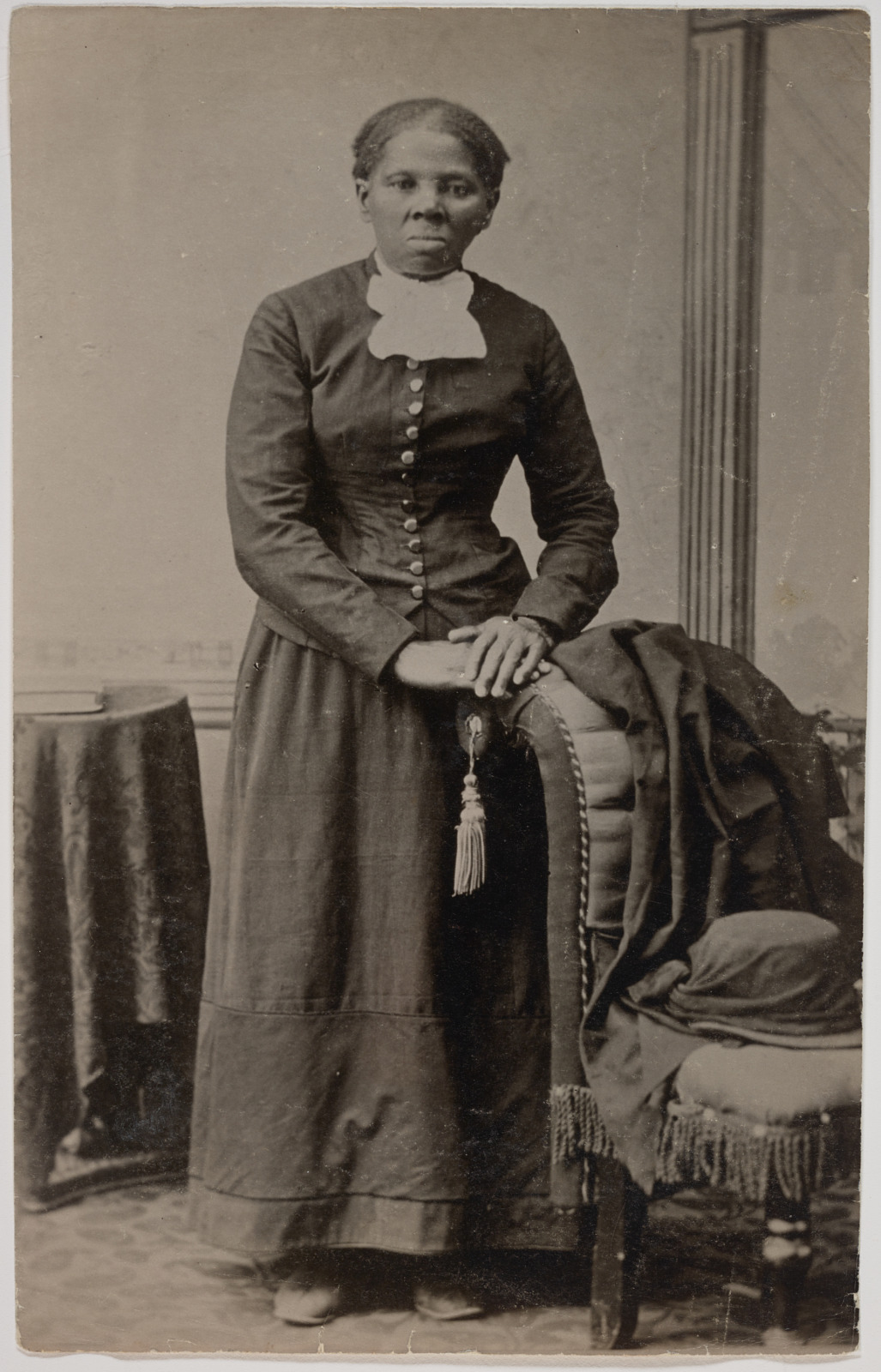

These required photographs span decades of Tubman's life, including a carte-de-visite portrait (1868-1869), a matte collodion print (1871-1876), and an albumen print (circa 1908).
Tubman was an abolitionist and conductor of the Underground Railroad, and these portraits give a rare look at a leader who repeatedly risked her life to lead enslaved people to freedom. The carte-de-visite format made her likeness widely accessible, spreading awareness of her work and the broader abolitionist cause. Seen together, the images show her across different stages of life and serve as lasting evidence of Black leadership and resistance, the same way photographs of Douglass demonstrated achievement in freedom.
I Go to Prepare a Place for You by Bisa Butler, 2021
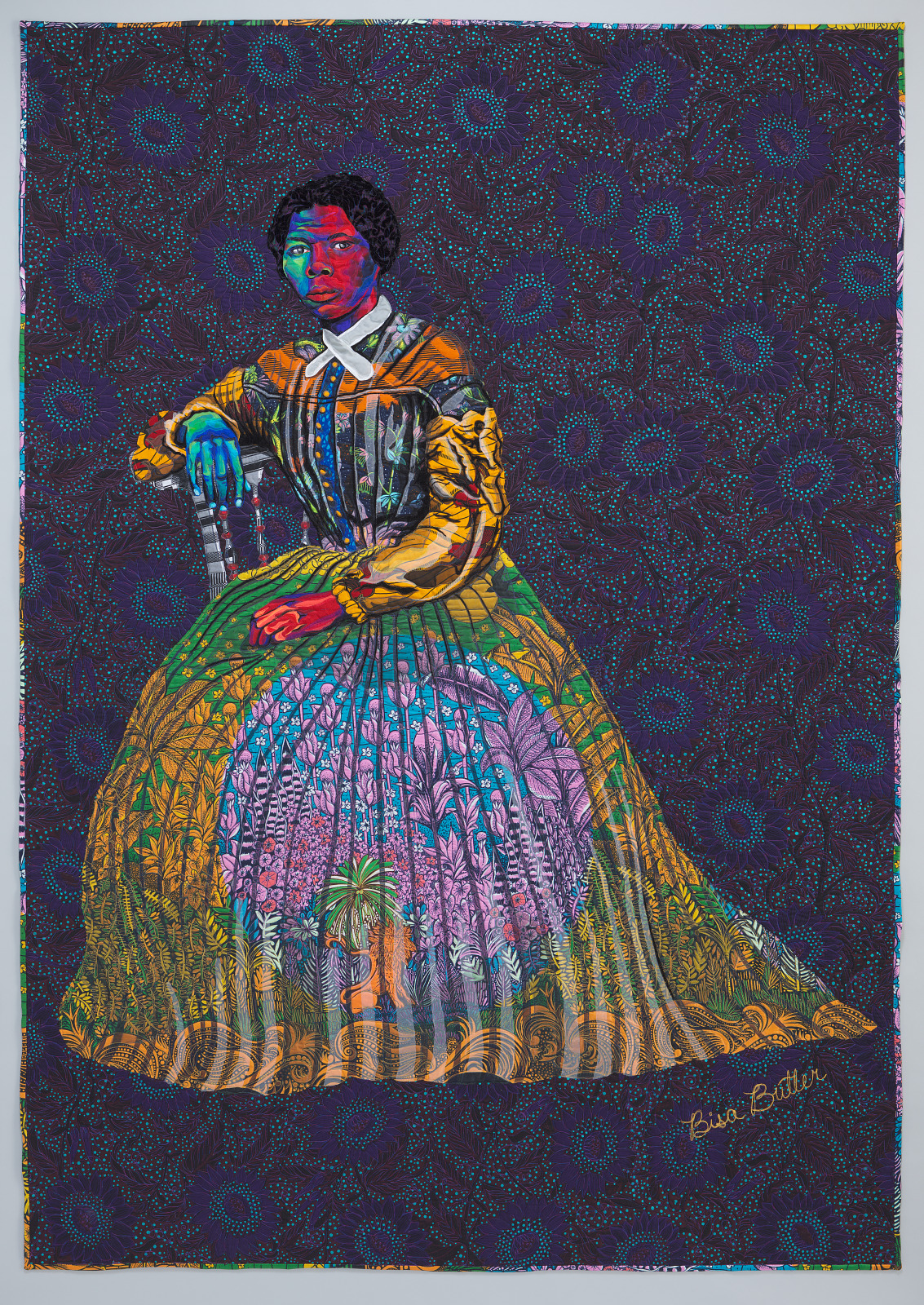
This required source is a quilted portrait by contemporary artist Bisa Butler. Butler's quilted portraits draw from African American quilting traditions to bring together historical, religious, diasporic, and gender perspectives in a visual and tactile format.
In this work, Butler contextualizes Harriet Tubman's legacy, highlights the link between faith and leadership in Tubman's life, and draws recurring connections between African Americans and Africa. It is a clear example of how contemporary artists build on Black aesthetic traditions to preserve the memory of leaders' bravery and resistance.
How to Use This on the AP African American Studies Exam
Using Sources Effectively
When you get a photograph or portrait, do not just describe what you see. Explain the choices and their purpose. Ask:
- Who made or commissioned this image, and what message did they want it to send?
- What specific details (clothing, expression, pose, materials) push back against stereotypes or show dignity?
- How did the format help spread the message? For example, a carte-de-visite was cheap and easy to circulate, so it reached a wide audience.
Making Connections
Strong responses link a source to a bigger idea. Tie these images to resistance, citizenship, and Black leadership. For Tubman and Douglass, connect their portraits to the argument that formerly enslaved people demonstrated Black achievement and potential in freedom.
Continuity and Change
Use Bisa Butler's quilted portrait to show change and continuity over time. The technology and style are new, but the goal of using visual art to honor Black leaders and assert dignity continues from the nineteenth century into today.
Common Misconceptions
- Misconception: Photography was just for keeping memories.Actually: Photography was not just for keeping memories. For these leaders it was a deliberate political tool to control their own image and challenge racist portrayals.
- Misconception: Sojourner Truth gave her photographs away by accident.Actually: Sojourner Truth did not give her photographs away by accident. She sold her carte-de-visites specifically to raise money for the abolitionist cause.
- Misconception: Serious, unsmiling expressions meant the people were unhappy or that old photos always look that way.Actually: The serious, unsmiling expressions were a choice, not a sign that the people were unhappy or that old photos always look that way. The composed look pushed back against demeaning stereotypes.
- Misconception: Kehinde Wiley and Amy Sherald are required examples for this topic.Actually: Bisa Butler's quilt is a required example of this topic, but artists like Kehinde Wiley and Amy Sherald are useful outside examples of the same idea, not required content for this topic.
- Misconception: You only need to know who is in an image.Actually: This topic centers on visual depictions of leaders. Make sure you can explain why an image matters and what it argues, not only who is in it.
Related AP African American Studies Guides
Practice Questions for 2.21
1 of 10
The fact that Frederick Douglass sat for more than 160 portraits while most nineteenth-century political figures sat for significantly fewer photographs most directly supports which conclusion about Black leadership strategies?
A.
The proliferation of Douglass's portraits indicates that photographic technology had become so common by the 1880s that all leaders routinely sat for multiple portraits.
B.
Portrait photographers in the nineteenth century were unable to find other subjects and therefore focused disproportionately on Douglass.
C.
Douglass recognized that visual proliferation of dignified Black representation could reshape public perception and challenge racist stereotypes systematically.
D.
Douglass was more vain than other nineteenth-century leaders and sought personal fame through excessive portrait production.
Vocabulary
The following words are mentioned explicitly in the AP® course framework for this topic.Term | Definition |
|---|---|
abolitionists | Individuals who actively worked to end slavery and support the freedom of enslaved people. |
Black achievement | Accomplishments and successes of African Americans that demonstrate capability, potential, and contribution to society. |
Black aesthetic traditions | Artistic and cultural practices rooted in African American history and experience that shape visual representation and creative expression. |
carte-de-visites | Small photographic portraits mounted on card stock that were popular in the nineteenth century, often sold or distributed to raise funds or spread messages. |
dignity | The quality of being worthy of respect and honor as a human being. |
freedom | The state of being liberated from enslavement or oppression and having autonomy and rights. |
resistance | Active opposition or defiance against oppression, injustice, or systems of control. |
stereotypes | Oversimplified, generalized beliefs or depictions about a group of people, often negative or dehumanizing. |
Frequently Asked Questions
What is AP African American Studies 2.21 about?
AP African American Studies 2.21 focuses on how African American leaders used photography and art to resist racist stereotypes and present themselves as people worthy of dignity, respect, and equal rights. The topic connects nineteenth-century photographs of leaders like Sojourner Truth, Frederick Douglass, and Harriet Tubman to contemporary visual art by Bisa Butler.
How did African American leaders use photography as resistance?
African American leaders used photography to control how they were seen by the public. Because photography was a new and widely circulated technology in the nineteenth century, portraits could challenge racist images by showing Black leaders as dignified, educated, purposeful, and politically active.
Why are Sojourner Truth carte-de-visites important?
Sojourner Truth sold carte-de-visite portraits to raise money for abolition and other freedom work. Her portraits also showed the importance of Black women's leadership in antislavery activism, public speaking, and recruiting Black soldiers to the Union Army.
Why was Frederick Douglass photographed so often?
Frederick Douglass understood that photographs could be political evidence. As the most photographed man of the nineteenth century, he used portraits to counter racist stereotypes and present Black achievement, intellect, and citizenship to a broad audience.
How do Harriet Tubman photographs and Bisa Butler's art connect?
The required Harriet Tubman photographs show Tubman across different moments of her life and make her leadership visible in the historical record. Bisa Butler's I Go to Prepare a Place for You builds on that visual legacy by using quilting traditions, religious meaning, gender perspective, and links to Africa to honor Tubman's resistance.
How should I use this topic on the AP African American Studies exam?
Use this topic when you need to analyze visual sources as evidence. Look at the subject, medium, audience, and purpose of a photograph or artwork, then explain how the image challenges stereotypes, represents leadership, or connects African American resistance across time.
See Fiveable more often in Google
Mark Fiveable as a preferred source and Google is more likely to show you our guides in Top Stories, with a "preferred" badge in AI Mode and AI Overviews.