4.19 African Americans and Sports

✊🏿AP African American Studies Unit 4 Review
4.19 African Americans and Sports
✊🏿 AP African American Studies
4.1
The Négritude and Negrismo Movements
4.2
Anticolonialism and Black Political Thought
4.3
African Americans and the Second World War: The Double V Campaign and the G.I. Bill
4.4
Discrimination, Segregation, and the Origins of the Civil Rights Movement
4.5
Redlining and Housing Discrimination
4.6
Major Civil Rights Organizations
4.7
Black Women's Leadership and Grassroots Organizing in the Civil Rights Movement
4.8
The Arts, Music, and the Politics of Freedom
4.9
Black Religious Nationalism and the Black Power Movement
4.10
The Black Arts Movement
4.11
The Black Panther Party for Self-Defense
4.12
Black Is Beautiful and Afrocentricity
4.13
The Black Feminist Movement, Womanism, and Intersectionality
4.14
Interlocking Systems of Oppression
4.15
Economic Growth and Black Political Representation
4.16
Demographic and Religious Diversity in Contemporary Black Communities
4.17
The Evolution of African American Music: From Spirituals to Hip-Hop
4.18
Black Life in Theater, TV, and Film
4.19
African Americans and Sports
4.20
Science, Medicine, and Technology in Black Communities
4.21
Black Studies, Black Futures, and Afrofuturism
Black athletes broke racial barriers in segregated sports and built their own leagues when shut out, from the first Black Kentucky Derby winner in 1875 to Jackie Robinson integrating Major League Baseball in 1947. Many also used their platforms to challenge discrimination, including Muhammad Ali, the 1968 Olympic protest by Tommie Smith and John Carlos, and Colin Kaepernick's NFL kneeling.
Why This Matters for the AP African American Studies Exam
This topic gives you concrete people and moments to support arguments about resistance, racial barriers, and the way Black achievement and protest connect to the broader Black Freedom movement. It pairs well with continuity and change reasoning, since you can trace barrier-breaking from Reconstruction into the present and link athlete protest to civil rights and Black Power ideas from earlier in Unit 4.
The required visual sources here are especially useful for source analysis. You can practice reading images of athletes (the 1840 jockeys image, the 1968 Olympic salute, and Kaepernick kneeling) for point of view, context, and purpose, then connect them to evidence-based claims about how sports became a stage for civil rights activism.
Key Takeaways
- Black athletes competed and excelled in segregated sports starting in Reconstruction, and built their own leagues like the Negro leagues when excluded from white organizations.
- Oliver Lewis won the first Kentucky Derby in 1875, and Jackie Robinson integrated Major League Baseball in 1947.
- Jesse Owens won four gold medals at the 1936 Olympics, then returned to face racial discrimination at home.
- Athletes used their public platforms for protest: Muhammad Ali refused the Vietnam draft in 1967, and Smith and Carlos raised the Black power fist in 1968.
- Colin Kaepernick and other NFL players began kneeling during the anthem in 2016 to protest police brutality, inspiring athletes in other sports.
- The required sources span 1840 to 2017, so be ready to compare how protest and Black presence in sports changed over time.
Contributions of Black Athletes
Black Athletes in the 19th Century
Beginning during Reconstruction, African American athletes showed their talents and broke barriers in racially segregated sports throughout the 1800s.
- In 1875, Oliver Lewis won the inaugural Kentucky Derby. Two years later, William "Billy" Walker also won the Derby. They set a precedent, and most Derby winners were African American until the early twentieth century.
- Because they were often excluded from white organizations, Black athletes built their own leagues.
Origins of the Colored Hockey League
In 1895, Black athletes in Halifax, Nova Scotia, founded the Colored Hockey League of the Maritimes, which predated the National Hockey League.
- The league spread, with teams across the Maritime provinces of Canada, giving Black hockey players a place to compete.
Negro Leagues and Integration
Racial segregation pushed African American athletes to create their own baseball associations, known as the "Negro leagues." Black teams formed soon after the Civil War, and Rube Foster organized the first lasting professional league, the Negro National League, in 1920.
- These leagues persisted until the 1960s and gave Black players a place to compete and excel.
- In 1947, Jackie Robinson became the first Black player in Major League Baseball, a major step toward integration in the sport.
African American Olympic Achievements
African American Olympians have won many gold medals for the United States.
- Jesse Owens won four gold medals at the 1936 Olympics in Berlin.
- Despite that success, Owens returned home to racial discrimination, a reminder of how athletic achievement did not erase inequality.
Contesting Discrimination in Sports
Breaking Barriers and Advocacy
Through achievements across many sports, African American athletes have broken racial barriers and used their public platforms to promote racial equality. Excelling on the field and speaking out off it both became tools for challenging discrimination.
Muhammad Ali's Protest Stance
In 1967, boxer Muhammad Ali refused to enlist in the United States Army and fight in the Vietnam War.
- Ali cited religious reasons but also pointed to ongoing racism at home, stating, "The real enemy of my people is right here."
- His refusal connected race, politics, and sports, and inspired others to take a stand.
1968 Olympic Black Power Demonstration
At the 1968 Olympic Games in Mexico City, sprinters Tommie Smith and John Carlos raised the Black power fist during the medal ceremony.
- This nonviolent protest showed solidarity with the Black Freedom movement and drew global attention to the struggle for racial equality.
- It remains an iconic moment linking sports and activism.
NFL Kneeling Protest and Police Brutality
In 2016, frustrated by the prevalence of police brutality, Colin Kaepernick and other NFL players began kneeling during the national anthem.
- This peaceful protest inspired athletes in other sports to do the same.
- It brought the problem of police brutality into the national spotlight and showed how sports can drive social conversation.
Required Sources
Jockeys Compete at the Washington Races, 1840
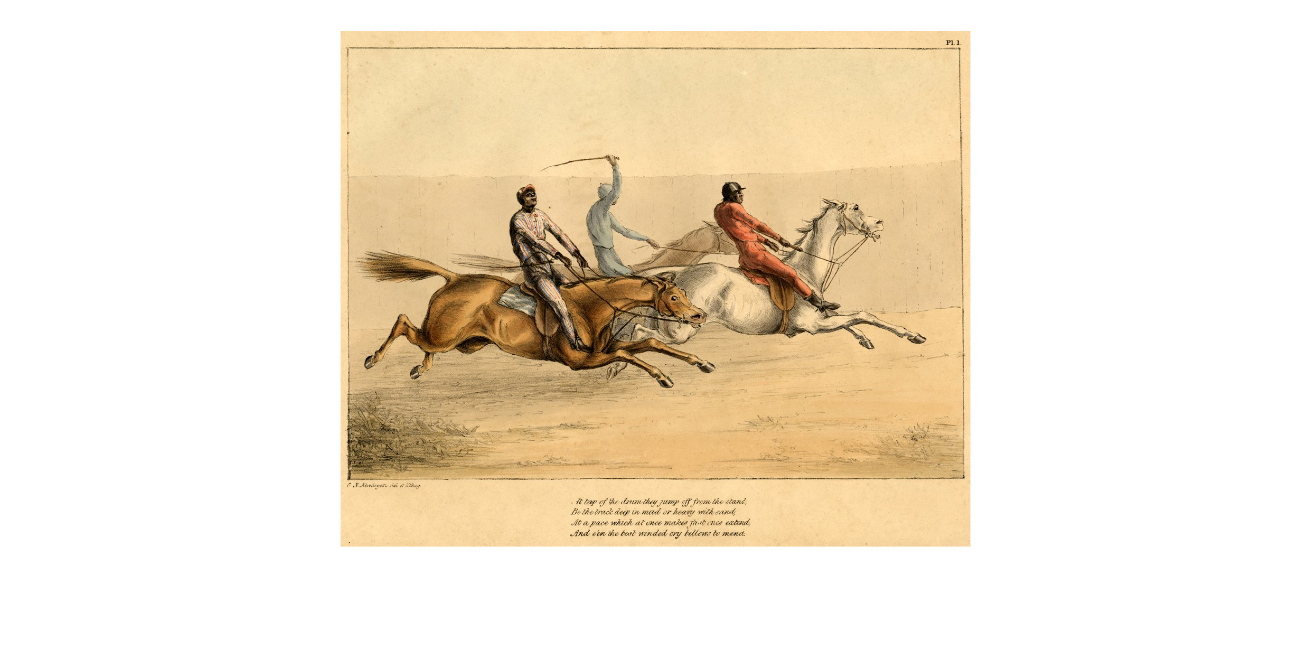
African American jockeys played a prominent but often overlooked role in early American horse racing. Their skill was highly valued, and Black riders were central to the sport for much of the 1800s. This image captures a moment when African Americans were at the forefront of a popular American pastime.
The presence of Black jockeys in elite racing complicates simple narratives about African American experiences in the antebellum period. It shows the complex dynamics of race in sports and society, where Black athletes could gain recognition even within a system built on slavery and discrimination.
Tommie Smith and John Carlos Raise Clenched Fists During XIX Summer Olympics, 1968
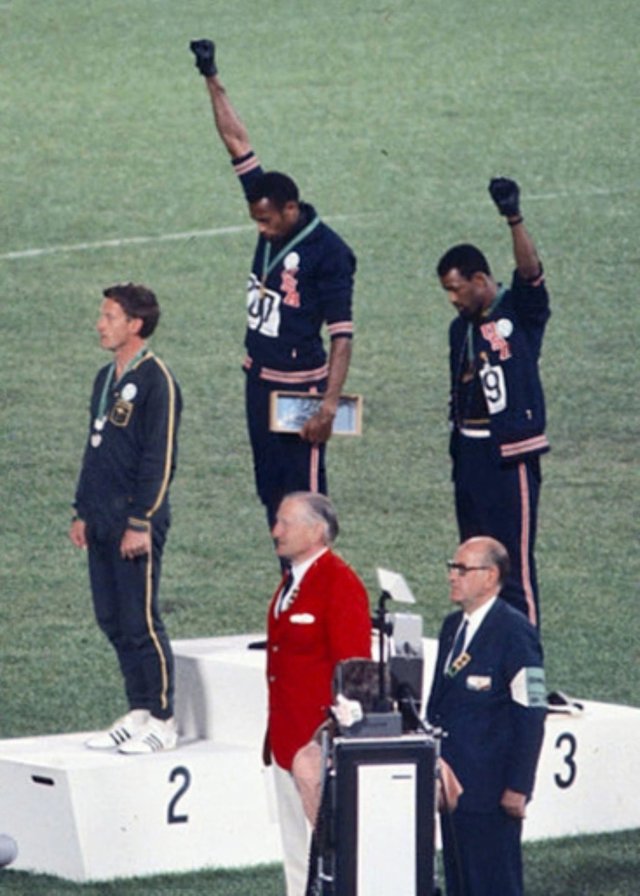
The image of Tommie Smith and John Carlos raising their fists on the Olympic podium in 1968 became a powerful symbol of protest against racial injustice. Their silent gesture during the national anthem brought global attention to the civil rights struggle and to racism in sports and society.
This act showed how Black athletes could use their platform for activism, inspiring later generations. It highlighted the intersection of sports and politics and challenged the idea that athletes should stay out of social issues.
Colin Kaepernick Kneels During National Anthem, Seattle Seahawks Versus San Francisco 49ers, 2017
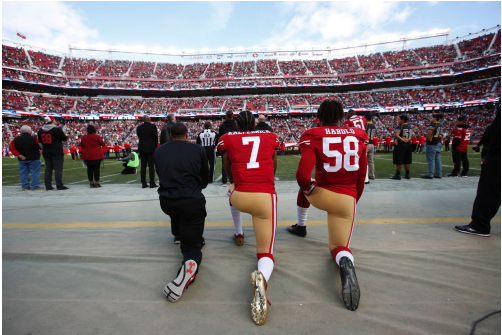
Colin Kaepernick's kneeling during the national anthem sparked a nationwide conversation about racial injustice and police brutality. His peaceful protest brought attention to systemic racism and grew into a movement that reached beyond sports into culture and politics.
The image captures a key moment in contemporary civil rights activism and shows the power of individual action to challenge accepted norms. Kaepernick's stance carried real cost to his career and reflects the ongoing struggle for equality.
How to Use This on the AP African American Studies Exam
Using Sources Effectively
When you get a sports-related image like the 1968 salute or the Kaepernick photo, name the specific protest and what it responded to (racial discrimination, the Vietnam War, or police brutality). Then explain purpose and audience: these athletes used a global or national stage to force attention onto injustice.
Continuity and Change
Trace the through-line. Barrier-breaking runs from Oliver Lewis (1875) and the Negro leagues to Jackie Robinson (1947). Protest runs from Ali (1967) to Smith and Carlos (1968) to Kaepernick (2016). Showing both the long history and the shifts in strategy makes a stronger argument.
Connecting Across Units
Link athlete activism to the Black Freedom movement, including civil rights and Black Power ideas from earlier in Unit 4. Smith and Carlos's raised fist is a direct visual tie to Black Power, so use that connection when a prompt asks you to relate sports to larger movements.
Common Trap
Do not treat athletic success as proof that racism ended. Jesse Owens won four gold medals and still faced discrimination at home. The strongest answers hold both achievement and ongoing inequality together.
Common Misconceptions
- Misconception: Black athletes only started breaking barriers in the twentieth century.Actually: Black athletes did not only start breaking barriers in the twentieth century. The pattern began in Reconstruction, with jockeys like Oliver Lewis and Billy Walker winning the Kentucky Derby in the 1870s.
- Misconception: The Negro leagues were a minor sideshow.Actually: The Negro leagues were not a minor sideshow. They were full athletic institutions that gave Black players a place to compete for decades, lasting until the 1960s.
- Misconception: Jackie Robinson integrating Major League Baseball in 1947 ended segregation in sports or society.Actually: Jackie Robinson integrating Major League Baseball in 1947 did not end segregation in sports or society. It was one important step, not a finish line.
- Misconception: Athlete protest was invented in 2016.Actually: Athlete protest was not invented in 2016. Ali in 1967 and Smith and Carlos in 1968 used their platforms decades earlier, and Kaepernick built on that tradition.
- Misconception: Smith and Carlos's raised fist was a call for violence.Actually: Smith and Carlos's raised fist was a nonviolent protest and a show of solidarity with the Black Freedom movement, not a call for violence.
Related AP African American Studies Guides
- 4.9 Black Religious Nationalism and the Black Power Movement
- 4.11 The Black Panther Party for Self-Defense
- 4.5 Redlining and Housing Discrimination
- 4.8 The Arts, Music, and the Politics of Freedom
- 4.12 Black Is Beautiful and Afrocentricity
- 4.4 Discrimination, Segregation, and the Origins of the Civil Rights Movement
Practice Questions for 4.19
1 of 10
The creation of separate Black athletic institutions such as the Negro Leagues and the Colored Hockey League is significant primarily because these organizations represented what about African American responses to systemic exclusion?
A.
Proof that African American athletic talent was inferior and required separate leagues.
B.
Autonomous institution-building that created economic opportunity and cultural identity.
C.
Temporary organizations that held little lasting significance until integration became possible.
D.
Evidence that Black athletes preferred segregated competition and separate opportunities.
Vocabulary
The following words are mentioned explicitly in the AP® course framework for this topic.Term | Definition |
|---|---|
Black Freedom movement | A period of transnational activism from the mid-1940s to the 1970s focused on achieving civil rights and racial equality for Black Americans and people of African descent globally. |
Black power fist | A raised fist gesture used as a symbol of solidarity with the Black Freedom movement and protest against racial discrimination. |
Colored Hockey League of the Maritimes | A professional hockey league founded by Black athletes in Halifax, Nova Scotia in 1895, predating the National Hockey League. |
Kentucky Derby | A prestigious annual horse racing event established in 1875, which African American jockeys dominated in the late nineteenth century. |
Major League Baseball | The highest level of professional baseball in the United States, which remained segregated until Jackie Robinson broke the color barrier in 1947. |
Negro leagues | Professional baseball associations founded by African Americans after the Civil War to provide opportunities for Black players excluded from Major League Baseball, lasting until the 1960s. |
Olympic Games | An international athletic competition in which African American athletes, including Jesse Owens, earned gold medals for the United States. |
peaceful protest | Nonviolent resistance or demonstration against injustice or discrimination, used to advocate for social and political change. |
police brutality | The excessive and unjustified use of force by law enforcement officers against individuals, often disproportionately affecting African Americans. |
racial barriers | Systemic obstacles and discrimination that prevent people of a particular race from accessing opportunities, particularly in sports and other competitive fields. |
racial discrimination | Systemic and individual acts of unfair treatment based on race, limiting opportunities and rights for African Americans. |
racial equality | The principle that all people should have equal rights, opportunities, and treatment regardless of race. |
racial segregation | The legal and systematic separation of African Americans and white people in housing, transportation, and public services. |
Reconstruction | The period following the Civil War (1865-1877) when the federal government worked to rebuild the South and integrate formerly enslaved people into American society. |
Frequently Asked Questions
Why are African Americans and sports important in Black history?
Sports show how Black athletes broke racial barriers, built institutions when excluded, and used public platforms to demand racial equality. AP African American Studies treats athletic success and protest as part of the broader Black Freedom movement.
Who were important Black athletes in nineteenth-century sports?
Oliver Lewis won the first Kentucky Derby in 1875, and William Billy Walker won two years later. Black jockeys set a precedent for African American excellence in racing during and after Reconstruction.
What were the Negro leagues?
The Negro leagues were Black baseball leagues created because racial segregation excluded African American athletes from white-controlled baseball. They persisted until the 1960s and gave Black players places to compete and lead.
Why is Jackie Robinson important?
In 1947 Jackie Robinson became the first Black player in Major League Baseball, marking a major step toward integration in professional baseball. His success challenged segregation but did not end racism in sports or society.
How did Black athletes use sports for protest?
Athletes used national and global stages to call attention to injustice, including Muhammad Ali refusing the Vietnam draft, Tommie Smith and John Carlos raising the Black power fist in 1968, and Colin Kaepernick kneeling during the anthem in 2016.
How should I use sports sources on the AP exam?
Identify the event shown, connect it to racial barriers or protest, and explain how the athlete used visibility to challenge discrimination. Strong answers hold achievement and ongoing inequality together.
See Fiveable more often in Google
Mark Fiveable as a preferred source and Google is more likely to show you our guides in Top Stories, with a "preferred" badge in AI Mode and AI Overviews.