2.24 Freedom Days: Commemorating the Ongoing Struggle for Freedom

✊🏿AP African American Studies Unit 2 Review
2.24 Freedom Days: Commemorating the Ongoing Struggle for Freedom
✊🏿 AP African American Studies
2.1
African Explorers in the Americas
2.2
Departure Zones in Africa and the Slave Trade to the United States
2.3
Capture and the Impact of the Slave Trade on West African Societies
2.4
African Resistance on Slave Ships and the Antislavery Movement
2.5
Slave Auctions and the Domestic Slave Trade
2.6
Labor, Culture, and Economy
2.7
Slavery and American Law: Slave Codes and Landmark Cases
2.8
The Social Construction of Race and the Reproduction of Status
2.9
Creating African American Culture
2.10
Black Pride, Identity, and the Question of Naming
2.11
The Stono Rebellion and Fort Mose
2.12
Legacies of the Haitian Revolution
2.13
Resistance and Revolts in the United States
2.14
Black Organizing in the North: Freedom, Women's Rights, and Education
2.15
Maroon Societies and Autonomous Black Communities
2.16
Diasporic Connections: Slavery and Freedom in Brazil
2.17
African Americans in Indigenous Territory
2.18
Debates About Emigration, Colonization, and Belonging in America
2.19
Black Political Thought: Radical Resistance
2.20
Race to the Promised Land: Abolitionism and the Underground Railroad
2.21
Legacies of Resistance in African American Art and Photography
2.22
Gender and Resistance in Slave Narratives
2.23
The Civil War and Black Communities
2.24
Freedom Days: Commemorating the Ongoing Struggle for Freedom
Freedom Days are celebrations that mark the end of legal slavery and honor the continued fight for equal rights. The biggest one, Juneteenth, remembers June 19, 1865, when enslaved people in Galveston, Texas finally learned they were free, two and a half years after the Emancipation Proclamation.
Why This Matters for the AP African American Studies Exam
This topic ties together the legal end of slavery and how Black communities chose to remember it, which makes it useful for causation and continuity questions. You should be able to tell the difference between a wartime order (the Emancipation Proclamation) and a constitutional change (the Thirteenth Amendment), and explain why the gap between them mattered. The required source, General Order No. 3, is a strong document to practice source analysis with, since you can connect its exact wording to bigger ideas about freedom and equality.
Key Takeaways
- The Emancipation Proclamation (1863) was a wartime order that only freed enslaved people in Confederate states still fighting the Union, not in the border states.
- The Thirteenth Amendment (1865) permanently abolished slavery in the United States, except as punishment for a crime, and freed about four million people.
- The Thirteenth Amendment did not cover the nearly 10,000 African Americans enslaved by Indigenous nations; separate 1866 treaties ended that slavery but withheld tribal citizenship rights.
- Juneteenth marks June 19, 1865, when General Order No. 3 was read in Galveston, Texas, the last state in rebellion to learn of freedom.
- Freedom Days are a long tradition that goes back to at least the 1827 abolition celebration in New York; Juneteenth became a federal holiday in 2021.
- Freedom Days commemorate ancestors' struggle, a hard-won and incomplete freedom, and the choice to find joy within Black communities.
How Legal Enslavement Ended
The Emancipation Proclamation
President Abraham Lincoln issued the Emancipation Proclamation as a wartime order in 1863. It declared freedom for enslaved people held in Confederate states still at war against the Union. It did not free everyone, though. Slavery continued legally in the four border states that stayed in the Union (Missouri, Kentucky, Maryland, and Delaware).
The key point: the Emancipation Proclamation did not end slavery across the whole country. It only applied to the rebelling states.
The Thirteenth Amendment
The Thirteenth Amendment, ratified in 1865, did what the Proclamation could not. It secured the permanent abolition of slavery throughout the United States, except as a punishment for a crime.
- It freed four million African Americans, nearly a third of the South's population.
- It marked a major first step toward freedom, justice, and inclusion for African Americans in the country of their birth.
"Neither slavery nor involuntary servitude, except as a punishment for crime whereof the party shall have been duly convicted, shall exist within the United States, or any place subject to their jurisdiction."
Slavery in Indigenous Nations
The Thirteenth Amendment did not reach the nearly 10,000 African Americans enslaved by Indigenous nations. To end that slavery, the United States government negotiated treaties with these nations in 1866.
- The 1866 treaties ended legal slavery in Indian Territory.
- They did not grant the freed people rights as tribal citizens, which left them in a difficult position.
This shows how the end of slavery did not happen all at once or in the same way everywhere. Different legal processes ended enslavement in different places and on different timelines.
Why Juneteenth Matters
Juneteenth's Origins in Texas
Juneteenth commemorates June 19, 1865, the day Union General Gordon Granger read General Order No. 3 in Galveston, Texas, informing enslaved people that they were free. Texas was the last state in rebellion to receive this news, so Juneteenth marks the end of slavery in the last holdout state.
General Order No. 3 was the first document to mention racial equality, describing equal personal and property rights for formerly enslaved people. That wording is worth remembering, because it connects the day of celebration to the larger and ongoing fight for equal rights.
Freedom Days in African American Communities

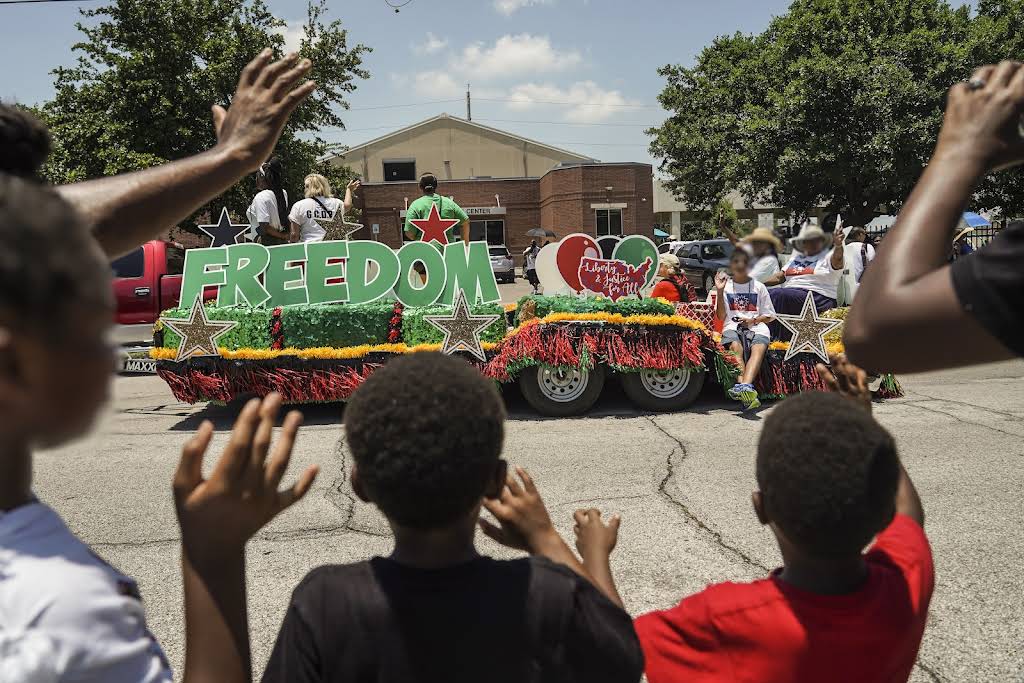
Freedom Days are celebrations that commemorate the end of slavery. African American communities have a long history of marking local Freedom Days, going back to the celebration of abolition in New York on July 5, 1827.
- Juneteenth is one of many Freedom Days that African American communities have consistently celebrated.
- More than 150 years after its first celebration, Juneteenth became a federal holiday in 2021.
Early Juneteenth Celebrations
The earliest Juneteenth celebrations gave newly freed African Americans a way to gather and celebrate their freedom together.
- They sang spirituals, wore new clothing that symbolized their freedom, feasted, and danced.
- The new clothing carried meaning because it broke from the dress codes that enslavers had imposed.
- At the time, Juneteenth was also called Jubilee Day and Emancipation Day.
What Freedom Days Commemorate
Juneteenth and other Freedom Days honor several things at once:
- The roles African Americans' ancestors played in the struggle to end legal enslavement in the United States.
- The way African Americans embraced a fraught, incomplete freedom while still fighting for equal rights, protections, and opportunities.
- African Americans' commitment to seeking joy and validation among themselves, even when the nation was slow to recognize this history.
Required Sources
General Order No. 3, issued by Maj. Gen. Gordon Granger, 1865
This order officially proclaimed the emancipation of enslaved people in Texas. Delivered by Major General Gordon Granger, it marked the effective end of slavery in the last rebelling state, coming two and a half years after the Emancipation Proclamation. The celebration of this day became the foundation for Juneteenth, and its recognition as a federal holiday in 2021 reinforced its place in American history.
General Order No. 3 announced that enslaved people in Texas were free, claimed equal personal and property rights for formerly enslaved people, and redefined the labor relationship as one between employers and paid workers. It also advised freed people to remain where they were and work for wages.
When you analyze this source, notice the tension in it. It announces freedom and "absolute equality," but it also tells freed people to stay put and work for wages, which shows how limited and controlled this new freedom was from the start.
Photographs of Juneteenth Celebrations
The required photographs include Juneteenth celebrations in West Philadelphia (2019), Louisville (2021), and Galveston (2021). These images show that Juneteenth is still celebrated today and remains meaningful in African American communities. They are useful examples of cultural preservation, showing how communities keep connections to their heritage while adapting traditions to speak to present-day concerns.
How to Use This on the AP African American Studies Exam
Using Sources Effectively
When you work with General Order No. 3, do more than summarize it. Point to specific phrases like "absolute equality of personal rights" and connect them to the larger struggle for equal rights. Then notice the limits, like the instruction to keep working for wages, and explain what that reveals about the kind of freedom being offered.
Causation and Continuity
Be ready to explain the chain of events that ended legal slavery: the Emancipation Proclamation as a wartime order, then the Thirteenth Amendment as permanent abolition, then the 1866 treaties for Indigenous nations. Show that these were separate steps on different timelines, not one single moment.
Common Trap
Watch for prompts that treat the Emancipation Proclamation as the end of slavery. It was not. Use the Thirteenth Amendment to make the distinction clear, and mention the people still enslaved in border states and in Indigenous nations after 1863.
Common Misconceptions
- Misconception: The Emancipation Proclamation freed all enslaved people.Actually: The Emancipation Proclamation did not free all enslaved people. It applied only to Confederate states still at war, not the loyal border states.
- Misconception: Juneteenth is the date slavery legally ended everywhere.Actually: Juneteenth is not the date slavery legally ended everywhere. It marks when news of freedom reached Texas, the last rebelling state. Permanent legal abolition came with the Thirteenth Amendment, and slavery in Indigenous nations continued until the 1866 treaties.
- Misconception: Becoming a federal holiday in 2021 was the start of Juneteenth.Actually: Becoming a federal holiday in 2021 was not the start of Juneteenth. Communities had celebrated it for more than 150 years before that recognition.
- Misconception: Freedom Days are only about Juneteenth.Actually: Freedom Days are not only about Juneteenth. African American communities celebrated many local Freedom Days, including the 1827 abolition celebration in New York.
- Misconception: The Thirteenth Amendment ended forced labor completely.Actually: The Thirteenth Amendment did not end forced labor completely. It allows enslavement "as a punishment for a crime," which is an exception worth noticing.
Related AP African American Studies Guides
Practice Questions for 2.24
1 of 10
The earliest Juneteenth celebrations, which included singing spirituals, wearing new clothing, feasting, and dancing, reflected which of the following aspects of African American freedom?
A.
The commemoration of military victories achieved by African American soldiers during the Civil War
B.
The preparation for immediate political participation in state and federal government institutions
C.
The assertion of joy, autonomy, and cultural validation within their own communities despite delayed national recognition
D.
The adoption of European cultural practices to demonstrate assimilation and acceptance by white American society
Vocabulary
The following words are mentioned explicitly in the AP® course framework for this topic.Term | Definition |
|---|---|
abolition | The movement to end slavery and the slave trade, and the legal elimination of slavery as an institution. |
border states | The slave states that remained in the Union during the Civil War, including Maryland, Delaware, Kentucky, and Missouri. |
Confederate states | The Southern states that seceded from the Union and formed the Confederate States of America during the Civil War. |
Emancipation Day | An alternative name for early Juneteenth celebrations that commemorated the emancipation of enslaved people. |
Emancipation Proclamation | An executive order issued by President Lincoln that declared enslaved people in Confederate states to be free, effective January 1, 1863. |
equal rights | The fundamental protections and opportunities that African Americans actively struggled to secure following the end of slavery. |
Freedom Days | Commemorative celebrations by African American communities marking the abolition of slavery and emancipation, including Juneteenth and other local observances. |
General Order No. 3 | A Union military order read in Galveston, Texas on June 19, 1865, that declared enslaved people free and was the first document to mention racial equality of personal rights and property between former masters and slaves. |
Indian Territory | The region designated by the United States government for the relocation of Indigenous nations, where some African Americans were held in slavery. |
Jubilee Day | An alternative name for early Juneteenth celebrations that emphasized the jubilant nature of the commemoration of freedom from slavery. |
Juneteenth | A commemoration marking June 19, 1865, when enslaved people in Galveston, Texas were informed of their freedom by Union General Order No. 3, which also declared racial equality of personal rights and property between former masters and enslaved people. |
legal enslavement | The institutionalized system of slavery in the United States that was enforced through law until its abolition. |
spirituals | Religious songs created by enslaved African Americans that blended African musical traditions with Christian themes and served as expressions of faith and resistance. |
Thirteenth Amendment | Constitutional amendment ratified in 1865 that officially abolished slavery and involuntary servitude, except as punishment for a crime. |
Frequently Asked Questions
What are Freedom Days in AP African American Studies?
Freedom Days are commemorations of emancipation and the continuing struggle for equal rights. They include Juneteenth, Jubilee Day, Emancipation Day, and other local celebrations created and sustained by African American communities.
What is Juneteenth?
Juneteenth commemorates June 19, 1865, when General Order No. 3 was read in Galveston, Texas, informing enslaved people there that they were free. It became a federal holiday in 2021.
How did the Emancipation Proclamation differ from the Thirteenth Amendment?
The Emancipation Proclamation was a 1863 wartime order that applied to Confederate states still fighting the Union. The Thirteenth Amendment, ratified in 1865, abolished slavery across the United States except as punishment for a crime.
Why did legal slavery continue after the Emancipation Proclamation?
The Emancipation Proclamation did not apply to Union border states or to African Americans enslaved by Indigenous nations. Separate 1866 treaties ended legal slavery in Indian Territory, though they did not automatically grant tribal citizenship rights to freed people.
What required sources connect to AP African American Studies 2.24?
The topic connects especially to General Order No. 3 and Juneteenth-related photographs. These sources help you analyze how legal freedom was announced, remembered, and celebrated.
Why did Juneteenth become a federal holiday?
Juneteenth became a federal holiday in 2021 after generations of community celebration and activism. The holiday recognizes emancipation while also pointing to the unfinished struggle for equal rights.
See Fiveable more often in Google
Mark Fiveable as a preferred source and Google is more likely to show you our guides in Top Stories, with a "preferred" badge in AI Mode and AI Overviews.