4.12 Black Is Beautiful and Afrocentricity

✊🏿AP African American Studies Unit 4 Review
4.12 Black Is Beautiful and Afrocentricity
✊🏿 AP African American Studies
4.1
The Négritude and Negrismo Movements
4.2
Anticolonialism and Black Political Thought
4.3
African Americans and the Second World War: The Double V Campaign and the G.I. Bill
4.4
Discrimination, Segregation, and the Origins of the Civil Rights Movement
4.5
Redlining and Housing Discrimination
4.6
Major Civil Rights Organizations
4.7
Black Women's Leadership and Grassroots Organizing in the Civil Rights Movement
4.8
The Arts, Music, and the Politics of Freedom
4.9
Black Religious Nationalism and the Black Power Movement
4.10
The Black Arts Movement
4.11
The Black Panther Party for Self-Defense
4.12
Black Is Beautiful and Afrocentricity
4.13
The Black Feminist Movement, Womanism, and Intersectionality
4.14
Interlocking Systems of Oppression
4.15
Economic Growth and Black Political Representation
4.16
Demographic and Religious Diversity in Contemporary Black Communities
4.17
The Evolution of African American Music: From Spirituals to Hip-Hop
4.18
Black Life in Theater, TV, and Film
4.19
African Americans and Sports
4.20
Science, Medicine, and Technology in Black Communities
4.21
Black Studies, Black Futures, and Afrofuturism
The Black Is Beautiful movement of the 1960s and Afrocentricity of the 1970s both pushed African Americans to embrace Black beauty, reject ideas of inferiority, and strengthen ties to Africa. Black Is Beautiful celebrated natural hair, African-inspired fashion, naming practices, and holidays like Kwanzaa, while Afrocentricity placed Africa and people of African descent at the center of history and helped shape African American Studies.
Why This Matters for the AP African American Studies Exam
This topic sits in Unit 4, the most heavily weighted unit on the exam. It connects directly to the Black Power era and shows how cultural pride became its own form of political resistance. You should be ready to explain cause and effect (how these movements grew out of the broader Black Freedom struggle) and continuity over time (how they shaped ethnic studies and identity debates that continue today).
The required sources here, including Kathleen Cleaver's remarks on natural hair, the Naturally '68 photo shoot, and Maya Angelou's "Still I Rise," are the kind of visual, video, and literary sources you analyze across the course. Practice reading them for the message they send about Black pride and self-definition, not just the surface details.
Key Takeaways
- The Black Is Beautiful movement emerged in the 1960s; Afrocentricity emerged in the 1970s. Both rejected notions of Black inferiority and pressure to match mainstream beauty standards.
- Black Is Beautiful celebrated natural hairstyles (the afro, cornrows), African-inspired fashion (dashikis, African head wraps), African and Islamic naming practices, Kwanzaa (established 1966), and Akan adinkra symbols like the Sankofa bird.
- Afrocentricity, a term coined by scholar Molefi Asante in the 1970s, places Africa and the achievements of people of African descent at the center of history.
- These movements helped establish African American Studies and laid a foundation for later multicultural and ethnic studies programs.
- Critics argue Afrocentricity can blur the diversity of ethnicities within the African diaspora and can become a substitute for Eurocentrism rather than a challenge to it.
- The CROWN Act (California, 2019) is a modern application of these ideas, banning discrimination based on hairstyle and hair texture.
The Black Is Beautiful Movement
Origins in the 1960s
The Black Is Beautiful movement grew in the 1960s as African Americans rejected narratives of Black inferiority and the pressure to conform to mainstream beauty standards. It encouraged people to embrace features like dark skin and natural hair instead of Eurocentric ideals that favored straight hair and lighter skin.
The movement lined up with the broader Black Freedom struggle, including the Civil Rights and Black Power movements, all of which promoted racial pride. This reinforced a stronger sense of identity and self-worth in Black communities.
Celebrating Afrocentric Aesthetics
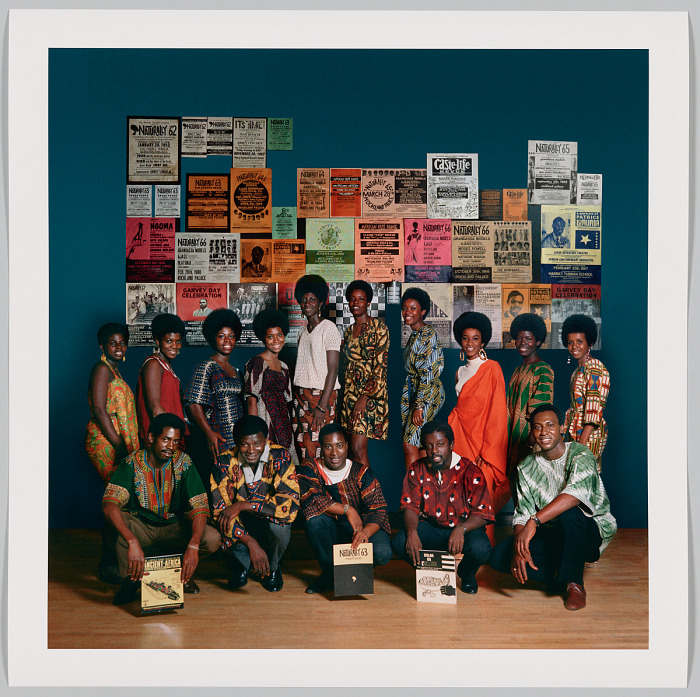
Black Is Beautiful turned everyday appearance into a statement of pride. Natural hairstyles became powerful symbols of identity and resistance to assimilation:
- The afro and cornrows embraced the texture of Black hair.
- Dashikis, garments rooted in West Africa, became popular dress.
- African head wraps were worn as celebrations of heritage.
People also reclaimed identity through naming. African and Islamic naming practices became more common, building on a long history of African Americans renaming themselves in response to changing times. These naming choices were acts of freedom and assertions of self-identity, Black pride, and unity.
The movement also connected to broader cultural traditions:
- Kwanzaa was established in 1966 as a celebration of African American heritage and culture.
- Akan adinkra symbols, like the Sankofa bird, became meaningful emblems of connection to African heritage.
Afrocentricity
Africa at the Center
Afrocentricity is an approach that highlights the experiences, perspectives, and aesthetics of Black people by placing Africa and the achievements of people of African descent at the center of history. Scholar Molefi Asante coined the term "Afrocentricity" in the 1970s.
This approach emerged alongside efforts in the 1960s to establish the field of African American Studies and to celebrate pride in African heritage. Instead of treating European history and culture as the default reference point, Afrocentricity asks students and scholars to start from African experiences.
A Contested Idea
Afrocentricity is not a one-sided story, and the AP course expects you to handle that nuance. Supporters value how it elevates African heritage. Critics raise real concerns:
- It can blur distinctions across the many ethnicities within the African diaspora, treating a hugely diverse continent as if it were one culture.
- It can become a substitute for Eurocentrism rather than a true challenge to it, simply swapping one center for another instead of rethinking the framework.
Holding both the value and the critique in view is exactly the kind of thinking the exam rewards.
Black Is Beautiful, Afrocentricity, and African American Studies
The Black Is Beautiful movement's rejection of cultural assimilation laid a foundation for later multicultural and ethnic studies movements. By challenging the idea that success required blending into the dominant culture, it emphasized preserving and celebrating Black identity.
That shift helped support the growth of African American Studies, Africana Studies, and Black Studies as academic fields. These programs created frameworks for studying the history, literature, and lived experiences of people of African descent.
How to Use This on the AP African American Studies Exam
Using Sources Effectively
The three required sources give you concrete evidence to use.
- Kathleen Cleaver on Natural Hair (1968): Cleaver, a legal scholar and Black Panther Party activist, encouraged Black people to embrace their natural beauty. Use this to show how personal appearance became political.
- Naturally '68 photo shoot at the Apollo Theater: This featured Grandassa models and members of the African Jazz-Art Society & Studios (AJASS) in dashikis. AJASS, inspired by Marcus Garvey and Black nationalism, ran the annual "Naturally" fashion shows to celebrate Black beauty and natural hairstyles. Use this to connect fashion and art to the movement's goals.
- "Still I Rise" by Maya Angelou (1978): Use this poem as literary evidence of resilience, self-affirmation, and Black pride.
When you analyze any of these, name the message about Black self-definition and tie it back to the larger movement, not just the visual or surface details.
Making Connections
Strong responses link this topic to nearby ideas in Unit 4. You can connect Black Is Beautiful to the Black Power movement's emphasis on cultural pride and to the Nation of Islam's naming practices, where members often adopted the letter "X" or new names. You can also trace continuity to a modern application: the CROWN Act, passed in California in 2019, bans discrimination based on hairstyle and hair texture, showing these ideas still matter.
Common Trap
When a question touches Afrocentricity, do not just praise it. Bring in the critique too, since balanced analysis that names both the value and the limits is what scores well.
Common Misconceptions
- Misconception: Black Is Beautiful and Afrocentricity are the same thing and come from the same exact moment.Actually: Black Is Beautiful and Afrocentricity are not the same thing or from the same exact moment. Black Is Beautiful emerged in the 1960s as a cultural and aesthetic movement; Afrocentricity emerged in the 1970s as an academic approach, with the term coined by Molefi Asante.
- Misconception: Natural hair and African-inspired fashion were just style trends.Actually: Natural hair and African-inspired fashion were not just style trends. They were deliberate rejections of Eurocentric beauty standards and assertions of Black pride and identity.
- Misconception: Afrocentricity is universally accepted.Actually: Afrocentricity is not universally accepted. The course expects you to know the critiques, including that it can flatten the diversity of the African diaspora and can mirror Eurocentrism instead of challenging it.
- Misconception: Kwanzaa is an ancient African holiday.Actually: Kwanzaa was established in 1966, not as an ancient African holiday. It draws on African harvest traditions but was created within this period of cultural renewal.
- Misconception: The CROWN Act was part of the 1960s and 1970s movements themselves.Actually: The CROWN Act is a recent application of these ideas, not part of the 1960s and 1970s movements themselves. Use it to show continuity into the present, not as original content from the era.
Related AP African American Studies Guides
- 4.9 Black Religious Nationalism and the Black Power Movement
- 4.11 The Black Panther Party for Self-Defense
- 4.5 Redlining and Housing Discrimination
- 4.8 The Arts, Music, and the Politics of Freedom
- 4.13 The Black Feminist Movement, Womanism, and Intersectionality
- 4.4 Discrimination, Segregation, and the Origins of the Civil Rights Movement
Practice Questions for 4.12
1 of 10
The adoption of African and Islamic naming practices among African Americans during the Black is Beautiful movement provides evidence for which claim about the movement's approach to identity formation?
A.
Religious conversion to Islam or African spirituality was required for full community participation
B.
African and Islamic cultures were inherently superior to European American culture
C.
Most African Americans rejected birth names because they were linguistically difficult to pronounce
D.
Identity required rejecting enslaver-imposed names in favor of self-chosen African or Islamic names
Vocabulary
The following words are mentioned explicitly in the AP® course framework for this topic.Term | Definition |
|---|---|
adinkra symbols | Akan visual symbols from West Africa that carry cultural meanings, with the Sankofa bird being a prominent example embraced during the Black is Beautiful movement. |
African American Studies | An interdisciplinary field of scholarly inquiry that analyzes the history, culture, and contributions of people of African descent in the United States and throughout the African diaspora. |
African diaspora | The dispersal and communities of people of African descent throughout the world, particularly resulting from the transatlantic slave trade and subsequent migration. |
African head wraps | Traditional cloth wrappings worn on the head, part of Afrocentric fashion that celebrated African cultural practices during the Black is Beautiful movement. |
afro | A natural hairstyle worn close to the head in a rounded, voluminous shape, embraced during the Black is Beautiful movement as a symbol of Black pride and identity. |
Afrocentric aesthetics | Visual and cultural styles rooted in African traditions, including natural hairstyles, clothing, and symbols that reflect African heritage and identity. |
Afrocentricity | An intellectual and cultural approach that places Africa and African heritage at the center of the identities and histories of people of African descent. |
Black beauty | The celebration and affirmation of African American physical features, aesthetics, and cultural expressions as inherently valuable and worthy of pride. |
Black is Beautiful movement | A cultural and social movement in the 1960s and 1970s that celebrated African and African American aesthetics, identity, and pride, rejecting Eurocentric beauty standards. |
Black well-being | The holistic health, prosperity, and advancement of African American communities, including physical, mental, social, and economic dimensions. |
cornrows | A traditional African hairstyle in which hair is braided close to the scalp in rows, celebrated during the Black is Beautiful movement as part of African cultural heritage. |
cultural assimilation | The process by which people of one culture adopt the practices and values of another culture, which Négritude writers protested against European cultural assimilation of Black people. |
dashiki | A colorful, loose-fitting garment of West African origin worn as part of Afrocentric fashion during the Black is Beautiful movement. |
ethnic studies | An interdisciplinary field of academic study examining the histories, cultures, and experiences of various ethnic groups. |
Eurocentrism | An intellectual and cultural perspective that places Europe and European heritage at the center of history and culture, often marginalizing other civilizations and viewpoints. |
Kwanzaa | A cultural celebration established in 1966 that honors African American heritage and values, created as part of the Black is Beautiful and Afrocentric movements. |
mainstream standards of beauty | Eurocentric beauty ideals and aesthetic norms that dominated American culture and were often used to devalue African American appearance and identity. |
multicultural studies | An academic and social approach that recognizes and examines the histories, cultures, and experiences of multiple ethnic and cultural groups. |
Sankofa bird | An Akan adinkra symbol representing the concept of learning from the past to move forward, embraced during the Black is Beautiful movement as a symbol of African heritage. |
Frequently Asked Questions
What was the Black Is Beautiful movement?
The Black Is Beautiful movement emerged in the 1960s as African Americans rejected ideas of Black inferiority and celebrated Black beauty, natural hair, dark skin, Afrocentric aesthetics, and cultural pride.
What is Afrocentricity?
Afrocentricity is an approach that places Africa and the achievements, perspectives, and aesthetics of people of African descent at the center of history and identity. Molefi Asante coined the term in the 1970s.
How are Black Is Beautiful and Afrocentricity connected?
Both movements rejected conformity to mainstream beauty standards and strengthened connections to Africa. Black Is Beautiful focused strongly on appearance and cultural pride, while Afrocentricity shaped historical interpretation and academic study.
What examples show Afrocentric aesthetics?
Examples include the afro, cornrows, dashikis, African head wraps, African and Islamic naming practices, Kwanzaa, and Akan adinkra symbols such as Sankofa.
Why does this topic matter for African American Studies?
The Black Is Beautiful movement helped lay a foundation for African American Studies, Black Studies, Africana Studies, and later ethnic studies by challenging cultural assimilation and centering Black identity and experience.
What required sources connect to AP African American Studies 4.12?
Required sources include Kathleen Cleaver on natural hair, the Naturally 68 photo shoot featuring Grandassa Models and AJASS members, and Maya Angelou’s Still I Rise. Use them as evidence of Black pride and self-definition.
See Fiveable more often in Google
Mark Fiveable as a preferred source and Google is more likely to show you our guides in Top Stories, with a "preferred" badge in AI Mode and AI Overviews.