4.8 The Arts, Music, and the Politics of Freedom

✊🏿AP African American Studies Unit 4 Review
4.8 The Arts, Music, and the Politics of Freedom
✊🏿 AP African American Studies
4.1
The Négritude and Negrismo Movements
4.2
Anticolonialism and Black Political Thought
4.3
African Americans and the Second World War: The Double V Campaign and the G.I. Bill
4.4
Discrimination, Segregation, and the Origins of the Civil Rights Movement
4.5
Redlining and Housing Discrimination
4.6
Major Civil Rights Organizations
4.7
Black Women's Leadership and Grassroots Organizing in the Civil Rights Movement
4.8
The Arts, Music, and the Politics of Freedom
4.9
Black Religious Nationalism and the Black Power Movement
4.10
The Black Arts Movement
4.11
The Black Panther Party for Self-Defense
4.12
Black Is Beautiful and Afrocentricity
4.13
The Black Feminist Movement, Womanism, and Intersectionality
4.14
Interlocking Systems of Oppression
4.15
Economic Growth and Black Political Representation
4.16
Demographic and Religious Diversity in Contemporary Black Communities
4.17
The Evolution of African American Music: From Spirituals to Hip-Hop
4.18
Black Life in Theater, TV, and Film
4.19
African Americans and Sports
4.20
Science, Medicine, and Technology in Black Communities
4.21
Black Studies, Black Futures, and Afrofuturism
The Arts, Music, and the Politics of Freedom looks at how Black artists, poets, and musicians used their work to fight for racial equality and pull global attention to the Black Freedom movement. It also shows how faith and music inside Black churches produced freedom songs that gave activists courage and unity during the Civil Rights movement of the 1950s and 1960s.
Why This Matters for the AP African American Studies Exam
This topic builds your skill at analyzing creative and cultural sources as evidence, which is central in AP African American Studies. You read poetry, listen to protest music, and study a leader's writing, then explain how each one advanced a political goal.
The required sources here are strong examples for source analysis and for arguments about how culture and politics connect. You can use Guillén's poem, Mingus's song, and King's writing to support claims about resistance, diasporic solidarity, and the role of faith in organizing. Practice explaining the purpose and audience of each source, not just its content.
Key Takeaways
- Black artists across the diaspora used poetry, music, and performance to protest racial injustice and bring global attention to the Black Freedom movement.
- Nicolás Guillén, a Cuban poet tied to the Negrismo movement, linked anti-Black racism in the United States and Latin America and condemned segregation and racial violence.
- Charles Mingus composed protest music using African American traditions like call and response; his "Fables of Faubus" responded to the Little Rock Crisis of 1957.
- Faith and music were tools for inspiration and community mobilization, and Black churches created space for organizing and adapting freedom songs.
- Freedom songs grew out of hymns, spirituals, gospel songs, and labor union songs, and were usually sung as a group.
- Martin Luther King Jr. called "We Shall Overcome" an anthem of the movement, and it inspired his 1966 speech of the same name.
Artists Advocating for Racial Equality
Artists in the Black Freedom Movement
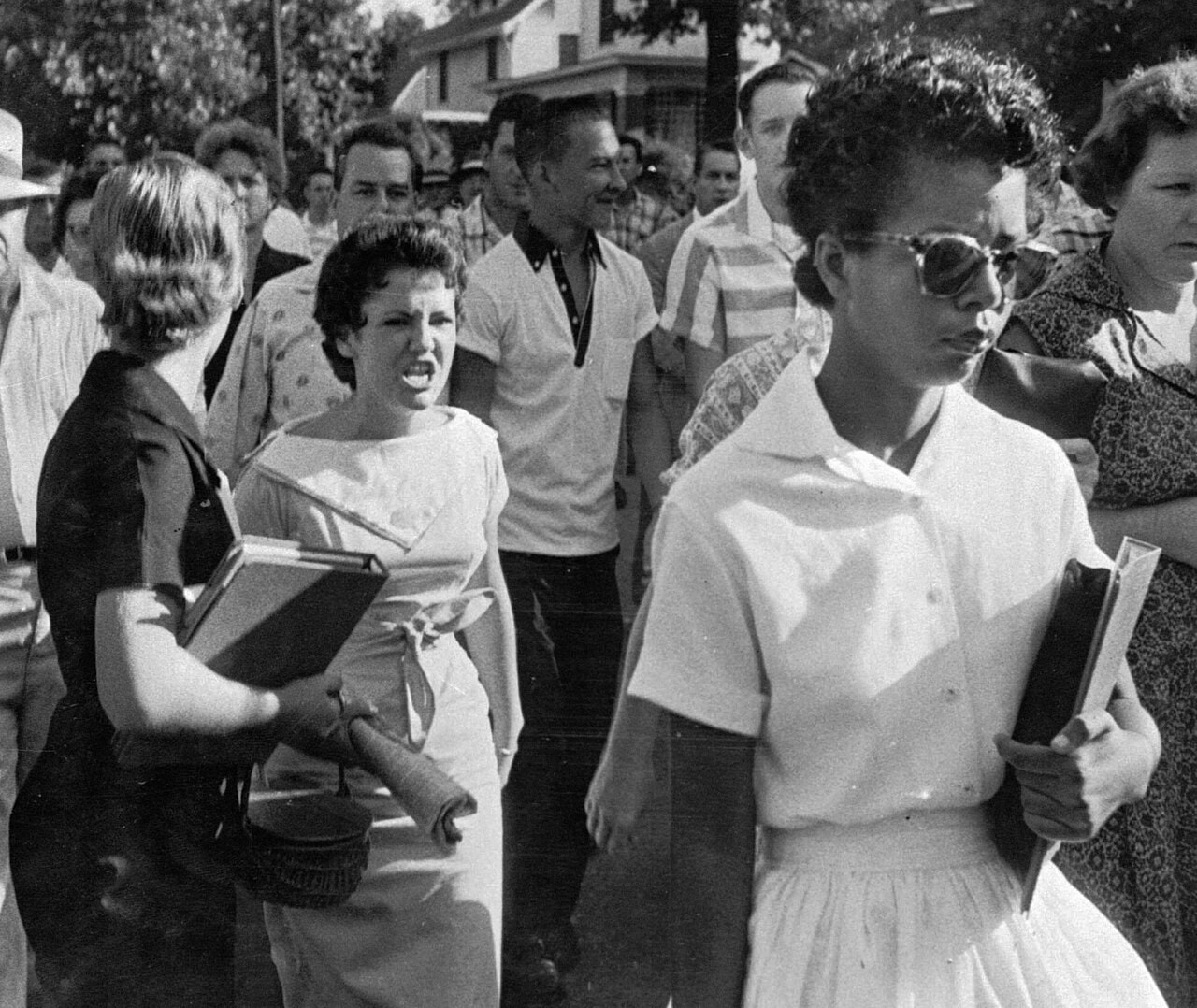
Black artists were central to the Black Freedom movement, using poetry, music, and visual arts to resist oppression.
- Their work amplified the struggles of African Americans and brought the fight against racial injustice to global audiences.
- It strengthened similar efforts by Afro-descendants outside the United States, building solidarity across the African diaspora.
Global Influence of Black Poets
Many Black poets engaged with themes of racial oppression and solidarity, challenging segregation and pushing for equality beyond U.S. borders.
- Nicolás Guillén, a Cuban poet associated with the Negrismo movement, examined the connections between anti-Black racism in the United States and Latin America.
- His poetry condemned racial violence and segregation, carrying the message of the Black Freedom movement to audiences beyond the United States.
- By drawing parallels between African American struggles and the experiences of Afro-descendants in Latin America, poets like Guillén highlighted how widespread anti-Black racism was and called for solidarity among oppressed communities.
Jazz Protest Music
Black musicians, especially jazz artists, raised awareness about racial injustice.
- Charles Mingus, a jazz bassist and composer, created protest songs that used call and response, a technique rooted in African American traditions.
- His music condemned white supremacist responses to racial integration.
- "Fables of Faubus" criticized Arkansas Governor Orval E. Faubus for resisting school desegregation during the Little Rock Crisis of 1957. After Columbia Records refused to allow the lyrics in 1959, Mingus rereleased the song in 1960 as "Original Faubus Fables" with words that mocked segregation.
One application worth noting: performers like Josephine Baker, who expatriated, criticized the double standards of an American democracy that kept segregation at home while promoting ideals of equality.
Faith and Music in the Civil Rights Movement
Faith and Music for Mobilization
Faith and music gave activists spiritual and emotional strength. Black churches helped organize efforts, build resilience, and adapt traditional music into freedom songs.
- Freedom songs grew out of hymns, spirituals, gospel songs, and labor union songs.
- Churches provided space for community gathering, organizing, and the creation of music that fueled the fight for racial equality.
Freedom Songs as Inspiration
Freedom songs gave courage to African Americans who risked their lives in the pursuit of justice.
- They unified activists and renewed their spirits, creating a sense of shared purpose.
- Their lyrics gave direction and communicated hopes for a more just and inclusive future.
- These songs were most often sung by a group, reflecting the community stewardship fostered by Black church leaders. Singers like Mahalia Jackson and Harry Belafonte performed iconic renditions, but the group setting mattered most.
"We Shall Overcome"
"We Shall Overcome" became an anthem of the Civil Rights movement, expressing resilience and determination.
- Martin Luther King Jr. described it as an anthem of the movement.
- Activists sang it while marching, while protesting, when they were arrested, and while in jail.
- The anthem served as a muse for King's 1966 speech of the same name, showing how freedom songs inspired political protest.
Required Sources
"Little Rock" by Nicolás Guillén, 1958
Guillén's poem "Little Rock" captures the racial tensions and the struggle for desegregation in 1950s America. Written in response to the Little Rock Crisis of 1957, it gives an international perspective on the fight against segregation in U.S. schools.
The poem shows how the African American struggle for equality resonated globally. It demonstrates the connections between civil rights struggles across borders and the role of art and literature in expressing solidarity and raising awareness beyond national boundaries.
A blues weeps tears of music
in the fine morning.
The white South shakes
its whip and strikes. Black children go
among pedagogical rifles
to their school of fear.
When they reach their classrooms,
Jim Crow will be the teacher,
Lynch's children will be their classmates
and on each desk
of each black child,
there will be ink of blood, pencils of fire.
This is the South. Its whip never ceases.
In that Faubus world,
under that hard Faubus sky of gangrene,
black children can
not go with whites to school.
Or they can gently stay at home.
Or (you never know)
let themselves be beaten to martyrdom.
Or not venture onto the streets.
Or die by bullet and saliva.
Or not whistle at the passing of a white girl.
Or finally, lower their eyes yes,
bend their bodies yes,
kneel yes,
in that free world yes,
of which Foster Dulles speaks in airport
after airport,
while the white little ball,
a graceful little white ball
presidential, of golf, like a tiny planet,
rolls on the pure, smooth, fine turf,
green, chaste, tender, soft, yes.
Well, now,
ladies and gentlemen, young ladies,
now children,
now old hairy and bald men,
now Indians, mulattoes, blacks, mixed-race,
now think what it would be
the whole world South,
the world all blood and all whip,
the world all white school for whites,
the whole world Rock and all Little,
the world all Yankee, all Faubus...
Think for a moment,
imagine it for just an instant.
"Original Faubus Fables" by Charles Mingus, 1960
Mingus's "Original Faubus Fables" is a musical protest against racial segregation and political oppression in 1950s America. The composition directly criticizes Arkansas Governor Orval Faubus, who tried to prevent the integration of Little Rock Central High School in 1957.
This jazz piece shows music working as social commentary and resistance during the Civil Rights movement. Mingus's use of call and response, dissonance, and improvisation mirrors the tension of the era while the lyrics confront racism directly, making it a significant cultural source in African American studies.
Why We Can't Wait by Martin Luther King Jr., 1964 (Excerpt from Chapter 4, "A New Day in Birmingham," p. 48)
In this excerpt, King gives a firsthand account of the Birmingham campaign, offering insight into the strategies and philosophy of the Civil Rights movement. His focus on nonviolent direct action shows how these tactics challenged segregation and discrimination, and how African American communities drove social change.
Key points from the excerpt:
-
Nightly mass meetings were held in churches throughout the Black community.
-
These meetings built power and unity.
-
Freedom songs were central to the movement:
- Described as "the soul of the movement"
- Adapted from old slave songs
- Used to inspire and unite protesters
-
Examples mentioned:
- "Woke Up This Morning with My Mind Stayed on Freedom"
- "Ain't Gonna Let Nobody Turn Me 'Round"
-
King's reflection on the songs:
- They gave courage and helped people march together
- They showed the resolve of young protesters facing police dogs and fire hoses
-
The chapter emphasizes how these songs bound the community together and gave spiritual strength to the movement.
"Can't Turn Me Around"
The freedom songs of the Civil Rights movement unified and inspired activists during the struggle for racial equality. "Can't Turn Me Around" captures the determination and resilience of the movement, working as an anthem for those facing oppression and violence.
Like many songs from the era, it shows how music functioned as a form of nonviolent resistance and a way to communicate shared values and goals. It points to the role of cultural expression in social movements and the emotional dimension of taking part in the Civil Rights movement.
How to Use This on the AP African American Studies Exam
Using Sources Effectively
- For Guillén's "Little Rock," explain purpose and audience. Note that a Cuban poet is writing about a U.S. crisis, which is direct evidence of diasporic solidarity and the global reach of the movement.
- For Mingus, connect the musical technique (call and response) to its political message. The song is not just art; it mocks Faubus and protests segregation.
- For the King excerpt and "Can't Turn Me Around," focus on how faith and group singing built unity and courage. Use specific detail like songs being called "the soul of the movement."
Free Response
- When a prompt asks about culture and politics, argue that art was a tool of resistance, not a side note. Back it with at least one named source.
- Use comparison: poetry (Guillén) reached international audiences, while freedom songs (church-based) mobilized local communities. Both advanced the same goals through different means.
- Show causation by linking the Little Rock Crisis of 1957 to creative responses like Guillén's poem and Mingus's song.
Common Trap
- Do not treat freedom songs as brand-new compositions. They were adaptations of hymns, spirituals, gospel songs, and labor union songs.
Common Misconceptions
- Misconception: Black protest art was only made in the United States.Actually: Afro-descendant artists across the diaspora, like Guillén in Cuba, contributed to and connected with the Black Freedom movement.
- Misconception: Freedom songs were solo performances by famous singers.Actually: They were most often sung by a group. Stars like Mahalia Jackson and Harry Belafonte performed renditions, but the community singing mattered most.
- Misconception: Mingus's protest song always had lyrics.Actually: Columbia Records refused the lyrics in 1959, so it first appeared as an instrumental. The 1960 "Original Faubus Fables" added the words.
- Misconception: We Shall Overcome was just a song.Actually: King treated it as an anthem of the movement, and it inspired his 1966 speech of the same name, showing how a song could shape political protest.
- Misconception: Faith and music were just emotional comfort.Actually: They were also organizing tools. Black churches created the space where activism and freedom songs came together.
Related AP African American Studies Guides
- 4.10 The Black Arts Movement
- 4.12 Black Is Beautiful and Afrocentricity
- 4.5 Redlining and Housing Discrimination
- 4.9 Black Religious Nationalism and the Black Power Movement
- 4.13 The Black Feminist Movement, Womanism, and Intersectionality
- 4.4 Discrimination, Segregation, and the Origins of the Civil Rights Movement
Practice Questions for 4.8
1 of 10
The adaptation of spirituals, hymns, and gospel songs into freedom songs during the Civil Rights Movement most directly reflects which of the following continuities in African American resistance?
A.
Creating entirely new musical genres that had no connection to earlier African American artistic practices
B.
Using cultural forms rooted in community experience to sustain collective struggle across generations of oppression
C.
Replacing African-influenced musical traditions with European classical forms to appeal to white sympathizers
D.
Developing music primarily for entertainment purposes rather than for organizing and inspiring political action
Vocabulary
The following words are mentioned explicitly in the AP® course framework for this topic.Term | Definition |
|---|---|
Afro-descendants | People of African descent living outside of Africa, including those in the Americas, Europe, and other parts of the diaspora. |
anti-Black racism | Systemic and individual discrimination, prejudice, and violence directed against Black people based on their race. |
Black Freedom movement | A period of transnational activism from the mid-1940s to the 1970s focused on achieving civil rights and racial equality for Black Americans and people of African descent globally. |
call and response | A musical and performative technique where one voice or instrument initiates a phrase and another responds, originating from African musical traditions. |
Civil Rights movement | The social and political movement from the 1950s-1960s aimed at ending racial segregation and discrimination against African Americans. |
community mobilization | The process of organizing and uniting a community to take collective action toward a shared goal or cause. |
freedom songs | Songs adapted from hymns, spirituals, gospel, and labor union music that inspired and unified African American activists during the Civil Rights movement. |
gospel songs | Religious music rooted in African American Christian tradition that expresses faith and spiritual devotion. |
hymns | Religious songs of praise and devotion used in Christian worship that were adapted into freedom songs during the Civil Rights movement. |
Negrismo | A movement that emerged in the Spanish-speaking Caribbean alongside Négritude, embraced by Black and mixed-race Latin Americans, and celebrated African contributions in Latin American music, folklore, literature, and art. |
protest songs | Musical compositions that express opposition to injustice, inequality, or oppressive systems and advocate for social change. |
racial equality | The principle that all people should have equal rights, opportunities, and treatment regardless of race. |
racial integration | The process of bringing together people of different races in shared social, educational, and institutional spaces. |
racial violence | Physical harm, intimidation, and brutality perpetrated against people because of their race. |
segregation | The forced separation of people based on race, enforced through laws and social practices. |
spirituals | Religious songs created by enslaved African Americans that blended African musical traditions with Christian themes and served as expressions of faith and resistance. |
We Shall Overcome | An anthem of the Civil Rights movement that activists sang during marches, protests, and while imprisoned to inspire and unify the movement. |
white supremacist | Ideology and movements based on the belief that white people are superior to other races and should maintain dominance and control. |
Frequently Asked Questions
What is AP African American Studies 4.8 about?
Topic 4.8 explains how artists, performers, poets, and musicians of African descent advanced the Black Freedom movement and how faith and music inspired Civil Rights activism.
How did artists support the Black Freedom movement?
Black artists used poetry, music, performance, and other creative forms to advocate for racial equality, denounce anti-Black racism, and bring attention to Black freedom struggles beyond the United States.
Why is Charles Mingus important for Topic 4.8?
Charles Mingus composed protest music tied to African American musical traditions like call and response. His work responded to white supremacist resistance to school integration during the Little Rock Crisis.
What role did freedom songs play in the Civil Rights movement?
Freedom songs helped unify activists, renew their spirits, give direction through lyrics, and communicate hope for a more just future. Many came from hymns, spirituals, gospel, and labor union songs.
Why does the guide connect faith, music, and Black churches?
Black churches provided space for organizing and for adapting musical traditions into freedom songs. Faith and music worked together as sources of inspiration and community mobilization.
How should I use Topic 4.8 sources on the AP exam?
Name the source, identify the artistic or musical form, and explain how it advanced racial equality, international solidarity, or Civil Rights mobilization. Connect sources like Mingus, Guillen, King, and freedom songs to the political context.
See Fiveable more often in Google
Mark Fiveable as a preferred source and Google is more likely to show you our guides in Top Stories, with a "preferred" badge in AI Mode and AI Overviews.