1.9 West Central Africa: The Kingdom of Kongo

✊🏿AP African American Studies Unit 1 Review
1.9 West Central Africa: The Kingdom of Kongo
✊🏿 AP African American Studies
1.1
What Is African American Studies?
1.2
The African Continent: A Varied Landscape
1.3
Population Growth and Ethnolinguistic Diversity
1.4
Africa's Ancient Societies
1.5
The Sudanic Empires: Ghana, Mali, and Songhai
1.6
Learning Traditions
1.7
Indigenous Cosmologies and Religious Syncretism
1.8
Culture and Trade in Southern and East Africa
1.9
West Central Africa: The Kingdom of Kongo
1.10
Kinship and Political Leadership
1.11
Global Africans
The Kingdom of Kongo was a powerful West Central African state whose leaders voluntarily converted to Roman Catholicism in 1491, deepening trade and political ties with Portugal. Those ties pulled Kongo into the transatlantic slave trade, and West Central Africa became the largest source of enslaved people sent to the Americas.
Why This Matters for the AP African American Studies Exam
This topic shows how religion, trade, and politics connected Africa, Europe, and the Americas before and during the early transatlantic slave trade. It gives you strong evidence for arguments about causation (how conversion led to deeper Portuguese ties and slave trading) and continuity (how African Christianity and naming customs carried across the Atlantic).
You will work with two required sources here: a 1526 letter from Nzinga Mbemba to the Portuguese king and an image of a Triple Crucifix. Both are useful for practicing source analysis, identifying point of view, and connecting an African leader's perspective to larger patterns in the diaspora.
Key Takeaways
- In 1491, King Nzinga a Nkuwu (João I) and his son Nzinga Mbemba (Afonso I) voluntarily converted Kongo to Roman Catholicism.
- Conversion strengthened Kongo's trade with Portugal; main trade goods included ivory, salt, copper, and textiles.
- Because the nobility chose conversion, Christianity gained mass acceptance and blended with local traditions into a distinct African Catholicism.
- Portugal demanded access to enslaved people in exchange for military help, and Kongo nobles could not limit how many captives were sold.
- Kongo and the wider West Central Africa region became the largest source of enslaved people in the transatlantic slave trade.
- About a quarter of enslaved Africans sent directly to what became the United States came from West Central Africa, carrying Christian practices and naming customs with them.
The Kingdom of Kongo
The Kingdom of Kongo was a powerful state in West Central Africa, in regions that are now Angola, the Democratic Republic of the Congo, and the Republic of the Congo. Its location and political strength made it an important trading partner once the Portuguese arrived along the coast.
Christianity in Kongo
In 1491, King Nzinga a Nkuwu (João I) and his son Nzinga Mbemba (Afonso I) voluntarily converted the Kingdom of Kongo to Roman Catholicism. This choice was different from many neighboring regions, where European powers forced conversion through colonization.
Because the conversion was a decision made by Kongo's own leaders, the Church was not tied to foreign occupation. That made Christianity easier to accept across the kingdom. Over time, a distinct form of African Catholicism developed that combined Christian beliefs with local aesthetic and cultural traditions, including art, naming customs, and rituals.
The conversion also had economic results. It strengthened Kongo's trade relationship with Portugal and increased the kingdom's wealth. The primary goods of trade were ivory, salt, copper, and textiles.
Relations with Portugal
Kongo's conversion and growing political ties with Portugal came with a heavy cost. In exchange for military assistance, the King of Portugal demanded access to the trade of enslaved people.
Kongo nobles did take part in the transatlantic slave trade, but they were unable to control how many captives European powers took. As demand grew, Kongo and the larger West Central Africa region became the largest source of enslaved people in the history of the transatlantic slave trade to the Americas.
Kongo's Influence on Early African Americans
West Central African Demographics
About a quarter of enslaved Africans transported directly to what became the United States came from West Central Africa. Many of these West Central Africans were already Christians before they arrived in the Americas, which shaped the religious life of early African American communities.
African Catholicism and Naming Traditions
The African Catholicism that developed in Kongo blended Christian beliefs with local traditions and aesthetics. One clear example is naming.
In Kongo, it was common before the rise of the transatlantic slave trade to name children after saints or according to the day of the week on which they were born, called "day names." Because of this, Christian names among early African Americans, in both Iberian and English versions such as Juan, João, and John, also have African origins. These names show how ideas and practices around kinship and lineage endured across the Atlantic.
Note: Examples like Gullah culture in the Sea Islands are useful applications of West Central African cultural influence, but treat them as examples rather than required content for this topic.
How to Use This on the AP African American Studies Exam
Using Sources Effectively
Both required sources reward close reading.
- The 1526 letter from Nzinga Mbemba to King João III shows an African ruler using diplomacy and Christian language to push back against the damage caused by the slave trade. Practice identifying his purpose, his point of view, and the limits of his power.
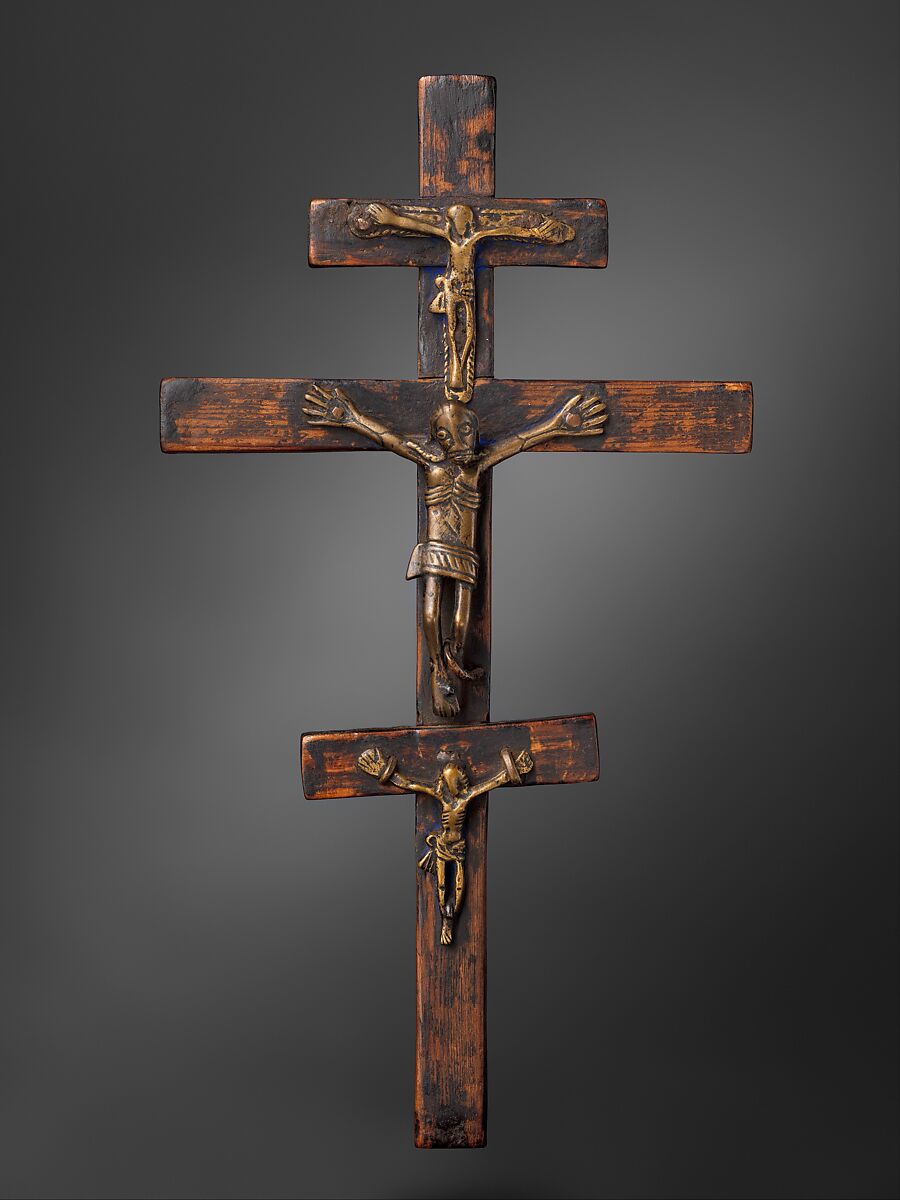
- The Triple Crucifix image shows how Christian iconography was reshaped through African artistic traditions. Use it as evidence of religious blending, or syncretism.
Causation
Be ready to explain a clear chain: voluntary conversion to Catholicism led to stronger ties with Portugal, which led to Portuguese demands for enslaved people, which led to West Central Africa becoming the largest source of captives in the transatlantic slave trade.
Continuity and Change
Use Kongo to show continuity across the Atlantic. African Christianity and naming customs did not disappear during enslavement; they carried into early African American life and identity.
Common Trap
Do not describe Kongo as simply a victim or simply a participant. The accurate picture is more complex: leaders chose conversion and took part in trade, but they could not control the scale of the slave trade once Portugal had leverage.
Common Misconceptions
- Misconception: Kongo was forced to convert to Christianity.Actually: Kongo was not forced to convert to Christianity. Its leaders converted voluntarily in 1491, which is part of why Christianity spread so widely.
- Misconception: African Catholicism was just a copy of European Catholicism.Actually: African Catholicism was not just a copy of European Catholicism. It blended Christian beliefs with local traditions, art, and customs.
- Misconception: Kongo nobles freely controlled the slave trade.Actually: Kongo nobles did participate in the slave trade, but the idea that they freely controlled it is wrong. They could not limit how many captives Europeans took.
- Misconception: Day names and saint names among early African Americans were purely European.Actually: "Day names" and saint names among early African Americans were not purely European. These naming customs had African origins in Kongo.
- Misconception: West Central Africa was a minor source region.Actually: West Central Africa was a major source region, not a minor one. Kongo and the surrounding region became the largest source of enslaved people in the entire transatlantic slave trade.
Required Sources
Excerpt of Letter from Nzinga Mbemba to Portuguese King João III, 1526
Nzinga Mbemba's letter to King João III gives a rare firsthand account of how the transatlantic slave trade harmed African societies. As ruler of Kongo, his perspective shows how some African leaders viewed and responded to European exploitation in the early 16th century.
The document also shows the complex diplomacy between African and European powers. It demonstrates how an African ruler tried to use appeals to Christian values to limit the slave trade, even as European economic and military pressure undermined his control.
Summary of the document:
- Excessive freedom given to foreign merchants is harming the Kingdom
- Quote: "Your Highness should know how our Kingdom is being lost in so many ways that it is convenient to provide for the necessary remedy, since this is caused by the excessive freedom given by your agents and officials to the men and merchants"
- Explanation: He is concerned that foreign merchants have too much liberty to trade in the Kingdom, which is causing problems.
- Abundance of foreign goods is undermining local authority
- Quote: "many of our vassals, whom we had in obedience, do not comply because they have the things in greater abundance than we ourselves"
- Explanation: The flood of foreign goods is weakening the Kingdom's control over its subjects, since they no longer depend on local rulers for these items.
- Slave trade is depopulating the country
- Quote: "the mentioned merchants are taking every day our natives, sons of the land and the sons of our noblemen and vassals and our relatives"
- Explanation: Foreign merchants are taking locals, including nobles and their relatives, leading to a significant population loss.
- Request to limit imports to necessary religious items
- Quote: "we need from those Kingdoms no more than some priests and a few people to reach in schools, and no other goods except wine and flour for the holy sacrament"
- Explanation: He wants to restrict imports to only what is needed for religious purposes, to curb the harm caused by trade.
- Appeal to ban slave trade
- Quote: "it is our will that in these Kingdoms there should not be any trade of slaves nor outlet for them"
- Explanation: He explicitly requests a ban on the slave trade within the Kingdom.
- Kidnapping of nobles and free people for slave trade
- Quote: "they kidnap even noblemen and the sons of noblemen, and our relatives, and take them to be sold to the white men who are in our Kingdoms"
- Explanation: He describes how even high-status people are being taken and sold into slavery, showing how severe the situation was.
- Difficulty in enforcing laws against slave trade
- Quote: "when they are carried to be embarked, if they are caught by our guards' men the whites allege that they have bought them but they cannot say from whom"
- Explanation: He explains how hard it was to stop the trade, since foreign traders claimed to have legally purchased people without proof.
Image of Triple Crucifix, Sixteenth to Nineteenth Century
The Triple Crucifix shows how Christian iconography was blended with African artistic and spiritual traditions. It demonstrates how Kongolese and African-descended people reshaped Christianity while keeping connections to their own cultural heritage.
This artifact highlights the creativity behind African Catholicism. Rather than simply adopting European forms, artists produced distinct Christian works that reflected local styles and meaning, helping lay foundations for later African American Christian traditions.
Related AP African American Studies Guides
Practice Questions for 1.9
1 of 10
The emergence of African Catholicism in Kongo, which blended Christian beliefs with local aesthetic and cultural traditions, is best understood as an example of which of the following processes that also influenced African American religious development?
A.
Religious assimilation, through which colonized peoples abandoned their traditional beliefs and completely adopted the religious practices of colonizing powers
B.
Religious isolation, through which communities maintained exclusively traditional spiritual practices without any external religious influence or adaptation
C.
Cultural syncretism, through which people maintain identity by adapting imposed or adopted religious systems to reflect their own traditions and values
D.
Religious imperialism, through which European powers forcibly imposed Christianity and eliminated indigenous spiritual practices and cultural traditions
Vocabulary
The following words are mentioned explicitly in the AP® course framework for this topic.Term | Definition |
|---|---|
African Catholicism | A distinct form of Christianity that emerged in the Kingdom of Kongo, blending Roman Catholic practices with local African aesthetic and cultural traditions. |
Christian culture | The religious beliefs, practices, and traditions associated with Christianity as practiced in the Kingdom of Kongo before the transatlantic slave trade. |
Christianity | A major world religion adopted by leaders in some African societies such as Kongo, often blended with local spiritual practices. |
conversion to Christianity | The adoption of Christian faith by the Kingdom of Kongo, which strengthened political ties with Portugal and facilitated trade agreements. |
copper | A metal resource that was one of the primary goods traded by the Kingdom of Kongo. |
day names | A naming practice in Kongo where children were named according to the day of the week on which they were born, often reflecting Christian and African traditions. |
enslaved Africans | People of African descent who were forcibly captured and transported across the Atlantic Ocean to be held in bondage in the Americas. |
ivory | A valuable material derived from elephant tusks, one of the primary goods traded by the Kingdom of Kongo. |
Kingdom of Kongo | A West Central African state that established political and religious ties with Portugal in the late 15th century and became a major participant in the transatlantic slave trade. |
kinship | Family relationships and connections that formed the basis for social organization, political alliances, and community structure in early West and Central African societies. |
Kongo nobles | Members of the aristocratic class in the Kingdom of Kongo who participated in the trade of enslaved people with European powers. |
lineage | Ancestral descent and family heritage that persisted among early African Americans despite the disruptions of enslavement. |
nobility | The upper class or aristocratic members of society in the Kingdom of Kongo whose conversion to Christianity helped gain mass acceptance of the religion. |
political relations | The diplomatic and governmental connections between the Kingdom of Kongo and Portugal that influenced trade agreements and military alliances. |
Roman Catholicism | The branch of Christianity led by the Pope in Rome, which became the dominant form of Christianity in Western Europe and was adopted by the Kingdom of Kongo. |
salt | A mineral commodity that was one of the primary goods traded by the Kingdom of Kongo. |
textiles | Woven or manufactured cloth products that were one of the primary goods traded by the Kingdom of Kongo. |
trade relationship | The commercial exchange and economic connections between two societies or nations, such as between the Kingdom of Kongo and Portugal. |
transatlantic slave trade | The forced migration of millions of Africans across the Atlantic Ocean to the Americas, beginning in the 16th century and lasting until the 19th century. |
West Central Africa | The geographic region that included the Kingdom of Kongo and became the largest source of enslaved people for the transatlantic slave trade to the Americas. |
Frequently Asked Questions
Why is the Kingdom of Kongo important in AP African American Studies?
Kongo shows how African political power, Christianity, trade with Portugal, and the transatlantic slave trade shaped early African American history and culture.
When did Kongo convert to Christianity?
In 1491, King Nzinga a Nkuwu and his son Nzinga Mbemba voluntarily converted the Kingdom of Kongo to Roman Catholicism.
How did Christianity affect Kongo's trade with Portugal?
Kongo's conversion strengthened its relationship with Portugal and expanded trade in goods such as ivory, salt, copper, and textiles.
How was Kongo connected to the transatlantic slave trade?
Portugal demanded access to enslaved people in exchange for military assistance, and Kongo nobles participated, though they could not limit how many captives European powers sold.
What was African Catholicism in Kongo?
African Catholicism in Kongo blended Roman Catholic beliefs with local aesthetic and cultural traditions, including art, rituals, and naming practices.
How did Kongo influence early African American culture?
Many West Central Africans brought Christian practices and naming customs, including saint names and day names, into early African American communities.
See Fiveable more often in Google
Mark Fiveable as a preferred source and Google is more likely to show you our guides in Top Stories, with a "preferred" badge in AI Mode and AI Overviews.