2.15 Maroon Societies and Autonomous Black Communities

✊🏿AP African American Studies Unit 2 Review
2.15 Maroon Societies and Autonomous Black Communities
✊🏿 AP African American Studies
2.1
African Explorers in the Americas
2.2
Departure Zones in Africa and the Slave Trade to the United States
2.3
Capture and the Impact of the Slave Trade on West African Societies
2.4
African Resistance on Slave Ships and the Antislavery Movement
2.5
Slave Auctions and the Domestic Slave Trade
2.6
Labor, Culture, and Economy
2.7
Slavery and American Law: Slave Codes and Landmark Cases
2.8
The Social Construction of Race and the Reproduction of Status
2.9
Creating African American Culture
2.10
Black Pride, Identity, and the Question of Naming
2.11
The Stono Rebellion and Fort Mose
2.12
Legacies of the Haitian Revolution
2.13
Resistance and Revolts in the United States
2.14
Black Organizing in the North: Freedom, Women's Rights, and Education
2.15
Maroon Societies and Autonomous Black Communities
2.16
Diasporic Connections: Slavery and Freedom in Brazil
2.17
African Americans in Indigenous Territory
2.18
Debates About Emigration, Colonization, and Belonging in America
2.19
Black Political Thought: Radical Resistance
2.20
Race to the Promised Land: Abolitionism and the Underground Railroad
2.21
Legacies of Resistance in African American Art and Photography
2.22
Gender and Resistance in Slave Narratives
2.23
The Civil War and Black Communities
2.24
Freedom Days: Commemorating the Ongoing Struggle for Freedom
Maroon communities were autonomous societies built by people who freed themselves from slavery and settled in remote areas across the African diaspora. They preserved blended African cultures, defended their freedom through maroon wars, and at times negotiated treaties with colonial governments.
Why This Matters for the AP African American Studies Exam
This topic builds your ability to analyze resistance as more than single revolts. Maroon societies show long-term, organized self-liberation, which connects to bigger course themes about freedom, autonomy, and cultural survival across the diaspora.
You can use this material to:
- Compare maroon communities in different regions (United States, Spanish America, Brazil, the Caribbean) for continuity and change.
- Explain causation: why people fled, how geography protected them, and why colonial governments fought or negotiated.
- Analyze required visual sources that show maroon leadership and guerrilla tactics, and consider who created the image and why.
- Build evidence-based arguments about how resistance shaped Black communities during slavery.
When you write about resistance, maroon societies give you strong examples of self-determination that go beyond a single uprising.
Key Takeaways
- Maroon communities were made up of self-emancipated people and those born free within the community, and they created autonomous spaces where African-based languages and cultural practices blended.
- They formed in remote, hidden places across the diaspora, lasting anywhere from a few years to about a century, while facing illness, starvation, and the constant threat of capture.
- In what became the United States, maroons settled in places like the Great Dismal Swamp and within Indigenous communities. They were called palenques in Spanish America and quilombos in Brazil.
- The Quilombo dos Palmares in Brazil was the largest maroon society there and lasted nearly 100 years.
- Maroon wars were organized military conflicts against colonial governments to protect freedom and autonomy, distinct from slave revolts. Some maroons signed treaties that required them to help suppress slave rebellions.
- Bayano led maroon wars against the Spanish in sixteenth-century Panama, and Queen Nanny led maroons against the English in eighteenth-century Jamaica.
Maroon Communities
Emergence Across the African Diaspora
Maroon communities were groups of people who freed themselves from slavery and built autonomous societies, often in remote and hidden environments beyond the reach of enslavers. Their length of survival varied widely, with some lasting just a few years and others continuing for nearly a century.
These communities took shape throughout the African diaspora wherever self-emancipated people could organize and defend themselves. Geography mattered: swamps, mountains, and dense terrain made it harder for colonial forces to find and recapture them.
Composition and Culture
Maroon communities included both self-emancipated people and those born free within the community. Living beyond colonial control, members blended African-based languages and cultural practices into new shared traditions. This cultural blending happened even as maroons dealt with illness, food scarcity, and the constant danger of capture.
Locations in North America
In the territory that became the United States, African Americans formed maroon communities in remote areas and within Indigenous communities.
- The Great Dismal Swamp, on the border between Virginia and North Carolina, sheltered maroon communities.
- Some freedom seekers found refuge within Indigenous communities, which could offer protection and support. (As an application, the Black Seminoles in Florida are an example of maroons living alongside an Indigenous nation, a connection developed further in Topic 2.17.)
Palenques and Quilombos
Maroon communities also formed well beyond the United States. In Spanish America they were called palenques, and in Brazil they were called quilombos.
- The Quilombo dos Palmares in Brazil was the largest maroon society in Brazil and lasted nearly 100 years.
The word quilombo comes from kilombo, meaning war camp, in Kimbundu, a Bantu language in West Central Africa. In seventeenth-century Angola, Queen Njinga created a kilombo, a sanctuary community for runaways where she offered military training to defend against the Portuguese. That history shows how African traditions of organized defense carried into maroon communities in the Americas.
Maroon Wars
Protecting Freedom and Making Treaties
Maroon leaders and their militias often staged wars against colonial governments to protect their collective freedom and autonomy. These maroon wars were organized military conflicts, not the same as a single slave revolt.
It helps to keep the difference clear:
- Maroon wars involved established communities with militias fighting to defend their independence over time.
- Slave revolts were uprisings by enslaved people, often aimed at ending their immediate enslavement.
Not every maroon community chose constant warfare. Some leaders negotiated treaties with colonial governments. In exchange for recognition of their freedom, certain treaties required maroons to help suppress slave rebellions, putting them in a complicated position between colonial authorities and enslaved people still seeking freedom.
Bayano
Bayano led a maroon community in wars against the Spanish for several years in sixteenth-century Panama. His leadership represents one of the earliest organized maroon resistance efforts in the Americas.
Queen Nanny
Queen Nanny led maroons in Jamaica in their wars against the English during the eighteenth century. She is remembered as a major leader of Jamaican maroon resistance and as a central figure in Afro-Caribbean memory and oral tradition.
Required Sources
Leonard Parkinson, a Captain of the Maroons by Abraham Raimbach, 1796
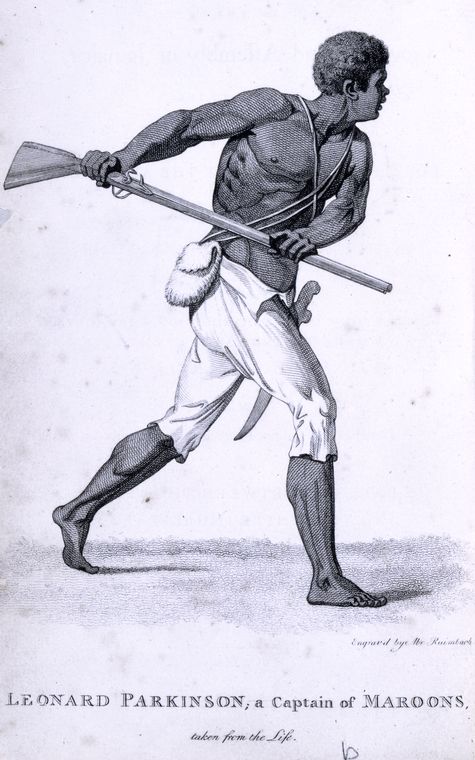
This portrait shows a Maroon captain in Jamaica during a period of active resistance against British colonial rule. As a leader, Parkinson was part of the effort to defend and maintain Maroon autonomy.
When you analyze this image, think about purpose and perspective. A portrait of a Maroon leader presents enslaved and self-emancipated people as organized and capable of self-governance, which challenges the idea that they were powerless.
The Maroons in Ambush on the Dromilly Estate in the Parish of Trelawney, Jamaica by J. Bourgoin and J. Merigot, 1801
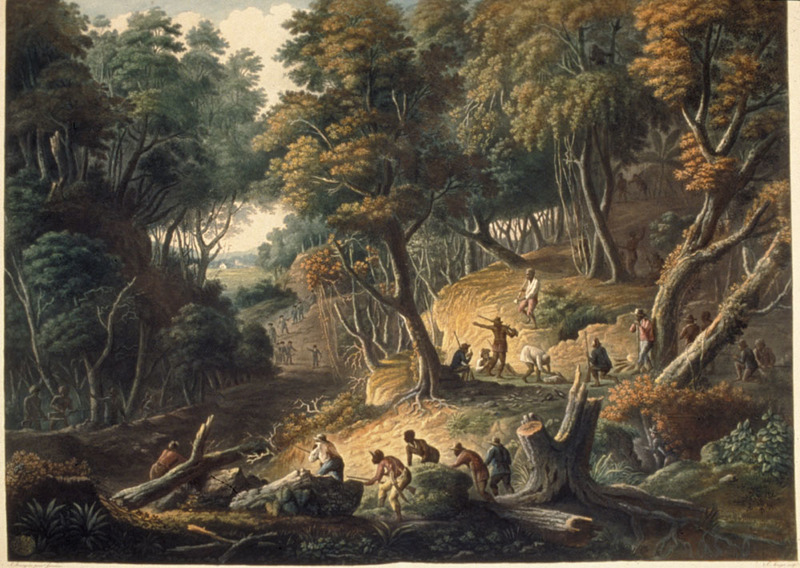
This 1801 illustration depicts Jamaican Maroons using guerrilla tactics against British colonial forces. It highlights how maroons used terrain, ambush, and knowledge of the landscape to resist recapture and defend their freedom.
The image also reveals European views of maroon communities. Consider how the creators may have wanted to portray the Maroons, since the picture reflects colonial anxieties about communities that resisted the plantation system.
The Hunted Slaves by Richard Ansdell, 1862
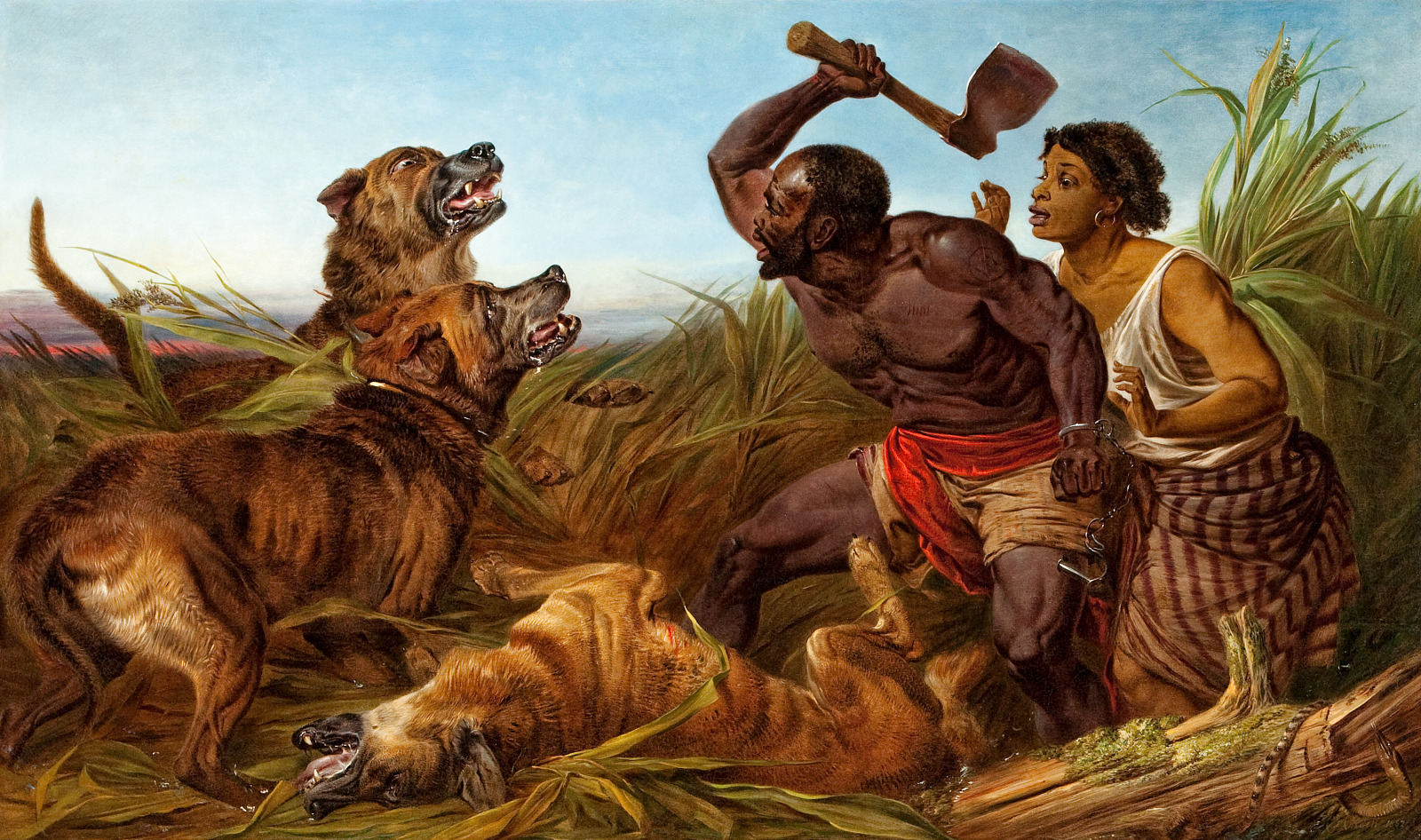
This painting shows the violent pursuit of people who escaped slavery, capturing the danger and fear that freedom seekers faced. Created during the Civil War era, it speaks to the broader struggle for emancipation and the systemic violence built into slavery.
When you use this source, connect it to the constant threat of capture that maroon communities lived with and to the larger story of resistance.
How to Use This on the AP African American Studies Exam
Using Sources Effectively
For the required images, do not just describe what you see. Identify the creator, the time period, and the likely purpose. Ask whether the image celebrates maroon leadership, records resistance, or reflects colonial fears. Tie the source back to autonomy, resistance, and self-governance.
Comparison
Practice comparing maroon societies across regions. Note that palenques (Spanish America) and quilombos (Brazil) served similar functions in different colonial settings, and that the Quilombo dos Palmares stands out for its size and long survival.
Causation and Continuity
Be ready to explain why maroon communities formed (escape from slavery, remote geography, organized defense) and why they lasted or fell (military strength, treaties, colonial pressure). Connecting kilombo traditions from Angola to quilombos in Brazil shows continuity of African practices across the diaspora.
Common Trap
If a prompt asks about resistance, do not treat maroon wars and slave revolts as the same thing. Use maroon wars to show sustained, community-based struggle for autonomy.
Common Misconceptions
- Misconception: Maroon communities were only in the United States.Actually: Maroon communities were not only in the United States. Most enslaved Africans were taken to other parts of the Americas, and maroon societies were widespread in the Caribbean, Spanish America, and Brazil.
- Misconception: Maroon wars and slave revolts are interchangeable.Actually: Maroon wars and slave revolts are not interchangeable. Maroon wars were organized conflicts by established communities defending autonomy, while revolts were uprisings against enslavement.
- Misconception: Treaties with colonial governments always meant full freedom on maroons' terms.Actually: Treaties with colonial governments did not always mean full freedom on maroons' terms. Some treaties required maroons to help capture or suppress other enslaved people, which created difficult tensions.
- Misconception: Maroon communities were disorganized hideouts.Actually: Maroon communities were not disorganized hideouts. They had leadership, militias, farming, and blended cultural traditions that helped them survive for years or even generations.
- Misconception: Surviving for a long time was guaranteed.Actually: Surviving for a long time was not guaranteed. Some communities lasted only a few years because of illness, starvation, and the constant threat of capture.
Related AP African American Studies Guides
Practice Questions for 2.15
1 of 10
Accounts of the Great Dismal Swamp maroon communities, recorded by nineteenth-century observers including Harriet Beecher Stowe, described thousands of formerly enslaved people living in remote terrain and maintaining African-based cultural practices. These written descriptions were created for Northern white abolitionist audiences during the antebellum period. The significance of these accounts can best be explained as providing evidence that maroon communities represented sustained alternatives to enslavement, challenging the assumption that slavery was inevitable or that resistance was impossible.
A.
These accounts served as historical documentation of maroon communities' cultural practices and survival strategies, preserving evidence of African-based traditions maintained in remote terrain during the antebellum period
B.
These accounts demonstrated to Southern slaveholder audiences that maroon autonomy was achievable and sustainable, challenging their assumptions about the necessity and permanence of slavery as a social system
C.
These accounts demonstrated to Northern audiences that maroon autonomy was achievable and sustainable, undermining pro-slavery arguments about enslaved people's incapacity for self-governance
D.
These accounts provided Northern abolitionist audiences with emotionally compelling narratives about maroon resistance, thereby strengthening antislavery sentiment through moral persuasion rather than political argument
Vocabulary
The following words are mentioned explicitly in the AP® course framework for this topic.Term | Definition |
|---|---|
African diaspora | The dispersal and communities of people of African descent throughout the world, particularly resulting from the transatlantic slave trade and subsequent migration. |
autonomous spaces | Independent communities and territories where people governed themselves and maintained control over their own affairs and cultural practices. |
colonial governments | The administrative authorities established by European powers to govern territories and populations in colonized regions. |
Great Dismal Swamp | A remote wetland region between Virginia and North Carolina where African Americans formed maroon communities. |
maroon communities | Communities of self-emancipated or escaped enslaved people who established independent settlements, often in remote areas. |
maroon leaders | Individuals who organized and led maroon communities in their resistance against colonial rule and efforts to maintain autonomy. |
maroon wars | Military conflicts staged by maroon communities and their leaders against colonial governments to protect their collective freedom and autonomy. |
palenques | Maroon communities in Spanish America formed by self-emancipated and free African people. |
Quilombo dos Palmares | The largest and longest-lasting maroon society in Brazil, which persisted for nearly 100 years. |
quilombos | Maroon communities in Brazil formed by self-emancipated and free African people. |
self-emancipated people | Enslaved individuals who escaped bondage and freed themselves from slavery. |
slave revolt | An armed uprising or rebellion by enslaved people against their enslavers and the system of slavery. |
treaties | Formal agreements between maroon communities and colonial governments, often involving maroon assistance in suppressing slave rebellions in exchange for recognition of their autonomy. |
Frequently Asked Questions
What are maroon societies?
Maroon societies were autonomous communities formed by self-emancipated people and people born free within those communities. They often developed in remote areas beyond direct colonial control.
Where did maroon communities emerge?
Maroon communities emerged across the African diaspora, including the Great Dismal Swamp in what became the United States, Spanish America, Brazil, Jamaica, and Panama.
What were palenques and quilombos?
Palenques were maroon communities in Spanish America, and quilombos were maroon communities in Brazil. Both terms refer to autonomous Black communities created outside enslavers’ control.
Why is Quilombo dos Palmares important?
Quilombo dos Palmares was the largest maroon society in Brazil and lasted nearly 100 years, making it a major example of long-term Black autonomy and resistance.
What were maroon wars?
Maroon wars were organized conflicts in which maroon leaders and militias fought colonial governments to protect collective freedom and autonomy. They were distinct from single slave revolts.
How should I use maroon societies on the AP African American Studies exam?
Use maroon societies as evidence of organized self-liberation, cultural survival, and autonomous Black community-building. They are also useful for analyzing required images of maroon leadership and tactics.
See Fiveable more often in Google
Mark Fiveable as a preferred source and Google is more likely to show you our guides in Top Stories, with a "preferred" badge in AI Mode and AI Overviews.