4.18 Black Life in Theater, TV, and Film

✊🏿AP African American Studies Unit 4 Review
4.18 Black Life in Theater, TV, and Film
✊🏿 AP African American Studies
4.1
The Négritude and Negrismo Movements
4.2
Anticolonialism and Black Political Thought
4.3
African Americans and the Second World War: The Double V Campaign and the G.I. Bill
4.4
Discrimination, Segregation, and the Origins of the Civil Rights Movement
4.5
Redlining and Housing Discrimination
4.6
Major Civil Rights Organizations
4.7
Black Women's Leadership and Grassroots Organizing in the Civil Rights Movement
4.8
The Arts, Music, and the Politics of Freedom
4.9
Black Religious Nationalism and the Black Power Movement
4.10
The Black Arts Movement
4.11
The Black Panther Party for Self-Defense
4.12
Black Is Beautiful and Afrocentricity
4.13
The Black Feminist Movement, Womanism, and Intersectionality
4.14
Interlocking Systems of Oppression
4.15
Economic Growth and Black Political Representation
4.16
Demographic and Religious Diversity in Contemporary Black Communities
4.17
The Evolution of African American Music: From Spirituals to Hip-Hop
4.18
Black Life in Theater, TV, and Film
4.19
African Americans and Sports
4.20
Science, Medicine, and Technology in Black Communities
4.21
Black Studies, Black Futures, and Afrofuturism
Black artists in theater, TV, and film built their own platforms to show realistic, complex portrayals of Black life and to push back against racist stereotypes in early American media. Filmmaker Oscar Micheaux, the dance program Soul Train, Black theater companies that grew out of the Great Migration, and a wide range of TV shows all reflect how migration and economic growth shaped representation across stage and screen.
Why This Matters for the AP African American Studies Exam
This topic supports the kind of thinking AP African American Studies rewards: connecting cultural production to history, migration, and economics. You should be able to describe how Black creators used stage and screen to challenge stereotypes and to explain why where people moved and how communities grew changed what audiences saw.
The required sources here are visual and performance based, so practice analyzing what a lobby card, a photograph, a dance video, or a playbill reveals about Black creativity and self-representation. Connecting this topic to the Great Migration and to the growth of the Black middle class is the kind of cause-and-effect link that shows up across the course.
Key Takeaways
- Oscar Micheaux made nearly 50 films between the 1920s and 1940s with all-Black casts that presented Black characters as realistic and complex, countering racist depictions in early cinema.
- Soul Train, created by Don Cornelius in 1971, was a popular African American dance program modeled on American Bandstand that spotlighted Black music, dance, and style.
- Black theater grew in urban centers where migrants settled during the Great Migration, producing work on political and social issues as well as depictions of Black joy.
- Since the 1970s, TV has shown more of the diversity within Black life, including upward mobility and strong family units.
- The required sources (Micheaux's The Betrayal lobby card, the Soul Train photo and dance video, and the Fences playbill) all show Black creators telling their own stories.
African American Representation on Stage and Screen
Oscar Micheaux and Realistic Black Portrayals
Oscar Micheaux pioneered independent Black filmmaking to counter the racist depictions of African Americans that were common in early twentieth century cinema. He produced nearly 50 films between the 1920s and 1940s, presenting Black life and characters as realistic and complex.
- He created opportunities for all-Black casts to perform a range of roles that challenged negative stereotypes.
- His work paved the way for future Black directors and producers in television and film.
Example application: Micheaux's 1920 film Within Our Gates is often discussed as a response to the racist film The Birth of a Nation, and Body and Soul (1925) featured Paul Robeson. These films are useful examples of his approach, not required AP content for this topic.
Soul Train's Cultural Impact
Soul Train was a popular African American dance program created by Don Cornelius in 1971. It was modeled on American Bandstand and became a major platform for Black music, dance, and fashion.
- The show gave national visibility to Black performers and to dance styles created in Black communities.
- As an application, the long run of the show and later tributes like American Soul on BET (2019) show its lasting cultural reach.
The Soul Train photograph and the dance video are required sources, so be ready to explain what they reveal about Black culture, creativity, and self-representation in media.
Migration and Economic Influences on Media
Black Theater in Urban Centers
Black theater in the twentieth century grew in urban centers where migrants settled during the Great Migration. Professional and community theater companies produced plays that tackled political and social issues important to Black life, while also offering depictions of Black joy in both dramatic and musical forms.
- August Wilson's play Fences (1987) is a required source for this topic. Set in 1950s Pittsburgh, it follows a former Negro League baseball player and explores family, work, and racial barriers.
- Example applications: companies like the American Negro Theater and plays like Lorraine Hansberry's A Raisin in the Sun are useful illustrations of Black theater's growth, but they are examples rather than required content here.
Diverse Black TV Portrayals
Since the 1970s, African Americans and African American life have been shown in ways that try to capture the diversity within Black culture. Two patterns are worth knowing:
- Upward mobility: shows like The Jeffersons (1975-1985) and The Fresh Prince of Bel-Air (1990-1996) portrayed Black families moving up and navigating wealthier settings.
- Strong family units: series like Good Times (1974-1979) and Black-ish (2014-2022) center close, resilient families.
These shifts connect to economic growth and to the expansion of the Black middle class, which is why this topic links cultural production to history and economics.
Required Sources
Lobby Card for The Betrayal, by Oscar Micheaux, 1948
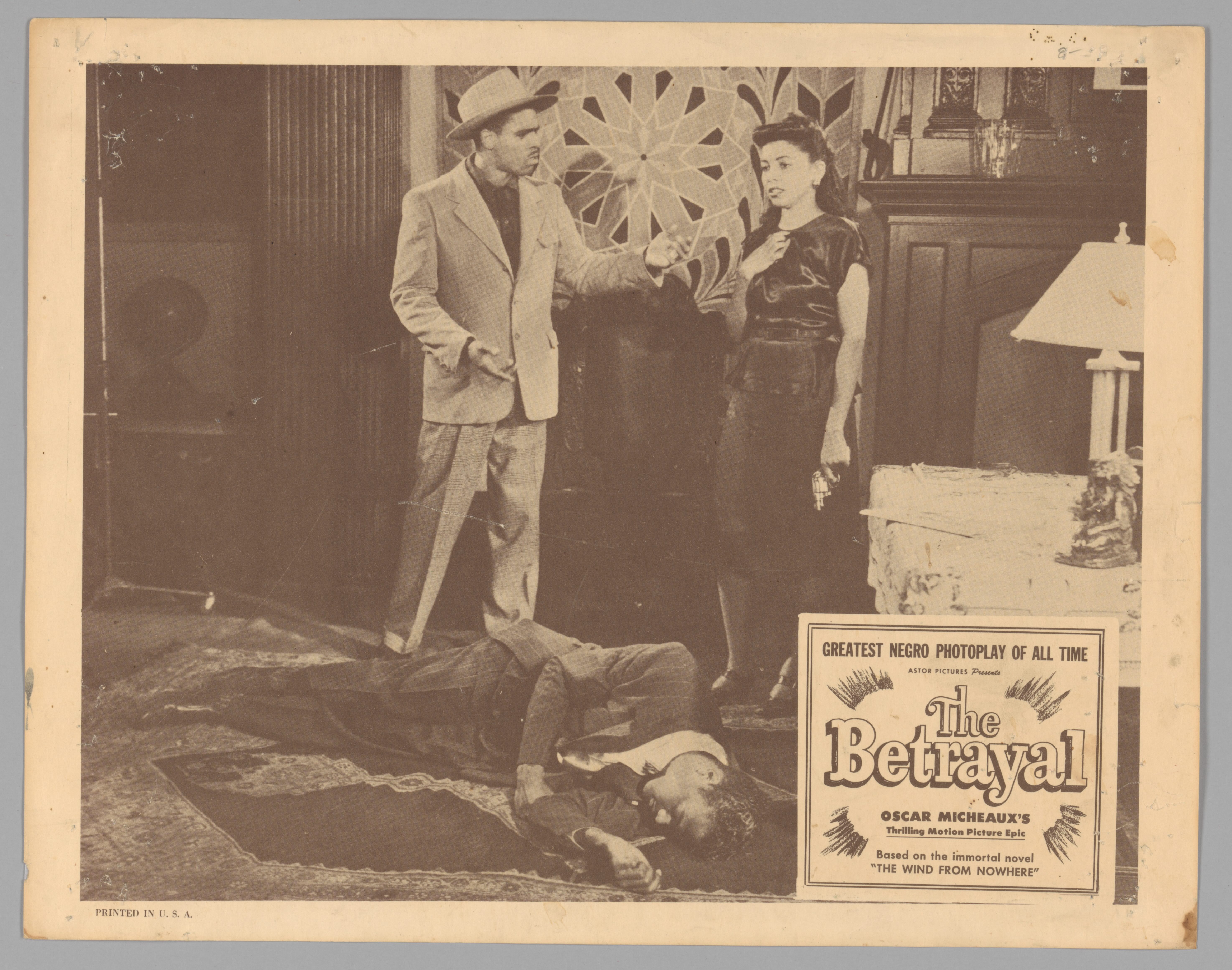
Oscar Micheaux's 1948 film The Betrayal reflects his work as one of the most prolific Black filmmakers of the early twentieth century. The lobby card is evidence of a parallel film industry created by and for Black audiences, showing how African American artists told their own stories despite systemic barriers in mainstream Hollywood.
When you analyze this source, focus on how it counters stereotypes and shows Black self-representation in an era of segregation and discrimination.
Photograph of Soul Train, Circa 1970
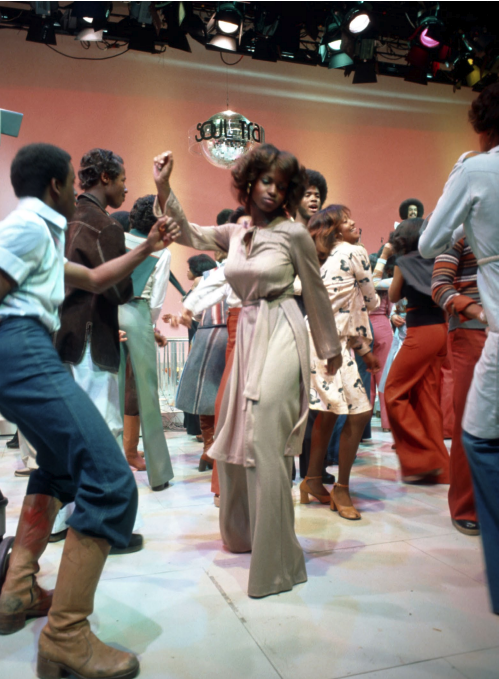
This photograph captures how Soul Train showcased African American music, dance, and culture to a wide audience. The show gave Black artists and performers unusual visibility and helped popularize Black music genres during a key era in American popular culture.
Use this image to explain how the program celebrated Black identity, fashion, and dance at a time when these images were rare in mainstream media.
"Soul Train It's a Vibe: The Best Soul Train Line Dances" (video, 4:31)
This required video highlights the Soul Train Line, where dancers formed two lines and took turns moving down the middle. When you study it, notice how the dancing functions as a public celebration of Black creativity, style, and community.
Playbill for Fences, by August Wilson, 1987
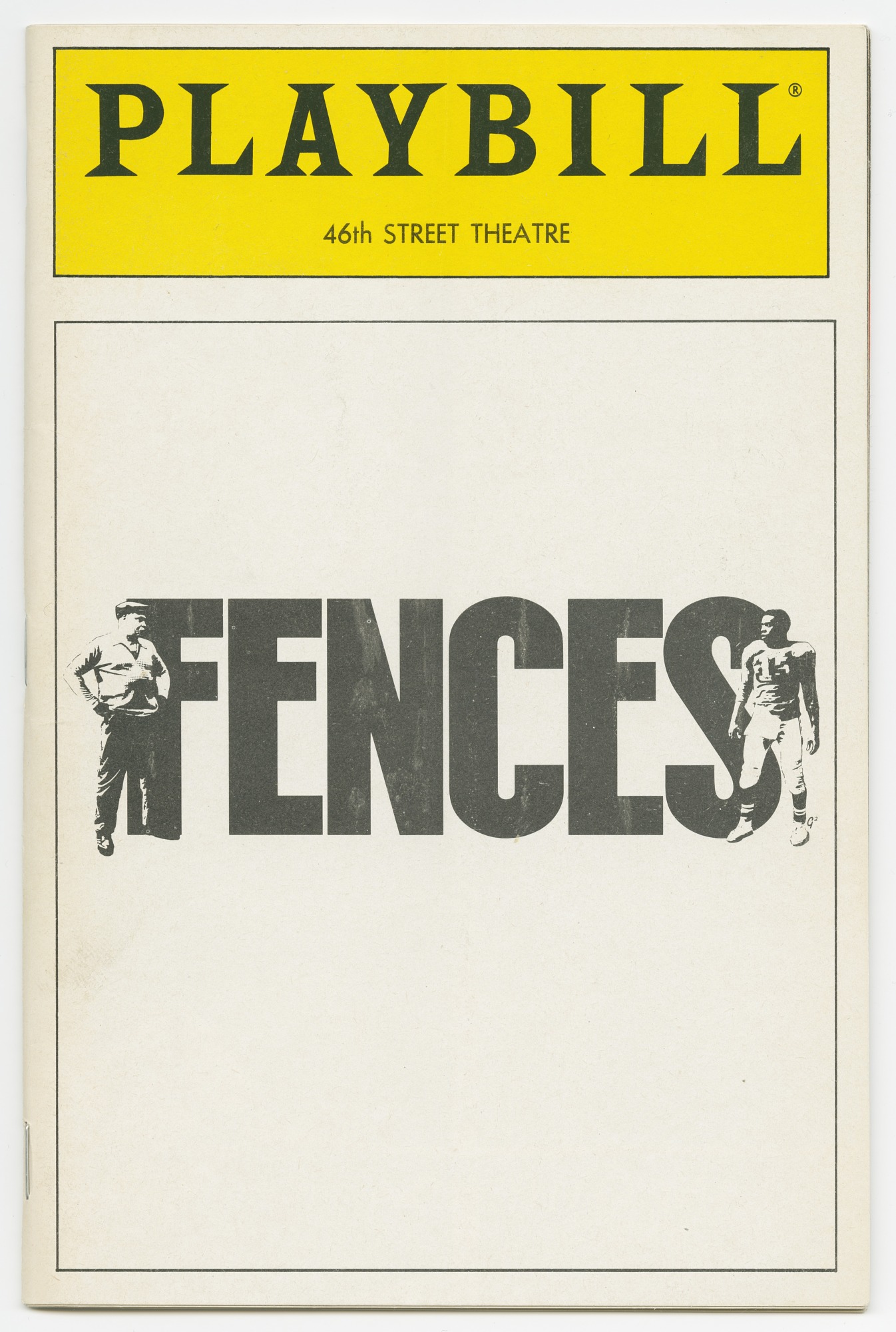
August Wilson's Fences brought African American experiences to mainstream theater audiences in 1987. Set in 1950s Pittsburgh, the play uses the story of a former Negro League baseball player to explore racial discrimination, family dynamics, and the long shadow of the past.
The playbill is useful for showing how Black theater addressed serious social issues while reaching wide audiences, connecting to the growth of Black theater after the Great Migration.
How to Use This on the AP African American Studies Exam
Using Sources Effectively
Treat each required source as evidence, not just a picture. For the lobby card, the Soul Train photo and video, and the Fences playbill, ask: who created this, who was the audience, and how does it show Black self-representation or challenge stereotypes? Tie your answer to specific details you can see or describe.
Making Connections
Practice linking this topic to causes. Explain how the Great Migration helped Black theater grow in cities, and how economic growth and the rising Black middle class shaped TV portrayals of upward mobility and strong families. These cause-and-effect links are exactly the kind of reasoning the course asks for.
Common Trap
Do not turn your example shows or films into the main point. Use named required content (Micheaux, Soul Train, the Great Migration link, and the post-1970s TV patterns) as your backbone, and bring in other shows or films only as supporting examples that you clearly label as examples.
Common Misconceptions
- Misconception: Soul Train was just a music show.Actually: Soul Train was not just a music show. It was a dance program modeled on American Bandstand that highlighted Black dance, fashion, and culture, not only performances.
- Misconception: Oscar Micheaux worked within mainstream Hollywood.Actually: Oscar Micheaux did not work within mainstream Hollywood. He built an independent body of work with all-Black casts to counter racist depictions, producing nearly 50 films between the 1920s and 1940s.
- Misconception: Black theater's growth was random.Actually: Black theater's growth was tied to migration, not random. Companies emerged in urban centers where people settled during the Great Migration.
- Misconception: Shows like Insecure, A Raisin in the Sun, or the American Negro Theater are required named content for this topic.Actually: Shows like Insecure, A Raisin in the Sun, or the American Negro Theater are helpful examples, but they are not the required named content for this topic. Lead with the required people, programs, and patterns and use these as support.
Related AP African American Studies Guides
- 4.9 Black Religious Nationalism and the Black Power Movement
- 4.11 The Black Panther Party for Self-Defense
- 4.5 Redlining and Housing Discrimination
- 4.8 The Arts, Music, and the Politics of Freedom
- 4.12 Black Is Beautiful and Afrocentricity
- 4.4 Discrimination, Segregation, and the Origins of the Civil Rights Movement
Practice Questions for 4.18
1 of 10
Which of the following best describes a continuity between Oscar Micheaux's independent filmmaking in the 1920s and the creation of twenty-first-century television series like Insecure and Black-ish?
A.
Both utilized mainstream studio funding to appease traditional industry gatekeepers and present multidimensional portrayals of Black communities.
B.
Both utilized mainstream studio funding to appease traditional industry gatekeepers and present exclusively tragic portrayals of Black communities.
C.
Both utilized Black creative control to bypass traditional industry gatekeepers and present multidimensional portrayals of Black communities.
D.
Both utilized Black creative control to bypass traditional industry gatekeepers and present exclusively tragic portrayals of Black communities.
Vocabulary
The following words are mentioned explicitly in the AP® course framework for this topic.Term | Definition |
|---|---|
all-Black casts | Film and television productions featuring exclusively African American actors and performers. |
Black theater | Theater companies and productions created by and for African Americans, particularly in urban centers, that addressed political and social issues relevant to Black life and celebrated Black cultural expression. |
Great Migration | The movement of approximately six million African Americans from the South to the North, Midwest, and western United States in waves from the 1910s to 1970s in search of economic opportunities and safety. |
negative stereotypes | Oversimplified and derogatory generalizations about African Americans used in early cinema and media. |
Oscar Micheaux | An African American filmmaker who produced nearly 50 films between the 1920s and 1940s, creating opportunities for all-Black casts and challenging negative stereotypes in cinema. |
racist depictions | Negative, stereotypical, and dehumanizing portrayals of African Americans in early twentieth century cinema that perpetuated harmful racial stereotypes. |
representations of African Americans | Depictions of Black people and Black life in media, including television and film, that reflect varying degrees of diversity, authenticity, and social commentary. |
Soul Train | A popular African American dance and music television program created by Don Cornelius in 1971, modeled on American Bandstand. |
upward mobility | The movement of individuals or groups to higher socioeconomic status, often depicted in television shows through characters achieving professional success and improved living standards. |
Frequently Asked Questions
What is AP African American Studies 4.18 about?
Topic 4.18 is about how African Americans represented Black life on stage, television, and film in the twentieth and twenty-first centuries. Focus on Oscar Micheaux, Soul Train, Black theater after the Great Migration, and TV portrayals of upward mobility and strong family units.
Why is Oscar Micheaux important?
Oscar Micheaux made nearly 50 films between the 1920s and 1940s and presented Black characters as realistic and complex. His independent films countered racist depictions in early cinema and created opportunities for all-Black casts.
Why does Soul Train matter for AP African American Studies?
Soul Train was a Black dance program created by Don Cornelius in 1971 and modeled on American Bandstand. It gave national visibility to Black music, dance, fashion, and creativity, making it important evidence for Black self-representation in media.
How did the Great Migration shape Black theater?
Black theater grew in urban centers where migrants settled during the Great Migration. Professional and community theater companies used the stage to address political and social issues and to show Black joy in dramatic and musical forms.
What TV examples should I know for this topic?
Know that shows since the 1970s tried to capture more diversity within Black life. The Jeffersons and The Fresh Prince of Bel-Air show upward mobility, while Good Times and Black-ish emphasize strong family units.
What required sources should I know for Topic 4.18?
Know the lobby card for The Betrayal, the Soul Train photograph, the Soul Train dance video, and the playbill for Fences. Use them to analyze audience, representation, performance, and Black creators telling their own stories.
See Fiveable more often in Google
Mark Fiveable as a preferred source and Google is more likely to show you our guides in Top Stories, with a "preferred" badge in AI Mode and AI Overviews.