2.17 African Americans in Indigenous Territory

✊🏿AP African American Studies Unit 2 Review
2.17 African Americans in Indigenous Territory
✊🏿 AP African American Studies
2.1
African Explorers in the Americas
2.2
Departure Zones in Africa and the Slave Trade to the United States
2.3
Capture and the Impact of the Slave Trade on West African Societies
2.4
African Resistance on Slave Ships and the Antislavery Movement
2.5
Slave Auctions and the Domestic Slave Trade
2.6
Labor, Culture, and Economy
2.7
Slavery and American Law: Slave Codes and Landmark Cases
2.8
The Social Construction of Race and the Reproduction of Status
2.9
Creating African American Culture
2.10
Black Pride, Identity, and the Question of Naming
2.11
The Stono Rebellion and Fort Mose
2.12
Legacies of the Haitian Revolution
2.13
Resistance and Revolts in the United States
2.14
Black Organizing in the North: Freedom, Women's Rights, and Education
2.15
Maroon Societies and Autonomous Black Communities
2.16
Diasporic Connections: Slavery and Freedom in Brazil
2.17
African Americans in Indigenous Territory
2.18
Debates About Emigration, Colonization, and Belonging in America
2.19
Black Political Thought: Radical Resistance
2.20
Race to the Promised Land: Abolitionism and the Underground Railroad
2.21
Legacies of Resistance in African American Art and Photography
2.22
Gender and Resistance in Slave Narratives
2.23
The Civil War and Black Communities
2.24
Freedom Days: Commemorating the Ongoing Struggle for Freedom
In the 1800s, the spread of slavery in the South created two very different Black-Indigenous relationships. Some African American freedom seekers found refuge and kinship among the Seminoles in Florida and fought beside them, while several large Indigenous nations enslaved African Americans, adopted slave codes, and over time hardened racial lines that pushed people of African descent out of tribal belonging.
Why This Matters for the AP African American Studies Exam
This topic shows that Black-Indigenous relationships in the United States were not one single story. You can use it to analyze cause and effect (how the expansion of slavery shaped these relationships) and continuity and change (how kinship gave way to rigid racial hierarchy). The required sources here are useful for source analysis practice, since they ask you to think about who created an image or document and what it reveals about Black life inside Indigenous territory.
When you build arguments about resistance, freedom, and the reach of racial slavery, this topic gives you specific evidence: the Black Seminoles and the Second Seminole War on one side, and Indigenous slave codes, slave patrols, and forced removal on the other.
Key Takeaways
- Some African American maroons found refuge among the Seminoles in Florida, were welcomed as kin, and fought alongside them against relocation in the Second Seminole War (1835 to 1842).
- Several large Indigenous nations enslaved African Americans and carried enslaved people with them when the federal government forced their removal during the Trail of Tears.
- These nations adopted slave codes, created slave patrols, and helped recapture Black people who fled for freedom.
- Codifying racial slavery hardened racial lines, broke Black-Indigenous kinship ties, and redefined mixed-race members as permanent outsiders.
- The same era produced both alliance and enslavement, so avoid flattening Black-Indigenous relations into one story.
Slavery's Expansion and Black-Indigenous Relations
The growth of slavery in the United States South pulled Black and Indigenous communities into very different relationships. In some places, African American freedom seekers were welcomed and protected. In others, they were enslaved under codes and patrols that looked a lot like those in white-controlled southern states. Holding both of these realities together is the point of this topic.
Maroons and the Seminoles
Maroons were formerly enslaved people and their descendants who escaped slavery and built communities in remote places. In Florida, many maroons found refuge among the Seminoles and were welcomed as kin. They fought alongside the Seminoles to resist forced relocation during the Second Seminole War from 1835 to 1842.
Out of these close ties came communities of Black Seminoles who carried both African and Seminole traditions. Their alliance shows how Black and Indigenous people sometimes joined a shared struggle against forced removal and racial slavery.
Indigenous Enslavement of African Americans
At the same time, many African Americans were enslaved by peoples of the five large Indigenous nations. When the federal government forcibly removed these nations from their homelands during the Trail of Tears, the Indigenous enslavers took the African Americans they had enslaved with them to Indian Territory in present-day Oklahoma.
Some of these nations adopted forms of chattel slavery similar to those of white southern enslavers. Their decision to take up slavery was tied to the pressures of survival, sovereignty, and land in a system controlled by white settler society.
In the original guide, this group is sometimes called the "Five Civilized Tribes." That older label (the Cherokee, Choctaw, Chickasaw, Creek/Muscogee, and Seminole) appears in some sources, but the course refers to them as the five large Indigenous nations.
Slave Codes and Slave Patrols
The five large Indigenous nations adopted slave codes, created slave patrols, and assisted in recapturing enslaved Black people who tried to flee for freedom. These codes restricted the daily lives of enslaved African Americans, and the patrols made escape even more dangerous. Cooperation between Indigenous and white enslavers tightened the net around people seeking freedom.
Hardening Racial Lines
Codifying racial slavery inside Indigenous communities hardened racial lines. Earlier, kinship ties, intermarriage, and shared culture had allowed some people of Black and Indigenous ancestry to belong. As racial slavery took hold, those connections were severed. Mixed-race members were redefined as permanent outsiders, stripped of recognition and excluded from full belonging.
Required Sources
Diary Entry Recounting the Capture of 41 Black Seminoles by Gen. Thomas Sidney Jesup, 1836
This account comes from the U.S. military side of the Second Seminole War. As you analyze it, think about perspective: it is written by a general leading the campaign against the Seminoles and their Black allies, so it reflects the goals of removal rather than the experiences of the people being captured.
Abraham, a Black Seminole leader, 1863
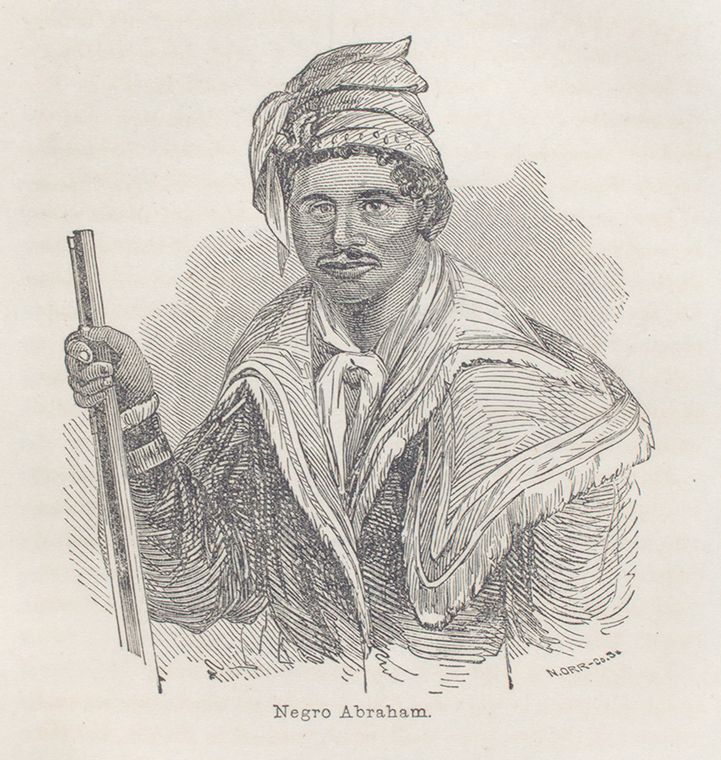
Abraham was a leader among the Black Seminoles. His role points to the alliances and strategies African Americans used in their pursuit of freedom and to the close ties between maroons and the Seminole Nation.
Gopher John, a Black Seminole leader and interpreter, 1863
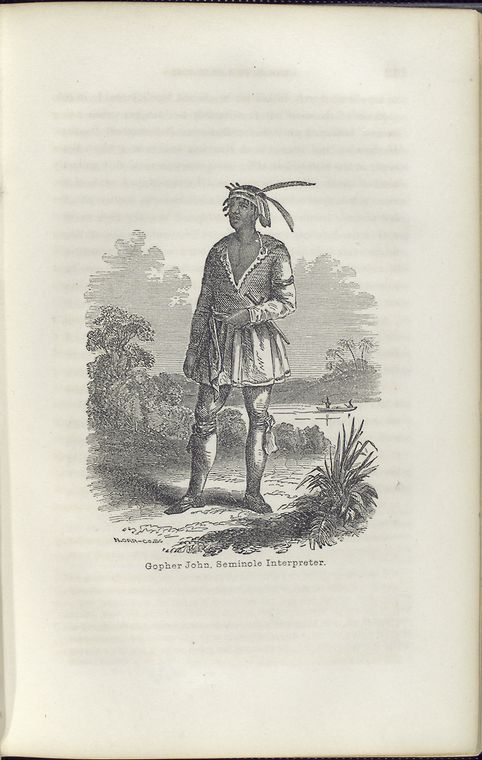
Gopher John served as a Black Seminole leader and interpreter. As an interpreter, he helped communication between the Seminoles and the U.S. government, which shows the agency and resilience of African Americans who found refuge and built new identities within Native American societies.
Arkansas Petition for Freedmen's Rights, 1869
This petition was submitted by formerly enslaved people connected to the Choctaw and Chickasaw Nations after emancipation. It shows their push for citizenship, land, and full rights inside those nations, and it reflects the long aftermath of slavery in Indian Territory.
". . . there are three thousand persons of African descent living and residing in the Choctaw and Chickasaw Nations, who were formerly held in servitude by said Nations, and who are desirous of remaining in said Nations and enjoying all the rights and privileges of Citizens thereof.
So that all persons of African descent may remain in said Nations; select and hold forty (40) acres of Land each and be entitled to all the rights and privileges of any class of Citizens in said Nations including the right of Suffrage."
How to Use This on the AP African American Studies Exam
Using Sources Effectively
For each required source, name the creator and their point of view. A diary by General Jesup serves the goal of removal, while portraits of Abraham and Gopher John and the Arkansas petition center Black Seminole leadership and the demands of formerly enslaved people. Ask what each source reveals and what it leaves out.
Causation
Be ready to explain how the expansion of slavery in the South drove both outcomes: refuge and alliance with the Seminoles, and enslavement and slave codes within other Indigenous nations.
Continuity and Change
Trace the shift from kinship and belonging to rigid racial hierarchy. Earlier kinship ties gave way to codified racial slavery that redefined mixed-race members as outsiders.
Common Trap
Do not treat Black-Indigenous history as one uniform story. The Seminole alliance and the enslavement of African Americans by other nations happened in the same era, and a strong answer holds both.
Common Misconceptions
- Misconception: All Indigenous nations protected escaped enslaved people.Actually: Not true. Some welcomed maroons as kin, but several large nations enslaved African Americans and helped recapture those who fled.
- Misconception: Black Seminoles were just enslaved people of the Seminoles.Actually: Many were free people and allies who fought beside the Seminoles, and they formed distinct communities with their own traditions.
- Misconception: The Trail of Tears only removed Indigenous peoples.Actually: Indigenous enslavers carried the African Americans they had enslaved with them to Indian Territory.
- Misconception: The Thirteenth Amendment immediately freed everyone.Actually: Freedom for people enslaved by Indigenous nations came through later treaties, and even then those treaties did not automatically grant tribal citizenship rights, which is why documents like the 1869 Arkansas petition exist.
- Misconception: Racial lines in Indigenous communities were always rigid.Actually: The hardening of racial slavery is what severed earlier kinship ties and pushed mixed-race members out of belonging.
Related AP African American Studies Guides
Practice Questions for 2.17
1 of 10
The 1869 Arkansas Petition for Freedmen's Rights claims that formerly enslaved people held by the Choctaw and Chickasaw Nations should retain land and citizenship rights. Which of the following best describes the evidence the petitioners use to support this claim?
A.
The petitioners provide statistical data proving that enslaved people generated greater wealth than Indigenous landowners
B.
The petitioners argue that Cherokee slave codes were unconstitutional and therefore unenforceable against them
C.
The petitioners cite federal treaties guaranteeing that all residents of Indigenous Nations would receive equal voting rights
D.
The petitioners assert that their long residence and labor in the Nations entitled them to equal legal status and property rights
Vocabulary
The following words are mentioned explicitly in the AP® course framework for this topic.Term | Definition |
|---|---|
Black-Indigenous kinship ties | Family and social relationships between African Americans and Indigenous peoples that were severed by the codification of racial slavery. |
five large Indigenous nations | Major Native American nations, including the Cherokee, Creek, Chickasaw, Choctaw, and Seminole, many of whom enslaved African Americans. |
maroons | African American freedom seekers who escaped slavery and established independent communities, often in remote areas. |
mixed-race members | Individuals of both African American and Indigenous ancestry whose community status and recognition were eliminated by racial slavery codification. |
racial slavery | A system of enslavement based on racial classification that created permanent, hereditary bondage and rigid racial hierarchies. |
Second Seminole War | A conflict from 1835 to 1842 between the Seminole Nation and the United States federal government over forced relocation, during which Black Seminoles fought alongside Indigenous resistance. |
Seminoles | A Native American people of Florida who provided refuge to African American maroons and resisted federal relocation policies. |
slave codes | Laws that defined and regulated slavery, establishing it as a race-based condition and imposing restrictions on the movement, assembly, weapons possession, and other activities of enslaved people. |
slave patrols | Armed groups organized by Indigenous nations to monitor, capture, and return enslaved African Americans who attempted to escape. |
slavery expansion | The geographic and demographic growth of the enslaved labor system in the United States South during the 18th and 19th centuries. |
Trail of Tears | The forced relocation of Indigenous nations from their southeastern homelands to Oklahoma by the federal government, during which enslaved African Americans were forcibly removed with their Indigenous enslavers. |
Frequently Asked Questions
What is AP African American Studies 2.17 about?
Topic 2.17 explains how slavery's expansion shaped Black-Indigenous relations, including Black Seminole alliances, African Americans enslaved in Indigenous nations, slave codes, and the Trail of Tears.
Who were the Black Seminoles?
Black Seminoles were people of African descent who found refuge among the Seminoles in Florida, formed distinct communities, and built political and kinship ties with the Seminole Nation.
How did the Seminoles relate to African American maroons?
Many maroons were welcomed by the Seminoles as kin and allies, and they resisted forced relocation alongside Seminole communities during the Second Seminole War.
How did some Indigenous nations participate in slavery?
Several large Indigenous nations enslaved African Americans, adopted slave codes, created slave patrols, and carried enslaved people with them during forced removal to Indian Territory.
What did the Arkansas Petition for Freedmen's Rights show?
The 1869 petition showed formerly enslaved people connected to the Choctaw and Chickasaw Nations demanding citizenship, land, suffrage, and full rights after emancipation.
How should I use this topic on the AP African American Studies exam?
Use it to show complexity: Black-Indigenous relations included refuge and alliance in some cases and enslavement, exclusion, and racial hierarchy in others.
See Fiveable more often in Google
Mark Fiveable as a preferred source and Google is more likely to show you our guides in Top Stories, with a "preferred" badge in AI Mode and AI Overviews.