1.4 Africa's Ancient Societies

✊🏿AP African American Studies Unit 1 Review
1.4 Africa's Ancient Societies
✊🏿 AP African American Studies
1.1
What Is African American Studies?
1.2
The African Continent: A Varied Landscape
1.3
Population Growth and Ethnolinguistic Diversity
1.4
Africa's Ancient Societies
1.5
The Sudanic Empires: Ghana, Mali, and Songhai
1.6
Learning Traditions
1.7
Indigenous Cosmologies and Religious Syncretism
1.8
Culture and Trade in Southern and East Africa
1.9
West Central Africa: The Kingdom of Kongo
1.10
Kinship and Political Leadership
1.11
Global Africans
Several of the world's earliest complex societies grew up in Africa, including Egypt and Nubia along the Nile, the Aksumite Empire in East Africa, and the Nok society in West Africa. These societies built trade networks, currencies, scripts, ironworking, and art, and later generations of Black writers and independence movements pointed to them to counter racist claims that Africa had no history or culture.
Why This Matters for the AP African American Studies Exam
This topic builds two skills you will reuse across AP African American Studies. First, you need to describe specific features and goods of ancient East and West African societies, which means knowing names, locations, dates, and what each society was known for. Second, you need to explain significance, which means connecting these ancient societies to later Black communities, writers, and political movements.
You will also work with two required images in this topic: an Aksumite coin showing King Ezana and a Nok sculpture. Practice reading these as evidence of complex societies, since source analysis shows up throughout the course. The argument that early Africa had documented, sophisticated histories is a thread that runs into later units, so getting comfortable with it now pays off.
Key Takeaways
- Egypt and Nubia (also called Kush or Cush) emerged along the Nile River around 3000 BCE; Nubia supplied Egypt's gold and luxury goods, and around 750 BCE Nubia took control of Egypt and established the twenty-fifth dynasty of the Black Pharaohs, who ruled for about a century.
- The Aksumite Empire (present-day Eritrea and Ethiopia) rose around 100 BCE, used its Red Sea location to trade with the Mediterranean, Rome, and India, and developed its own currency and the Ge'ez script.
- Aksum, under King Ezana, became the first African society to adopt Christianity, on its own terms and not because of colonialism or the later transatlantic slave trade. Ge'ez is still the main liturgical language of the Ethiopian Orthodox Church.
- The Nok society (present-day Nigeria) emerged around 500 BCE as one of West Africa's earliest ironworking societies, known for terracotta sculptures, pottery, and stone instruments; its artifacts are the oldest surviving evidence of a complex, settled society in sub-Saharan Africa.
- From the late 1700s on, African American writers used ancient Africa in sacred and secular texts to counter racist stereotypes, and these texts became part of the early canon of African American Studies.
- In the mid-1900s, research on ancient African societies supported African political claims for self-rule and independence from European colonialism.
Ancient East and West African Societies
Africa is home to several of the world's earliest complex, large-scale societies, including Egypt, Nubia, Aksum, and Nok. Knowing where each one was, when it rose, and what it was known for is the core of this topic.
Along the Nile
Egypt and Nubia (also known as Kush or Cush) developed along the Nile River around 3000 BCE. The river supported farming and trade, and Nubia was the source of Egypt's gold and luxury trade items.
That wealth created tension. Egypt and Nubia came into conflict over resources and trade routes. Around 750 BCE, Nubia defeated Egypt and established the twenty-fifth dynasty:
- These Nubian rulers are known as the Black Pharaohs, and they governed Egypt for about a century.
- Meroe, a Nubian center, developed its own system of writing.
The Aksumite Empire
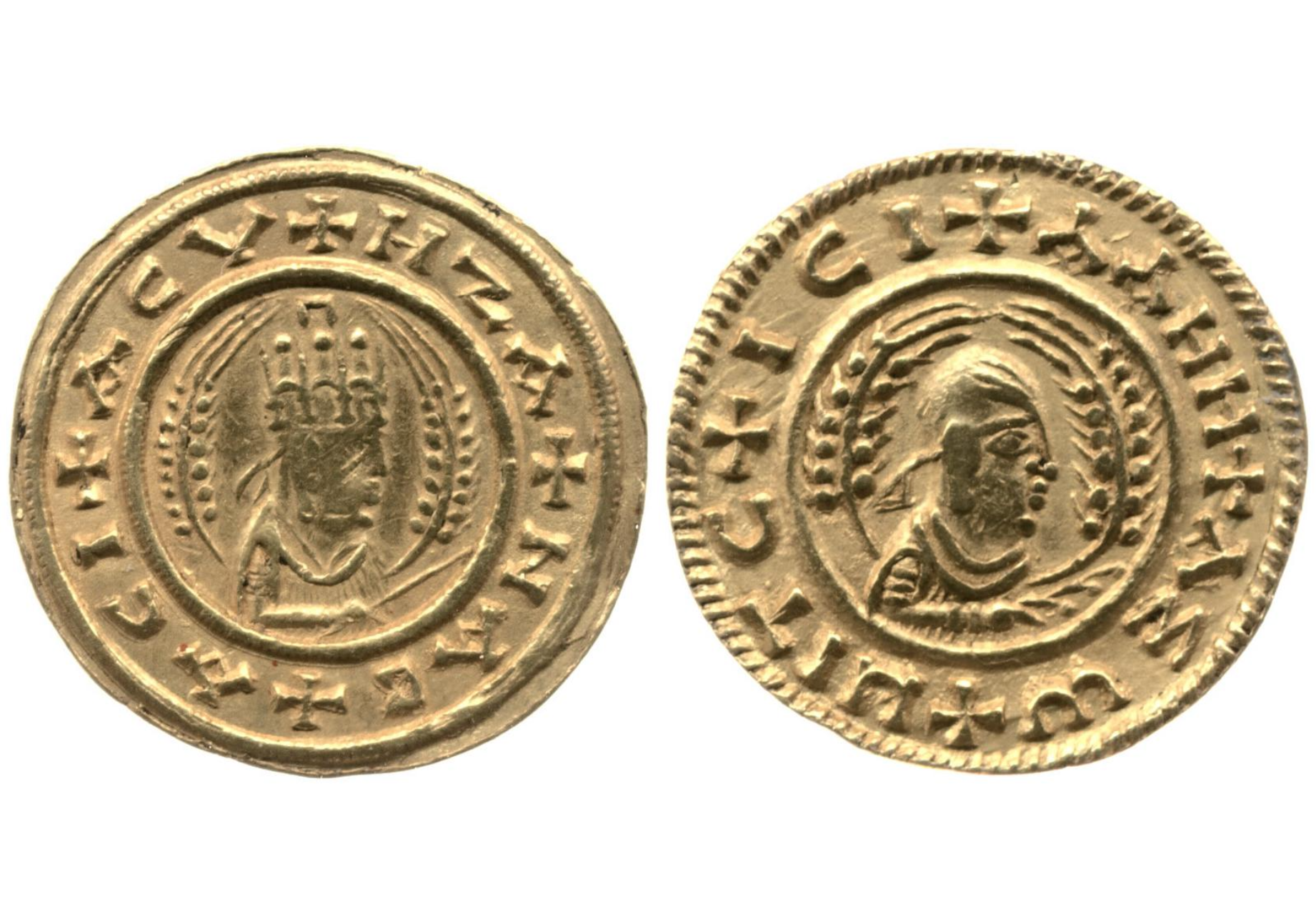
The Aksumite Empire arose in eastern Africa, in present-day Eritrea and Ethiopia, around 100 BCE. Its location along the Red Sea connected it to major maritime trade networks reaching the Mediterranean, the Roman Empire, and India, which fueled its rise and expansion.
Aksum stands out for two achievements:
- It developed its own currency.
- It developed the Ge'ez script, which is still used as the main liturgical language (the language used in religious services) of the Ethiopian Orthodox Church.
The Nok
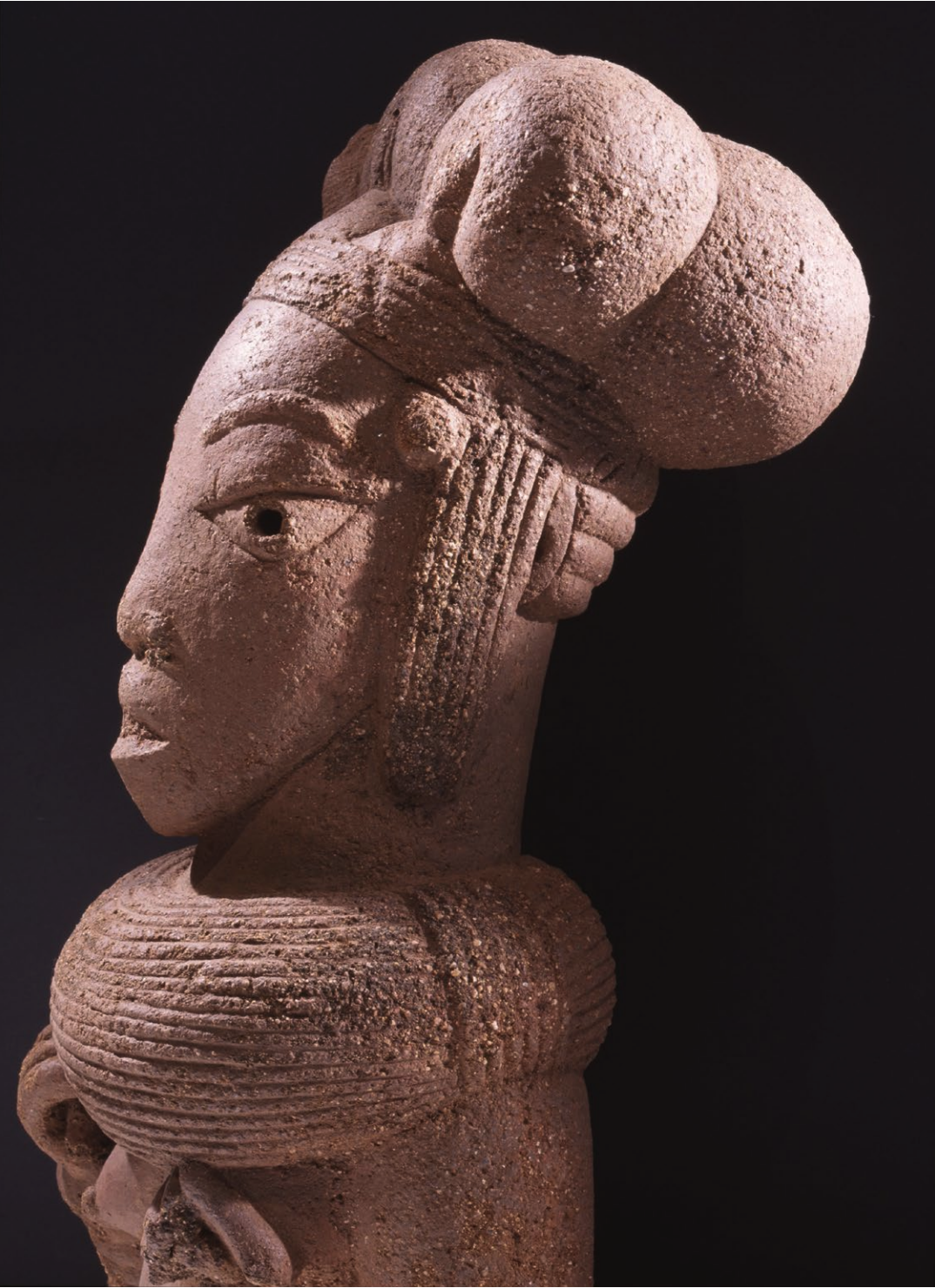
The Nok society emerged around 500 BCE in present-day Nigeria as one of the earliest ironworking societies in West Africa. The Nok are best known for their pottery, naturalistic terracotta sculptures of animals and people shown with various hairstyles and jewelry, and stone instruments.
Nok artifacts are the most ancient surviving evidence of a complex, settled society in sub-Saharan Africa. Archaeological research in the 1940s helped uncover Nok history, and the resemblance between Nok sculptures and later Ife Yoruba and Benin terracotta works suggests the Nok may be an early ancestor of those cultures.
Significance of Ancient African Societies
Aksum's Adoption of Christianity
Under King Ezana, Aksum became the first African society to adopt Christianity. Aksum adopted the faith on its own terms, beyond the influence of colonialism or the later transatlantic slave trade, making it one of the oldest Christian societies. The Ge'ez script remains the primary liturgical language of the Ethiopian Orthodox Church, a clear example of long-term cultural continuity.
Ancient Africa in African American Texts
From the late eighteenth century onward, African American writers featured ancient Africa in their sacred and secular texts. They used examples from ancient Africa to counter racist stereotypes that portrayed African societies as lacking government or culture.
By challenging the idea of African inferiority used to justify slavery and racism, these texts became part of the early canon of African American Studies, laying groundwork for later scholarship and activism centered on the African diaspora.
Ancient Societies and African Independence
In the mid-twentieth century, research showing the complexity and contributions of ancient African societies supported Africans' political claims for self-rule. Evidence that Africa had a long history of advanced civilizations strengthened the case for independence from European colonialism.
How to Use This on the AP African American Studies Exam
Using Sources Effectively
Both required images in this topic can be read as evidence of complex societies.
- The Aksumite coin showing King Ezana (circa 340-400) is proof that Aksum minted its own currency, a sign of an organized political and economic system. It also connects to Ezana's adoption of Christianity.
- The Nok sculpture (circa 900 BCE-200 CE) is some of the earliest figurative art from sub-Saharan Africa and points to sophisticated artistic and metalworking traditions long before European contact.
When you analyze a source, name what it shows and then explain what that proves about the society.
Describe vs. Explain
Watch the task verb.
- Describe questions want concrete features and goods: dates, locations, currency, script, ironworking, terracotta, gold.
- Explain questions want significance and connections: why these societies mattered to later Black writers and to independence movements.
Common Trap
Do not stop at "these societies existed." The significance half of this topic is about how later generations used the memory of ancient Africa, so always be ready to connect ancient societies to African American writing and to anticolonial politics.
Common Misconceptions
- Misconception: Sub-Saharan Africa had no complex societies before European contact.Actually: Nok artifacts are the oldest surviving evidence of a complex, settled society in sub-Saharan Africa, dating back over two millennia.
- Misconception: Africa only adopted Christianity through European colonialism.Actually: Aksum adopted Christianity under King Ezana on its own terms, well before colonial rule or the transatlantic slave trade.
- Misconception: Egypt always controlled Nubia.Actually: Nubia was the source of Egypt's gold and luxury goods, and around 750 BCE Nubia defeated Egypt and ruled it as the twenty-fifth dynasty of Black Pharaohs.
- Misconception: Ge'ez is a dead language.Actually: Ge'ez is still used today as the main liturgical language of the Ethiopian Orthodox Church.
- Misconception: Ancient African history only matters for ancient history.Actually: African American writers and twentieth-century independence movements both drew on ancient African societies to counter racism and support self-rule.
Related AP African American Studies Guides
Practice Questions for 1.4
1 of 10
Which of the following best supports the claim that Nubian conquest of Egypt demonstrated African military and political capability?
A.
Nubian forces conquered Egypt around 750 BCE and ruled as the Twenty-Fifth Dynasty
B.
The Nile River provided fertile soil that allowed both Egypt and Nubia to develop agriculture
C.
Nubia possessed abundant gold and luxury trade items that created economic relationships with Egypt
D.
Nubian rulers integrated Egyptian customs and religious practices into their own culture
Vocabulary
The following words are mentioned explicitly in the AP® course framework for this topic.Term | Definition |
|---|---|
African American Studies | An interdisciplinary field of scholarly inquiry that analyzes the history, culture, and contributions of people of African descent in the United States and throughout the African diaspora. |
African American writers | Intellectuals and authors from African American communities who documented and emphasized the historical and cultural significance of ancient Africa. |
Aksumite Empire | An ancient eastern African empire that emerged around 100 BCE in present-day Eritrea and Ethiopia, connected to major maritime trade networks. |
Ancient Egypt | An early complex civilization that emerged along the Nile River around 3000 BCE in northeastern Africa. |
Black Pharaohs | Nubian rulers who established the twenty-fifth dynasty and ruled Egypt for approximately a century beginning around 750 BCE. |
colonialism | The practice of establishing political and economic control over distant territories and their peoples, often justified through claims of civilization and superiority. |
complex societies | Large-scale, organized societies with advanced social structures, economies, and governance systems that emerged in ancient Africa. |
Ethiopian Orthodox Church | The Christian church that continues to use Ge'ez as its main liturgical language, maintaining a connection to ancient Aksumite religious traditions. |
Ge'ez | The script of ancient Aksum that remains the primary liturgical language of the Ethiopian Orthodox Church. |
independence | The political status of African nations freeing themselves from European colonial control, a movement informed by scholarship on Africa's ancient civilizations. |
ironworking | The process of working with iron to create tools and other objects, a technology developed by the Nok society in West Africa. |
King Ezana | The ruler of Aksum who led the empire's adoption of Christianity as its official religion. |
luxury trade items | High-value goods such as gold and other precious items produced by Nubia and traded with Egypt and other societies. |
Nile River | A major river in northeastern Africa where the civilizations of Egypt and Nubia emerged and developed. |
Nok society | An early ironworking society that emerged in present-day Nigeria around 500 BCE, known for pottery and terracotta sculptures. |
Nubia | An ancient African civilization (also known as Kush/Cush) that emerged along the Nile River around 3000 BCE and became a major source of gold and luxury trade items for Egypt. |
Red Sea trade networks | Maritime trade routes connecting the Aksumite Empire to the Mediterranean, Roman Empire, and India. |
self-rule | The political principle of African nations governing themselves independently, a goal supported by evidence of Africa's ancient complex societies. |
terracotta sculptures | Clay figurines created by the Nok society depicting animals and people with various hairstyles and jewelry. |
transatlantic slave trade | The forced migration of millions of Africans across the Atlantic Ocean to the Americas, beginning in the 16th century and lasting until the 19th century. |
Frequently Asked Questions
What is the Nok society and why is it important?
The Nok society emerged around 500 BCE in present-day Nigeria. It is one of West Africa's earliest ironworking societies and is known for terracotta sculpture, pottery, stone instruments, and evidence of a complex settled society.
What ancient African societies are in AP African American Studies 1.4?
Topic 1.4 focuses on Egypt, Nubia or Kush, Aksum, and Nok. You should know where each society was located, what it produced, and why it matters historically.
Why was Aksum important?
Aksum rose in present-day Eritrea and Ethiopia around 100 BCE. Its Red Sea location connected it to trade networks, and it developed its own currency and Ge'ez script.
How are Egypt and Nubia connected?
Egypt and Nubia developed along the Nile around 3000 BCE. Nubia supplied gold and luxury goods to Egypt, and around 750 BCE Nubia defeated Egypt and established the twenty-fifth dynasty of Black Pharaohs.
Why did ancient African societies matter to Black communities?
African American writers used ancient African societies to counter racist claims that Africa lacked government or culture. Later research on ancient Africa also supported African claims for self-rule and independence.
What required sources connect to Topic 1.4?
The required sources include an Aksumite coin showing King Ezana and an image of a Nok sculpture. Both are evidence of complex political, economic, artistic, and religious life in ancient Africa.
See Fiveable more often in Google
Mark Fiveable as a preferred source and Google is more likely to show you our guides in Top Stories, with a "preferred" badge in AI Mode and AI Overviews.