25.2 Quantum computing and quantum electronics

🔌Intro to Electrical Engineering Unit 25 Review
25.2 Quantum computing and quantum electronics
🔌 Intro to Electrical Engineering
Quantum computing applies principles of quantum mechanics to computation. For an intro EE course, the key takeaway is understanding how quantum devices differ from classical digital circuits and why those differences matter for the future of the field. This section covers the core building blocks (qubits and gates), the major algorithms, and the hardware challenges engineers are working to solve.
Quantum Computing Fundamentals
Qubit Properties and Manipulation
A qubit is the quantum equivalent of a classical bit, but with a critical difference. A classical bit is always either 0 or 1. A qubit can exist in a superposition of both states at the same time. Mathematically, a qubit's state is written as:
where and are complex numbers whose squared magnitudes add up to 1. When you measure the qubit, it collapses to either 0 or 1, with probabilities and . Superposition is what allows quantum computers to process many possibilities in parallel during a computation.
Quantum entanglement is a phenomenon where two or more qubits become correlated so that the state of one instantly constrains the state of the other, no matter how far apart they are. If two qubits are entangled and you measure one as 0, the other's state is immediately determined. Entanglement is not just a curiosity; it's a practical resource that powers quantum algorithms and secure quantum communication.
Quantum gates manipulate qubit states, much like logic gates (AND, OR, NOT) manipulate classical bits. A few important ones:
- Hadamard gate: Takes a qubit in state or and puts it into an equal superposition. This is often the first step in a quantum algorithm.
- CNOT gate (Controlled-NOT): A two-qubit gate that flips the second qubit only if the first qubit is . This is the standard way to create entanglement between qubits.
- Pauli gates (X, Y, Z): Single-qubit rotations. The Pauli-X gate, for instance, acts like a classical NOT gate, flipping to and vice versa.
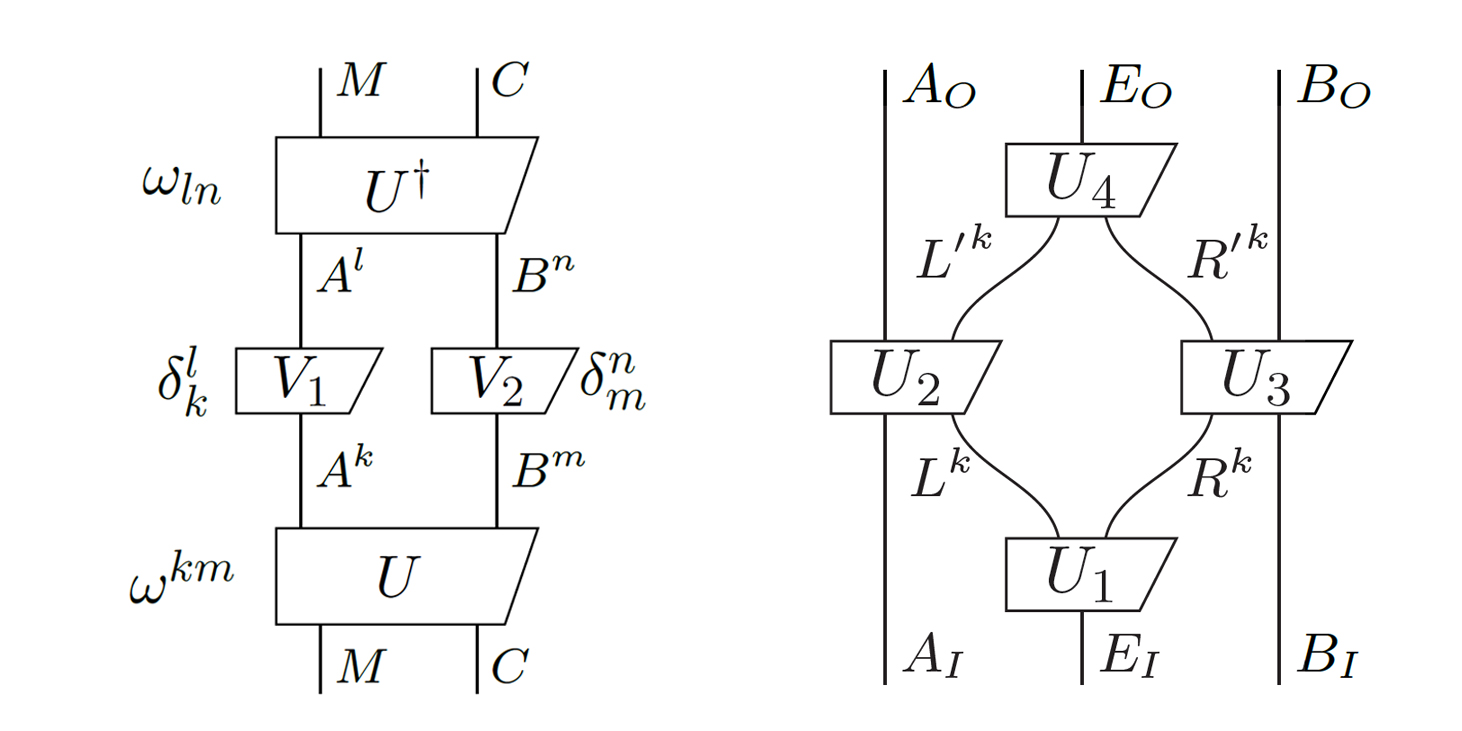
A quantum circuit is a sequence of these gates applied to a set of qubits. You can think of it as the quantum version of a digital logic circuit diagram, read from left to right.
Quantum Algorithms and Applications

Quantum Algorithms and Their Advantages
Quantum algorithms exploit superposition and entanglement to solve specific types of problems faster than any known classical approach. Not all problems benefit, but certain ones see dramatic speedups.
- Shor's algorithm can factor large integers exponentially faster than the best classical factoring methods. This matters because modern encryption (like RSA) relies on the assumption that factoring large numbers is practically impossible. A sufficiently powerful quantum computer running Shor's algorithm could break RSA encryption, which is why post-quantum cryptography is an active research area.
- Grover's algorithm searches an unsorted database of items in roughly steps, compared to the steps a classical search requires. That's a quadratic speedup. For a database of 1 million entries, Grover's algorithm needs about 1,000 operations instead of up to 1 million.
Quantum cryptography uses quantum mechanics to make communication provably secure.
- The BB84 protocol encodes key bits onto individual quantum states (like photon polarizations). Any eavesdropper who tries to intercept and measure these states unavoidably disturbs them, so the two communicating parties can detect the intrusion.
- Quantum key distribution (QKD) lets two parties generate a shared secret key that is guaranteed to be private. That key is then used with conventional encryption to secure messages.
Quantum communication involves transmitting quantum states across a network.
- Quantum teleportation transfers a qubit's state from one location to another using entanglement and classical communication. The physical qubit doesn't travel; instead, its quantum information is reconstructed at the destination.
- Quantum repeaters extend the range of quantum communication. Quantum signals degrade over distance due to photon loss in fiber optics, and unlike classical signals, you can't simply copy and amplify a quantum state (this is the no-cloning theorem). Repeaters use entanglement swapping to relay quantum information across long distances.
Quantum Hardware and Error Correction
Quantum Error Correction and Sensing Technologies
Real quantum hardware is extremely fragile. Qubits lose their quantum properties through a process called decoherence, caused by interactions with the environment (thermal noise, electromagnetic interference, vibrations). This is the single biggest engineering challenge in building practical quantum computers.
Quantum error correction addresses this by encoding a single logical qubit across multiple physical qubits, creating redundancy that allows errors to be detected and fixed without destroying the quantum information.
- The surface code is currently the most promising error correction scheme. It arranges physical qubits in a 2D grid and uses repeated measurements of neighboring qubits to catch errors. It requires roughly 1,000 physical qubits per logical qubit, which is why today's machines with a few hundred qubits can't yet do fully fault-tolerant computation.
- The Shor code was the first quantum error correction code proposed, encoding one logical qubit into nine physical qubits. It's more of a proof of concept than a practical choice.
- Fault-tolerant quantum computing is the goal: designing entire quantum circuits so that errors don't accumulate and ruin the computation. This requires integrating error correction into every step of the algorithm.
Quantum sensors take advantage of qubits' extreme sensitivity to their environment, turning a weakness of quantum computers into a strength for measurement.
- Quantum magnetometers based on nitrogen-vacancy (NV) centers in diamond can detect magnetic fields at the nanoscale. These are useful in materials science and biomedical imaging.
- Quantum gravimeters use cold atoms held in superposition to measure gravitational acceleration with very high precision, with applications in geophysics, underground mapping, and navigation systems that don't rely on GPS.
See Fiveable more often in Google
Mark Fiveable as a preferred source and Google is more likely to show you our guides in Top Stories, with a "preferred" badge in AI Mode and AI Overviews.