28.7 DNA Synthesis

🥼Organic Chemistry Unit 28 Review
28.7 DNA Synthesis
🥼 Organic Chemistry
DNA Synthesis
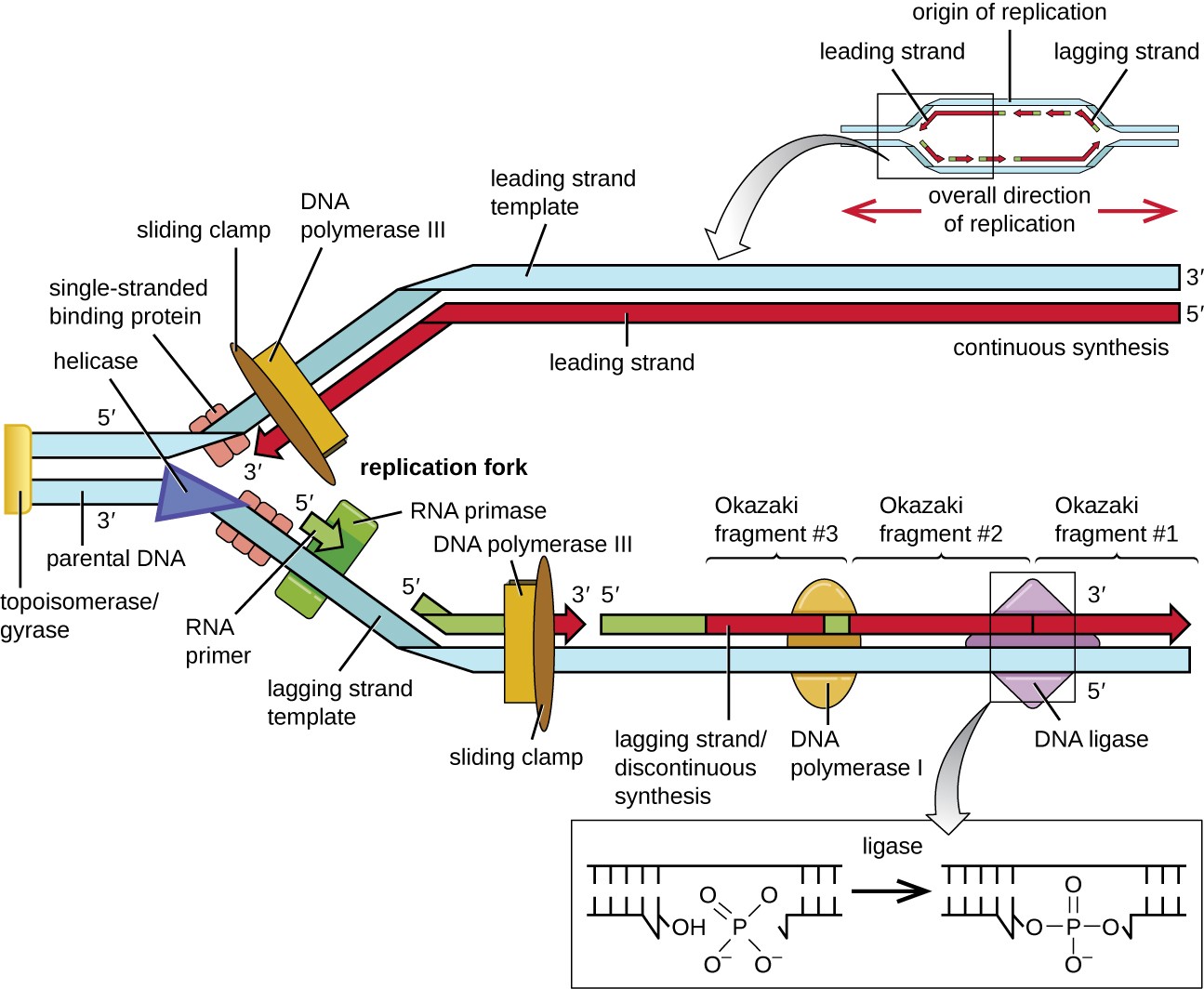
DNA synthesis (also called oligonucleotide synthesis) is the chemical process used to build custom DNA sequences one nucleotide at a time. This technique is foundational in molecular biology because it lets researchers create specific genetic sequences for studying gene function, diagnostic testing, and developing therapies. The chemistry behind it centers on carefully protecting and deprotecting reactive groups, coupling nucleotides in a controlled order, and stabilizing the growing chain at each step.
Steps in Automated DNA Synthesis
Automated DNA synthesis builds an oligonucleotide from the 3' end to the 5' end, which is the opposite direction of biological DNA replication. Each cycle adds a single nucleotide, and the cycle repeats until the full sequence is assembled.
-
Solid Support
- The synthesis takes place on controlled pore glass (CPG) beads, which serve as an insoluble anchor for the growing chain.
- The first nucleoside is pre-attached to the beads through a cleavable linker at its 3' end. This gives the synthesis a fixed starting point.
-
Detritylation (Deprotection)
- The 5'-dimethoxytrityl (DMT) protecting group is removed by washing with trichloroacetic acid (TCA).
- This exposes the 5'-hydroxyl group, making it available to react with the next incoming nucleotide.
- The released DMT cation is orange, so it can be monitored spectrophotometrically to track coupling efficiency.
-
Coupling
- An activated phosphoramidite monomer (the next nucleotide in the sequence) is delivered along with tetrazole, which acts as a mild acid activator.
- Tetrazole protonates the diisopropylamino group on the phosphoramidite, converting it into a good leaving group and making the phosphorus center electrophilic.
- The free 5'-hydroxyl attacks this activated phosphorus, forming a phosphite triester linkage between the two nucleotides.
- Typical coupling efficiencies exceed 99% per step, which is critical because even small losses compound over many cycles.
-
Capping
- Any 5'-hydroxyl groups that failed to couple are acetylated using acetic anhydride and N-methylimidazole.
- This permanently blocks those unreacted chains from growing further. Without capping, failure sequences would continue elongating and contaminate the final product with deletion mutations.
-
Oxidation
- The phosphite triester formed during coupling is unstable. It's oxidized to a more stable phosphate triester using an iodine solution ( in water/pyridine/THF).
- This converts P(III) to P(V), giving the internucleotide linkage the same oxidation state found in natural DNA.
-
Cycle Repetition
- Steps 2 through 5 repeat for each nucleotide in the desired sequence. A 20-mer oligonucleotide, for example, requires 19 coupling cycles (the first nucleoside is already on the support).
-
Cleavage and Global Deprotection
- Once the full sequence is assembled, the oligonucleotide is cleaved from the CPG support using concentrated aqueous ammonia.
- The same ammonia treatment removes the protecting groups from the nucleobases and the cyanoethyl groups from the phosphates.
- The crude product is then purified, typically by HPLC or gel electrophoresis.
Protection of Reactive Groups
Selective protection is what makes the whole synthesis possible. Without it, reactive groups would couple indiscriminately, and you'd get a scrambled mess instead of a defined sequence.
- 5'-Hydroxyl group is protected with a DMT (dimethoxytrityl) group. DMT is acid-labile, so it can be cleanly removed with TCA at the start of each cycle while leaving all other protecting groups intact. This selectivity ensures that only one hydroxyl is exposed for coupling at a time.
- Exocyclic amino groups on nucleobases need protection because they're nucleophilic and would otherwise interfere with coupling. The standard groups are:
- Benzoyl (Bz) for adenine and cytosine
- Isobutyryl (iBu) for guanine
- These are removed during the final ammonia treatment, not during the synthesis cycles.
- Phosphate groups are protected with 2-cyanoethyl groups. These block the phosphate from unwanted side reactions during synthesis and are removed by β-elimination under the basic conditions of the final ammonia step.
Key Reagents Summary
| Step | Reagent | Role |
|---|---|---|
| Detritylation | Trichloroacetic acid (TCA) | Removes DMT to expose 5'-OH |
| Coupling | Phosphoramidite monomer + tetrazole | Adds next nucleotide; tetrazole activates the phosphoramidite |
| Capping | Acetic anhydride + N-methylimidazole | Blocks unreacted chains |
| Oxidation | / water / pyridine | Converts P(III) phosphite to P(V) phosphate |
| Cleavage & deprotection | Concentrated (aq) | Releases oligo from support; removes base and phosphate protecting groups |
DNA Structure and Amplification
These concepts provide context for why synthetic oligonucleotides are useful.
- Nucleotides are the monomeric building blocks of DNA. Each consists of a deoxyribose sugar, a phosphate group, and one of four nitrogenous bases (A, T, G, or C).
- Watson-Crick base pairing refers to the specific hydrogen bonding between complementary bases: adenine pairs with thymine (two H-bonds), and guanine pairs with cytosine (three H-bonds). Synthetic oligonucleotides are designed to hybridize with target sequences through these predictable base-pairing rules.
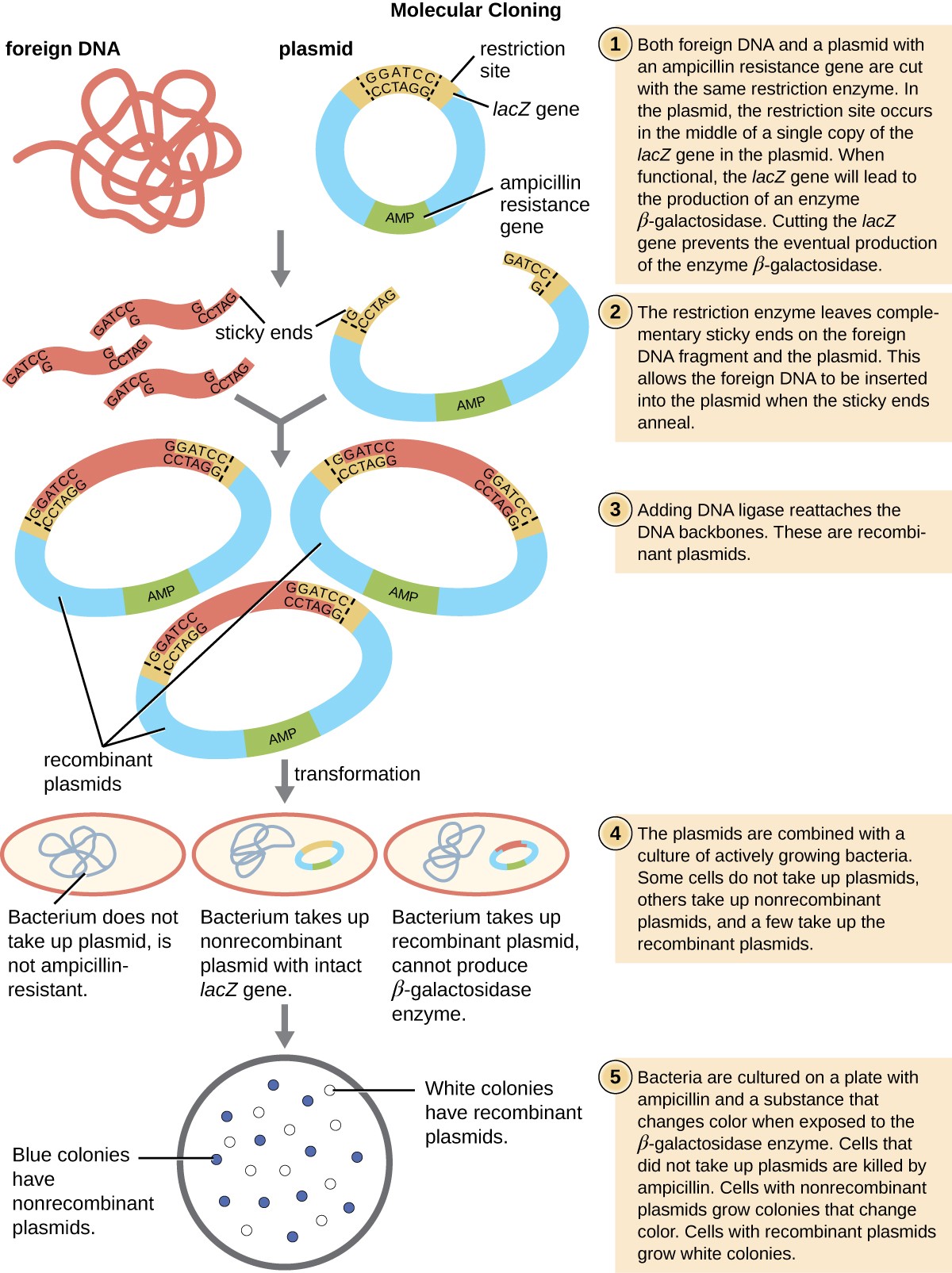
- Polymerase chain reaction (PCR) is one of the most common applications of synthetic DNA. Short synthetic oligonucleotides called primers flank a target region, and repeated cycles of heating (denaturation), cooling (annealing), and extension by DNA polymerase amplify that region exponentially. A single target molecule can be amplified to billions of copies in about 30 cycles.
See Fiveable more often in Google
Mark Fiveable as a preferred source and Google is more likely to show you our guides in Top Stories, with a "preferred" badge in AI Mode and AI Overviews.