22.7 Alkylation of Enolate Ions

🥼Organic Chemistry Unit 22 Review
22.7 Alkylation of Enolate Ions
🥼 Organic Chemistry
Enolate Ion Alkylation and Synthesis
Enolate ion alkylation is one of the most useful ways to form new carbon-carbon bonds in organic chemistry. The idea is straightforward: remove a proton from the α-carbon of a carbonyl compound to generate a nucleophilic enolate ion, then let that enolate attack an alkyl halide through an reaction. Two classic applications of this strategy, malonic ester synthesis and acetoacetic ester synthesis, let you build substituted acetic acids and methyl ketones from simple starting materials.

Top images from around the web for Mechanism of enolate ion alkylation
20.6 Aldol reaction | Organic Chemistry II View original
Is this image relevant?
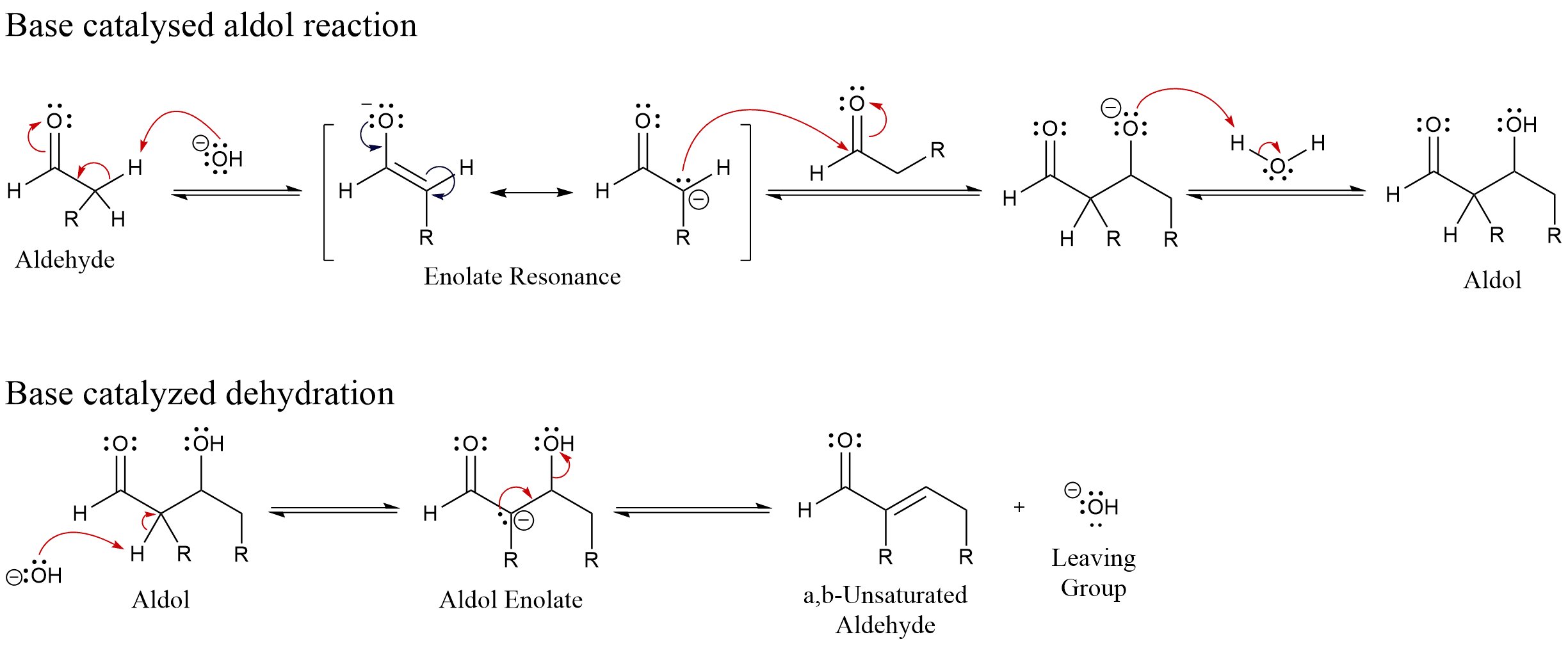
File:Enolate aldol mechanism.png - Wikipedia View original
Is this image relevant?
20.6 Aldol reaction | Organic Chemistry II View original
Is this image relevant?
File:Enolate aldol mechanism.png - Wikipedia View original
Is this image relevant?
Mechanism of Enolate Ion Alkylation
Enolate formation starts with a strong, non-nucleophilic base (LDA, NaH, or NaOEt) abstracting the α-hydrogen next to the carbonyl group. The resulting enolate ion is stabilized by resonance: the negative charge is delocalized between the α-carbon and the carbonyl oxygen. That delocalization is what makes the α-hydrogen acidic enough to remove in the first place.
The alkylation step is an reaction. The nucleophilic α-carbon of the enolate attacks the electrophilic carbon of an alkyl halide (R–X) with backside attack, which means:
- Inversion of configuration occurs at the electrophilic carbon
- A new C–C bond forms, and the carbonyl group is regenerated
- The alkyl halide must be primary or methyl (sometimes secondary, but with caution). Tertiary halides won't work because is blocked by steric hindrance, and elimination (E2) dominates instead
This requirement is a common exam pitfall. If you see a tertiary alkyl halide in an enolate alkylation problem, that's a red flag.
Steps in Malonic Ester Synthesis
Malonic ester synthesis converts an alkyl halide into a substituted acetic acid with two more carbons than the original halide. Here's the full sequence:
- Deprotonation: Sodium ethoxide (NaOEt) removes the α-hydrogen from diethyl malonate. The resulting enolate is stabilized by resonance with both ester carbonyls, making this proton quite acidic ().
- Alkylation: The enolate attacks an alkyl halide via , forming a new C–C bond at the α-carbon. A second alkylation can be performed by repeating steps 1 and 2 with a different (or same) alkyl halide.
- Hydrolysis: Heating with aqueous acid (or base, then acid) cleaves both ester groups, producing a dicarboxylic acid (a substituted malonic acid).
- Decarboxylation: Heating the dicarboxylic acid causes loss of from one carboxyl group. β-Keto acids and malonic acid derivatives decarboxylate readily because the transition state is stabilized by a six-membered cyclic arrangement. The final product is a monosubstituted (or disubstituted) acetic acid.
To figure out what alkyl halide you need, work backward: look at the substituent on the α-carbon of your target acetic acid. That substituent came from the alkyl halide.

Acetoacetic vs. Malonic Ester Synthesis
These two syntheses follow the same logic (alkylate, hydrolyze, decarboxylate) but start from different substrates and give different products.
| Feature | Malonic Ester Synthesis | Acetoacetic Ester Synthesis |
|---|---|---|
| Starting material | Diethyl malonate | Ethyl acetoacetate |
| α-Carbon flanked by | Two ester groups | One ester + one ketone |
| Product after decarboxylation | Substituted acetic acid | Methyl ketone |
| Retrosynthetic clue | Target has or | Target has (methyl ketone) |
Both reactions share these features:
- Enolate formation with NaOEt at a carbon flanked by two electron-withdrawing groups
- alkylation (so primary/methyl halides work best)
- Hydrolysis followed by decarboxylation of a β-dicarbonyl intermediate
The key difference is simply what's left after you lose . In malonic ester synthesis, you lose one entire and keep the other as your carboxylic acid product. In acetoacetic ester synthesis, you lose the (from the ester side) and keep the ketone, giving a methyl ketone.
Enolate Formation and Reactivity
The of the α-hydrogen determines how easily the enolate forms. Carbons flanked by two carbonyl groups (as in malonic esters or β-keto esters) have values around 9–13, so a relatively mild base like NaOEt is sufficient. Simple ketones have α-hydrogen values around 19–20, requiring a much stronger base like LDA.
Kinetic vs. thermodynamic enolates matter most for unsymmetrical ketones, where deprotonation can occur on either side of the carbonyl:
- Kinetic enolate: Forms at the less substituted α-carbon (less hindered, faster proton removal). Favored by strong, bulky bases like LDA at low temperature ().
- Thermodynamic enolate: The more substituted enolate, which is more stable due to greater alkyl substitution of the double bond. Favored by equilibrating conditions: a weaker base (like NaOEt) at higher temperature, allowing reversible deprotonation to reach the more stable product.
Choosing the right base and temperature gives you control over which α-carbon gets alkylated. This regioselectivity is critical when planning a synthesis with an unsymmetrical ketone.
See Fiveable more often in Google
Mark Fiveable as a preferred source and Google is more likely to show you our guides in Top Stories, with a "preferred" badge in AI Mode and AI Overviews.