12.3 Mass Spectrometry of Some Common Functional Groups

🥼Organic Chemistry Unit 12 Review
12.3 Mass Spectrometry of Some Common Functional Groups
🥼 Organic Chemistry
12.1
Mass Spectrometry of Small Molecules: Magnetic-Sector Instruments
12.2
Interpreting Mass Spectra
12.3
Mass Spectrometry of Some Common Functional Groups
12.4
Mass Spectrometry in Biological Chemistry: Time-of-Flight (TOF) Instruments
12.5
Spectroscopy and the Electromagnetic Spectrum
12.6
Infrared Spectroscopy
12.7
Interpreting Infrared Spectra
12.8
Infrared Spectra of Some Common Functional Groups
Mass spectrometry identifies organic compounds by ionizing molecules and analyzing how they break apart. Different functional groups fragment in predictable ways, so recognizing these patterns lets you determine molecular masses, identify functional groups, and piece together the structure of unknown compounds.
Mass Spectrometry of Common Functional Groups

Top images from around the web for Ionization and Detection Methods
File:Electron Ionization.svg - Wikimedia Commons View original
Is this image relevant?
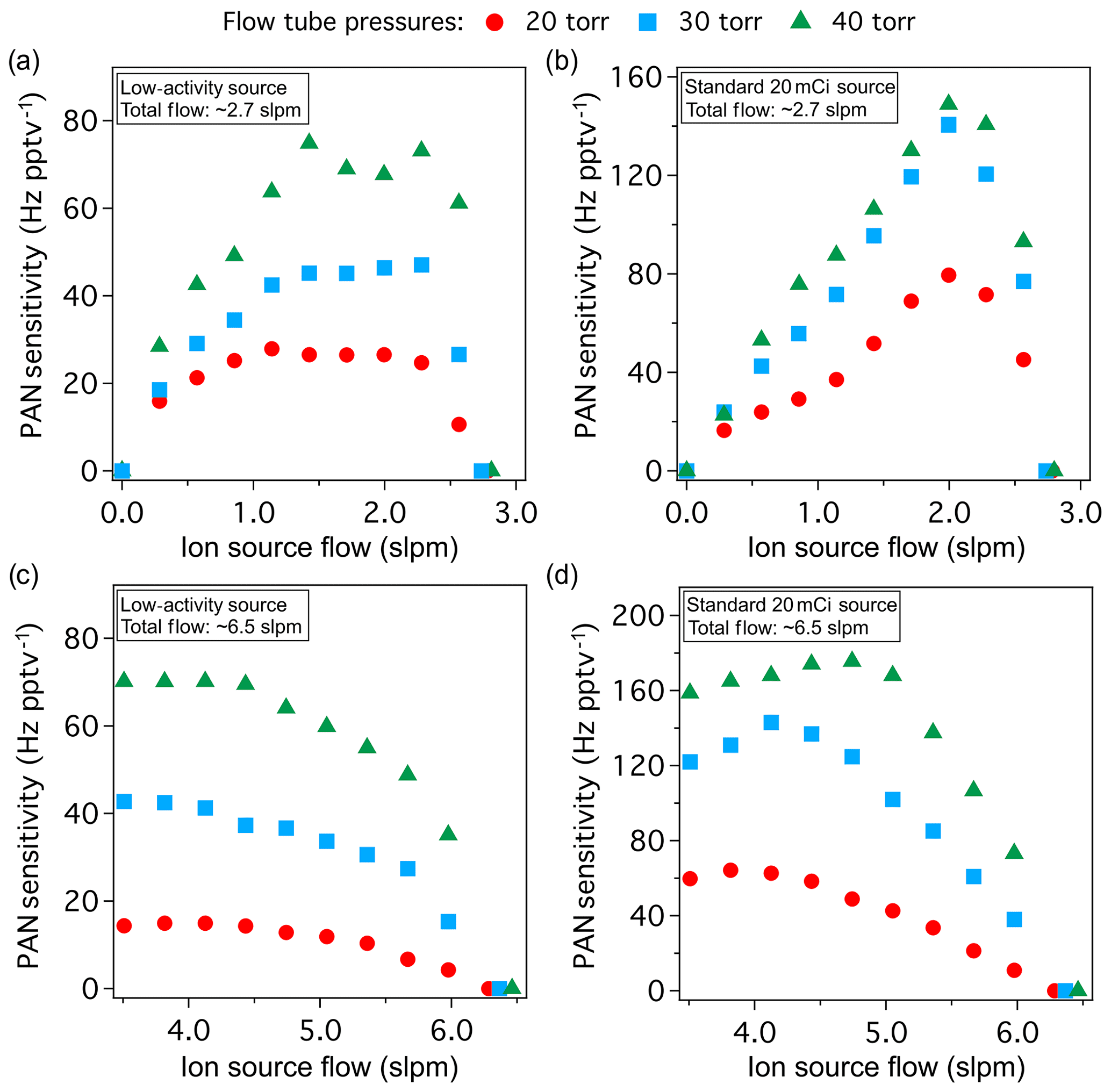
AMT - A low-activity ion source for measurement of atmospheric gases by chemical ionization mass ... View original
Is this image relevant?
AMT - The sensitivity of benzene cluster cation chemical ionization mass spectrometry to select ... View original
Is this image relevant?
File:Electron Ionization.svg - Wikimedia Commons View original
Is this image relevant?
AMT - A low-activity ion source for measurement of atmospheric gases by chemical ionization mass ... View original
Is this image relevant?
Ionization and Detection Methods
Electron impact (EI) is the most common ionization method. High-energy electrons slam into sample molecules, knocking out an electron to create a radical cation (the molecular ion, ). This process also transfers enough energy to break bonds, producing a fragmentation pattern that acts like a fingerprint for the molecule.
Chemical ionization (CI) is a softer technique. Because it transfers less energy, you get a stronger molecular ion peak and less fragmentation. CI is useful when EI breaks the molecule apart so thoroughly that the molecular ion peak is weak or absent.
Every ion is detected by its mass-to-charge ratio (). Since most ions in organic mass spec carry a +1 charge, effectively equals the ion's mass. The base peak is the tallest peak in the spectrum (set to 100% relative abundance), and it represents the most stable fragment ion formed during ionization.

Fragmentation Patterns of Organic Compounds
Each functional group has characteristic ways of breaking apart. Learning these patterns is the fastest route to interpreting a mass spectrum.
Alcohols
- The molecular ion peak () is often present but weak, because alcohols fragment easily.
- Loss of a hydroxyl radical gives an peak (loss of , mass 17). For ethanol (), this produces a peak at .
- Loss of water gives an peak (loss of , mass 18). This happens through a rearrangement and is especially common in longer-chain alcohols like propanol.
Amines
- The molecular ion peak () tends to be more stable than in alcohols.
- Loss of a hydrogen atom from nitrogen gives an peak.
- -cleavage next to the nitrogen is the dominant fragmentation. The bond between the carbon attached to nitrogen and the next carbon breaks, producing a characteristic fragment. For ethylamine, this -cleavage yields at .
Halides (Alkyl Halides)
- Halides are distinctive because of isotope patterns in the molecular ion region:
- Chlorine: and exist in roughly a 3:1 ratio, so you'll see and peaks with a 3:1 intensity pattern.
- Bromine: and exist in roughly a 1:1 ratio, so and appear as two peaks of nearly equal height. This is one of the easiest patterns to spot.
- Loss of the halogen atom gives an peak (where X = 19 for F, 35 for Cl, 79 for Br, 127 for I).
Carbonyl Compounds (Aldehydes and Ketones)
- The molecular ion peak () is usually visible but can be weak.
- -cleavage breaks the bond next to the carbonyl carbon. In ketones, this can happen on either side, producing two different fragment ions. For 2-butanone (), -cleavage gives fragments at (loss of ) and (the or fragment).
- Loss of (mass 28) can occur, giving an peak.
- The McLafferty rearrangement occurs when a -hydrogen (a hydrogen on the carbon three bonds away from the carbonyl) is present. The molecule undergoes a six-membered ring transition state, transferring the hydrogen to the carbonyl oxygen while breaking a bond. This produces a characteristic even-mass fragment. For 2-pentanone, the McLafferty rearrangement gives a peak at .

Using Mass Spectra for Structural Determination
Interpreting a mass spectrum follows a logical sequence:
-
Find the molecular ion peak () to determine the molecular mass. For butanal, .
-
Check for isotope patterns in the molecular ion region. A 3:1 doublet suggests chlorine; a 1:1 doublet suggests bromine.
-
Apply the nitrogen rule (see below) to determine whether nitrogen is present.
-
Look for characteristic losses from the molecular ion:
- Loss of 17 → (alcohol)
- Loss of 18 → (alcohol)
- Loss of 28 → (carbonyl) or
- Loss of 29 → (aldehyde)
- Loss of 35 or 37 →
- Loss of 45 → (ethyl ester)
-
Examine the base peak and other major fragments. The most abundant fragment is the most stable one, which tells you about the molecule's preferred way of breaking apart.
-
Combine all the evidence to propose a structure consistent with the molecular mass, fragmentation pattern, and functional group clues.
For example, chlorobutane () shows the 3:1 isotope pattern for chlorine and an peak at , confirming loss of from a fragment.
Nitrogen Rule
The nitrogen rule is a quick check for whether nitrogen atoms are present in your compound:
- A molecule with an odd number of nitrogen atoms will have an odd molecular mass.
- A molecule with zero or an even number of nitrogen atoms will have an even molecular mass.
This rule works because nitrogen has an even atomic mass (14) but an odd valence (3), which is unique among the common organic elements (C, H, O, N, S, halogens).
Applying the nitrogen rule:
- Read the molecular ion peak to get the nominal molecular mass.
- If the mass is odd (e.g., pyridine at ), the molecule contains 1, 3, 5, etc. nitrogen atoms.
- If the mass is even (e.g., benzene at ), the molecule contains 0, 2, 4, etc. nitrogen atoms.
Note that aniline () has a molecular mass of 93, which is odd, consistent with its one nitrogen atom. A compound like 4-aminobutanoic acid (, odd mass) contains one nitrogen, and its spectrum would also show amine-related fragmentation patterns to confirm this.
Combine the nitrogen rule with the fragmentation patterns above, and you have a solid framework for tackling mass spec problems on any exam.
See Fiveable more often in Google
Mark Fiveable as a preferred source and Google is more likely to show you our guides in Top Stories, with a "preferred" badge in AI Mode and AI Overviews.