9.2 Vocal Delivery Techniques

📞Intro to Public Speaking Unit 9 Review
9.2 Vocal Delivery Techniques
📞 Intro to Public Speaking
Vocal delivery techniques
Your voice carries just as much meaning as your words. Pitch, tone, volume, pacing, and pausing all shape how your audience receives your message. A well-delivered speech sounds natural and confident; a poorly delivered one can undermine even the strongest content.

Top images from around the web for Pitch, tone, and volume
Elements of Speech Communication | Boundless Communications View original
Is this image relevant?
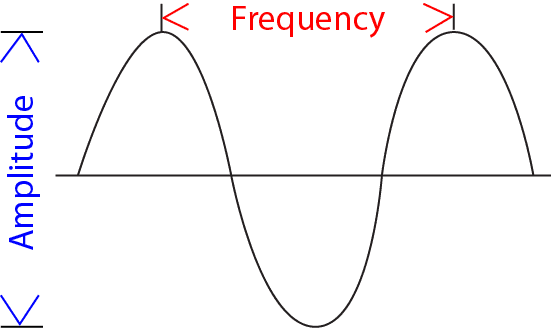
Effective Vocal Delivery | Boundless Communications View original
Is this image relevant?
Pitch and Volume Guided Notes by Hashtag Teached | TPT View original
Is this image relevant?
Elements of Speech Communication | Boundless Communications View original
Is this image relevant?
Effective Vocal Delivery | Boundless Communications View original
Is this image relevant?
Pitch, tone, and volume
Pitch is how high or low your voice sounds. It naturally shifts to convey emotion and emphasis. Ending a sentence on a higher pitch signals a question; dropping your pitch signals certainty. The goal isn't to force your pitch into a narrow range but to use its natural movement intentionally.
Tone is the overall quality or "color" of your voice. Think of the difference between a warm, friendly tone and a flat, authoritative one. Your audience picks up on tone almost immediately, and it shapes whether they perceive you as approachable, serious, or trustworthy.
Volume is straightforward: how loud or soft you speak. But volume control is more than just being heard in the back row. Dropping your volume draws listeners in, while raising it signals urgency or importance. The key is matching your volume to the room, the moment, and the point you're making.
Vocal variety ties all three together. Strategically shifting your pitch, tone, and volume keeps your audience engaged. A speech delivered at one pitch, one tone, and one volume level will lose people fast, no matter how good the content is.
Breath support and vocal exercises
Breath support is the foundation for controlling all three elements above. Without it, your voice tires quickly, your volume drops at the ends of sentences, and your pitch range shrinks.
Diaphragmatic breathing is the core technique. Instead of breathing shallowly from your chest, you breathe deeply so your belly expands. This gives you a steady stream of air to power your voice. Here's how to practice:
- Place one hand on your chest and one on your stomach.
- Breathe in slowly through your nose. Your stomach should push outward while your chest stays relatively still.
- Exhale slowly through your mouth, controlling the release of air.
- Practice sustaining a single note or sound on the exhale to build control.
A few exercises worth adding to your routine:
- Scales: Slide your voice from low to high and back down. This expands your pitch range and gives you more flexibility during a speech.
- Tongue twisters: "Red leather, yellow leather" or "unique New York" repeated at increasing speed. These sharpen your articulation.
- Lip trills: Blow air through loosely closed lips so they vibrate (like a motorboat sound). This warms up your vocal cords and strengthens breath support.
- Humming: Hum at different pitches and notice where you feel the vibration (chest, throat, face). This builds resonance and tone quality.
- Vocal sirens: Glide smoothly from your lowest comfortable pitch to your highest and back. This helps you transition between registers without your voice cracking.
Pacing and pausing for impact

Speech rhythm and rate variation
Pacing is how fast or slow you speak, and it should change throughout your speech based on what you're saying. A single, unchanging speed feels robotic.
- Slow down for complex or important ideas. If you're explaining a difficult concept or delivering your central argument, give your audience time to absorb it.
- Speed up for familiar or transitional content. Brief background information or a quick anecdote can move at a brisker pace without losing your audience.
- Match your rate to the emotional tone. Excitement and urgency naturally call for a faster pace. Seriousness, grief, or reflection call for a slower one.
Even small shifts matter. Micro-pauses between phrases (just a beat of silence) improve clarity and help your speech feel smooth rather than choppy or rushed.
Strategic pausing techniques
Pauses are one of the most underused tools in public speaking. Silence feels uncomfortable when you're the one at the podium, but for your audience, a well-placed pause is powerful.
- Dramatic pause: A longer silence before or after a key statement. It builds tension and signals that something important just happened (or is about to).
- Cognitive pause: A brief pause after delivering complex information. This gives your audience a moment to process what you said before you move on.
- Emphatic pause: A short silence right before or after a key word or phrase, making it stand out. For example: "The single biggest factor was... trust."
- Transitional pause: A pause that signals you're shifting to a new topic or section. It acts like a verbal paragraph break.
- Rhetorical pause: A pause after a question you don't expect the audience to answer out loud. It invites them to reflect internally.
The common thread is that pauses give your words room to land. Filling every second with sound actually weakens your delivery.
Avoiding vocal pitfalls

Common vocal delivery issues
These are the habits that trip up most beginning speakers. Knowing what they are makes them much easier to fix.
- Monotone delivery: Speaking with little variation in pitch or tone. It makes even interesting content sound boring and causes audiences to tune out.
- Rushed speech: Talking too fast, often from nervousness. It blurs your articulation and doesn't give listeners time to process your points.
- Vocal fry: A low, creaky, rattling sound at the end of sentences (think of the stereotypical "Valley girl" trailing off). It can make you sound disengaged or unprofessional.
- Upspeak: Ending declarative statements with a rising pitch, as if you're asking a question. It undermines your authority because you sound uncertain about your own points.
- Filler words: "Um," "uh," "like," "you know," "so." A few are natural and harmless, but excessive fillers distract from your message and make you seem unprepared.
- Trailing off: Starting sentences at a good volume but letting your voice fade toward the end. Your audience misses the last few words of each thought.
- Breathiness: A weak, airy voice that lacks projection. It usually comes from shallow breathing rather than using diaphragmatic support.
Techniques to overcome vocal challenges
Each pitfall above has a specific fix:
- For monotone delivery: Practice reading a passage out loud with exaggerated emotion. It'll feel silly, but it trains your voice to use more variation. Then dial it back to a natural level.
- For rushed speech: Read a passage aloud and deliberately pause at every comma and period. Use a timer to slow yourself down until a comfortable pace feels normal.
- For vocal fry: Strengthen your breath support with diaphragmatic breathing exercises. Vocal fry often happens when you run out of air at the end of a sentence.
- For upspeak: Practice ending statements with a downward inflection. Record yourself and listen back, marking any statements that accidentally sound like questions.
- For filler words: Record a practice speech and count your fillers. Once you're aware of them, start replacing each "um" or "uh" with a brief, intentional pause. The pause actually sounds more confident.
- For trailing off: Focus on "landing" the last word of each sentence with the same energy as the first. Think of it as delivering each sentence all the way to the period.
- For breathiness: Go back to the diaphragmatic breathing exercises in the earlier section. A stronger air supply produces a stronger, more resonant voice.
Recording yourself and listening back is the single most effective way to catch these issues. You often can't hear them in real time.
Techniques for vocal confidence
Developing a strong, resonant voice
A resonant voice sounds full and carries well without you having to shout. It comes from proper breath support and vocal placement (where in your body the sound seems to resonate).
- Practice diaphragmatic breathing daily, not just before speeches. It should become your default way of breathing when you speak.
- Experiment with vocal placement. Try humming and notice whether the vibration sits in your throat, your chest, or your face (around your nose and cheekbones). Resonance in the chest and face tends to produce a richer, more projected sound.
- Use articulation exercises regularly. Clear pronunciation makes you easier to understand and projects competence. Tongue twisters at varying speeds are a simple, effective tool.
- Practice projection by speaking to the back wall of a room rather than to the person closest to you. Projection comes from breath support and focus, not from yelling.
Over time, these practices help you develop a vocal style that sounds both natural and confident.
Conveying enthusiasm and credibility
Your audience decides within the first few seconds whether you sound like someone worth listening to. Enthusiasm and credibility come through in specific vocal choices:
- Vocal inflection shows you care about your topic. A flat delivery signals boredom, even if you're genuinely passionate. Let your pitch and tone reflect your interest.
- A conversational tone builds connection. You're talking with your audience, not at them. Natural variations in pitch and pace (the way you'd speak to a friend about something you find interesting) go a long way.
- Strategic volume shifts draw attention to your most important points. Raising your voice slightly for a key claim, or dropping it for a serious moment, signals to your audience what matters most.
- Well-timed pauses build anticipation and give weight to your words. They also show that you're comfortable with silence, which reads as confidence.
- Matching your energy to the content keeps you credible. An upbeat, energetic delivery works for a motivational topic but would feel wrong for a speech about a serious issue. Read the room and adjust.
The through-line across all of these techniques is intentionality. Confident vocal delivery isn't about having a naturally great voice. It's about making deliberate choices with the voice you have.
See Fiveable more often in Google
Mark Fiveable as a preferred source and Google is more likely to show you our guides in Top Stories, with a "preferred" badge in AI Mode and AI Overviews.