15.3 Balancing Persuasion and Manipulation

📞Intro to Public Speaking Unit 15 Review
15.3 Balancing Persuasion and Manipulation
📞 Intro to Public Speaking
Ethical Persuasion vs Manipulation
Every time you give a persuasive speech, you're trying to change how people think or act. That's the whole point. But there's a real difference between persuading someone with good evidence and honest appeals versus manipulating them by exploiting their fears or hiding the full picture. This section helps you recognize that line and stay on the right side of it.

Top images from around the web for Defining Characteristics
Speaking Ethically and Avoiding Fallacies – Communication for Business Professionals View original
Is this image relevant?
How to Become a Rhetorically Effective Speaker – Starr Sumner – Medium View original
Is this image relevant?
Speaking Ethically and Avoiding Fallacies – Communication for Business Professionals View original
Is this image relevant?
How to Become a Rhetorically Effective Speaker – Starr Sumner – Medium View original
Is this image relevant?
Defining Characteristics
Ethical persuasion uses logical arguments, credible evidence, and emotional appeals to influence an audience while respecting their ability to make their own decisions. You present accurate information and let the audience weigh it.
Manipulation uses deceptive or coercive tactics to influence people, often disregarding their best interests or withholding key information. It typically serves only the speaker's goals at the audience's expense.
Three factors separate the two:
- Speaker's intentions — Are you trying to inform and convince, or just to "win"?
- Transparency — Are you open about your sources, methods, and potential biases?
- Respect for autonomy — Are you giving the audience what they need to make an informed decision, or are you trying to prevent them from thinking critically?
Rhetorical Approaches
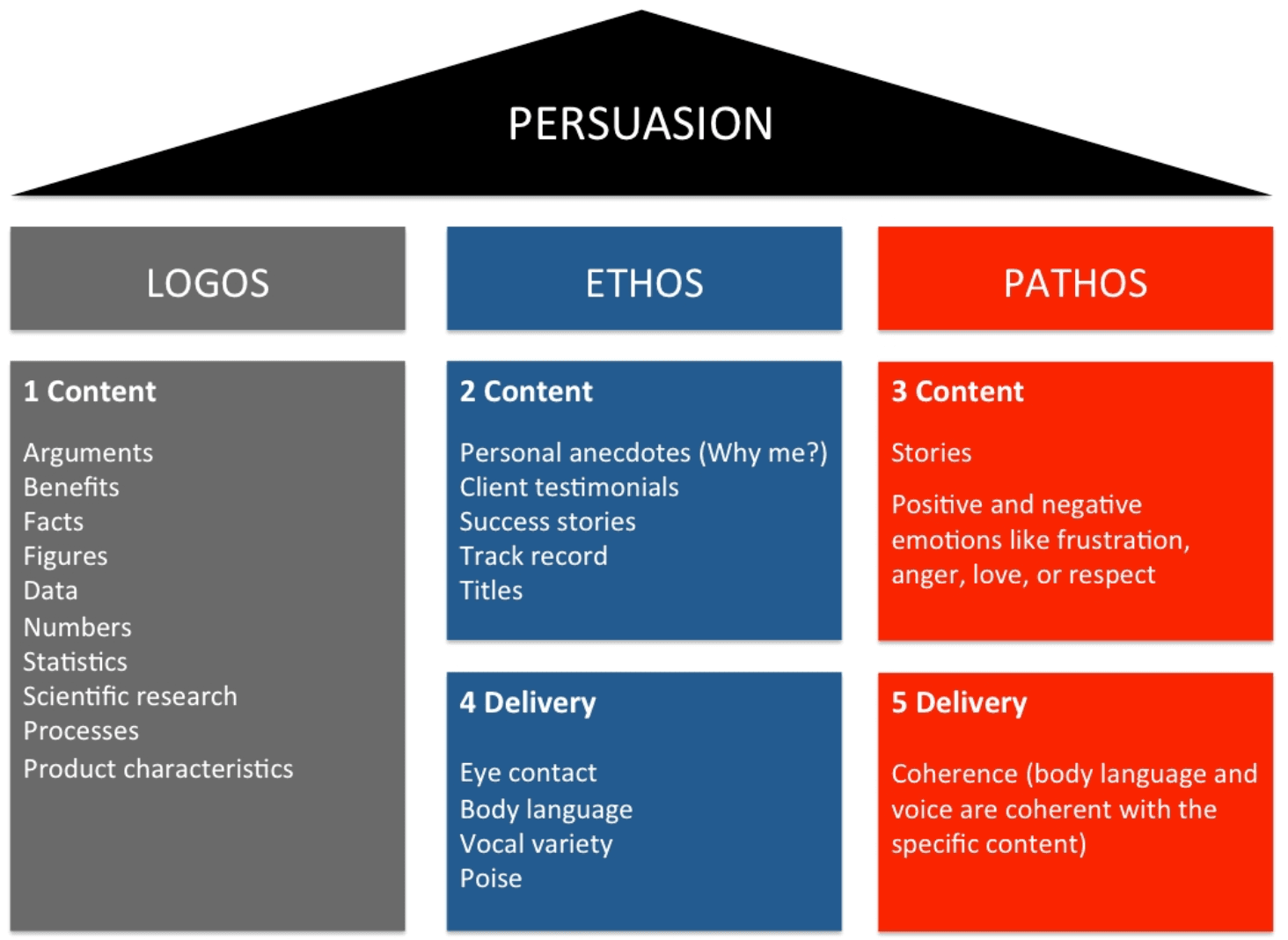
Ethical persuasion uses ethos (credibility), pathos (emotion), and logos (logic) in balanced proportions. Manipulation tends to overload one of these, usually pathos, to exploit audience vulnerabilities.
Here's how the two compare in practice:
- Transparency: Ethical speakers openly share sources, explain their reasoning, and acknowledge where their argument has limits. Manipulative speakers conceal their true intentions or lack of evidence.
- Critical thinking: Ethical persuasion invites questions and open dialogue. Manipulation tries to bypass rational thought and discourage dissent.
- Emotional appeals: Both ethical persuasion and manipulation use emotion, but ethical speakers use it to support a logical argument, not to replace one.
Manipulative Tactics in Speeches
Recognizing manipulation is the first step to avoiding it in your own speeches and spotting it in others'. These tactics show up constantly in political rhetoric, advertising, and everyday arguments.
Emotional Exploitation
- Fear-mongering exaggerates threats or invents false emergencies to provoke anxiety and compliance. A speaker might wildly overstate the danger of a policy to scare the audience into agreement rather than presenting realistic risk data.
- Guilt-tripping and excessive pity appeals overuse pathos to cloud judgment. Instead of making a logical case for donating to a cause, a speaker might show graphic images for several minutes with no context, aiming to overwhelm rather than inform.
- Gaslighting attempts to make audiences question their own perceptions to control the narrative. For example, a political figure might flatly deny making a recorded statement, trying to make the audience distrust what they saw with their own eyes.
Logical Fallacies
- Ad hominem attacks discredit opposing viewpoints by attacking a person's character rather than addressing their argument. Calling a critic "un-American" instead of responding to their evidence is a classic example.
- False dichotomies present only two extreme options while ignoring everything in between. "You're either with us or against us" eliminates any room for partial agreement or nuanced positions.
- Bandwagon appeals exploit the desire for conformity by implying majority support regardless of actual merit. Claims like "9 out of 10 doctors recommend..." pressure the audience to follow the crowd rather than evaluate the evidence.
Selective Information Use
- Cherry-picking means selectively presenting only the data that supports your position while omitting contradictory evidence. A speaker citing three favorable studies while ignoring ten that reached the opposite conclusion is cherry-picking.
- Straw man arguments misrepresent an opposing view to make it easier to attack. Claiming "all environmentalists want to ban cars" distorts a complex position into something absurd and easy to dismiss.
- Card stacking emphasizes favorable facts while downplaying or omitting unfavorable ones. Think of a product pitch that highlights every benefit but never mentions side effects or risks.

Ethical Implications of Persuasion
Philosophical Considerations
You don't need to be a philosophy major, but a few ethical frameworks help clarify why manipulation is wrong, not just that it feels wrong.
- Respect for persons requires you to consider audience autonomy and dignity. Your listeners deserve to be treated as thinking people, not targets.
- Utilitarian ethics asks you to weigh the potential benefits and harms of your persuasive methods on all stakeholders, not just yourself or your immediate audience.
- Kantian ethics emphasizes treating audiences as ends in themselves, not merely as means to your goals. If your strategy only works because the audience doesn't realize what you're doing, that's a red flag.
- Virtue ethics focuses on the speaker's character and intentions, promoting honesty and integrity as core values in persuasion.
Practical Ethical Concerns
- Emotional appeals aren't automatically unethical, but you should ask whether you're genuinely engaging with audience values or just manipulating feelings to get a reaction.
- Transparency and honesty in presenting evidence are non-negotiable. If you wouldn't want your sources scrutinized, that's a sign something is off.
- Consider the long-term consequences of your methods. Deceptive persuasion might work once, but it erodes public trust and degrades the quality of public discourse over time.
- Your persuasive techniques should align with your genuine beliefs. If you have to argue something you don't actually believe using tactics you'd be embarrassed to explain, reconsider your approach.
- Power dynamics matter. Speaking to vulnerable or captive audiences (children, employees who can't leave, people in crisis) raises the ethical stakes significantly. The less freedom your audience has to push back, the more careful you need to be.
Ethical Balance in Persuasion
Pre-Speech Preparation
- Set personal ethical boundaries before you start writing. Commit to truthfulness, respect for audience autonomy, and avoiding deceptive practices.
- Fact-check rigorously. Verify the accuracy and context of every claim and statistic you plan to use. If a data point only supports your argument when taken out of context, drop it.
- Reflect on your own biases and motivations. Ask yourself: Am I trying to help the audience understand something, or am I just trying to get what I want? This kind of self-awareness helps you catch unconscious manipulation before it reaches the podium.
- Build an ethical decision-making framework you can apply when you hit gray areas. Some speakers use a simple test: Would I be comfortable if the audience could see every choice I made in preparing this speech?
Speech Content and Delivery
- Present multiple perspectives on the issue. Even if you're arguing for one side, acknowledging the strongest counterarguments builds your credibility and respects your audience's intelligence.
- Acknowledge limitations or potential weaknesses in your own position. This doesn't weaken your speech; it actually strengthens your ethos.
- Use emotional appeals and rhetorical devices to enhance your logical argument, not to replace it. Pathos should support logos, not drown it out.
- Balance ethos, pathos, and logos throughout the speech for well-rounded, ethical persuasion.
- Provide clear citations for factual claims and statistics. If you say "studies show," be ready to say which studies.
Post-Speech Evaluation
- Seek feedback from diverse sources, including people who disagree with you, to identify any unintentionally manipulative elements.
- Conduct an honest self-assessment: Did I stay within my ethical boundaries? Did I present information fairly?
- Pay attention to audience reactions and questions. If listeners seem confused or misled, that's worth examining even if it wasn't intentional.
- Treat each speech as a learning opportunity. Reflect on what worked ethically and what you'd do differently next time.
See Fiveable more often in Google
Mark Fiveable as a preferred source and Google is more likely to show you our guides in Top Stories, with a "preferred" badge in AI Mode and AI Overviews.