9.4 Managing Stage Presence and Eye Contact

📞Intro to Public Speaking Unit 9 Review
9.4 Managing Stage Presence and Eye Contact
📞 Intro to Public Speaking
Managing Stage Fright

Top images from around the web for Understanding and addressing physiological symptoms
The Process of Breathing · Anatomy and Physiology View original
Is this image relevant?
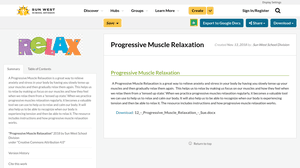
Progressive Muscle Relaxation | Resource Bank View original
Is this image relevant?
Deep Breathing | Diagram showing how to do deep breathing. U… | Flickr View original
Is this image relevant?
The Process of Breathing · Anatomy and Physiology View original
Is this image relevant?
Progressive Muscle Relaxation | Resource Bank View original
Is this image relevant?
Understanding and Addressing Physiological Symptoms
A racing heart, sweaty palms, and shaky hands are completely normal responses to public speaking. Your body is triggering its fight-or-flight response, and the goal isn't to eliminate these symptoms but to manage them so they don't derail your delivery.
Controlled breathing is the fastest way to calm your nervous system:
- Diaphragmatic breathing: Breathe deeply into your belly (not your chest), then exhale slowly. This activates your body's relaxation response.
- Box breathing: Inhale for 4 seconds, hold for 4, exhale for 4, hold for 4. Repeat this cycle 3-4 times before you speak.
Progressive muscle relaxation helps release physical tension before you go on:
- Start at your toes and work up to your head.
- Tense each muscle group for about 5 seconds, then release for 10 seconds.
- Pay special attention to your shoulders, jaw, and hands, since those are where tension shows most during a speech.
Psychological Techniques for Anxiety Reduction
Cognitive restructuring means catching your anxious thoughts and replacing them with realistic ones. For example, if your brain says "I'll forget everything," counter with "I've practiced this multiple times and I have notes if I need them." The replacement doesn't need to be wildly optimistic; it just needs to be accurate.
Visualization works because your brain processes a vividly imagined experience similarly to a real one. Picture yourself walking to the front of the room, making eye contact, speaking clearly, and handling transitions smoothly. Include sensory details: the feel of your notes in your hand, the sound of your voice in the room.
Build a pre-speech routine to give yourself a sense of control:
- Positive but realistic self-talk ("I'm prepared for this")
- Light physical movement like shoulder rolls or gentle stretches to release tension
- A few rounds of box breathing
Preparation Strategies for Composure
Nothing reduces anxiety like genuine preparation. Create a detailed outline and speaking notes, then rehearse multiple times. If you can, practice in the actual room where you'll be speaking.
Before your speech, familiarize yourself with the venue:
- Test the microphone, projector, clicker, and any other equipment
- Walk the stage area so you can plan where you'll stand and move
- Note any obstacles like cords, furniture, or uneven flooring
Effective Eye Contact
Techniques for Audience Engagement
Eye contact is one of the strongest tools you have for connecting with listeners. Without it, even a well-written speech can feel distant.
The triangle technique helps you cover the whole room without staring at one spot. Divide the audience into three sections (left, center, right) and rotate your gaze between them in a loose triangular pattern. This creates the impression that you're speaking to everyone, even in a large room.
For each person or section, hold your gaze for 3-5 seconds before moving on. That's long enough to feel like a real connection but short enough to avoid making anyone uncomfortable. Move your eyes smoothly rather than darting around, which can make you look nervous.
As you scan the room, watch for audience feedback: nodding (they're with you), frowning (they're confused), fidgeting (they're losing interest). These cues tell you when to slow down, clarify a point, or pick up your energy.

Adapting Eye Contact to Different Contexts
Eye contact norms vary across cultures. In some cultures, sustained direct eye contact can feel confrontational or disrespectful. If you're speaking to a diverse audience, be aware of this and don't interpret averted eyes as disengagement.
Different venue sizes also require different approaches:
- Small rooms: Focus on individual audience members. You can make genuine one-on-one eye contact with most people.
- Large auditoriums: Use broader scanning. Look at sections rather than individuals, and focus on people a few rows back so more of the audience feels included.
- Virtual presentations: Look directly into the camera lens, not at the faces on your screen. This is counterintuitive, but it's the only way to simulate eye contact on video.
Maintaining Consistent Eye Contact
The biggest enemy of eye contact is over-reliance on your notes or slides. If you're reading, you're not connecting.
- Glance at your notes briefly, then look back up before you start speaking again. Never talk while looking down.
- Memorize your key points and transitions so you only need notes for specific details or quotes.
- Use mental anchors to recall your speech structure. For instance, associate each main point with a vivid image or use a mnemonic to remember the order of your sections.
Engaging Stage Presence
Effective Use of Speaking Space
Proxemics is the study of how physical distance affects communication. In public speaking, you're typically working at public distance (12+ feet), but understanding the other zones helps you use movement intentionally:
- Stepping forward toward the audience signals emphasis or urgency. Use this for your most important points.
- Moving laterally (side to side) can signal a transition between topics. Walk to a new spot when you shift to a new section of your speech.
- Stepping back creates a pause and gives the audience a moment to absorb what you just said.
The power position is center stage, slightly forward, with your feet about shoulder-width apart and your posture open (arms uncrossed, shoulders back). This is your home base. Return to it for your strongest moments.
Nonverbal Communication Through Movement
Your gestures should feel natural and match what you're saying. A few guidelines:
- Use purposeful hand movements that reinforce your words. If you're listing three points, hold up fingers. If you're describing growth, move your hand upward.
- Synchronize gestures with your key words, not before or after.
- Avoid repetitive, unconscious movements (pacing, swaying, clicking a pen) that distract from your message.
Different stage setups require different movement strategies:
- Proscenium stages (standard front-facing): You face the audience directly. Movement is mostly forward/back and side to side.
- Thrust stages (audience on three sides): You need to turn and address all three sections, not just the front.
- In-the-round (audience surrounds you): Rotate regularly so no section feels ignored.
If there's a podium, decide whether to stay behind it or step out. Stepping away from the podium makes you appear more confident and approachable, but staying behind it is fine if that helps you manage your notes or nerves.

Integrating Visual Elements
Props and visual aids can strengthen your message, but only if they're handled smoothly:
- Plan exactly when you'll introduce a prop and where you'll set it down afterward.
- Practice the physical motions of picking up, displaying, and putting away props so it doesn't break your flow.
- When showing slides or charts, step to the side so the audience can see. Gesture toward the visual, then turn back to the audience before you start explaining it.
Always check that your visual aids are visible from every part of the room before your speech begins.
Professional Presentation
Appropriate Attire Selection
What you wear affects your credibility before you say a single word. A good rule of thumb: dress one level above what you expect your audience to wear. If they'll be in jeans and T-shirts, go business casual. If they'll be in business casual, wear business professional.
Research the specific context:
- Academic conferences and formal events typically call for professional attire.
- Tech meetups and creative industry events tend to be more casual.
Color can subtly influence perception:
- Blue suggests trustworthiness and calm
- Red projects energy and confidence
- Neutral tones (black, gray, navy) read as professional and authoritative
Grooming and Appearance Details
Keep your appearance clean and polished. Wrinkled clothes, unkempt hair, or distracting accessories pull attention away from your message.
- Choose simple accessories. Noisy bracelets or flashy jewelry can be distracting, especially with a microphone that picks up extra sound.
- Pick breathable fabrics if you'll be speaking for a while or under stage lights.
- Test your outfit's range of motion beforehand. You need to be able to gesture freely and move around the stage without adjusting your clothes.
Aligning Appearance with Message
Your appearance should be consistent with your content and tone. A speech about corporate leadership calls for different attire than a talk at a community workshop. If there's a mismatch between how you look and what you're saying, the audience will notice, even if they can't articulate why.
Balance professionalism with authenticity. You don't need to look like someone you're not. Incorporate your personal style while meeting the expectations of the setting, and make sure your appearance supports your message rather than competing with it.
See Fiveable more often in Google
Mark Fiveable as a preferred source and Google is more likely to show you our guides in Top Stories, with a "preferred" badge in AI Mode and AI Overviews.