1.3 Historical and Contemporary Perspectives on Public Speaking

📞Intro to Public Speaking Unit 1 Review
1.3 Historical and Contemporary Perspectives on Public Speaking
📞 Intro to Public Speaking
Public Speaking's Historical Journey
Public speaking is one of the oldest formal disciplines in Western education. Understanding where it came from helps you see why certain principles (like Aristotle's three appeals) still show up in every speech class today.

Top images from around the web for Ancient Origins and Classical Development
Athenian democracy - Wikipedia View original
Is this image relevant?
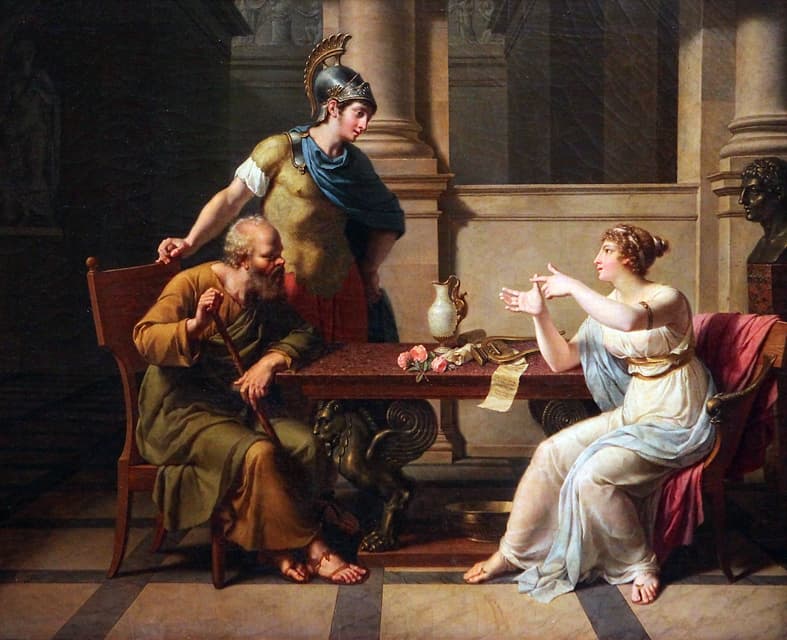
Rhetoric in the Ancient World | Public Speaking View original
Is this image relevant?
Rhetoric - Wikipedia View original
Is this image relevant?
Athenian democracy - Wikipedia View original
Is this image relevant?
Rhetoric in the Ancient World | Public Speaking View original
Is this image relevant?
Ancient Origins and Classical Development
Public speaking first became a formal area of study in ancient Greece, where citizens needed to argue their own cases in court and debate policy in democratic assemblies. Speaking well wasn't optional; it was how you participated in civic life.
- The Sophists, particularly Protagoras and Gorgias, were among the first to teach rhetoric as a skill that could be learned and practiced for a fee.
- Aristotle wrote Rhetoric, which laid the foundation for how we still think about persuasion. He identified three modes of appeal: ethos (credibility of the speaker), pathos (emotional appeal to the audience), and logos (logical reasoning and evidence).
- In Rome, Cicero built on Greek ideas and stressed the importance of style and delivery in his work De Oratore. For Cicero, what you said mattered, but how you said it could make or break a speech.
In practice, this looked like citizens debating policy in the Athenian assembly or senators delivering orations in the Roman Senate.
Medieval and Renaissance Evolution
During the Middle Ages, public speaking didn't disappear, but its main stage shifted. Preaching became the dominant form of oratory, and universities held formal disputations where scholars debated philosophical and theological questions using structured rhetorical techniques.
The Renaissance brought renewed interest in classical Greek and Roman texts. Humanist thinkers believed that eloquent speech was central to an educated person's life. Erasmus' De Copia, for example, taught students how to express the same idea in multiple ways, building verbal flexibility that's still useful for speakers today.
Enlightenment to Modern Era
The Enlightenment shifted public speaking toward rational argumentation. Speakers were increasingly expected to support claims with evidence and logical reasoning rather than relying on emotional appeals or authority alone. This emphasis shaped the modern expectation that a good speech needs solid support for its claims.
- During the 18th and 19th centuries, rhetoric became a standard subject in universities, with formal textbooks and structured curricula.
- The 20th century brought public speaking to mass audiences through radio, television, and eventually the internet. Political campaign speeches and corporate presentations became familiar formats that millions of people encountered regularly.
Key Figures in Public Speaking

Ancient and Classical Influencers
- Demosthenes is one of the most famous Greek orators, known for his Philippics, a series of speeches urging Athens to resist Philip of Macedon's expansion. He's also famous for overcoming a speech impediment through rigorous practice, a story still cited as proof that speaking skills can be developed.
- Quintilian, a Roman rhetorician, wrote Institutio Oratoria, a comprehensive guide to rhetoric education that covered everything from a speaker's childhood training to advanced techniques.
- Cicero delivered the Catiline Orations, a set of speeches that exposed a conspiracy against the Roman Republic. These remain classic examples of persuasive political oratory.
- St. Augustine adapted classical rhetoric for Christian preaching, bridging ancient techniques and medieval religious communication.
Modern Era Pioneers
- Hugh Blair published Lectures on Rhetoric and Belles Lettres in 1783, which became a standard university textbook for over a century and helped formalize rhetoric education.
- Dale Carnegie brought public speaking to everyday people. His book The Art of Public Speaking (and later How to Win Friends and Influence People) made speech techniques accessible to a mass audience in the early 20th century.
- Martin Luther King Jr. demonstrated the power of oratory in social movements. His "I Have a Dream" speech (1963) combined biblical cadence, repetition, and vivid imagery to galvanize the civil rights movement.
- Barbara Jordan was one of the first African American women elected to the Texas State Senate and became known for her commanding oratory, particularly her 1976 Democratic National Convention keynote address.
Other landmark modern speeches include Winston Churchill's "We Shall Fight on the Beaches" (1940), which rallied British morale during World War II, and Steve Jobs' 2005 Stanford Commencement Address, often cited as a model of storytelling in public speaking.
Technology's Impact on Public Speaking
Technology hasn't changed the core principles of good speaking, but it has dramatically changed how speeches are prepared, delivered, and experienced.
Digital Presentation Tools
- Visual aid software like PowerPoint and Prezi replaced overhead projectors and poster boards, allowing speakers to create dynamic, image-rich slides. The tradeoff: poorly designed slides can distract from a message just as easily as they can support it.
- Teleprompters allow speakers to maintain eye contact with an audience while reading a prepared script, a technique common in political speeches and broadcast news.
- Real-time analytics tools can track audience engagement during presentations (through polling apps or attention metrics), giving speakers data they can use to adjust on the fly.

Virtual Platforms and New Media
The internet created entirely new venues for public speaking:
- Video conferencing platforms like Zoom made remote presentations routine, especially after 2020. Speaking to a camera instead of a live audience requires different skills, particularly in maintaining energy and reading engagement without physical cues.
- TED Talks popularized the short-form expert presentation (typically 18 minutes or less) and made high-quality speeches accessible to global audiences online.
- Podcasting blends public speaking with conversational style, creating a long-form format where speaking skills directly affect a show's success.
- Social media platforms like Instagram Live and YouTube allow anyone to address an audience in real time, lowering the barrier to entry for public speaking.
Virtual and augmented reality are emerging as newer tools, though they're not yet mainstream for most speakers.
Public Speaking's Role in Modern Society
Political and Business Influence
Public speaking remains central to how power operates. Political debates and campaign speeches shape voter opinions and election outcomes. A single strong (or weak) debate performance can shift a race. Presidential inauguration addresses set the tone for an administration and speak to the entire nation.
In business, executives use speeches to motivate employees, pitch to investors, and communicate corporate vision at events like annual shareholder meetings. The ability to present clearly and persuasively is consistently ranked among the most valued workplace skills.
Education and Knowledge Sharing
- TED Talks have become one of the most recognized platforms for sharing expert knowledge across fields, from neuroscience to urban design. Their popularity shows how much audiences value clear, engaging spoken communication.
- Public speaking is increasingly treated as a core 21st-century competency in education, taught not just in communication departments but across disciplines.
- In the scientific community, researchers present findings at conferences and public lectures. The ability to explain complex work to non-specialist audiences has become an important part of a scientist's role.
Social Impact and Entertainment
Public speaking has long been a catalyst for social change. Activists use speeches to build movements, shift public opinion, and pressure policymakers. Greta Thunberg's addresses on climate change, for instance, reached global audiences and influenced international policy discussions while she was still a teenager.
In entertainment, public speaking skills underpin stand-up comedy, award show speeches, and media appearances. Oscar acceptance speeches that address social issues can spark national conversations, showing how even brief moments at a microphone carry real influence.
See Fiveable more often in Google
Mark Fiveable as a preferred source and Google is more likely to show you our guides in Top Stories, with a "preferred" badge in AI Mode and AI Overviews.