8.1 Principles of Effective Language Use

📞Intro to Public Speaking Unit 8 Review
8.1 Principles of Effective Language Use
📞 Intro to Public Speaking
Clear and Concise Language
Effective language in speeches comes down to three things: clarity, impact, and connection. You want words that your audience understands immediately and remembers afterward. This section covers how to choose those words deliberately.

Top images from around the web for Precision and Economy in Speech
Understanding Listening | Boundless Communications View original
Is this image relevant?
4.3: Forming Effective Sentences – Communication at Work View original
Is this image relevant?
2.2 Communicating with Precision – Technical Writing Essentials View original
Is this image relevant?
Understanding Listening | Boundless Communications View original
Is this image relevant?
4.3: Forming Effective Sentences – Communication at Work View original
Is this image relevant?
Precision and Economy in Speech
Clarity means using precise words that convey your intended meaning without ambiguity. Conciseness means expressing ideas in the fewest words possible without losing meaning. Together, they keep your audience focused instead of confused.
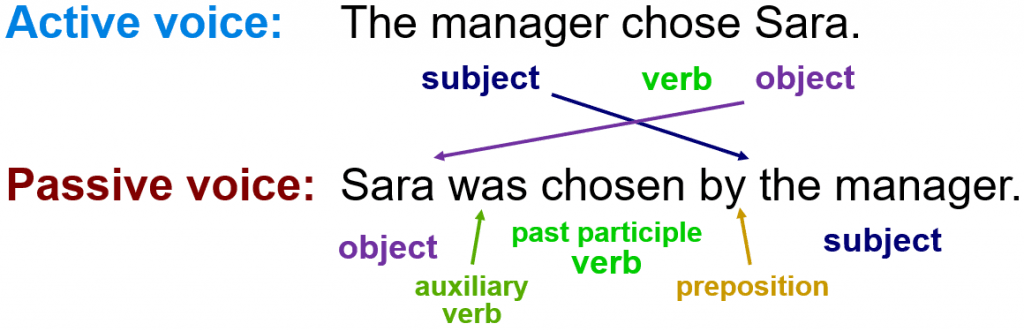
Active voice generally makes your speech clearer and more direct than passive voice. Compare:
- Active: "The committee approved the proposal."
- Passive: "The proposal was approved by the committee."
The active version is shorter, punchier, and tells the audience who did what right away. Default to active voice unless you have a specific reason to use passive (like when the actor is unknown or unimportant).
Avoid jargon and technical terms unless your audience knows them. If you must use a technical term, define it immediately. Instead of "The ROI on this initiative is substantial," say "The financial benefits of this project far outweigh its costs." Your audience shouldn't have to decode your message.
Vary your sentence structure to keep listeners engaged. Mix simple, compound, and complex sentences. A string of short sentences builds momentum: "We faced challenges. Our team persevered. In the end, we achieved success through collaboration and innovation." But too many short sentences in a row sounds choppy, and too many long ones lose people. Find the rhythm.
Coherence and Flow
Even well-chosen words fall flat if your ideas don't connect logically. Transitional phrases create that connection between ideas and sections of your speech. Words like "Furthermore," "In contrast," and "As a result" signal to the audience how your next point relates to the last one.
Cut anything that doesn't earn its place in your speech:
- Redundancies: saying the same thing twice in different words
- Filler words: "basically," "like," "you know"
- Unnecessary qualifiers: "in my opinion," "as a matter of fact" (unless they serve a specific rhetorical purpose)
Finally, organize your ideas in a logical sequence. Depending on your topic, you might use chronological order, problem-solution structure, or topical arrangement. The structure you choose should feel natural for your content and make it easy for the audience to follow along.
Vivid Language for Engagement
Clear language gets your point across. Vivid language makes it stick. This is where you move from informing your audience to truly engaging them.

Sensory and Figurative Language
Sensory language appeals to the five senses and creates mental images that pull listeners into your speech. Compare "The fire was warm" with "The crackling flames cast dancing shadows on the cave walls." The second version appeals to both sight and sound, giving the audience something to experience, not just understand.
Metaphors and similes make abstract ideas concrete by comparing them to something familiar:
- Metaphor (direct comparison): "Life is a rollercoaster with its ups and downs."
- Simile (comparison using "like" or "as"): "Her voice was as smooth as silk."
Both work by linking an unfamiliar or abstract concept to something the audience already understands emotionally.
Specific details almost always beat general ones. Instead of "The building was tall," say "The skyscraper towered 100 stories above the bustling city streets." Concrete details help your audience visualize exactly what you mean.
Rhetorical Devices and Storytelling
Rhetorical devices add rhythm and emphasis to your key points. Here are a few worth knowing:
- Alliteration (repeated initial consonant sounds): "Peter Piper picked a peck of pickled peppers"
- Assonance (repeated vowel sounds): "Light white night"
- Consonance (repeated consonant sounds within or at the end of words): "Pitter patter, raindrops scatter"
Repetition, used strategically, reinforces your message and creates a memorable cadence. Two common forms:
- Anaphora: repeating a word or phrase at the beginning of successive clauses. Think of Martin Luther King Jr.'s repeated "I have a dream" lines.
- Epistrophe: repeating a word or phrase at the end of successive clauses. Abraham Lincoln's "of the people, by the people, for the people" is a classic example.
Storytelling makes speeches relatable. A good story has a clear beginning, middle, and end, and features characters the audience can connect with emotionally. Even a brief anecdote can make an abstract argument feel real and human.
Sentence length is itself a tool. Short sentences create impact: "We came. We saw. We conquered." Longer sentences allow for elaboration and flow. Varying between the two keeps your audience's attention and lets you control the emotional tone.
Inclusive Language in Public Speaking
Inclusive language ensures your message reaches your entire audience without alienating or marginalizing anyone. It's not about being overly cautious with every word. It's about being thoughtful enough that no one in your audience feels excluded from the conversation.

Respecting Diversity and Avoiding Bias
Gender-neutral language avoids defaulting to one gender when you mean everyone:
- Use singular "they" instead of "he" or "she" when referring to an unknown individual
- Use inclusive job titles: "firefighter" instead of "fireman," "police officer" instead of "policeman"
Person-first language puts the individual before a disability or condition, emphasizing their personhood. For example, say "person with autism" rather than "autistic person." (Note: some communities prefer identity-first language, like "Deaf person." When in doubt, follow the preference of the group you're discussing.)
Cultural sensitivity means being aware that idioms and references don't always translate across cultures. "It's not rocket science" might confuse an international audience. "It's not complicated" says the same thing more clearly.
Age, Orientation, and Representation
- Avoid ageist language. Instead of "elderly person," use "older adult" or specify the age range. Don't assume that age determines capability.
- Use inclusive language for sexual orientation and gender identity. Using "partner" or "spouse" instead of assuming "husband" or "wife" avoids heteronormative assumptions and respects diverse identities.
- Include diverse examples and references. When you mention historical figures, experts, or hypothetical people, intentionally draw from various backgrounds. This helps a wider range of audience members see themselves in your speech.
Vocabulary for Different Contexts
The same idea can be expressed in very different ways depending on who you're talking to and where. Adapting your vocabulary to the situation is one of the most practical skills in public speaking.
Adapting Language to Audience and Setting
Register refers to the level of formality in your language. You adjust it based on your audience and the occasion:
- Formal register: "I respectfully request your attention to this matter."
- Informal register: "Hey, can you take a look at this?"
Neither is inherently better. The right register is the one that fits the context.
Technical vocabulary works for specialized audiences but needs translation for general ones:
- Medical conference: "The patient presented with acute myocardial infarction."
- General audience: "The patient had a severe heart attack."
If you're unsure whether your audience knows a term, explain it. You won't offend experts by being clear, but you will lose a general audience by being obscure.
Colloquialisms and slang can build rapport with certain groups but may feel out of place in formal settings or with diverse audiences. "That new policy is totally lit" might land with a youth group but would undermine your credibility at a professional conference, where "The new policy has been very well-received" fits better.
Nuanced Communication Strategies
Euphemisms let you discuss sensitive topics tactfully. Saying someone "passed away" instead of "died" can show respect in a difficult moment. But overusing euphemisms makes you sound vague or evasive. Use them when sensitivity genuinely calls for it.
Connotation vs. denotation is a distinction worth paying attention to. "Stubborn" and "persistent" describe similar behavior, but "stubborn" carries a negative connotation while "persistent" sounds admirable. Your word choice shapes how the audience feels about what you're describing.
Jargon should be used judiciously. For a tech audience, "We're leveraging AI to optimize our UX" is efficient shorthand. For a general audience, "We're using artificial intelligence to improve how users interact with our product" actually communicates. Always ask yourself: Will my audience understand this, or am I just sounding impressive to myself?
Rhetorical questions and imperatives should match your speech's purpose and audience:
- Rhetorical question (to provoke thought): "Isn't it time we took action on climate change?"
- Imperative (to call for action): "Join us in making a difference for our planet."
Both are powerful, but they set different tones. Rhetorical questions invite reflection; imperatives demand engagement.
See Fiveable more often in Google
Mark Fiveable as a preferred source and Google is more likely to show you our guides in Top Stories, with a "preferred" badge in AI Mode and AI Overviews.