5.1 Basic Speech Structure

📞Intro to Public Speaking Unit 5 Review
5.1 Basic Speech Structure
📞 Intro to Public Speaking
Every speech has three main parts: an introduction, a body, and a conclusion. That sounds simple, but knowing how each part works and why it matters is what separates a rambling talk from one that actually lands with your audience. This guide covers what goes into each section, how to organize your content, and how to pull it all together.
Speech Structure Components

Top images from around the web for Main Parts of a Speech
Purpose of a Speech Conclusion | Public Speaking View original
Is this image relevant?
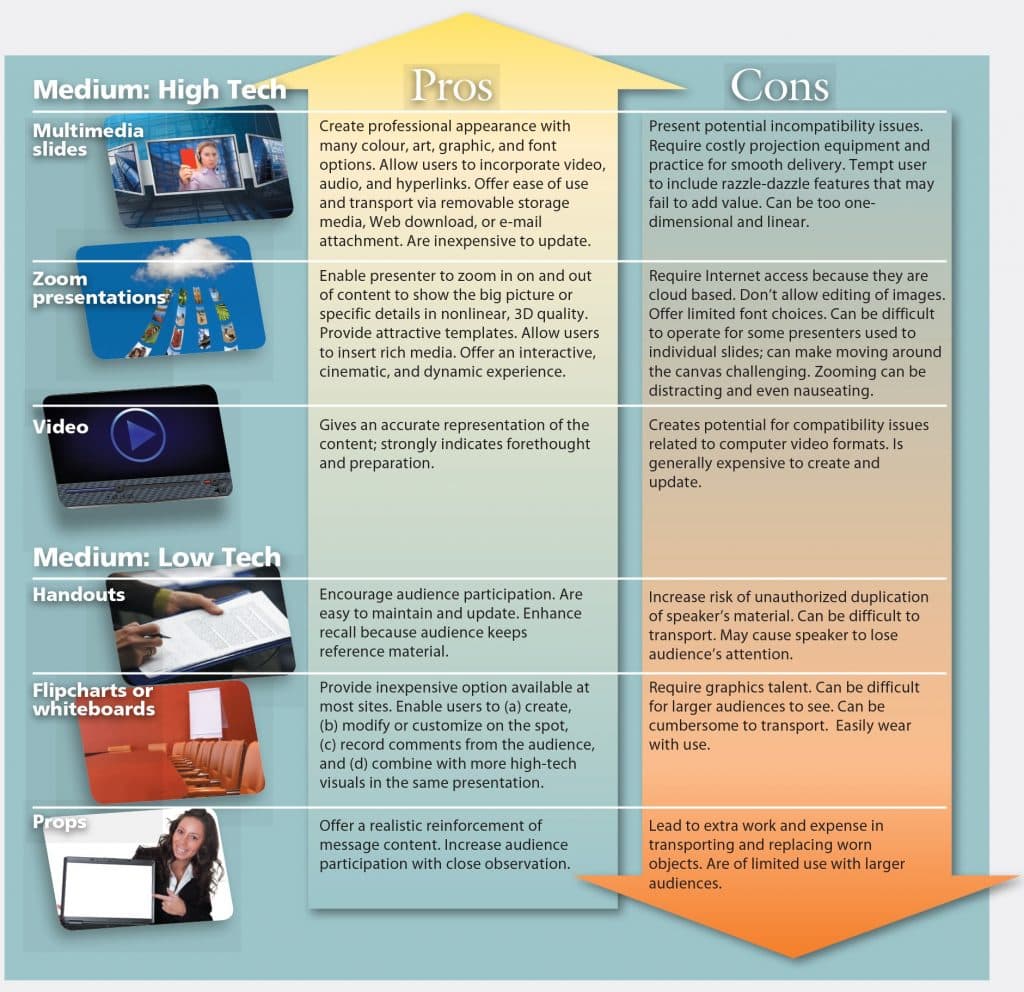
Unit 35: Visual Aids – Communication Skills View original
Is this image relevant?
Purpose of a Speech Conclusion | Public Speaking View original
Is this image relevant?
Unit 35: Visual Aids – Communication Skills View original
Is this image relevant?
Main Parts of a Speech
Introduction – This is your first impression. It has four jobs:
- Attention-getter: Open with something that makes people want to listen. A surprising statistic, a short story, a bold question.
- Credibility: Give the audience a reason to trust you on this topic. Maybe you have personal experience, or you've done research.
- Thesis statement: One clear sentence that states your central idea or argument. Everything else in the speech supports this.
- Preview of main points: Tell the audience what's coming. "Today I'll cover X, Y, and Z." This acts as a roadmap so they can follow along.
Body – This is where your actual content lives. You'll organize it into 2–5 main points, each backed by supporting evidence like facts, statistics, examples, or stories. The body takes up the bulk of your speaking time (roughly 75–80% of it).
Conclusion – Wrap it up by summarizing your main points, restating your thesis (in slightly different words), and ending with a memorable closing statement. This could be a call to action, a powerful quote, or a callback to your attention-getter.
Transitions connect all of these parts together. They're the phrases and sentences that move you smoothly from one idea to the next, so your speech doesn't feel like a list of disconnected thoughts.
Supporting Elements
- Supporting evidence (facts, statistics, expert quotes, examples) strengthens your main points and makes you more credible.
- Organizational patterns give your body a logical shape. Common ones include chronological (time order), spatial (location-based), topical (by category), and problem-solution. You pick the pattern that best fits your purpose and content.
- Visual aids (slides, charts, props) can clarify complex information and keep your audience engaged, but they should support your words, not replace them.
Purpose of Speech Structure
What the Introduction Does
Your introduction sets the tone for everything that follows. In the first 30 seconds, your audience decides whether they're going to pay attention or zone out. A strong attention-getter earns their interest. Establishing relevance (connecting your topic to something they care about) gives them a reason to keep listening. The thesis and preview then set clear expectations so the audience knows exactly where you're headed.
One thing students often overlook: relevance and the attention-getter aren't the same job. You might open with a shocking statistic (attention-getter) and then explain why this matters to the people in the room (relevance). Both need to happen in your introduction.
What the Body and Conclusion Do
The body breaks your content into organized chunks, which makes it far easier for your audience to process and remember. Each main point should clearly connect back to your thesis. If a point doesn't support your thesis, it doesn't belong in the speech.
Transitions between points maintain coherence. Phrases like "Now that we've looked at the causes, let's turn to the effects" act as signposts that keep your audience oriented.
The conclusion does two things: it reinforces your key ideas through a brief summary, and it gives the audience something to walk away with. A strong closing statement is what people tend to remember most, so don't let your speech just trail off. Avoid introducing new information in the conclusion; it's for reinforcing, not adding.
Visual Aid Integration
Visual aids work best when they:
- Clarify something that's hard to explain with words alone (data, processes, comparisons)
- Reinforce a key point visually to boost retention
- Add variety to keep the audience engaged
The most common mistake is putting too much text on a slide and then reading it aloud. Your visuals should complement what you're saying, not duplicate it. A good rule of thumb: if the audience can understand the slide without you talking, there's too much on it.
Speech Structure Effectiveness

Audience Comprehension
A clear structure makes your speech easier to follow and easier to remember. When your main points are organized logically and your transitions are smooth, the audience doesn't have to work hard to keep up. The introduction tells them what to expect, the body delivers on that promise, and the conclusion ties it together. This pattern (tell them what you'll say, say it, then tell them what you said) is sometimes called the "tell them three times" principle, and it works because repetition aids retention.
Speech Coherence and Flow
- Effective transitions create a sense of continuity between sections.
- Balanced content means you're spending appropriate time on each point rather than rushing through one and dragging out another. If you have three main points and seven minutes, each point should get roughly equal time unless one is clearly more complex.
- A solid structure also helps with time management. When you know exactly what you need to cover in each section, you're less likely to run over or finish too early.
Impact on Audience
- An engaging introduction builds credibility and captures attention early.
- Organized main points help the audience follow your argument or narrative without getting lost.
- A strong conclusion increases the chance that people will remember your message and, if you're persuading, act on it.
Organizing Speeches
Pre-planning Stage
Before you write a single word, work through these steps:
- Define your purpose. Are you trying to inform, persuade, or entertain? This shapes every decision that follows.
- Analyze your audience. What do they already know? What do they care about? What might they resist?
- Write your thesis statement. Boil your entire speech down to one sentence. If you can't do that yet, you need to narrow your topic.
- Choose an organizational pattern. Topical works for most informative speeches. Chronological works for processes or histories. Problem-solution is great for persuasive speeches. Spatial works well when you're describing a place, layout, or physical structure.
Content Development
- Outline your main points in a logical sequence that supports your thesis.
- Craft your introduction. Write the attention-getter, establish your credibility, state your thesis, and preview your points.
- Develop the body. For each main point, gather supporting evidence (examples, statistics, expert testimony) and arrange it clearly.
- Write transitions between each main point and between major sections. Signposting phrases like "My second point is..." or "This brings us to..." keep the audience on track.
- Write your conclusion. Summarize your main points, restate your thesis, and end with a memorable closing.
Refinement and Enhancement
- Add visual aids if they genuinely help (slides, handouts, props). Don't add them just because you think you should.
- Review your outline for balance. Are your main points roughly equal in weight? Does everything connect back to your thesis?
- Check your timing. Practice out loud with a timer. Cut or expand content as needed to fit your time limit.
- Practice delivery. Run through the speech multiple times, focusing on smooth transitions and natural pacing. The structure should feel invisible to your audience; if they're noticing your organization, it's working. If they're noticing it's missing, it's not.
See Fiveable more often in Google
Mark Fiveable as a preferred source and Google is more likely to show you our guides in Top Stories, with a "preferred" badge in AI Mode and AI Overviews.