4.2 Narrowing and Focusing Topics

📞Intro to Public Speaking Unit 4 Review
4.2 Narrowing and Focusing Topics
📞 Intro to Public Speaking
Narrowing a Topic
Taking a broad subject and shaping it into a focused, manageable speech topic is one of the most important skills in public speaking. A well-narrowed topic gives you a clear message, keeps your audience engaged, and makes the rest of your preparation (research, outlining, practicing) much easier.

Top images from around the web for Topic Refinement Strategies
Narrowing a Topic | Choosing & Using Sources: A Guide to Academic Research View original
Is this image relevant?
Narrowing Your Topic | Public Speaking View original
Is this image relevant?
Narrowing Your Topic | Public Speaking View original
Is this image relevant?
Narrowing a Topic | Choosing & Using Sources: A Guide to Academic Research View original
Is this image relevant?
Narrowing Your Topic | Public Speaking View original
Is this image relevant?
Topic Refinement Strategies
The funnel method is the most common approach: you start with a broad subject and systematically work your way down to something specific. For example, "health" becomes "mental health" becomes "college students and anxiety" becomes "how sleep habits affect anxiety in college students."
Here are practical ways to narrow any topic:
- Limit by time period (e.g., climate policy in the last decade, not all of environmental history)
- Limit by geography (e.g., water access in rural Sub-Saharan Africa, not global water issues)
- Limit by subtopic or angle (e.g., the economic impact of fast fashion, not the entire fashion industry)
- Ask probing questions about your general topic: Who is most affected? What's the most debated aspect? What part do you know most about?
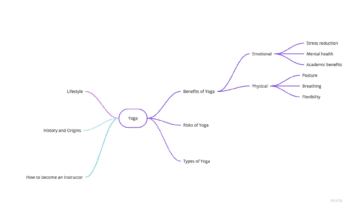
- Create a concept map or mind map to visually branch out from your broad idea and spot which branch feels most promising
Throughout this process, factor in your time constraints, the research materials available to you, and your own knowledge of the subject.
Audience and Contextual Considerations
Your audience should shape how you narrow your topic. A few things to think through:
- Demographics like age, education level, and cultural background affect what will land. A topic that works for a college seminar might not work for a community group.
- Prior knowledge matters. If your audience already knows the basics, you can go deeper. If they don't, you'll need to keep it more accessible.
- Sensitivity and controversy. Some topics require extra care depending on the setting. That doesn't mean you avoid them, but you should be deliberate about how you frame them.
- Relevance. Topics connected to current events or issues your audience cares about tend to generate more engagement.
- Speech purpose. Make sure your narrowed topic aligns with whether you're informing, persuading, or entertaining.
- Venue and format. A five-minute classroom speech calls for a tighter focus than a twenty-minute keynote.
Thesis Statement Development

Crafting Effective Thesis Statements
A thesis statement is a single sentence that captures the central idea or argument of your entire speech. Think of it as a promise to your audience about what you'll cover and what you'll prove or explain.
A strong thesis statement should be:
- Specific enough that your audience knows exactly what to expect
- Focused enough to be fully developed within your time limit
- Written in clear, concrete language (avoid vague phrases like "many factors" or "various issues")
- Positioned near the end of your introduction, where it serves as a bridge into the body of your speech
One useful test: try to imagine someone disagreeing with or questioning your thesis. If no one reasonably could, it might be too obvious or too vague. Anticipating counterarguments also helps you strengthen your points before you deliver.
Thesis Statement Components and Variations
A complete thesis typically includes the topic, your claim about it, and a preview of your supporting points. The type of thesis you write depends on your speech purpose:
-
Declarative thesis (informative speeches): States what you'll explain. "The three primary causes of the French Revolution were economic inequality, Enlightenment ideas, and a weak monarchy."
-
Argumentative thesis (persuasive speeches): Takes a clear position. "Universities should require financial literacy courses because graduates face rising debt, poor savings habits, and limited investment knowledge."
-
Comparative thesis (speeches analyzing multiple subjects): Weighs options. "While both renewable and non-renewable energy sources have advantages, solar power proves more sustainable in the long term."
-
Cause-and-effect thesis: Explores relationships between events. "The widespread adoption of social media has significantly altered interpersonal communication patterns."
Notice how each example names the topic, states a clear position or focus, and hints at the structure of the speech.
Speech Outline Creation

Structural Elements of a Speech Outline
A speech outline organizes your ideas hierarchically so your speech flows logically. Every outline follows the same basic structure: introduction, body, and conclusion.
Introduction should include:
- An attention-getter (story, question, startling fact)
- A relevance statement (why this matters to your audience)
- A credibility statement (why you're qualified to speak on this)
- A preview of your main points
Body contains your main points, each directly supporting your thesis. Nest your evidence, examples, and details under the main point they support. Aim for main points that are distinct from each other but together cover your thesis completely.
Conclusion should include:
- A restatement of your thesis (rephrased, not repeated word-for-word)
- A brief review of your main points
- A memorable closing statement or call to action
Use transitional phrases between main points to help your audience follow along (e.g., "Now that we've looked at the causes, let's turn to the effects").
Outline Formatting and Development
- Use a consistent numbering system for main points and subpoints (I, A, 1, a).
- Keep parallel structure in your phrasing. If your first main point starts with a verb, the others should too.
- Include source citations directly in your outline so you can reference them easily while preparing.
- Add estimated time allocations for each section to help with pacing.
You'll typically create two versions of your outline:
- A preparation outline with full sentences and detailed notes. This is your planning document.
- A speaking outline with brief key phrases and delivery cues (pauses, emphasis, visual aid references). This is what you bring to the podium.
Topic Scope Adaptation
Time Management Strategies
One of the trickiest parts of speech preparation is fitting your content to your time limit. Here's a general framework:
- Introduction and conclusion together should take about 10-15% of your total time.
- The body gets the remaining 70-80%.
- For a 5-minute speech, stick to 2 main points. For 10-15 minutes, 3 main points usually works well. Longer speeches can handle 4-5, but more than that risks losing your audience.
To stay on track:
- Estimate how long each section will take and write those times into your outline.
- Practice delivering the speech multiple times, timing each run-through.
- Identify examples or details you could cut if you're running long. Having these "omittable" sections planned in advance keeps you from panicking mid-speech.
- Remember that more complex topics often need fewer main points, since each one requires more explanation.
Content Adaptation Techniques
When you need to adjust your speech's scope, these techniques help:
- Inverted pyramid method: Put the most important information first in each section. If you run short on time, the less critical details are at the end and easier to skip.
- Modular content: Design sections that can be added or removed without breaking the overall flow of your speech.
- Scalable examples: Choose anecdotes or illustrations that you can tell in 30 seconds or expand to 2 minutes depending on your pacing.
- Verbal signposts: Phrases like "my second point is..." or "to wrap up this section..." help your audience track where you are, especially if you've had to adjust on the fly.
- Concise language: Look for places where you can say the same thing in fewer words. Cutting filler phrases and redundant sentences often frees up more time than you'd expect.
- Flexible conclusions: Prepare both a brief summary version and a more extended closing so you can adapt to how much time remains.
See Fiveable more often in Google
Mark Fiveable as a preferred source and Google is more likely to show you our guides in Top Stories, with a "preferred" badge in AI Mode and AI Overviews.