4.1 Criteria for Selecting Effective Speech Topics

📞Intro to Public Speaking Unit 4 Review
4.1 Criteria for Selecting Effective Speech Topics
📞 Intro to Public Speaking
Choosing a Speech Topic
Selecting a speech topic is about finding the overlap between what you know, what your audience cares about, and what fits the situation. Get this right and the rest of the speech-writing process becomes much easier. Get it wrong and you'll be fighting an uphill battle no matter how polished your delivery is.

Top images from around the web for Relevance and Expertise
How to Become a Rhetorically Effective Speaker – Starr Sumner – Medium View original
Is this image relevant?
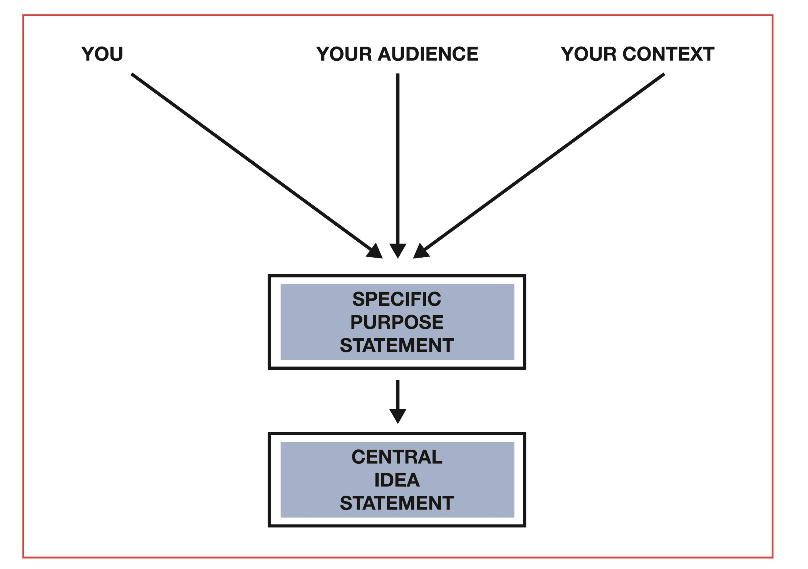
Finding the Purpose and Central Idea of Your Speech | Public Speaking View original
Is this image relevant?
Choosing a Topic | Public Speaking View original
Is this image relevant?
How to Become a Rhetorically Effective Speaker – Starr Sumner – Medium View original
Is this image relevant?
Finding the Purpose and Central Idea of Your Speech | Public Speaking View original
Is this image relevant?
Relevance and Expertise
Your topic should connect to something you genuinely know or care about. When a speaker has real interest or experience in a subject, that comes through in their voice, their confidence, and the quality of detail they can offer. You don't need to be a world expert, but you should be able to speak with some authority.
At the same time, the topic has to matter to your audience. That's where audience demographics come in: age, education level, cultural background, and shared experiences all shape what will land well. A topic that fascinates you but means nothing to your listeners won't be effective.
The occasion and context also set boundaries:
- Formal events (graduation ceremonies, award banquets) call for more serious, purposeful topics
- Casual settings (club meetings, after-dinner talks) give you room for lighter or more personal subjects
Practical Considerations
Even a great topic idea can fall apart if the logistics don't work. Before committing, think through these factors:
- Time constraints — A 5-minute speech needs a narrow focus (one specific example or argument). A 20-minute speech can explore a topic more broadly. Trying to cover too much in too little time is one of the most common mistakes new speakers make.
- Available supporting material — Can you find credible sources, data, or examples to back up your points? If you can't locate solid evidence, the topic may not be feasible. Also consider whether visual aids or demonstrations would strengthen your speech and whether those are realistic for the setting.
- Controversy level — Controversial topics can spark genuine engagement, but they also risk alienating parts of your audience. If you choose a sensitive subject, you'll need thorough research and a careful, respectful approach.
Evaluating Speech Topics

Audience Analysis
Before you finalize a topic, do some homework on who you'll be speaking to. Audience analysis is the process of gathering information about your listeners so you can tailor your topic and approach to them specifically.
- Surveys or informal questions give you direct feedback on what people want to hear about
- Demographic research helps you anticipate preferences, knowledge gaps, and sensitivities
A strong topic strikes a balance between novelty and familiarity. If everything you say is brand new, the audience may struggle to follow. If everything is already known, they'll tune out. The sweet spot is introducing fresh ideas while connecting them to things your audience already understands. For example, explaining blockchain technology by comparing it to a shared Google Doc gives listeners a familiar foothold.
Also consider whether your topic lends itself to audience participation. Topics that allow for Q&A, live polls, or hands-on demonstrations tend to boost engagement, though not every subject or setting calls for interaction.
Speaker Preparation
Be honest about how much preparation a topic will require from you:
- If you're already knowledgeable, you can speak with more depth and handle audience questions confidently
- If the topic is less familiar, budget extra research time and focus on the most essential points
- Complex topics may need simplification for shorter time slots. One useful strategy is breaking a broad subject into subtopics and choosing just one to cover well. For instance, instead of "climate change," you might narrow it to "how rising sea levels affect coastal housing costs."
- Prioritize your most compelling evidence. Collect statistics, brief stories, and case studies, then select only the strongest material that fits your time limit
Topic Alignment with Purpose

Speech Purpose and Structure
Every speech has a primary purpose, and your topic needs to match it. The three fundamental purposes are:
- Informative — Educate the audience on a subject (e.g., how solar panels convert sunlight to electricity)
- Persuasive — Change the audience's beliefs or motivate action (e.g., arguing that your campus should switch to renewable energy)
- Entertaining — Engage and delight the audience (e.g., a humorous retelling of a travel mishap)
Purpose shapes everything about how you develop the speech. An informative speech organizes facts in a logical sequence. A persuasive speech builds arguments step by step, using evidence and emotional appeals. An entertaining speech flows through narrative and timing to hold attention.
The supporting materials you choose also shift with purpose. Informative speeches lean on data and clear explanations. Persuasive speeches rely on strong evidence and logical or emotional appeals. Entertaining speeches use storytelling techniques like vivid description, pacing, and humor.
Purpose-Driven Development
Misalignment between topic and purpose confuses your audience. If you're giving an informative speech about social media's effect on teens but keep arguing that parents should ban smartphones, you've drifted into persuasion. If an informative talk turns into a string of jokes, the educational goal gets lost. Before drafting, write down your purpose in one sentence and check each section of your outline against it.
Some occasions call for specialized purposes beyond the big three:
- Commemorative speeches honor people or events (eulogies, tributes, retirement toasts)
- Demonstrative speeches teach a specific skill or process (a cooking technique, a first-aid procedure)
Matching your topic to the right purpose from the start keeps your speech focused and your audience clear on what to expect.
Cultural Sensitivity in Topic Selection
Inclusive Approach
Your audience will likely include people from different backgrounds, and your topic selection should reflect that awareness. Cultural competence means recognizing that your listeners may hold different values, experiences, and perspectives, and adjusting your approach accordingly.
- Research the cultural norms and expectations of your audience before finalizing a topic
- Avoid stereotypes and broad generalizations. Use specific, sourced examples rather than sweeping claims about any group
- Watch out for idioms, slang, or cultural references that may not translate across backgrounds. If you use one, briefly explain it
Responsible Communication
Responsible topic selection goes beyond just avoiding offense. It means actively working to represent diverse experiences:
- Include examples from varied cultural backgrounds when possible
- Highlight universal themes (fairness, curiosity, resilience) that resonate across different groups
- Be aware of how your topic might affect marginalized communities, and handle those dimensions with care
You should also reflect on your own positionality, which refers to how your personal background (your identity, experiences, and social position) shapes the way you see a topic. Being transparent about that builds trust with your audience. You don't need to deliver a disclaimer, but acknowledging the limits of your own perspective shows maturity and credibility as a speaker.
See Fiveable more often in Google
Mark Fiveable as a preferred source and Google is more likely to show you our guides in Top Stories, with a "preferred" badge in AI Mode and AI Overviews.