8.3 Adapting Language to the Audience and Context

📞Intro to Public Speaking Unit 8 Review
8.3 Adapting Language to the Audience and Context
📞 Intro to Public Speaking
Adapting your language to your audience and context is one of the most practical skills in public speaking. The same message can land completely differently depending on who you're talking to and where you're saying it. A phrase that works at a community meeting might fall flat at an academic conference, and vice versa.
This section covers how to analyze your audience's linguistic needs, shift your language for different settings, break down complex ideas for non-experts, and speak with cultural sensitivity.
Linguistic Needs of Diverse Audiences

Top images from around the web for Audience Analysis Techniques
Intercultural Communication Overview | Introduction to Communication View original
Is this image relevant?
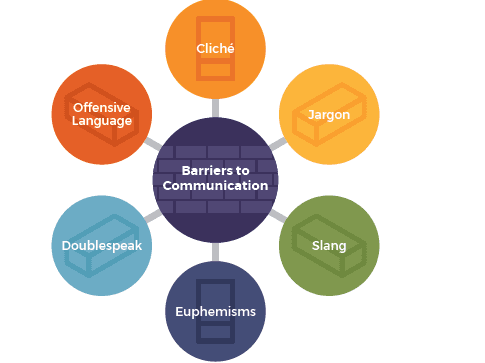
Language Can be an Obstacle to Communication – Communication for Business Professionals View original
Is this image relevant?
Unit 3: Troubleshooting Miscommunication – Communication Skills View original
Is this image relevant?
Intercultural Communication Overview | Introduction to Communication View original
Is this image relevant?
Language Can be an Obstacle to Communication – Communication for Business Professionals View original
Is this image relevant?
Audience Analysis Techniques
Before you write a single word of your speech, you need to understand who's in the room. Audience analysis means figuring out what your listeners already know, what language they're comfortable with, and what might trip them up.
Several factors shape what your audience expects linguistically:
- Education level shapes vocabulary and comprehension. A room full of PhD researchers can handle dense terminology; a general audience needs plain language.
- Cultural background affects language norms and preferences. Some cultures value directness, while others expect more indirect, formal communication.
- Professional context determines familiarity with specialized terms. Nurses understand "tachycardia," but a general audience needs you to say "rapid heart rate."
Common linguistic barriers to watch for:
- Jargon creates walls between you and non-expert listeners. A term like "myocardial infarction" means nothing to most people outside healthcare. Just say "heart attack."
- Idioms can confuse non-native speakers. Saying something is "a piece of cake" might be taken literally by someone unfamiliar with the expression.
- Regional dialects can cause misunderstandings across geographic areas. A word that's common in one region may be unfamiliar or carry a different meaning elsewhere (think "pop" vs. "soda" vs. "coke" for a soft drink).
To address these barriers, define complex terms when you first use them, use visual aids to reinforce what you're saying verbally, and consider offering multilingual resources if your audience includes non-native speakers.
Adapting Language in Real-Time
Even with thorough preparation, you'll sometimes need to adjust on the fly. Pay attention to your audience's nonverbal cues during your speech. Furrowed brows, blank stares, or people checking their phones are signs you may be losing them.
- If confusion is apparent, simplify your vocabulary and slow down.
- If a concept generates visible interest (nodding, leaning forward), elaborate on it.
- If your audience includes multilingual speakers, acknowledging diverse language backgrounds builds rapport. You might incorporate a key phrase in another language when it's relevant and respectful.
A note on ethics: adapting your language doesn't mean pretending to be someone you're not. Stay authentic while adjusting your communication style, and avoid adopting language patterns from other cultures in ways that feel performative or appropriative.
Adapting Communication for Different Settings

Purpose-Driven Language Choices
Your speech's purpose should drive your language choices. Each type of speech calls for a different approach:
- Informative speeches prioritize clarity and precision. You want the audience to understand, so choose exact, unambiguous words.
- Persuasive speeches lean on emotional appeals and vivid imagery. You want the audience to feel something and then act.
- Entertaining speeches use humor, storytelling, and engaging anecdotes. The goal is to hold attention and create a memorable experience.
Formality matters too. At an academic conference, you'd use more sophisticated vocabulary and complete sentence structures. At a community gathering or a casual team meeting, colloquial expressions and a conversational tone feel more natural and keep people engaged.
Rhetorical devices also shift depending on context. Alliteration works well in marketing presentations where you want phrases to stick ("Bold. Bright. Beautiful."). Rhetorical questions are effective in persuasive settings because they pull the audience into your reasoning ("Can we really afford to wait?").
Tone and Style Adaptation
Tone is how your speech feels to the audience, and it has a huge effect on how your message is received.
- A serious tone signals importance and urgency. Use it when the stakes are high or the topic demands gravity.
- A lighthearted tone makes you approachable and puts the audience at ease. It works well for introductions, ice-breakers, or less formal topics.
The key is consistency. Establish your core message, then adapt your delivery to suit the venue without losing that message. Your key points should come through clearly whether you're presenting in a boardroom or a classroom.
Your nonverbal communication needs to match your words. If you're delivering a serious point but smiling casually, the audience gets mixed signals. Gestures should emphasize important moments, and your facial expressions should reinforce the tone you're going for.
After a speech, solicit feedback. Post-speech evaluations and honest reflection on how the audience responded during your presentation help you refine your approach for next time.
Explaining Complex Ideas to Non-Experts

Simplification Techniques
Translating complicated material for a general audience is a skill that takes practice. Here's a reliable process:
- Break the concept into smaller parts. Divide your main idea into related subtopics and present them in a logical sequence. Don't try to explain everything at once.
- Use analogies and comparisons. Connect unfamiliar ideas to things your audience already knows. For example, you might compare how the immune system works to how a security team protects a building: it identifies threats, responds to intruders, and remembers past break-ins.
- Scaffold your information. Start with the foundational concept, make sure the audience grasps it, then layer on more advanced ideas gradually. Each new piece should build on what came before.
- Support with visuals. Diagrams showing relationships between concepts, or simple charts presenting data, often communicate more efficiently than words alone.
The goal isn't to "dumb things down." It's to build a bridge between what your audience already understands and what you want them to learn.
Enhancing Audience Comprehension
Even with great simplification, you need to check whether your audience is actually following along.
- Ask clarifying questions throughout your presentation ("Does that distinction make sense?").
- Watch for nonverbal cues: nodding suggests understanding, while crossed arms or averted eyes may signal confusion or disengagement.
Interactive elements also boost comprehension. Live demonstrations, brief activities, or Q&A sessions give the audience a chance to process and engage with the material rather than passively absorbing it.
Balance depth and breadth carefully. Provide enough detail for a clear understanding, but resist the urge to cover every nuance. Overloading your audience with information is just as harmful as giving too little.
Real-world examples are your best tool here. Relating a scientific principle to an everyday phenomenon (like explaining air pressure by talking about why your ears pop on an airplane) makes abstract ideas concrete and memorable.
Cultural Sensitivity in Speech
Culturally Aware Language Choices
Culture shapes how people interpret language. A phrase that's perfectly neutral in one culture might be offensive or confusing in another. Being culturally aware doesn't mean walking on eggshells; it means doing your homework and being thoughtful.
- Research cultural norms and taboos before preparing your speech. Topics that seem straightforward to you may be sensitive for parts of your audience.
- Identify and avoid stereotypes. If you're unsure whether something could come across as insensitive, seek feedback from people with diverse backgrounds before you present.
- Incorporate diverse perspectives. Include stories, case studies, and references from various cultures rather than drawing all your examples from a single cultural lens.
- Use inclusive language. Choose gender-neutral terms when appropriate, and don't make assumptions about your audience's backgrounds, beliefs, or experiences.
Navigating Cultural Differences
When addressing potentially controversial topics, acknowledge different viewpoints respectfully and frame discussions in neutral, fact-based language. You don't have to avoid difficult subjects, but approaching them with care shows respect for your audience.
Pronunciation matters more than many speakers realize. Take the time to practice pronouncing names, places, and culturally specific terms correctly. Getting someone's name right is a small effort that signals genuine respect.
Nonverbal communication varies across cultures too. Eye contact, gestures, and personal space norms differ significantly. For instance, direct eye contact is considered confident in many Western cultures but can be seen as disrespectful in some East Asian or Indigenous cultures. If you're speaking to a culturally diverse audience, research these differences ahead of time.
Building cultural competence is an ongoing process. Engaging with diverse communities and seeking out different perspectives over time will make you a more effective and respectful speaker, not just in one presentation, but across every speaking situation you encounter.
See Fiveable more often in Google
Mark Fiveable as a preferred source and Google is more likely to show you our guides in Top Stories, with a "preferred" badge in AI Mode and AI Overviews.