11.1 Goals and Types of Informative Speeches

📞Intro to Public Speaking Unit 11 Review
11.1 Goals and Types of Informative Speeches
📞 Intro to Public Speaking
Goals of Informative Speaking
An informative speech has one core purpose: to help your audience understand something they didn't fully understand before. Unlike persuasive speeches, you're not trying to change anyone's mind. You're building knowledge, filling in gaps, and sparking curiosity. That distinction shapes every choice you make as a speaker.

Top images from around the web for Educating the Audience
Helping Your Audience Listen More | Boundless Communications View original
Is this image relevant?
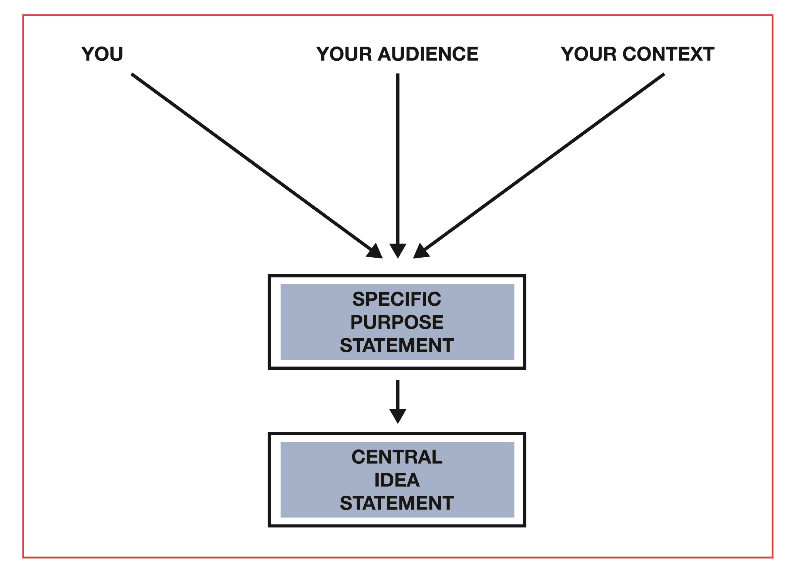
Finding the Purpose and Central Idea of Your Speech | Public Speaking View original
Is this image relevant?
Unit 33: Informative and Persuasive Presentations – Communication Skills View original
Is this image relevant?
Helping Your Audience Listen More | Boundless Communications View original
Is this image relevant?
Finding the Purpose and Central Idea of Your Speech | Public Speaking View original
Is this image relevant?
Educating the Audience
The primary goal is to increase your audience's knowledge of a specific topic. This means you define concepts, explain processes, describe events, or demonstrate tasks. The key difference from persuasive speaking is that you're not trying to change attitudes, beliefs, or behaviors. You're giving people information and letting them decide what to do with it.
A strong informative speech also helps the audience apply what they've learned. If you're explaining interview techniques, your listeners should walk away better prepared for an actual job interview. If you're covering a scientific concept, they should be able to explain it to someone else.
The best informative speeches also stimulate curiosity. You want your audience to leave wanting to learn more, whether that means picking up a book, watching a documentary, or exploring the topic on their own.
Presenting Information Objectively
Objectivity is what separates informative speaking from persuasive speaking. Your job is to present information in an unbiased way so the audience can form their own conclusions.
- Use accurate, up-to-date information from reliable sources (academic journals, expert interviews, reputable news outlets)
- Bridge knowledge gaps and correct common misconceptions about your topic
- Acknowledge different perspectives or interpretations when they exist, such as competing scientific theories or differing historical accounts
- Avoid loaded language that subtly pushes the audience toward a particular viewpoint
Types of Informative Speeches
Not all informative speeches work the same way. The type you choose depends on your topic and what you want the audience to take away from it.
Descriptive and Explanatory Speeches
Descriptive speeches provide detailed accounts of objects, people, places, or events. They rely on vivid language to create clear mental images. For example, a speech describing the Grand Canyon would help the audience see the layered rock formations and feel the scale of the landscape, even if they've never visited.
Explanatory speeches clarify complex ideas, concepts, or theories by breaking them into understandable parts. If you're explaining how photosynthesis works, you'd walk through each stage of the process so the audience grasps the mechanism, not just the vocabulary.
Definition speeches are a related type that explore the meaning, origin, and significance of a specific term or concept. A definition speech on "democracy" wouldn't just give a dictionary entry. It would trace where the idea came from, how its meaning has shifted over time, and why the term matters today.

Demonstrative and Comparative Speeches
Demonstrative speeches (also called "how-to" speeches) show the audience how to perform a specific task or process, step by step. Think of teaching someone to perform CPR or navigate a new software application. The audience should be able to replicate the process after watching your speech.
Comparative speeches analyze the similarities and differences between two or more subjects. These help the audience understand relationships and contrasts. For instance, comparing solar and wind energy would cover how each works, their costs, and their environmental impacts so listeners can see the trade-offs clearly.
Historical and Current Events Speeches
Historical speeches present information about past events, figures, or time periods. The strongest historical speeches connect the past to the present. A speech on the Industrial Revolution, for example, would be more engaging if it showed how that era's changes still shape modern labor practices and technology.
Current events speeches focus on recent developments or ongoing issues. These require you to provide context and explain why the event matters. Reporting that a new scientific discovery happened isn't enough. You need to explain what it means and why your audience should care.
Selecting an Informative Topic
Audience Considerations
Your topic needs to match your audience. Consider these factors:
- Demographics and existing knowledge. A room full of biology majors doesn't need a basic overview of cell structure. A general audience does.
- Purpose and context. A speech for a college class has different expectations than one for a professional conference.
- Scope. Make sure you can cover the topic adequately within your allotted time. A five-minute speech on "the history of medicine" will feel rushed and shallow. Narrow it down.
- Visual aid potential. Some topics benefit greatly from props, slides, or demonstrations. Factor that into your planning.

Speaker Considerations
- Choose topics that align with your interests and areas of knowledge. Your credibility and enthusiasm both increase when you genuinely care about the subject.
- Check that enough reliable sources exist before committing to a topic. A fascinating idea with no credible research behind it will be difficult to develop.
- Consider offering a fresh angle. You don't need a completely obscure topic, but exploring a lesser-known aspect of a familiar subject (like hidden figures behind a major historical event, or unexpected applications of a common technology) can make your speech stand out.
Making Information Accessible
Simplifying Complex Concepts
Your audience can't learn from information they can't follow. Use these strategies to make complex material understandable:
- Use clear language. Avoid unnecessary jargon. When you must use a technical term, define it right away.
- Use analogies. Comparing an unfamiliar concept to something familiar makes it click faster. Comparing the immune system to a fortress with different layers of defense, for instance, gives the audience a mental framework to hang new details on.
- Break information into chunks. Don't dump everything at once. Present complex material in smaller, sequential pieces.
- Give real-world examples. Abstract ideas become concrete when you ground them in specific situations. Illustrating an economic theory with an example from a local business makes it tangible.
Enhancing Comprehension and Retention
Getting the audience to understand your speech during the presentation is one thing. Helping them remember it afterward takes additional effort.
- Visual aids like flowcharts, infographics, or diagrams help illustrate relationships and processes that are hard to follow through words alone.
- Repetition and summarization reinforce your key points. Preview your main ideas, develop them, then summarize them at the end.
- Audience participation keeps listeners engaged. Brief polls, quick questions, or asking for a show of hands can pull a passive audience into active thinking.
- Storytelling makes information stick. Framing a scientific discovery as a narrative with characters, obstacles, and a resolution is far more memorable than listing facts and dates.
See Fiveable more often in Google
Mark Fiveable as a preferred source and Google is more likely to show you our guides in Top Stories, with a "preferred" badge in AI Mode and AI Overviews.