8.2 Rhetorical Devices and Figurative Language

📞Intro to Public Speaking Unit 8 Review
8.2 Rhetorical Devices and Figurative Language
📞 Intro to Public Speaking
Rhetorical Devices in Speechwriting
Rhetorical devices and figurative language give speakers the ability to turn plain statements into messages that stick. These techniques help you connect with an audience emotionally, build persuasive arguments, and make complex ideas easier to grasp. If you've ever remembered a line from a speech long after hearing it, a rhetorical device was probably at work.

Top images from around the web for Persuasive Techniques in Rhetoric
Supporting Claims | English Composition I View original
Is this image relevant?
How to Become a Rhetorically Effective Speaker – Starr Sumner – Medium View original
Is this image relevant?
Supporting Claims | English Composition I View original
Is this image relevant?
How to Become a Rhetorically Effective Speaker – Starr Sumner – Medium View original
Is this image relevant?
Persuasive Techniques in Rhetoric
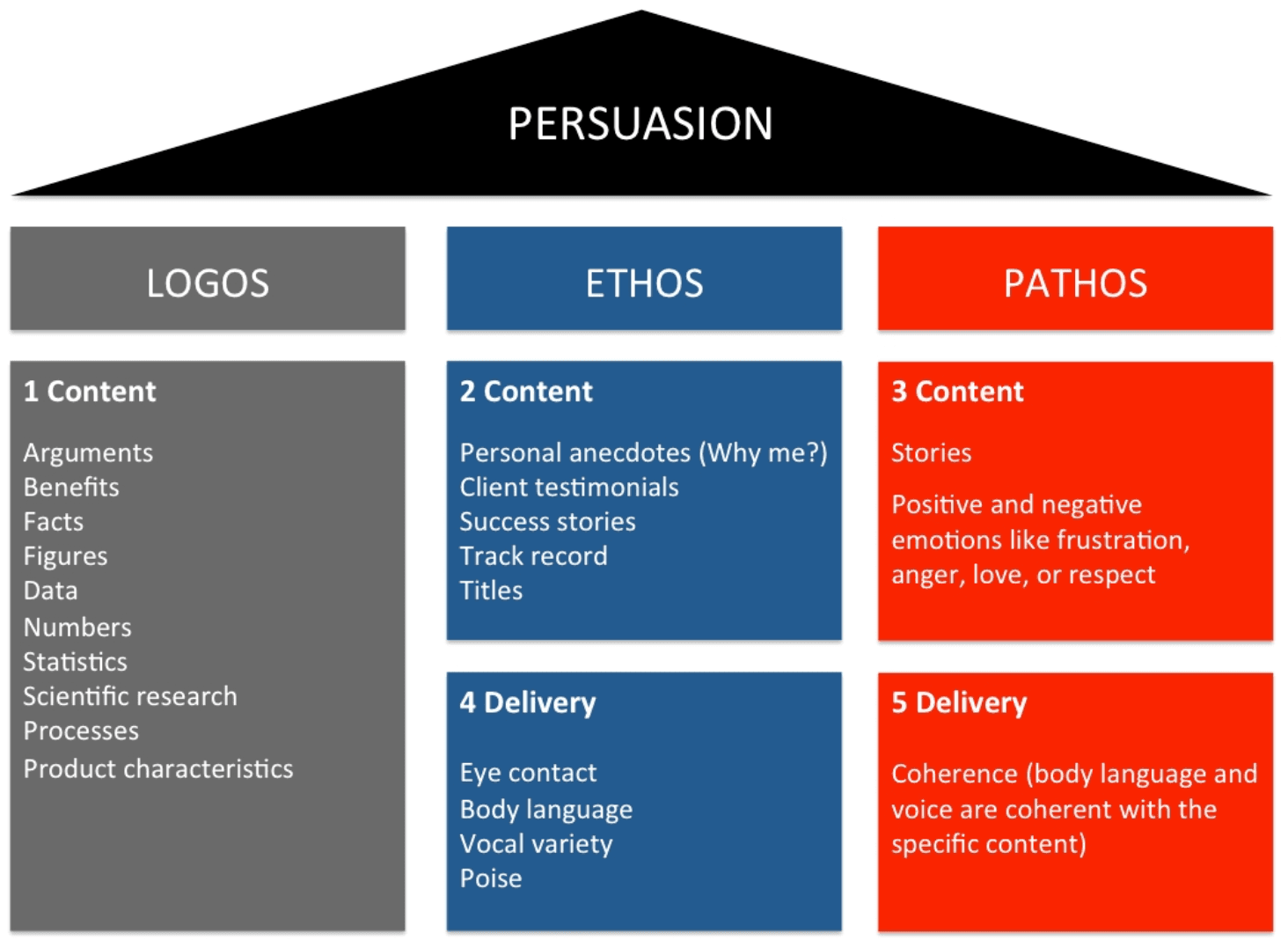
Every rhetorical device serves a purpose: making your speech more effective and persuasive. Before diving into specific devices, it helps to know the three foundational modes of persuasion that most devices tap into:
- Ethos appeals to the speaker's credibility and character. If the audience trusts you, they're more likely to be persuaded.
- Pathos appeals to the audience's emotions. Fear, hope, sympathy, anger: these feelings drive people to act.
- Logos appeals to logical reasoning. Facts, statistics, and structured arguments fall here.
Most rhetorical devices work by strengthening one or more of these appeals. Here are two of the most recognizable:
Anaphora repeats the same word or phrase at the beginning of successive clauses or sentences. It builds rhythm and hammers a point home. Martin Luther King Jr.'s "I have a dream" repeated at the start of eight consecutive sentences is the classic example. Each repetition intensified the emotional impact.
Chiasmus reverses the grammatical structure of one phrase in the next. JFK's "Ask not what your country can do for you; ask what you can do for your country" flips the structure to create a statement that's almost impossible to forget. The reversal forces the audience to reconsider the relationship between the two ideas.
Structural and Stylistic Devices
These devices shape how your words sound and how your ideas land:
- Antithesis places contrasting ideas side by side in balanced phrases. Alexander Pope's "To err is human; to forgive, divine" works because the parallel structure makes the contrast sharp and clear.
- Hyperbole is intentional exaggeration used for emphasis, not deception. Saying "I've told you a million times" doesn't mean you literally have. It conveys frustration in a way that a precise number never could.
- Parallelism uses the same grammatical pattern across successive phrases. Lincoln's "government of the people, by the people, for the people" repeats the same prepositional structure three times. That consistency makes the line rhythmic and easy to remember.
- Rhetorical questions are questions you ask without expecting an answer. They pull the audience into your argument by making them think. "Are we not all human?" doesn't need a reply; the answer is implied, and the audience arrives at it themselves.
- Alliteration repeats the same consonant sound at the start of nearby words. It makes phrases catchy and easier to recall. "Peter Piper picked a peck of pickled peppers" is an extreme example, but in speeches, subtler alliteration like "compassion and commitment" works well without sounding forced.
Metaphors, Similes, and Analogies in Speeches
Defining Figurative Comparisons
These three devices all make comparisons, but they do it differently:
- Metaphors make implicit comparisons by stating one thing is another. "Life is a rollercoaster" doesn't literally mean life is an amusement park ride. It transfers the qualities of a rollercoaster (ups, downs, unexpected turns) onto life itself.
- Similes make explicit comparisons using "like" or "as." "As busy as a bee" directly signals that a comparison is happening. Similes tend to feel lighter and more conversational than metaphors.
- Analogies extend a comparison further to explain something unfamiliar through something familiar. "The structure of an atom is like a miniature solar system" doesn't just compare two things; it uses one as a framework to help the audience understand the other.
Effectiveness and Analysis
These devices work best when they meet the audience where they are. A comparison only clicks if the audience understands the familiar side of it. A farming metaphor will resonate differently with a rural audience than an urban one.
When you're analyzing figurative comparisons in a speech, consider:
- Relevance: Does the comparison actually clarify the speaker's message, or is it decorative?
- Memorability: Will the audience remember this comparison after the speech ends?
- Emotional impact: Does it make the audience feel something?
- Frequency and placement: A single powerful metaphor at the climax of a speech hits differently than metaphors scattered throughout every paragraph.
Tracking which comparisons a speaker chooses also reveals their rhetorical strategy. If a politician consistently uses war metaphors when discussing the economy, that framing shapes how the audience thinks about economic issues.

Rhetorical Techniques for Emphasis
Repetition and Structure
Repetition is one of the simplest and most effective tools in speechwriting. When you repeat a word, phrase, or idea deliberately, you signal to the audience that this point matters.
Strategic placement is key. Repeating a phrase at the beginning of a speech plants it in the audience's mind; returning to it at the end creates a sense of closure and reinforces the message. The audience feels guided toward the conclusion you want them to reach.
The challenge with repetition is balance. Too little and the point doesn't stick. Too much and the speech becomes monotonous. Effective speakers vary how they repeat: sometimes through anaphora (repeating at the start of clauses), sometimes through epistrophe (repeating at the end of clauses), and sometimes by restating the same idea in different words. Combining repetition with other devices like antithesis or parallelism creates a layered effect that's more persuasive than any single technique alone.
Rhetorical Questions and Sound Devices
Rhetorical questions do double duty: they engage the audience and steer their thinking. A well-placed rhetorical question makes listeners feel like active participants rather than passive receivers. Placing them at transitions between sections can re-capture attention, while using them near the conclusion can drive your final point home.
Alliteration adds a sonic quality that makes phrases stickier. "Look before you leap" has survived as a saying partly because of that repeated "l" sound. In speeches, use alliteration selectively. A phrase or two per speech can be memorable; alliteration in every sentence starts to sound like a tongue twister.
When you combine these techniques, the effect multiplies. A rhetorical question followed by a repeated phrase with alliterative language creates emphasis on multiple levels: intellectual engagement, rhythmic reinforcement, and pleasing sound all at once.
Figurative Language and Persuasion
Types and Applications of Figurative Language
Figurative language is any expression that goes beyond literal meaning to create a stronger effect. The main types you'll encounter in speechwriting:
- Metaphors: "Life is a highway" (direct identification)
- Similes: "As cold as ice" (comparison using like/as)
- Personification: "The wind whispered" (giving human qualities to non-human things)
- Hyperbole: "I'm so hungry I could eat a horse" (exaggeration for emphasis)
All of these create vivid imagery and emotional connections that plain, literal language often can't achieve. They also simplify complex ideas by linking them to things the audience already understands.
One thing to watch for: figurative language is culturally loaded. A metaphor rooted in American football won't land with an audience unfamiliar with the sport. Always consider whether your comparisons will make sense to your specific audience.
Impact and Evaluation
Figurative language often persuades more effectively than pure logic because it engages emotions. People may forget a statistic, but they'll remember a vivid image or a comparison that made them feel something.
When evaluating figurative language in a speech, ask yourself:
- Does the audience actually understand the comparison?
- Does it create the right emotional response for the speaker's purpose?
- Does it fit the overall tone of the speech?
- Is it used at the right frequency?
That last point matters more than students often realize. Overloading a speech with figurative language can muddy your message and make you seem less credible. If every other sentence is a metaphor, none of them stand out. The most quoted speeches in history, like King's "I Have a Dream," use figurative language at key moments while grounding the rest of the speech in clear, direct language.
The goal is balance: enough figurative language to engage and persuade, enough literal language to maintain clarity and credibility.
See Fiveable more often in Google
Mark Fiveable as a preferred source and Google is more likely to show you our guides in Top Stories, with a "preferred" badge in AI Mode and AI Overviews.