5.3 Creating Effective Outlines

📞Intro to Public Speaking Unit 5 Review
5.3 Creating Effective Outlines
📞 Intro to Public Speaking
Speech Outline Types
A speech outline is your blueprint. It keeps your ideas organized, helps you stay on track during delivery, and makes sure your audience can follow along. There are several types of outlines, and each one serves a different purpose depending on where you are in the speech-writing process.

Top images from around the web for Linear Outline Formats
Visual Tools for Public Speaking | In this month's VizThink,… | Flickr View original
Is this image relevant?
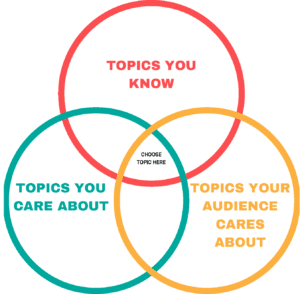
Choosing a Topic | Public Speaking View original
Is this image relevant?
Oral Presentations – An Introduction to Technical Communication View original
Is this image relevant?
Visual Tools for Public Speaking | In this month's VizThink,… | Flickr View original
Is this image relevant?
Choosing a Topic | Public Speaking View original
Is this image relevant?
Linear Outline Formats
Preparation outlines are what you create first. These are detailed, full-sentence outlines that lay out your entire speech, including supporting evidence and source citations. Think of this as the rough draft of your speech in outline form. It's where you work out what you're actually going to say.
Topic outlines use short phrases or single words instead of full sentences. They give you a quick, bird's-eye view of your speech structure without all the detail. These are useful when you want to check whether your overall organization makes sense before filling in the specifics.
Sentence outlines require every main point and subpoint to be written as a complete sentence. This forces you to clarify exactly what each point is saying, which is helpful when your ideas are still fuzzy. If you can't state a point as a clear sentence, you probably don't have a clear point yet.
Speaking outlines (also called delivery outlines) are the stripped-down version you actually bring to the podium. You create these from your preparation outline by condensing everything down to key phrases, transition cues, and delivery reminders (like "pause here" or "make eye contact"). The goal is a quick-reference tool, not something you read word-for-word.
Hierarchical Outline Structures
These systems show how your ideas relate to each other through levels of indentation and labeling.
- Alphanumeric outlines use a mix of Roman numerals, letters, and numbers to show hierarchy:
- I. Main Point
- A. Subpoint
-
- Supporting detail
- a. Specific example
-
- A. Subpoint
- I. Main Point
- Decimal outlines use a numbered system where each level adds a decimal place:
- 1.0 Main Point
- 1.1 Subpoint
- 1.1.1 Supporting detail
- 1.1 Subpoint
- 1.0 Main Point
Both accomplish the same thing. Alphanumeric is more common in public speaking courses, but your instructor will likely specify which format to use, so check your assignment guidelines.
Visual Outline Formats
Mind maps take a non-linear approach. You place your central topic in the middle and draw branches outward to connect related ideas. This format works well during brainstorming, especially if you're a visual thinker. You can use colors, images, or symbols to group related concepts. Mind maps aren't typically submitted as final outlines, but they're a great tool for generating and organizing ideas before you build a formal outline.
Speech Outline Structure

Essential Components
Every speech outline has three parts: introduction, body, and conclusion. Here's what belongs in each.
Introduction — Your introduction does three jobs:
- Grab attention with an attention-getter (a startling statistic, a relevant story, a thought-provoking question).
- State your thesis clearly so the audience knows your central argument or purpose.
- Preview your main points so listeners know what's coming. For example: "Today we'll look at the causes, effects, and solutions for sleep deprivation among college students."
The preview is more than a formality. It gives your audience a mental roadmap, which makes it much easier for them to follow and remember your speech.
Body — This is the bulk of your speech, typically containing 2-4 main points (for a classroom speech, 3 is the sweet spot). Each main point should be roughly parallel in structure and importance. Under each main point, subpoints provide the evidence, examples, or explanations that support it.
Conclusion — Your conclusion ties everything together:
- Signal that you're wrapping up (a brief transition like "In closing" prepares the audience).
- Restate your thesis in light of what you've presented.
- Summarize your main points briefly.
- End with a memorable closing statement or call to action (a powerful quote, a challenge to the audience, a vivid image).
Organizational Elements
Transitions are the glue between your main points. Without them, your speech feels like a list of disconnected ideas.
- Signposts use simple markers like "First," "Next," or "Finally" to signal where you are in the speech.
- Bridging statements explicitly connect one section to the next: "Now that we've looked at the causes, let's examine the effects."
- Internal summaries briefly recap what you've covered so far before moving on. These are especially useful in longer speeches to help the audience keep up.
Write your transitions directly into your outline between main points. If you leave them out of the outline, you'll likely forget them during delivery.
Formatting consistency matters too. Use the same indentation level for items of equal importance, and stick with one numbering system throughout. If your Roman numeral I has subpoints A, B, and C, then Roman numeral II should follow the same pattern. This isn't just about looking neat; consistent formatting helps you spot structural problems, like a main point that's underdeveloped compared to the others.
Outlining for Organization
The organizational pattern you choose shapes how your audience processes your message. Pick the one that best fits your topic and purpose.
Topical and Temporal Patterns
- Topical pattern — Divides your subject into logical categories that don't overlap. This is the most flexible pattern and works well for informative speeches. Example: a speech on renewable energy organized by type (solar, wind, hydroelectric).
- Chronological pattern — Arranges points in time order. Use this for historical topics or step-by-step processes. Example: the stages of child development (infancy, early childhood, adolescence).
- Spatial pattern — Organizes information by physical location or geography. Example: describing a college campus building by building, or explaining ocean zones from surface to deep sea.

Causal and Problem-Solution Patterns
- Causal pattern — Explores cause-and-effect relationships. You can move from causes to effects or from effects back to causes. Example: a speech on sleep deprivation that first covers causes (screen time, caffeine, stress) and then covers effects (poor academic performance, weakened immune system).
- Problem-solution pattern — Presents a problem and then proposes one or more solutions. This is a go-to for persuasive speeches. Example: Problem: food waste on campus. Solutions: composting programs, smaller portion options, donation partnerships with local shelters.
A common mistake is picking a pattern that doesn't match your purpose. If you're trying to persuade, a topical pattern can feel flat because it just presents information without building toward action. Problem-solution or causal patterns tend to work better for persuasion because they naturally lead the audience toward a conclusion.
Supporting Evidence Integration
Your outline should show exactly where your evidence goes and what it supports. Follow these guidelines:
- Place evidence directly under the subpoint it supports, not floating between sections.
- Mix your evidence types. Combine quantitative data (statistics, survey results) with qualitative support (expert testimony, real-world examples, case studies) for a more convincing argument.
- Cite your sources in the outline itself. Your instructor will specify the format (APA, MLA, etc.), but every piece of borrowed information needs a citation, even at the outline stage.
- Connect evidence back to your point. Don't just drop in a statistic; explain what it means and why it matters for your argument. For instance, don't just write "70% of college students report sleep deprivation." Follow it with something like "That means in a class of 30, roughly 21 of your peers are running on too little sleep."
Refining Speech Outlines
Once you have a draft outline, the real improvement happens in revision. Work through these areas systematically.
Content Evaluation and Adjustment
- Check balance. Are your main points roughly equal in depth and development? If one point has three subpoints with evidence and another has just a single sentence, something needs adjusting.
- Look for logical gaps. Read through your outline as if you know nothing about the topic. Are there places where you make a leap the audience can't follow? Add explanation or transitions where needed.
- Cut what doesn't serve the thesis. If a piece of information is interesting but doesn't directly support your thesis or a main point, remove it. Conciseness strengthens a speech.
Language and Clarity Improvements
- Adjust your language for your specific audience. A speech to classmates can be more conversational; a speech to professionals might need more formal phrasing. Either way, avoid unnecessary jargon.
- Vary your transitions. If every transition is "Next," the speech will feel monotonous. Mix in phrases like "In contrast," "Building on this," "Equally important," or "On the other hand."
- Use peer feedback. Have someone else read your outline or listen to a practice run. They'll catch confusing spots and weak arguments you've become blind to.
Final Checks and Polishing
Before submitting or practicing from your outline, run through this checklist:
- Are all sources properly cited in the required format?
- Does each section flow logically into the next?
- Does the conclusion follow naturally from the body, or does it introduce new ideas? (It shouldn't.)
- Is formatting consistent throughout (indentation, numbering, lettering)?
- Does your speaking outline fit on the allowed number of note cards or pages (if your instructor set a limit)?
- Have you proofread for spelling and grammar errors?
A polished outline saves you time later. The clearer your outline, the smoother your rehearsals and the more confident your delivery.
See Fiveable more often in Google
Mark Fiveable as a preferred source and Google is more likely to show you our guides in Top Stories, with a "preferred" badge in AI Mode and AI Overviews.