5.4 Developing Clear Main Points and Subpoints

📞Intro to Public Speaking Unit 5 Review
5.4 Developing Clear Main Points and Subpoints
📞 Intro to Public Speaking
Formulating Main Points
Your main points are the backbone of your speech. They're the two to five big ideas that directly support your thesis, and everything else in your speech exists to back them up. Getting these right makes the difference between an audience that follows you and one that zones out.

Top images from around the web for Key Characteristics of Effective Main Points
Helping Your Audience Listen More | Boundless Communications View original
Is this image relevant?
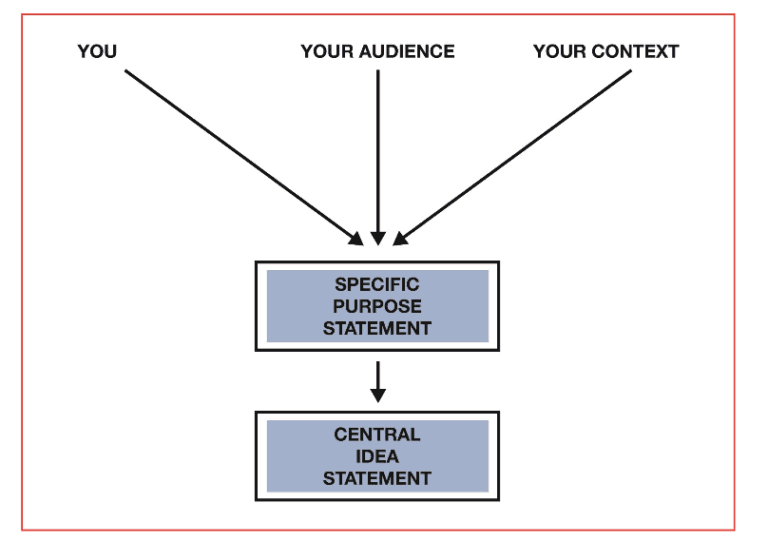
Finding the Purpose and Central Idea of Your Speech | Public Speaking View original
Is this image relevant?
Responding to Market Needs: Training in Public Speaking Insights and Techniques - PROCSEE View original
Is this image relevant?
Helping Your Audience Listen More | Boundless Communications View original
Is this image relevant?
Finding the Purpose and Central Idea of Your Speech | Public Speaking View original
Is this image relevant?
Key Characteristics of Effective Main Points
- They directly support your thesis. Every main point should clearly develop your central idea.
- Stick to two to five main points depending on your speech length. More than five and your audience won't retain them.
- State each one as a complete sentence, not just a topic word. "Exercise" isn't a main point. "Regular exercise improves cardiovascular health" is.
- Make them mutually exclusive, meaning each point covers a distinct aspect of your topic with no overlap.
- Use parallel structure so they sound consistent. If your first point starts with a verb, start them all with verbs.
- Arrange them in a logical order that makes sense for your topic: chronological, spatial, causal, or problem-solution.
Crafting Clear and Concise Main Points
Each main point should contain one key idea, not two or three crammed together. If you find yourself using "and" to connect two different concepts, you probably need to split it into separate points.
A few practical tips:
- Avoid jargon or overly technical language unless your audience expects it
- Use active voice to make points direct and punchy. Compare "Carbon emissions are reduced by renewable energy" (passive) with "Renewable energy reduces carbon emissions" (active)
- Choose strong action verbs like implement, analyze, or transform instead of vague ones like deals with or relates to
- Test each point by asking: Does this directly support my thesis? If the connection feels like a stretch, revise or cut it
Examples of Effective Main Points
For a speech on climate change:
- Greenhouse gas emissions accelerate global warming
- Rising sea levels threaten coastal communities
- Extreme weather events increase in frequency and intensity
For a speech on the benefits of exercise:
- Regular exercise improves cardiovascular health
- Physical activity enhances mental well-being
- Consistent workouts help maintain a healthy weight
Notice how each set uses parallel structure (same sentence pattern) and covers a distinct aspect of the topic without overlap.
Supporting Subpoints
Main points make claims. Subpoints are where you prove those claims with evidence, examples, and reasoning. Without strong subpoints, your main points are just opinions.

Developing Relevant Subpoints
Aim for two to four subpoints per main point. Each subpoint should provide specific evidence: a statistic, an expert quote, a real-world example, or a logical explanation.
- Make sure every subpoint directly relates to its main point, not just to the general topic
- Think about your audience's background. If they already know the basics, you can use more advanced evidence. If they're new to the topic, start with accessible examples
- Balance your subpoints across main points. If your first main point has four strong subpoints and your third has only one, your speech will feel lopsided
- Rhetorical devices like analogies, metaphors, or vivid descriptions can make subpoints more memorable and persuasive
Types of Supporting Material for Subpoints
You have several options for the kind of evidence you use:
- Statistical data from reputable sources (government reports, academic studies)
- Expert testimony or quotes from recognized authorities in the field
- Real-life examples or case studies that illustrate your point concretely
- Historical evidence or precedents that support your argument
- Logical reasoning or theoretical frameworks that explain why something is true
- Visual aids like graphs, charts, or physical props that make data tangible
The strongest subpoints often combine more than one type. A statistic paired with a real-life example, for instance, gives your audience both the data and the human story.
Example of Effective Subpoints
Main point: Regular exercise improves cardiovascular health
- Aerobic exercise strengthens the heart muscle, allowing it to pump blood more efficiently
- Physical activity lowers blood pressure and cholesterol levels
- Regular workouts reduce the risk of heart disease by up to 35% (American Heart Association)
Notice how each subpoint adds a different piece of evidence. The first explains a mechanism, the second names specific health markers, and the third provides a concrete statistic with a credible source.
Coherence of Points
A speech can have great main points and solid subpoints but still confuse the audience if those pieces don't connect smoothly. Coherence is what makes your speech feel like one unified argument rather than a list of loosely related facts.

Establishing Logical Relationships
- Build a clear hierarchy: main points support the thesis, subpoints support main points. If a subpoint doesn't clearly serve its main point, move it or cut it.
- Follow a consistent organizational pattern within each main point. If you're using chronological order in your first main point, don't randomly switch to cause-effect in the next without a reason.
- Make sure each subpoint contributes unique information. If two subpoints say roughly the same thing in different words, combine them.
- Keep the depth proportional to each point's importance. Your most significant main point deserves the most developed subpoints.
Enhancing Coherence Through Language
The words you choose between and within your points matter just as much as the points themselves.
- Transitional phrases bridge your main points: Furthermore, In addition, Conversely, On the other hand
- Signposts tell the audience where they are in your speech: First, Second, Finally, Now that we've covered X, let's turn to Y
- Internal previews and summaries help with longer speeches. Before diving into a main point, briefly preview what you'll cover. After finishing it, summarize before moving on.
- Repeat key terms from your thesis throughout the speech to reinforce how everything connects
- Maintain consistent verb tense and point of view so your language doesn't distract from your ideas
Evaluating Point Effectiveness
Before you finalize your speech, step back and evaluate whether your structure actually works. This is where many speakers skip ahead to practicing delivery, but catching structural problems now saves you from a confusing speech later.
Assessing Overall Structure
- Do your main points collectively address your thesis? Read them back-to-back without the subpoints. If someone heard only those sentences, would they understand your central idea?
- Is the time balanced? If you spend five minutes on your first point and thirty seconds on your third, the audience will notice.
- Are your transitions smooth? Read through the end of one main point into the beginning of the next. If the jump feels abrupt, add a transitional sentence.
- Consider getting peer feedback. Ask a classmate to listen and tell you which point was clearest and which was hardest to follow.
Analyzing Individual Points
- For each main point, ask: Is the evidence strong enough to be convincing? A single weak example won't hold up.
- Check your wording for clarity. Read each point aloud. If you stumble over it or it could be misinterpreted, simplify.
- Think about counterarguments. If an audience member could easily object to a point, you should address that objection within your subpoints.
- Evaluate whether your rhetorical devices are actually helping. A metaphor that confuses the audience is worse than a straightforward explanation.
See Fiveable more often in Google
Mark Fiveable as a preferred source and Google is more likely to show you our guides in Top Stories, with a "preferred" badge in AI Mode and AI Overviews.