12.1 Theories of Persuasion

📞Intro to Public Speaking Unit 12 Review
12.1 Theories of Persuasion
📞 Intro to Public Speaking
Aristotle's Modes of Persuasion
Persuasion theories give you a toolkit for building speeches that actually change minds. From Aristotle's classical appeals to modern cognitive models, these frameworks explain how people process arguments and make decisions. Understanding them helps you tailor your message, anticipate how your audience will react, and speak with real impact.

Top images from around the web for Understanding Ethos, Pathos, and Logos
Unit 27: Persuasive Messages – Communication Skills View original
Is this image relevant?
Supporting Claims | English I – Andersson View original
Is this image relevant?
Unit 27: Persuasive Messages – Communication Skills View original
Is this image relevant?
Supporting Claims | English I – Andersson View original
Is this image relevant?
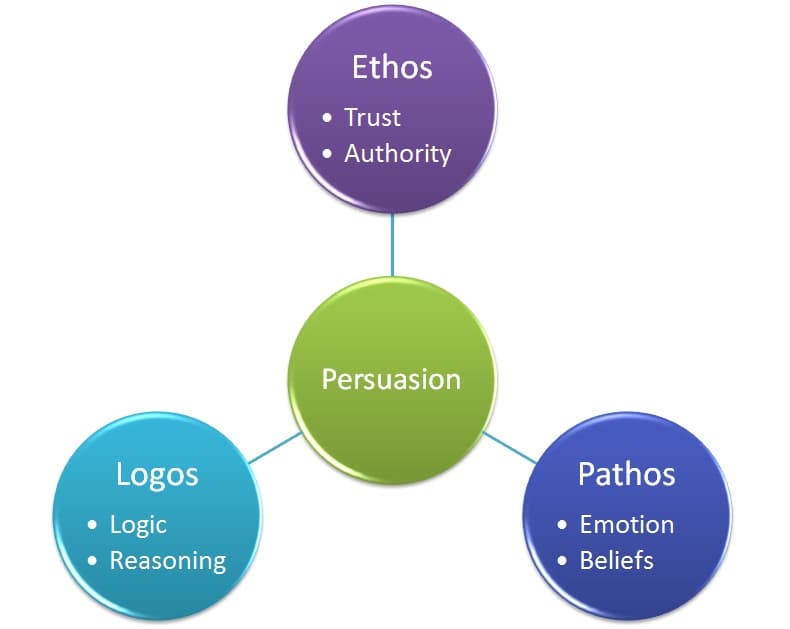
Understanding Ethos, Pathos, and Logos
Aristotle identified three core appeals that persuasive speakers rely on. Most strong persuasive speeches use all three together, but each one targets a different part of how people evaluate a message.
- Ethos is the credibility or character of the speaker. Your audience needs to trust you before they'll seriously consider your argument. You build ethos through relevant experience, credentials, or by citing respected sources. A nursing student speaking about hospital staffing shortages has built-in ethos; someone with no connection to the topic would need to establish it by referencing experts or reputable organizations.
- Pathos is an appeal to the audience's emotions. Storytelling, vivid language, and emotional triggers can shift how people feel about an issue. Tone of voice and body language matter here too. Think of a charity ad showing a specific child's story rather than just listing statistics about poverty.
- Logos is the logical backbone of your argument: facts, statistics, reasoning, and evidence. A clear, well-structured argument supported by credible data (peer-reviewed studies, government reports) makes your case harder to dismiss.
Combining the Three Modes
The most effective persuasion weaves all three modes together. Here's what that looks like in practice:
- Ethos first: Open by establishing why you're worth listening to. Mention relevant qualifications, personal experience, or cite a reputable source early (e.g., the World Health Organization, a peer-reviewed journal).
- Pathos to engage: Use a specific story or vivid metaphor to make the audience feel the stakes. Comparing climate change to a ticking time bomb, for instance, creates urgency that raw data alone can't.
- Logos to convince: Present a clear, step-by-step logical progression. Back up each claim with evidence like graphs, statistics, or expert testimony.
A speech that only uses logos can feel dry. One that only uses pathos can feel manipulative. One that only uses ethos gives you no substance. The combination is what makes persuasion stick.
Elaboration Likelihood Model
Central and Peripheral Routes to Persuasion
The Elaboration Likelihood Model (ELM), developed by Richard Petty and John Cacioppo, says there are two distinct paths your audience can take when processing your message:
- Central route (high elaboration): The audience carefully evaluates the quality of your arguments, thinks critically, and weighs the evidence. Attitude changes through this route tend to be stronger and longer-lasting.
- Peripheral route (low elaboration): The audience relies on surface-level cues instead of deeply analyzing the argument. These cues include things like the speaker's attractiveness, confidence, or how many arguments are presented (regardless of quality). Attitude shifts through this route tend to be temporary.
Which route your audience takes depends on three factors:
- Motivation to process the information (Do they care about this topic?)
- Ability to process it (Do they have the background knowledge to follow the argument?)
- Personal relevance (Does this topic directly affect them?)
Applying ELM to Your Speeches
Time and cognitive resources also play a role. An audience that's tired, distracted, or pressed for time is more likely to default to peripheral processing.
This has practical implications for how you design a persuasive speech:
- For a highly motivated audience (central route): Focus on strong, well-supported arguments with detailed evidence. These listeners will scrutinize your reasoning, so weak arguments will backfire.
- For a less engaged audience (peripheral route): Put extra effort into polished delivery, credible sourcing, and an appealing presentation style. These cues carry more weight when the audience isn't deeply analyzing your logic.
Example: A detailed product review aimed at a tech-savvy audience relies on the central route. A celebrity endorsement for a fashion brand relies on the peripheral route. Both can be persuasive, but through very different mechanisms.

Social Judgment Theory
Key Concepts and Latitudes
Developed by Muzafer Sherif and Carl Hovland, Social Judgment Theory explains how people evaluate new information by comparing it to what they already believe. Think of it like a mental measuring stick: your audience holds every new claim up against their existing attitudes.
The theory introduces three zones, called latitudes:
- Latitude of acceptance: Ideas the person finds agreeable or at least reasonable.
- Latitude of rejection: Ideas the person finds unacceptable or strongly disagrees with.
- Latitude of non-commitment: Ideas the person feels neutral or undecided about.
Attitude change is most likely when your message falls within or close to the audience's latitude of acceptance. If your argument lands squarely in their latitude of rejection, they'll dismiss it or even push back harder.
One important factor is ego-involvement, which is how personally invested someone is in the topic. High ego-involvement narrows the latitude of acceptance and widens the latitude of rejection. In other words, the more someone cares about an issue, the harder they are to persuade.
Application in Persuasive Communication
The practical takeaway is that you need to assess where your audience already stands before you craft your argument.
- Start close to their current position. If you're speaking to an audience skeptical of a policy, don't open with your most extreme claim. Begin with common ground and gradually move toward your main argument.
- Use a gradual approach. Propose ideas within the latitude of acceptance first, then slowly expand outward. A single speech may only shift someone a small amount, and that's normal.
- Adapt to different segments. Political campaigns do this constantly: they frame the same core policy differently depending on whether they're speaking to supporters, undecided voters, or mild opponents. Environmental campaigns similarly adjust their messaging based on how much the audience already accepts about climate change.
Cognitive Dissonance Theory
Understanding Cognitive Dissonance
Developed by Leon Festinger in 1957, Cognitive Dissonance Theory describes the psychological discomfort people feel when they hold conflicting beliefs, attitudes, or behaviors. That uncomfortable tension motivates people to resolve the conflict and restore internal consistency.
The strength of the dissonance depends on:
- How important the conflicting elements are to the person
- How many dissonant beliefs are in play at once
When people experience dissonance, they typically resolve it in one of three ways:
- Change one of the conflicting elements (e.g., quit smoking to match the belief that smoking is harmful)
- Add new information that reduces the conflict (e.g., "My grandfather smoked and lived to 90")
- Downplay the importance of the conflict (e.g., "Life is short anyway, so it doesn't matter")
Applying Cognitive Dissonance in Persuasion
As a persuasive speaker, you can intentionally create cognitive dissonance to motivate your audience toward change. The strategy is straightforward: highlight the gap between what your audience says they value and what they actually do.
- Anti-smoking campaigns point out the contradiction between a smoker's desire for good health and their continued smoking. The discomfort of that contradiction can push someone toward quitting.
- Environmental messages emphasize the disconnect between people's stated concern for the planet and their everyday wasteful habits, like using single-use plastics.
The key is making the inconsistency feel personal and hard to ignore. If the audience can easily dismiss the conflict or rationalize it away, the dissonance won't be strong enough to drive change. Your job is to make the gap between their beliefs and behaviors vivid enough that they feel compelled to close it.
See Fiveable more often in Google
Mark Fiveable as a preferred source and Google is more likely to show you our guides in Top Stories, with a "preferred" badge in AI Mode and AI Overviews.