13.2 Techniques for Impromptu Speaking

📞Intro to Public Speaking Unit 13 Review
13.2 Techniques for Impromptu Speaking
📞 Intro to Public Speaking
Impromptu Speaking Challenges and Opportunities
Impromptu speaking means delivering a speech with little or no preparation time. You might face it during a Q&A session, a job interview, a meeting, or even a casual social gathering where someone asks you to "say a few words." The skill matters because people who can speak clearly under pressure are seen as more credible and capable leaders.

Top images from around the web for Time Constraints and Anxiety Management
Deep Breathing | Diagram showing how to do deep breathing. U… | Flickr View original
Is this image relevant?
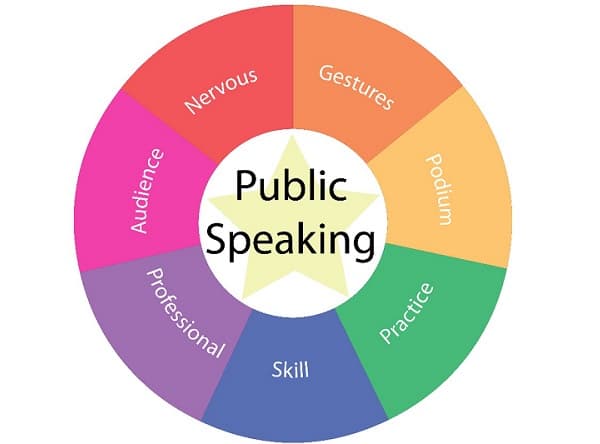
Impromptu Speaking - Guía rápida View original
Is this image relevant?
Breath | Public Speaking View original
Is this image relevant?
Deep Breathing | Diagram showing how to do deep breathing. U… | Flickr View original
Is this image relevant?
Impromptu Speaking - Guía rápida View original
Is this image relevant?
Time Constraints and Anxiety Management
The core challenge is simple: you don't have time to plan. That lack of preparation can trigger anxiety, which makes it harder to think clearly, which makes you more anxious. Breaking that cycle is the first priority.
- Controlled breathing is your most reliable tool. Diaphragmatic breathing (breathing deep into your belly rather than shallow chest breaths) activates your body's calm-down response. Take two or three slow breaths before you start speaking.
- Positive self-talk works better than you'd expect. Replace "I'm going to mess this up" with "I know enough about this to say something useful." It sounds basic, but it shifts your mental state.
- Visualization helps too. Briefly picture yourself speaking calmly and the audience responding well. Even a few seconds of this can reduce nervousness.
Restricted prep time also means your delivery won't be as polished as a rehearsed speech. That's expected and completely fine. The goal isn't perfection; it's coherence and confidence.
Skill Development and Professional Benefits
Impromptu speaking showcases quick thinking, adaptability, and authenticity. In professional and academic settings, these qualities directly shape how others perceive your competence.
- Regular practice in low-stakes environments builds confidence for high-pressure moments. Try giving short off-the-cuff responses in class discussions, at team meetings, or with friends.
- Developing a pre-speaking ritual can help center your thoughts. This could be as simple as taking a breath, planting your feet, and identifying one main point before you open your mouth.
Organizing Thoughts for Impromptu Speeches
The biggest mistake in impromptu speaking is starting to talk before you know where you're going. Even five seconds of mental organization makes a noticeable difference. Structural frameworks give you a ready-made path to follow so you don't have to invent one on the spot.

Structural Frameworks
PREP Method (Point, Reason, Example, Point): This is the most commonly taught framework for impromptu speaking, and for good reason. Here's how it works:
- Point — State your main idea clearly. ("Teamwork is the most important skill in any workplace.")
- Reason — Explain why. ("No single person has all the knowledge needed to solve complex problems.")
- Example — Give a specific illustration. ("In my group project last semester, we only succeeded because each person brought a different strength.")
- Point — Restate your main idea to close. ("That's why teamwork matters more than individual talent.")
Other useful frameworks:
- Past, Present, Future — Gives your response a chronological flow. Great for topics about change or progress.
- Problem, Solution, Benefit — Frames your response around a central issue, what should be done, and why it helps. Works well for persuasive responses.
- Rule of Three — Organize around three main points or supporting arguments. Three is easy for both you and your audience to remember. For example, if asked what makes a strong job candidate, you might say: education, experience, and enthusiasm.
Mental mapping can also help. In the few seconds before you speak, mentally sketch two or three key points and the order you'll cover them. You don't need a full outline, just a rough path.
Content Generation Strategies
When you're stuck on what to say, start with what you know best: your own experience.
- Personal anecdotes are natural content generators. A childhood memory of learning to ride a bike can illustrate perseverance. A story about a tough group project can demonstrate problem-solving. These feel authentic and are easy to recall under pressure.
- Relevant facts, statistics, or quotes strengthen your credibility when you can recall them. Citing a specific study or referencing a well-known figure's perspective adds weight to your point. You won't always have data at your fingertips, but building general knowledge through reading helps over time.
Smooth transitions keep your speech from feeling choppy. Build a small repertoire of transition phrases you're comfortable with: "On the other hand," "Building on that," "What this really comes down to," "Similarly." Having these ready means one less thing to think about in the moment.
Composure and Confidence in Impromptu Speaking

Mental Preparation Techniques
- Focus on the message, not on yourself. When you shift your attention from "How do I look?" to "What does the audience need to hear?", the pressure drops significantly.
- Embrace pauses. Silence feels longer to you than it does to your audience. A brief pause before answering gives you time to think and signals to listeners that you're being thoughtful, not scrambling.
- Practice active listening. If someone asks you a question or gives you a prompt, really hear it before responding. You can even briefly restate the question to buy yourself a moment and confirm you understood correctly.
Non-Verbal Communication Strategies
Your body language communicates as much as your words, sometimes more. In impromptu situations, strong nonverbal cues can project confidence even when you feel uncertain inside.
- Eye contact is the single most important nonverbal tool. It projects assurance and helps you connect with your audience. Scan the room rather than staring at one person or at the floor.
- Posture matters. Stand tall with your shoulders back and your weight evenly distributed. This conveys confidence and actually helps you feel more confident too.
- Use open hand gestures to appear approachable and to emphasize points naturally. Avoid crossing your arms or gripping the podium.
- Vocal variety keeps your audience engaged. Vary your pitch, pace, and volume. Slow down and lower your voice for important points. Pick up the pace slightly to convey energy or excitement. A monotone delivery will lose people fast, no matter how good your content is.
Delivering Effective Impromptu Speeches
Audience Adaptation and Content Refinement
Different audiences need different approaches. Adapting on the fly is part of what makes impromptu speaking challenging, but a few principles keep you on track:
- Match your language to your audience. Technical jargon works at a professional conference but alienates a general audience. Simplified terms work for newcomers but might seem shallow to experts.
- Adjust tone and references. Humor that lands with your classmates might not work at a formal event. Cultural references should fit the demographic you're speaking to.
- Be concise. In impromptu speaking, shorter is almost always better. Cover your key point with enough detail to be convincing, then stop. Rambling is the most common pitfall when people speak without preparation.
Delivery Techniques and Engagement Strategies
- Vocal variety (covered above) is worth repeating here because it's that important for delivery. Slowing down for a key point and then picking up the pace creates a rhythm that holds attention.
- Nonverbal communication reinforces everything you say. Gestures, facial expressions, and movement should feel natural, not rehearsed.
- Respond to your audience in real time. If you notice confused faces, clarify your point. If someone asks a question, address it directly. If the energy in the room shifts, adjust. This kind of responsiveness is one of the biggest advantages of impromptu speaking: you're not locked into a script, so you can adapt moment to moment.
See Fiveable more often in Google
Mark Fiveable as a preferred source and Google is more likely to show you our guides in Top Stories, with a "preferred" badge in AI Mode and AI Overviews.