4.3 Research Methods and Source Evaluation

📞Intro to Public Speaking Unit 4 Review
4.3 Research Methods and Source Evaluation
📞 Intro to Public Speaking
Primary vs. Secondary Sources

Top images from around the web for Characteristics and Examples
Finding Sources | Basic Reading and Writing View original
Is this image relevant?
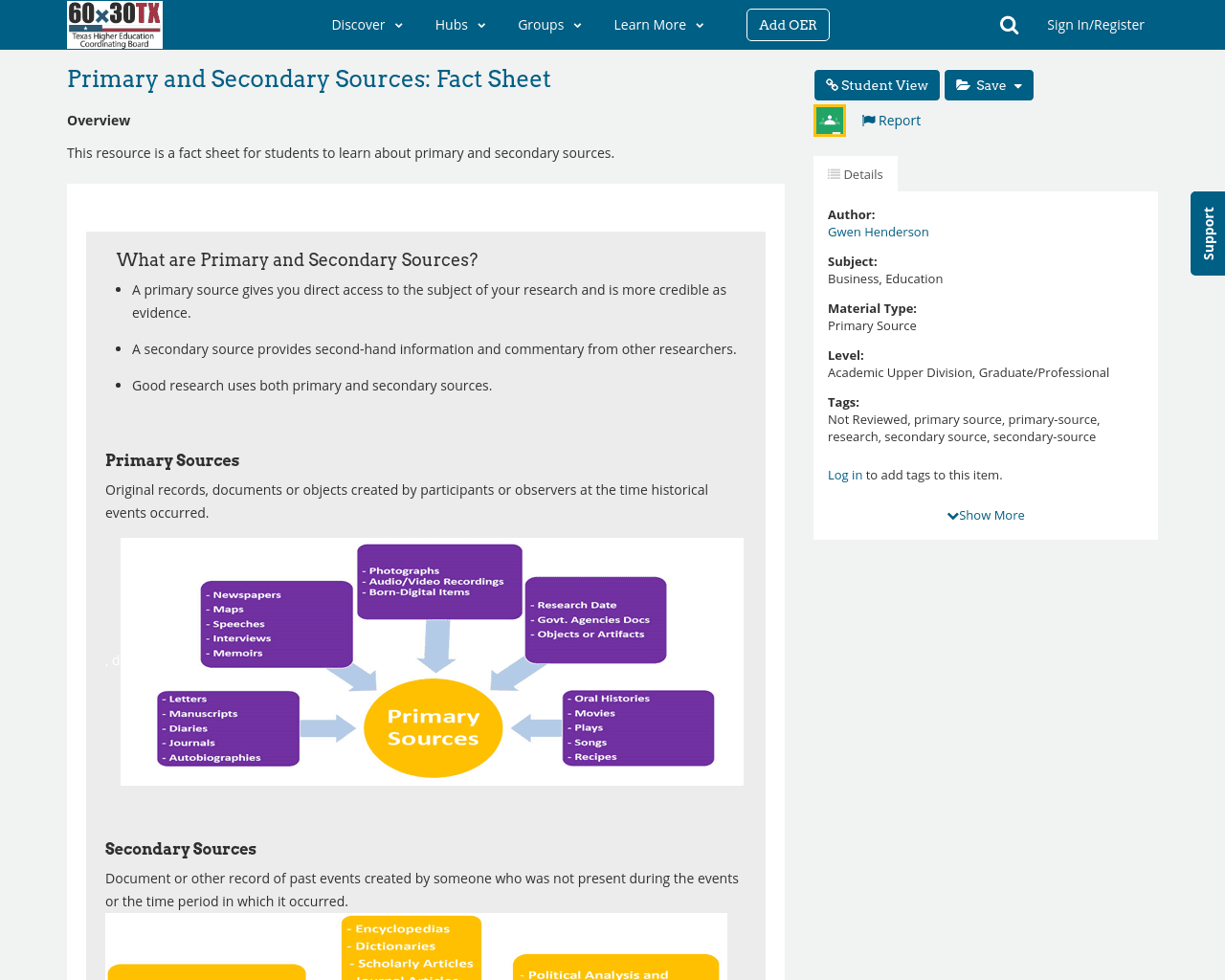
Primary and Secondary Sources: Fact Sheet | OERTX View original
Is this image relevant?
Evaluating Information & Citing Sources - First Year Writing (General) - James P. Adams Library ... View original
Is this image relevant?
Finding Sources | Basic Reading and Writing View original
Is this image relevant?
Primary and Secondary Sources: Fact Sheet | OERTX View original
Is this image relevant?
Characteristics and Examples
Every source you use in a speech falls into one of two categories: primary or secondary. Knowing the difference helps you choose the right evidence for your claims.
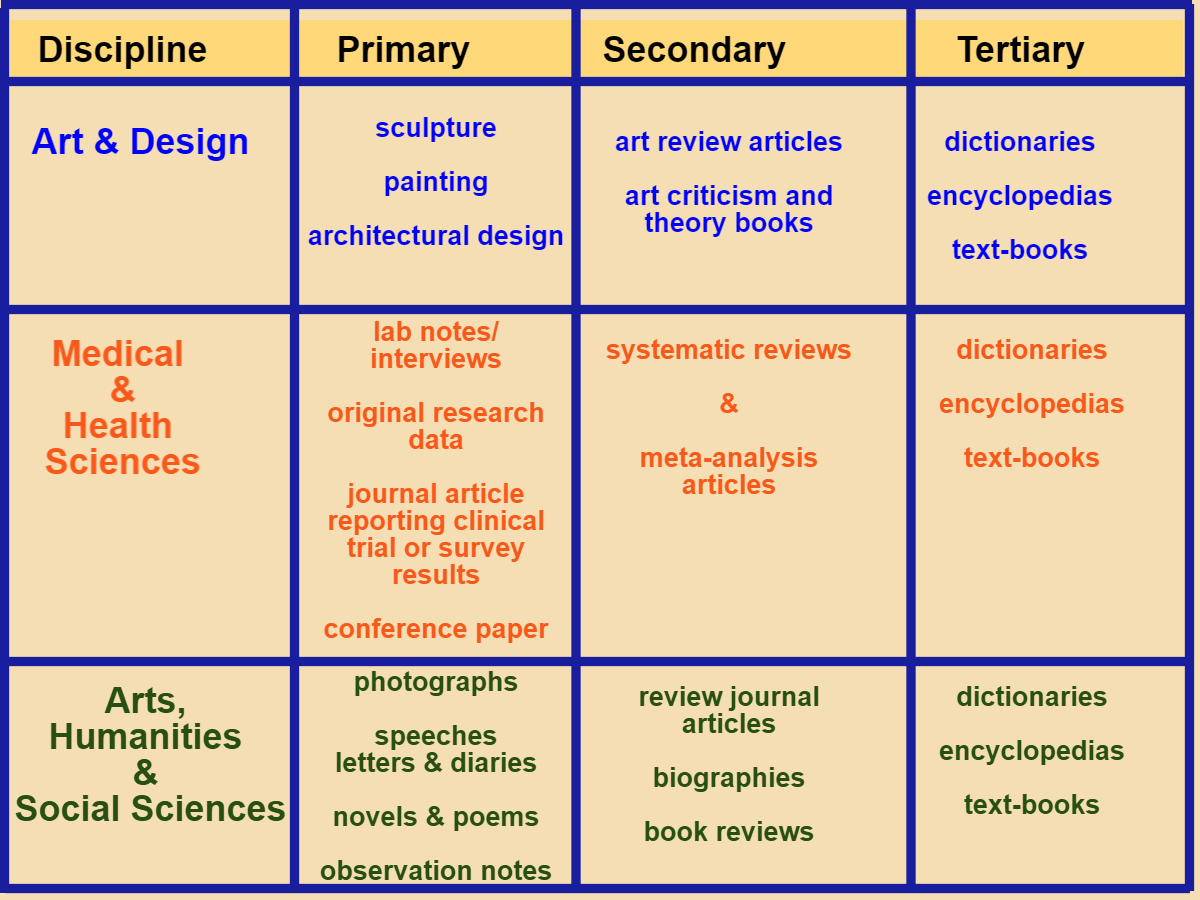
Primary sources are original, first-hand materials created at the time of an event or by someone directly involved. Think original research studies, interview transcripts, photographs, diaries, court records, or government census data. These give you direct access to the evidence itself.
Secondary sources interpret, analyze, or summarize primary sources. Textbooks, review articles, biographies, and news commentaries all fall here. They're useful because someone has already done the work of putting primary material into context.
A few things to keep in mind:
- The same source can be primary or secondary depending on your topic. A newspaper article about a protest is a secondary source if you're researching the protest itself, but it becomes a primary source if you're studying how the media covered the event.
- Primary sources tend to be more detailed and authentic, but they require you to do the interpreting.
- Secondary sources give you a broader view and pre-built analysis, but they carry the original author's biases and framing.
Using Both in Your Research
Strong speech research draws on both types. Here's how they work together:
- Secondary sources help you understand the big picture and find out what experts have already said about your topic. They can also point you toward primary sources worth examining.
- Primary sources let you engage directly with original data or accounts, which adds credibility to your speech. You can also use them to verify claims you found in secondary sources.
For example, if you're giving a speech on rising college tuition, you might use a secondary source (a policy analysis article) to frame the issue, then cite primary data (the College Board's annual tuition survey) to back up specific numbers. That combination makes your argument both well-contextualized and grounded in hard evidence.
Effective Source Search Techniques
Boolean Operators and Advanced Search Features
Typing a vague phrase into a search bar usually buries you in irrelevant results. Boolean operators are simple commands that help you control what shows up.
- AND narrows your results by requiring all terms to be present. college tuition AND student debt returns only results that discuss both.
- OR broadens your results by including any of the terms. college OR university captures sources that use either word.
- NOT excludes a term. tuition NOT community college filters out results about community colleges.
Most databases and search engines also have advanced search features worth using:
- Date range filters limit results to a specific time period, which is helpful when you need recent data.
- Document type selections let you target journals, books, or theses specifically.
- Quotation marks around a phrase search for that exact wording. Searching "student loan crisis" returns only results with that specific phrase.
- Wildcards (the * symbol) search for variant word endings. Searching environment* will find environment, environmental, and environmentalism all at once.
Specialized Search Strategies
General search engines are fine for getting started, but subject-specific databases produce higher-quality, often peer-reviewed results. A few common ones:
- Google Scholar for academic articles across disciplines
- JSTOR for humanities and social science journals
- PubMed for health and medical research
Two other techniques that experienced researchers rely on:
- Citation chaining: Find one strong source, then look at its reference list. The sources it cites are likely relevant to your topic too. You can also search forward to see who has cited that source since it was published.
- Iterative searching: Start with broad search terms, scan your initial results, then refine your terms based on the language and keywords those sources actually use. Your second or third round of searching almost always produces better results than your first.
Source Reliability and Authority

Evaluating Credibility
Not all sources deserve a spot in your speech. Before you cite something, run it through these checks:
- Author qualifications: Does the author have credentials or expertise in this area? Look for institutional affiliations, degrees, or a track record of publishing on the topic.
- Peer review: Articles published in peer-reviewed journals have been vetted by other experts before publication. That doesn't make them perfect, but it's a strong credibility signal.
- Purpose and audience: Is the source written to inform, persuade, or sell something? A pharmaceutical company's press release about its own drug is not the same as an independent clinical trial.
- Methodology: For research-based sources, check whether the methods are clearly described and sound. Small sample sizes, vague data collection, or obvious conflicts of interest are red flags.
- Citations and references: Credible sources typically cite their own evidence. If a source makes big claims with no references, be cautious.
- Cross-referencing: Verify key claims by checking whether other reputable sources report the same information. If only one source makes a particular claim, treat it with skepticism.
Assessing Timeliness and Relevance
How recent a source needs to be depends entirely on your topic.
- For fast-moving fields like technology, medicine, or politics, a source from five years ago may already be outdated. Aim for the most current data available.
- For stable fields like philosophy, history, or literary analysis, older sources can still carry full authority. A 30-year-old analysis of Shakespeare isn't automatically less valid.
- The best approach is often to balance classic and current sources. Foundational works give historical context, while recent research shows where the conversation stands now.
Always ask: has this source been superseded by newer findings? If a 2015 study's conclusions were overturned by a 2022 study, citing the older one without acknowledging the update weakens your credibility.
Diverse Perspectives in Sources
Synthesizing Multiple Sources
A speech built on a single source or a single viewpoint sounds thin. Synthesizing means pulling together information from multiple sources to build a more complete, nuanced picture.
- Include contrasting viewpoints to show you've considered the issue from multiple angles. This demonstrates critical thinking and makes your argument harder to dismiss.
- Draw from different types of evidence: pair statistical data (quantitative) with personal accounts or case studies (qualitative) for a more complete picture.
- Look for interdisciplinary connections. A speech on food insecurity, for instance, gets richer when you combine sources from economics, public health, and sociology rather than pulling only from one field.
Balancing Source Types
Variety in your sources signals thorough research. Aim for a mix that might include:
- Scholarly journal articles for rigorous, peer-reviewed evidence
- Government reports or official statistics for reliable data
- Reputable news outlets for current events and real-world context
- Expert interviews or industry reports for practical, applied perspectives
When it makes sense for your topic, also consider sources from different time periods (to show how an issue has evolved), different geographic regions (to avoid a narrow cultural lens), and both mainstream and alternative viewpoints (to capture the full range of thought on an issue).
The goal isn't to pad your bibliography. It's to show your audience that you've done the work to understand your topic from multiple angles, which is one of the strongest ways to build credibility as a speaker.
See Fiveable more often in Google
Mark Fiveable as a preferred source and Google is more likely to show you our guides in Top Stories, with a "preferred" badge in AI Mode and AI Overviews.