12.2 Persuasive Speech Structures

📞Intro to Public Speaking Unit 12 Review
12.2 Persuasive Speech Structures
📞 Intro to Public Speaking
Persuasive Speech Patterns
Persuasive speech structures give you a framework for building arguments that actually land with an audience. Instead of just dumping information, these patterns walk listeners through your reasoning in a way that feels logical and compelling. The structure you pick depends on your topic, your audience, and what you want them to do or believe by the end.

Top images from around the web for Problem-Solution and Cause-Effect Patterns
GRAPHIC ORGANIZERS for Reading/Writing Patterns – How to Learn Like a Pro! View original
Is this image relevant?
Cause and Effect Diagram for PowerPoint View original
Is this image relevant?
Rhetorical Modes - EnglishComposition.Org View original
Is this image relevant?
GRAPHIC ORGANIZERS for Reading/Writing Patterns – How to Learn Like a Pro! View original
Is this image relevant?
Cause and Effect Diagram for PowerPoint View original
Is this image relevant?
Problem-Solution and Cause-Effect Patterns
The problem-solution pattern is probably the most straightforward persuasive structure. You identify a specific issue, then present a viable solution. This works best when your audience already recognizes the problem but isn't sure what to do about it. For example, you might describe the rising cost of textbooks and then argue for open-source educational materials as the fix.
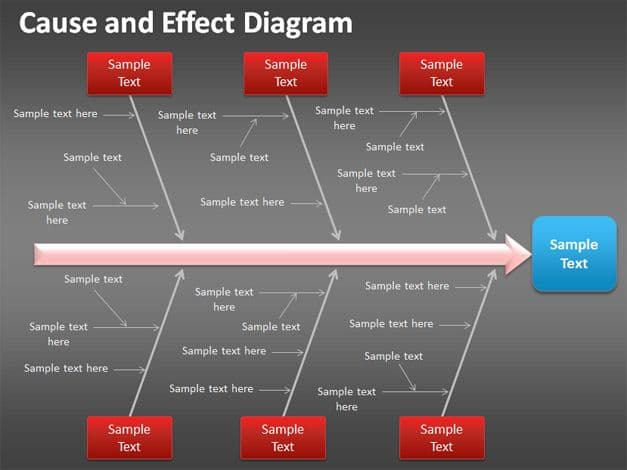
The cause-effect pattern takes a different angle. Instead of jumping to a solution, you dig into why something is happening and what results from it. This is useful when your audience doesn't fully understand the issue yet. You could explain how excessive social media usage leads to increased anxiety and depression in teenagers, using research data to connect the cause to the effect. The goal here is building understanding before you ever propose a change.
The comparative advantage pattern assumes your audience already knows solutions exist. Your job is to argue that one option is better than the others. You present multiple alternatives, then make the case for your preferred choice. Think of it like comparing different public transportation proposals for a growing city and arguing that light rail beats expanded bus routes and ride-share subsidies.
Quick guide for choosing a pattern:
- Audience sees the problem but needs a fix → Problem-Solution
- Audience doesn't fully grasp the issue yet → Cause-Effect
- Audience knows solutions exist but hasn't picked one → Comparative Advantage
Specialized Persuasive Patterns
Monroe's Motivated Sequence is a five-step structure specifically designed to move people to action. It gets its own full section below because it's central to this course.
The topical pattern organizes your speech by subtopics within a larger subject. Each main point covers a different dimension of the issue. For example, a speech on ocean pollution might have three main points: plastic waste, chemical runoff, and overfishing. This pattern works well when no single cause-effect relationship or timeline drives the topic, but you still want to build a persuasive case across multiple angles.
The chronological pattern arranges information in time order. It's effective when you're tracing how a problem developed or walking through a process with clear sequential steps. A speech tracing the development of civil rights legislation from the 1950s through the present would use this pattern naturally.
The spatial pattern organizes information by physical or geographical relationships. You might use it to compare how climate change affects different ecosystems around the world, moving from Arctic ice loss to rainforest degradation to coral reef bleaching. This helps audiences see the scope of an issue across locations.
Thesis Statements for Persuasion

Characteristics of Effective Thesis Statements
A persuasive thesis statement does more than announce your topic. It takes a clear position on a debatable issue and previews the arguments you'll use to support it. A few key qualities to aim for:
- Arguable: Reasonable people could disagree with it. "Pollution is bad" isn't really arguable since almost everyone agrees. "Our city should ban single-use plastics by 2026" is arguable because people can reasonably disagree about the timeline, the method, or whether a ban is the right approach at all.
- Specific: Avoids vague language. Instead of "something should be done about education," state exactly what should be done and why.
- Concise: Typically one to two sentences. If your thesis takes a full paragraph, it needs trimming.
- Audience-aware: Tailored to what your listeners already know and believe. A thesis for skeptics looks different than one for a sympathetic crowd.
- Action-oriented: Often includes a call to action or a proposed solution, not just a statement of opinion.
Crafting and Positioning the Thesis
Your thesis typically goes near the end of your introduction. It acts as a bridge between your attention-getter and the body of your speech, giving the audience a roadmap for everything that follows.
A strong example: "By implementing a comprehensive recycling program, our city can reduce landfill waste by 40% within two years, creating a cleaner environment and saving taxpayer money." Notice how this states a specific position, previews the benefits, and includes concrete numbers.
A weak example, by contrast: "Recycling is good for the environment." That's a statement of fact most people already agree with. There's nothing to argue, no specific action proposed, and no preview of your reasoning.
As you develop the body of your speech, every main point should connect back to and support this thesis. If a point doesn't clearly reinforce your thesis, it probably doesn't belong in the speech.
Monroe's Motivated Sequence
Monroe's Motivated Sequence is one of the most widely taught persuasive structures because it mirrors how people naturally process decisions. Developed by Purdue professor Alan Monroe in the 1930s, it moves the audience from awareness to action in five steps, each building on the last.

Steps of the Sequence
-
Attention: Capture the audience's interest right away. Use a startling statistic, a brief story, or a rhetorical question. Example: "Did you know that every minute, a truckload of plastic enters our oceans?"
-
Need: Establish that a real problem exists and show why it matters to your audience specifically. Don't just present abstract data. Connect the issue to their lives. Example: showing photos of local beach pollution alongside data on health risks from contaminated water. The more personally relevant you make the need, the more motivated your audience will be to hear your solution.
-
Satisfaction: Present your solution in detail. Explain exactly how it addresses the need you just established. Example: proposing a city-wide ban on single-use plastics, with specifics on implementation and timeline. Your audience should be able to see a clear, logical link between the problem in Step 2 and the fix you're offering here.
-
Visualization: Paint a vivid picture of the future. Describe what happens if your solution is adopted (positive visualization) and what happens if it isn't (negative visualization). Example: contrasting clean beaches with thriving marine life against polluted shores and declining ecosystems. This step is where emotional appeal does its heaviest work. You're helping the audience feel the stakes.
-
Action: Tell the audience exactly what to do. Be specific. Don't just say "get involved." Say "Sign the petition at the table outside this room" or "Call your city council representative this week." Vague calls to action get ignored. The easier and more concrete you make the action step, the more likely people are to follow through.
Implementing the Sequence
The power of this sequence comes from how each step flows logically into the next. You can't present a solution before the audience feels the need for one, and you can't ask for action before they can picture the outcome. Skipping steps or rushing through them weakens the whole structure.
Monroe's Motivated Sequence works across a wide range of topics. You could use it to advocate for increased mental health funding in schools, to push for a campus recycling initiative, or to encourage voter registration.
The sequence also balances logic and emotion effectively. The Need and Satisfaction steps rely heavily on evidence and reasoning, while the Visualization and Action steps tap into how the audience feels about the issue. That balance is what makes it so versatile.
Transitions and Signposts in Persuasive Speeches
Transitions and signposts are the connective tissue of your speech. Without them, even well-organized arguments can feel choppy or hard to follow. They tell your audience where you've been, where you're going, and how your ideas relate to each other.
Types of Transitions and Signposts
Transitions are words, phrases, or full sentences that link one idea to the next. They signal the relationship between points. Example: "Now that we've examined the problem, let's turn to a solution."
Internal previews tell the audience what's coming up next, helping them mentally prepare. Example: "In the next few minutes, I'll discuss three key benefits of this proposal."
Internal summaries briefly recap what you just covered before you move on. These reinforce important information and help listeners who may have drifted. Example: "To recap, we've seen how this issue affects our community's health and economy."
Verbal signposts are simple markers that track your progression: "first," "second," "finally," "most importantly." They're small but they keep your audience oriented. Example: "The final reason to support this initiative is its long-term sustainability."
Implementing Effective Transitions
Transitions aren't just verbal. Non-verbal cues like pausing before a new point, shifting your position, or changing your vocal tone all signal that you're moving to something new. A longer pause before introducing a contrasting point gives the audience a moment to absorb what you just said.
Your transitional statements should reflect the logical relationship between ideas:
- Adding evidence? Use "furthermore" or "in addition."
- Presenting a contrast? Try "however" or "despite these challenges."
- Showing cause and effect? "As a result" or "consequently" works well.
- Returning to your thesis? "This brings us back to the central question" keeps the audience anchored.
Strong transitions make your speech feel like one cohesive argument rather than a collection of separate points. They're easy to overlook during preparation, but audiences notice when they're missing.
See Fiveable more often in Google
Mark Fiveable as a preferred source and Google is more likely to show you our guides in Top Stories, with a "preferred" badge in AI Mode and AI Overviews.