4.5 Corporate Cultures

👔Principles of Management Unit 4 Review
4.5 Corporate Cultures
👔 Principles of Management
Organizational Culture and Its Impact
Organizational culture shapes how employees think and act. It's the invisible set of shared values, beliefs, and norms that guides decision-making, fosters unity, and aligns people with strategic goals. Understanding culture is key to managing effectively because even the best strategy will fail if the culture works against it.

Top images from around the web for Influence of organizational culture
What is your organizational culture: Pathological, Bureaucratic or Generative? · Langerman Panta ... View original
Is this image relevant?
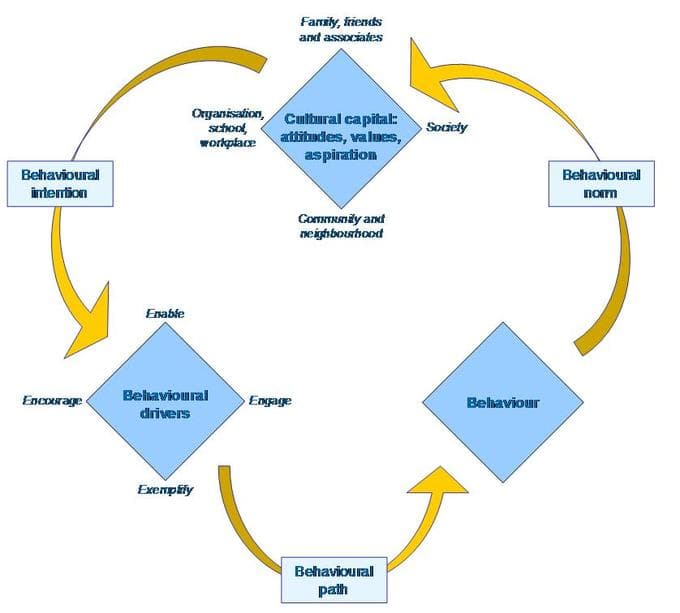
Shaping Organizational Culture | Boundless Management View original
Is this image relevant?
ba3361 - Organizational Culture and Technology View original
Is this image relevant?
What is your organizational culture: Pathological, Bureaucratic or Generative? · Langerman Panta ... View original
Is this image relevant?
Shaping Organizational Culture | Boundless Management View original
Is this image relevant?
Influence of Organizational Culture
Culture touches nearly every part of how an organization functions. At its core, it defines what behaviors get rewarded, what risks feel acceptable, and how people collaborate day to day.
- Shapes behavior and decisions. Shared values and norms act as an unwritten rulebook. Employees at a company that values transparency will share information freely; employees at one that values hierarchy will defer to their managers before acting.
- Affects adaptability. Flexible cultures respond more quickly to shifts in markets, technology, or competition. Rigid cultures may have stability on their side, but they often struggle when the environment changes fast.
- Builds internal cohesion. A strong culture gives employees a sense of identity and purpose, which reduces conflict and encourages collaboration.
- Supports strategy execution. Culture needs to align with the company's mission, vision, and strategic objectives. A company pursuing aggressive growth can't thrive with a culture that punishes risk-taking.
- Creates organizational climate. Climate is how employees perceive their work environment. It's related to culture but more about the day-to-day feel: Do people trust leadership? Do they feel supported? Climate directly influences attitudes, motivation, and retention.

Types in the Competing Values Framework
The Competing Values Framework organizes cultures along two dimensions: internal vs. external focus, and flexibility vs. stability. This produces four distinct culture types.
- Clan culture (collaborative) emphasizes teamwork, employee involvement, and open communication. Think of it as a family-like environment that values loyalty, tradition, and strong relationships. Mentoring and consensus-building are common here.
- Adhocracy culture (creative) encourages innovation, risk-taking, and entrepreneurship. Individual initiative and flexibility are prized. This type thrives in dynamic, uncertain environments where being first to market matters more than following a playbook.
- Market culture (competitive) focuses on results, market share, and profitability. Customer satisfaction and external success drive everything. Performance is constantly measured, and goal achievement is the primary metric for evaluating people.
- Hierarchy culture (control) prioritizes stability, efficiency, and predictability. Formal rules, policies, standardized procedures, and top-down decision-making keep things running smoothly. This culture works well where consistency and compliance are non-negotiable.
No culture type is inherently "better." The right fit depends on the industry, the company's strategy, and the competitive environment.

Alignment of Culture with Industry
A culture that works brilliantly in one industry can be a liability in another. The key is congruence between culture, industry characteristics, and business strategy.
- Industry characteristics matter. Fast-paced, innovative industries like technology benefit from adhocracy cultures that reward experimentation. Stable, heavily regulated industries like banking or utilities tend to align better with hierarchy cultures that emphasize compliance and consistency.
- Strategy and culture must match. A cost leadership strategy pairs naturally with hierarchy culture (efficiency and standardization). A differentiation strategy pairs better with clan or adhocracy cultures that foster creativity and customer intimacy.
- Misalignment creates real problems. A market culture in a heavily regulated industry can encourage excessive risk-taking. An adhocracy culture in a mature, stable industry may waste resources chasing unnecessary innovations.
- Successful companies get this right. Apple's adhocracy culture aligns with its innovation focus in the fast-moving tech industry. Walmart's hierarchy culture supports its cost leadership strategy in retail, where efficiency at scale is everything.
- Cultural fit in hiring also matters. Bringing in employees whose personal values clash with the organization's norms creates friction and turnover, even if those employees are technically skilled.
Cultural Dynamics and Diversity
Culture isn't static, and it's rarely uniform across an entire organization.
- Subcultures naturally form within departments or teams. An R&D team might operate with an adhocracy mindset inside a company that's otherwise hierarchical. These subcultures aren't necessarily a problem, but leaders need to be aware of them.
- Cultural intelligence is the ability to work effectively across different cultural contexts. It's essential for leaders managing diverse workforces or operating in global markets, where assumptions about communication, authority, and teamwork vary widely.
- Cultural dimensions like power distance (how much inequality is accepted) and individualism vs. collectivism influence organizational behavior across countries. A management approach that works in the U.S. may not translate well in Japan or Brazil.
- Acculturation is the process of adapting to a new organizational culture. This happens most visibly during mergers and acquisitions, where two distinct cultures collide. It also applies to individual employees joining a new company.
- Cultural change is sometimes necessary when market conditions shift or strategic priorities evolve. It requires deliberate effort: clear communication from leadership, visible changes in policies and rewards, and patience, since deeply held values don't change overnight.
See Fiveable more often in Google
Mark Fiveable as a preferred source and Google is more likely to show you our guides in Top Stories, with a "preferred" badge in AI Mode and AI Overviews.