4.3 Organizational Designs and Structures

👔Principles of Management Unit 4 Review
4.3 Organizational Designs and Structures
👔 Principles of Management
Organizational Structures
Organizational structures shape how companies operate and adapt to their environment. From rigid hierarchies to flexible networks, each structure carries distinct advantages and trade-offs. Understanding these differences helps managers design organizations that actually fit their strategy and environment.

Top images from around the web for Mechanistic vs organic structures
Organizational Structures and Their History | Organizational Behavior / Human Relations View original
Is this image relevant?
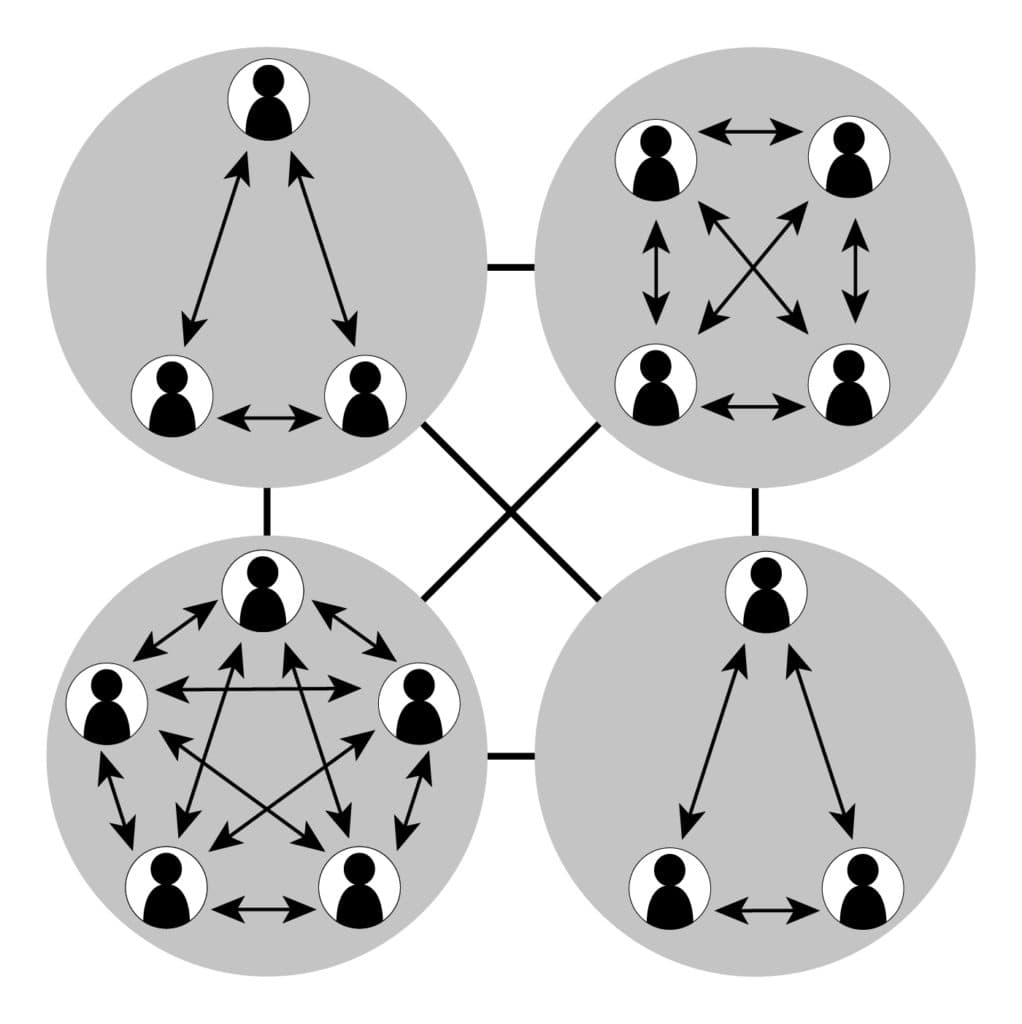
Organic versus Mechanistic Models | Organizational Behavior and Human Relations View original
Is this image relevant?
Organic versus Mechanistic Models | Organizational Behavior and Human Relations View original
Is this image relevant?
Organizational Structures and Their History | Organizational Behavior / Human Relations View original
Is this image relevant?
Organic versus Mechanistic Models | Organizational Behavior and Human Relations View original
Is this image relevant?
Mechanistic vs. Organic Structures
These two categories sit at opposite ends of a spectrum, and most real organizations fall somewhere in between.
Mechanistic structures are rigid, highly formalized, and centralized with a clear chain of command. Think of the military or a large manufacturing plant. Roles and responsibilities are well-defined, processes are standardized, and decisions flow from the top down. This works well in stable, predictable environments where efficiency and consistency matter most.
Organic structures are flexible, decentralized, and built to adapt. Startups and tech companies often lean organic. Communication flows freely across levels and departments, employees have more autonomy, and collaboration is encouraged over strict hierarchy. This suits dynamic environments where conditions shift quickly and innovation is a priority.
The key distinction: mechanistic structures prioritize control and efficiency, while organic structures prioritize adaptability and collaboration. Neither is inherently better. The right choice depends on the organization's environment and strategy.

Evolution of Organizational Structures
Organizations haven't always looked the way they do now. Structural design has evolved alongside changes in markets, technology, and management thinking.
- Traditional hierarchical structures dominated the early 20th century. Companies like Ford Motor Company used clear lines of authority, deep specialization, and centralized decision-making. These structures worked well in stable markets with predictable demand.
- Flatter, more flexible structures emerged as globalization, technology, and market volatility made rigid hierarchies too slow. Companies like Apple reduced layers of management, empowered employees at lower levels, and gained faster decision-making as a result.
- Matrix and networked team structures developed to handle complex, project-based work. Organizations like NASA needed people from different specialties working together across reporting lines. These structures foster collaboration and knowledge sharing, helping organizations respond quickly to shifting customer needs.

Comparison of Structural Types
Each structural type reflects a different way of organizing people, authority, and resources. The table below summarizes the core trade-offs, followed by a closer look at each.
| Structure | Best For | Key Strength | Key Weakness |
|---|---|---|---|
| Functional | Stable environments, specialized work | Deep expertise, efficiency | Siloed departments, slow cross-functional response |
| Divisional | Diverse products, markets, or regions | Market responsiveness, clear accountability | Resource duplication across divisions |
| Matrix | Complex projects needing cross-functional input | Collaboration, flexible resource allocation | Role ambiguity, dual-reporting conflicts |
| Networked Team | Fast-changing, project-driven work | Adaptability, innovation | Unclear authority, harder to maintain consistency |
Functional Structure
Jobs are grouped by business function (marketing, finance, operations, etc.). Each department develops deep expertise, resources are used efficiently within functions, and employees have clear career paths within their specialty. The downside is that departments can become functional silos, meaning they optimize for their own goals rather than the organization's. Communication across functions tends to be limited, and responding to market changes can be slow because decisions must travel up and across the hierarchy.
Divisional Structure
The organization is split into semi-autonomous divisions, each focused on a specific product line, service, or geographic region. Procter & Gamble, for example, organizes around product categories. Each division can make decisions quickly and tailor its approach to local market needs, with clear accountability for performance. The trade-off is duplication of resources: each division may have its own marketing team, HR department, and so on. Divisions can also end up competing with each other for corporate resources, and knowledge sharing across divisions tends to be weak.
Matrix Structure
Employees report to two managers: a functional manager (e.g., head of engineering) and a project or product manager. Engineering firms and large consulting organizations often use this model. It enables cross-functional collaboration and lets the organization shift resources between projects as priorities change. The challenge is that dual reporting lines create ambiguity. When two bosses give conflicting directions, employees get stuck. Matrix structures demand strong communication skills and clear processes for resolving conflicts.
Networked Team Structure
Teams form and dissolve around specific projects or goals, drawing members from across the organization (or even from outside it). Consulting firms and creative agencies often operate this way. The structure is highly adaptable and encourages innovation through diverse perspectives. But without a fixed hierarchy, authority and accountability can be unclear. Maintaining consistent quality across teams requires strong leadership and deliberate coordination.
Organizational Design and Effectiveness
Organizational design is the process of creating or adjusting structures so they align with an organization's goals, strategy, and environment. It's not a one-time decision; as conditions change, the structure may need to change too.
A few core ideas guide this process:
- Contingency theory holds that there is no single best structure. The most effective design depends on factors like the external environment, the technology the organization uses, and its size. A small tech startup and a multinational manufacturer face very different conditions, so they need very different structures.
- Departmentalization is how jobs and activities get grouped. You can departmentalize by function, product, geography, customer type, or process. The choice shapes how information flows and where decision-making authority sits.
- Organizational culture can support or undermine any structure. A matrix structure won't work if the culture discourages collaboration, and a flat structure will fail if employees aren't comfortable making decisions without top-down approval.
- Henry Mintzberg's organizational configurations describe how structural elements (like the degree of formalization, where decisions are made, and how work is coordinated) combine into distinct organizational forms. His framework helps explain why certain structures fit certain situations.
Organizational effectiveness is ultimately measured by how well a structure enables the organization to achieve its objectives. A well-designed structure reduces friction, supports the strategy, and helps people do their best work. A poorly designed one creates bottlenecks, confusion, and wasted effort, no matter how talented the people inside it are.
See Fiveable more often in Google
Mark Fiveable as a preferred source and Google is more likely to show you our guides in Top Stories, with a "preferred" badge in AI Mode and AI Overviews.