15.6 Multicultural Teams

👔Principles of Management Unit 15 Review
15.6 Multicultural Teams
👔 Principles of Management
Multicultural teams bring both unique challenges and real advantages to the workplace. Language barriers, differing work styles, and conflicting values can create tension, but those same differences also generate diverse perspectives and more creative solutions. Effective managers need to navigate these complexities deliberately rather than hoping they'll sort themselves out.
This section covers the main challenges multicultural teams face, how specific cultural dimensions shape team dynamics, and practical strategies for leading across cultures.
Managing Multicultural Teams

Top images from around the web for Challenges of multicultural team management
Shaping Organizational Culture | Boundless Management View original
Is this image relevant?
Creating a Diverse Workforce | Boundless Management View original
Is this image relevant?
Multiculturalism without multilingualism – Language on the Move View original
Is this image relevant?
Shaping Organizational Culture | Boundless Management View original
Is this image relevant?
Creating a Diverse Workforce | Boundless Management View original
Is this image relevant?
Challenges of Multicultural Team Management
Cultural differences affect nearly every aspect of how a team functions. Here are the most common friction points:
- Language barriers and miscommunication go beyond vocabulary. Idioms, accents, and translation gaps can cause confusion even when everyone technically speaks the same language. A phrase like "let's table this" means postpone in the U.S. but discuss now in the U.K.
- Differing work style expectations rooted in cultural norms create mismatched assumptions about punctuality, formality, and how much deference to show a manager.
- Conflicting cultural values around individualism vs. collectivism or attitudes toward authority can cause real disagreements about how work should get done and who makes decisions.
- Stereotyping and prejudice can lead to exclusion or unfair treatment based on racial, ethnic, or national biases, even when unintentional.
- Difficulty building trust arises because cultures differ on how relationships form. Some cultures keep personal and professional lives separate; others expect socializing before any real business happens.
- Uneven cultural adaptation among team members creates imbalances. If some members adapt quickly while others struggle, cliques can form and collaboration suffers.

Impact of Cultural Differences on Teams
Four cultural dimensions come up repeatedly in management research. Understanding these helps you predict where misunderstandings are likely to occur.
High-context vs. low-context communication
- High-context cultures (Japan, China, many Arab countries) rely heavily on nonverbal cues, tone, and shared understanding. What's not said often matters more than what is.
- Low-context cultures (United States, Germany, Scandinavia) depend on explicit verbal messages. People say exactly what they mean and expect others to do the same.
A high-context team member might hint at a problem indirectly, while a low-context colleague waits for someone to state it plainly. Neither approach is wrong, but the mismatch causes missed signals.
Direct vs. indirect communication
- Direct communicators (Israel, Netherlands, Russia) express opinions openly, even when critical.
- Indirect communicators (Japan, Korea, Thailand) use subtle cues and tend to avoid open confrontation.
This overlaps with the high/low-context distinction but isn't identical. A culture can be relatively low-context yet still prefer indirect feedback in certain situations.
Individualistic vs. collectivistic cultures
- Individualistic cultures (United States, United Kingdom, Australia) prioritize personal goals, autonomy, and individual recognition.
- Collectivistic cultures (China, Mexico, Brazil) prioritize group harmony, consensus, and shared responsibility.
In practice, this affects everything from how people respond to individual praise (motivating in one culture, embarrassing in another) to whether someone will voice disagreement with the group.
Top-down vs. bottom-up decision-making
- Top-down cultures (France, Saudi Arabia, India) expect leaders to make decisions and subordinates to follow.
- Bottom-up cultures (Sweden, Denmark, New Zealand) involve team members in the decision-making process and value participative input.
A manager who asks for everyone's opinion might seem indecisive to team members from top-down cultures, while one who decides unilaterally might seem authoritarian to those from bottom-up cultures.

Strategies for Cross-Cultural Collaboration
These strategies move from internal awareness outward to team-level practices:
- Reflect on your own cultural biases. You can't manage cultural differences if you're unaware of your own assumptions about "normal" work behavior.
- Learn about your team members' cultures through research, conversation, and experience. Even basic knowledge of cultural norms shows respect and prevents avoidable mistakes.
- Practice active listening and perspective-taking. Before reacting to behavior that seems odd or rude, consider whether a cultural difference explains it.
- Adapt your communication and work style when needed. This might mean being more explicit with high-context communicators or more patient with indirect ones. The management term for this flexibility is code-switching.
- Establish a shared vision and team norms early. When the team agrees on common goals and ground rules for communication, cultural differences become easier to navigate.
- Build relationships through social interaction. Team-building activities, shared meals, or informal check-ins help bridge cultural gaps, especially for team members from relationship-oriented cultures.
- Use inclusive language. Avoid idioms, slang, or jargon that might confuse non-native speakers or exclude certain team members.
- Create opportunities for cultural sharing. Presentations, discussions, or celebrations of cultural traditions help team members understand each other and build mutual respect.
- Address conflicts with cultural sensitivity. When disagreements arise, consider whether cultural differences are a root cause. Mediation, reframing the issue, and finding compromise all work better when you account for cultural context.
- Leverage diversity for better outcomes. The goal isn't just to manage cultural differences but to use them. Diverse perspectives lead to more creative problem-solving and stronger decisions, a concept sometimes called cultural synergy.
Developing Cross-Cultural Leadership Skills
Managing multicultural teams is a skill set you build over time, not a one-time adjustment.
- Cultivate a global mindset. This means moving beyond your default cultural frame and genuinely valuing different ways of working and thinking.
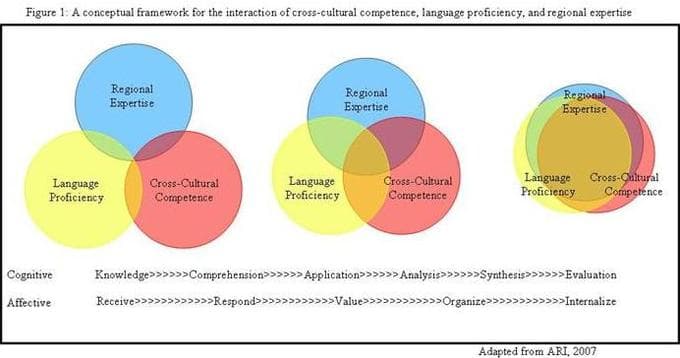
- Build your cultural intelligence (CQ). CQ is a measurable capability that reflects how well you can function in culturally diverse settings. It includes cognitive knowledge, motivation to engage with other cultures, and the behavioral ability to adapt. Unlike IQ, CQ improves with deliberate practice.
- Pursue continuous learning. Intercultural competence grows through exposure, not just reading. Working on diverse teams, traveling, and seeking feedback from colleagues with different backgrounds all contribute.
- Treat cultural diversity as a competitive advantage. Organizations with culturally competent leaders consistently outperform those that treat diversity as a box to check. The manager who can bridge cultural gaps adds real strategic value.
See Fiveable more often in Google
Mark Fiveable as a preferred source and Google is more likely to show you our guides in Top Stories, with a "preferred" badge in AI Mode and AI Overviews.