12.7 Recommendations for Managing Diversity

👔Principles of Management Unit 12 Review
12.7 Recommendations for Managing Diversity
👔 Principles of Management
Strategies for Promoting Diversity and Inclusion
Managing diversity goes beyond simply hiring people from different backgrounds. It requires deliberate systems and practices that reduce bias, create equitable opportunities, and build a culture where every employee can contribute fully. This section covers concrete strategies organizations use to make that happen.

Top images from around the web for Strategies for workplace diversity
Intercultural Work Environment and Leadership Style - Research leap View original
Is this image relevant?
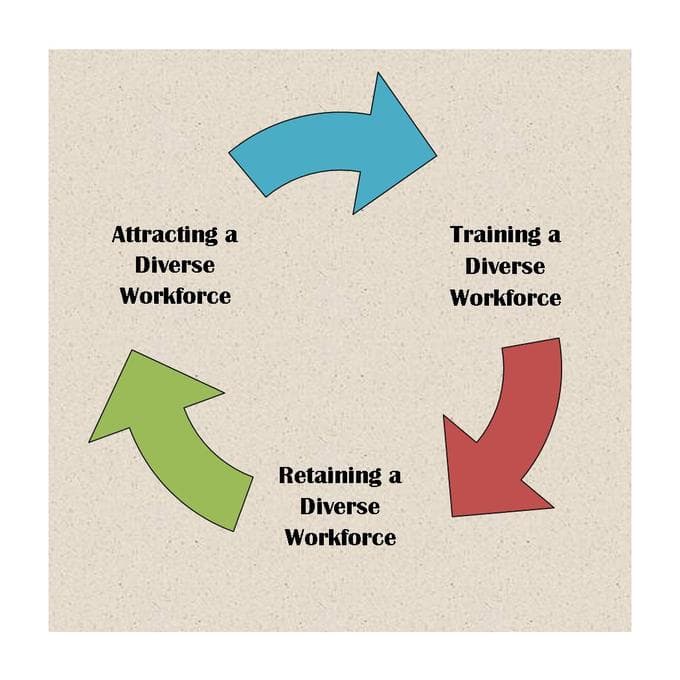
Creating a Diverse Workforce | Boundless Management View original
Is this image relevant?
"What Applicants Need to Know about Diversity, Equity, and Inclusion in Job Interviews ... View original
Is this image relevant?
Intercultural Work Environment and Leadership Style - Research leap View original
Is this image relevant?
Creating a Diverse Workforce | Boundless Management View original
Is this image relevant?
Strategies for Workplace Diversity
Blind resume screening removes identifying information (name, age, gender, sometimes school names) from applications so reviewers focus purely on qualifications and experience. This directly targets unconscious bias at the earliest stage of hiring.
Diverse interview panels include interviewers from different backgrounds, departments, and levels within the organization. When only one type of person evaluates candidates, shared blind spots go unchecked. A varied panel helps counteract that.
Diversity and inclusion training educates employees on unconscious bias and cultural sensitivity. The goal isn't to blame anyone for having biases (everyone does) but to help people recognize those biases so they don't drive decisions.
Employee resource groups (ERGs) are voluntary, employee-led groups organized around shared identities or experiences (e.g., women in leadership, LGBTQ+ employees, veterans). They serve as support networks and provide mentorship, networking, and professional development opportunities for underrepresented groups.
Additional strategies include:
- Flexible work arrangements such as remote work, flexible hours, or job sharing to accommodate diverse employee needs (e.g., caregiving responsibilities, disabilities, religious observances)
- Regular pay equity audits to identify and address wage disparities based on gender, race, or other factors, ensuring fair compensation practices
- Diversity pipeline development to build a steady flow of diverse candidates for future positions through partnerships with universities, community organizations, and targeted recruiting efforts
Components of Structured Interviews
Unstructured interviews ("just have a conversation") tend to favor candidates who remind the interviewer of themselves. Structured interviews fix this by standardizing the process. Here are the key components:
- Standardized questions — Every candidate gets the same set of predetermined questions, making comparisons fair and consistent.
- Behavioral and situational questions — These ask candidates to describe past behaviors ("Tell me about a time you resolved a conflict") or respond to hypothetical job-related scenarios. They predict future performance better than vague questions like "What's your greatest weakness?"
- Objective scoring criteria — Clear, predefined rubrics for evaluating responses minimize subjective interpretation. Instead of a gut feeling, interviewers rate answers against specific benchmarks.
- Multiple interviewers — Having several interviewers reduces the impact of any single person's biases on the hiring decision.
- Interviewer training — Interviewers are trained on structured techniques and bias awareness, including how to recognize unconscious bias during evaluations.

Fostering an Inclusive Organizational Culture
Hiring diverse talent is only half the challenge. If the organizational culture doesn't support inclusion, diverse employees leave. The practices below focus on retention and belonging.
Benefits of Diversified Mentoring
Diversified mentoring pairs mentees with mentors from different backgrounds (different race, gender, department, or career path). This exposes both parties to perspectives they wouldn't encounter otherwise, building cross-cultural understanding and stronger communication skills. For underrepresented groups especially, these relationships support career development and advancement by connecting mentees to networks and knowledge they might not otherwise access.

Leadership's Role in Inclusion
- Visible leadership commitment — When senior leaders consistently communicate that diversity and inclusion are core values, and then model inclusive behaviors in their own decision-making, it signals to the entire organization that these aren't just talking points.
- Diverse representation in leadership — Promoting diverse candidates into leadership positions provides role models for underrepresented groups and demonstrates that advancement is genuinely possible for everyone.
- Inclusive leadership practices — This means active listening, seeking out diverse perspectives before making decisions, creating psychological safety so employees feel comfortable sharing ideas and concerns, and recognizing contributions from all team members.
- Transparency — Regularly communicating progress and challenges in diversity efforts, holding leaders accountable for meeting goals, and celebrating successes while learning from setbacks builds trust in the process.
Measuring and Promoting Diversity
You can't improve what you don't measure. Organizations need concrete tools to track whether their efforts are actually working.
- Diversity metrics track workforce composition, hiring rates, promotion rates, and retention rates across demographic groups to identify where gaps exist
- Cultural competence programs build employees' ability to work effectively across cultural differences through workshops, cross-functional projects, and ongoing education
- Affirmative action policies proactively promote equal opportunities for underrepresented groups in hiring and promotion decisions
- Inclusive language standards guide all company communications (job postings, internal memos, policies) to avoid exclusionary terms and create a more welcoming environment
- Intersectionality awareness recognizes that individuals hold multiple identities simultaneously (e.g., a Black woman faces challenges distinct from those faced by Black men or white women). Effective diversity programs address these overlapping experiences rather than treating each identity in isolation
See Fiveable more often in Google
Mark Fiveable as a preferred source and Google is more likely to show you our guides in Top Stories, with a "preferred" badge in AI Mode and AI Overviews.