1.1 What Do Managers Do?

👔Principles of Management Unit 1 Review
1.1 What Do Managers Do?
👔 Principles of Management
The Nature of Managerial Work
Managerial work is less about sitting at a desk making big decisions and more about constant communication, rapid task-switching, and responding to whatever comes up next. Understanding what managers actually do day-to-day helps you see why skills like adaptability and interpersonal communication matter so much in management roles.
Dynamic Nature of Managerial Activities
A manager's workday is brief, varied, and fragmented. Rather than spending long stretches on a single project, managers constantly shift between activities: attending a budget meeting, then fielding a customer complaint, then reviewing a report, all within the same hour.
Interactions with other people take up a huge chunk of the day. Managers regularly communicate with subordinates, peers, superiors, and external stakeholders like suppliers and clients. Many of these interactions are short, sometimes just a few minutes in a hallway conversation or a quick impromptu update.
This means managers need to be highly adaptable. New issues and opportunities pop up constantly, whether it's an urgent request from a client or an unexpected setback on a project. The ability to shift focus quickly and manage multiple tasks at once is central to the role.
Time Allocation in Management Roles
Research shows that managers spend up to 80% of their time in some form of verbal communication. That includes face-to-face conversations, phone calls, emails, team huddles, one-on-one discussions, and presentations.
Beyond formal communication, interpersonal relationship-building is a constant part of the job. Managers gather information and build rapport through informal interactions like lunch conversations or quick check-ins. These relationships foster the trust and collaboration that make teams function well.
Meetings consume a particularly large share of a manager's schedule. These range from team meetings and project updates to strategic planning sessions. Meetings serve multiple purposes at once: sharing information, making decisions, brainstorming solutions, and aligning priorities across groups.
Key Functions Performed Through Verbal Interactions
Managers use conversations and meetings to carry out the core work that drives organizational performance. These functions include:
-
Setting goals and objectives — Managers communicate organizational goals to their teams and make sure everyone understands their specific role in achieving them. This involves assigning tasks, setting milestones, and clarifying expectations.
-
Providing direction and guidance — Through coaching sessions, performance reviews, and everyday conversations, managers offer support to their team members. They clarify what's expected, give feedback, help develop skills, and remove obstacles that get in the way of progress.
-
Monitoring progress and performance — Managers stay informed about how projects and initiatives are moving through regular status updates and performance metrics (like key performance indicators). When something is off track, they make course corrections or reallocate resources.
-
Facilitating collaboration and coordination — Managers align efforts across team members and departments, especially on cross-functional projects or when resources are shared. Meetings are a key tool for resolving conflicts and keeping operations running smoothly.
-
Making decisions and solving problems — Managers gather input from others by soliciting feedback and seeking out expertise. They use that information to evaluate options, make informed decisions, and implement solutions to organizational challenges.
Core Management Functions and Leadership
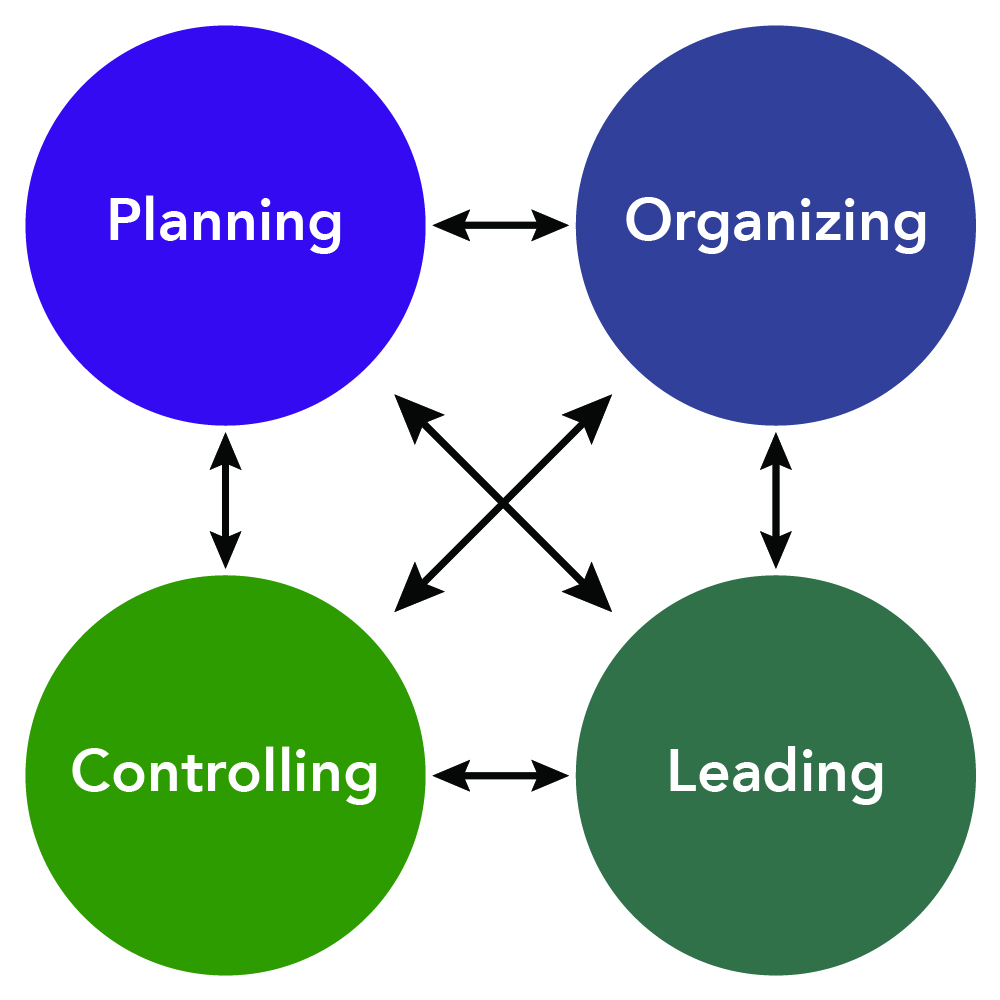
Beyond daily interactions, managers carry out four essential management functions:
- Planning: Setting goals and developing strategies to achieve them, from long-term strategic plans to short-term project timelines.
- Organizing: Structuring work, assigning resources, and designing roles so that objectives can be accomplished efficiently.
- Leading: Inspiring and motivating employees to perform at their best, which includes everything from setting a vision to giving encouragement during tough stretches.
- Controlling: Monitoring performance against goals and making adjustments when results fall short of expectations.
Effective managers don't just execute these four functions in isolation. They balance all of them while also shaping organizational culture, creating a work environment that reflects company values. Delegation plays a key role here: by assigning meaningful responsibilities to employees, managers both empower their teams and develop their skills for the future.
See Fiveable more often in Google
Mark Fiveable as a preferred source and Google is more likely to show you our guides in Top Stories, with a "preferred" badge in AI Mode and AI Overviews.