10.3 Managing Change

👔Principles of Management Unit 10 Review
10.3 Managing Change
👔 Principles of Management
Models and Approaches for Organizational Change
Organizational change doesn't just happen on its own. It requires deliberate planning, the right strategy, and attention to how people actually experience the transition. Several well-known models give managers a structured way to think about change, from the organization-wide level down to the individual employee.
Models for Organizational Change
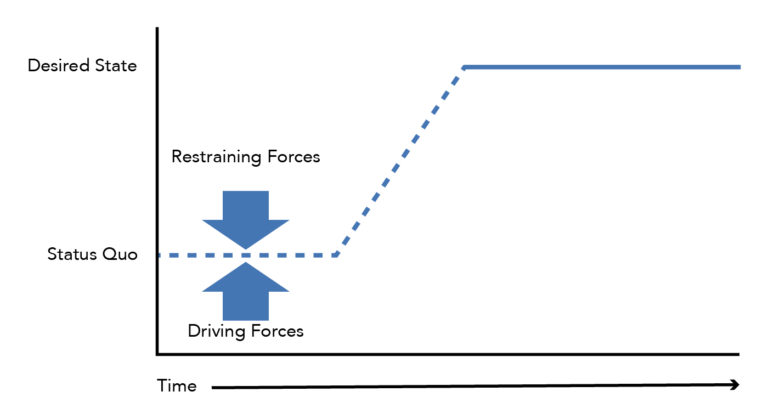
Lewin's Change Management Model breaks change into three stages:
- Unfreeze: Prepare the organization to accept that change is necessary. This means building a compelling case for why the status quo isn't working and addressing resistance early. Think of it as loosening the grip of old habits before trying to introduce new ones.
- Change: Implement the new processes, systems, or behaviors. This is the transition itself, where employees are actively learning and adapting (e.g., rolling out a new organizational structure or adopting updated technology).
- Refreeze: Lock in the changes so they become the new normal. Without this step, people drift back to old ways. Reinforcement tools like training, rewards, and recognition help the changes stick.
Kotter's 8-Step Change Model provides a more detailed roadmap, especially useful for large-scale transformations:
- Create urgency by identifying threats or opportunities that demand action (e.g., shifting market conditions, new competitors).
- Build a guiding coalition of influential leaders and stakeholders who will champion the change.
- Form a strategic vision that clearly describes the desired future state and why it's worth pursuing.
- Enlist a volunteer army by communicating the vision broadly and inspiring employees to get behind it.
- Enable action by removing barriers such as outdated processes or rigid hierarchies that block progress.
- Generate short-term wins to show early progress and keep momentum alive.
- Sustain acceleration by building on those wins and continuing to push forward rather than declaring victory too soon.
- Institute change by embedding the new practices into organizational culture so they outlast any single leader or initiative.
Kotter specifically warns against skipping steps or declaring success too early. Steps 6 and 7 are where many change efforts stall because leaders lose focus after initial progress.
The ADKAR Model shifts focus to the individual level. Each letter represents a milestone a person must reach for change to succeed:
- Awareness of the need for change (through clear communication about why)
- Desire to participate and support the change (addressing personal concerns and highlighting benefits)
- Knowledge of how to change (training, coaching, and resources)
- Ability to implement the required skills and behaviors (practice, feedback, and support)
- Reinforcement to sustain the change over time (recognition, rewards, and follow-up)
The ADKAR model is particularly useful for diagnosing where an individual is stuck. If someone understands the change but isn't doing it, the gap might be in ability or desire, not knowledge.
Top-Down vs. Bottom-Up Strategies
Top-down strategies are initiated by senior management, who set the vision and priorities:
- Provides clear direction and alignment with organizational goals
- Enables swift, consistent implementation across the organization
- Risk: employees may resist changes they feel were imposed on them without their input
Bottom-up strategies are driven by employees at lower levels who identify problems and propose solutions:
- Encourages participation, ownership, and buy-in from the people closest to the work
- Taps into frontline knowledge that leadership may not have
- Risk: without coordination, initiatives can become siloed and misaligned with broader objectives
When to use each:
- Top-down works best for urgent, transformational changes that need consistent execution (mergers, major restructuring).
- Bottom-up works best for incremental, continuous improvement where employee insight is critical (process optimization, quality improvements).
- In practice, the most successful change efforts combine both: leadership sets direction while employees contribute ideas and take ownership of implementation.

Culture's Impact on Change Initiatives
Organizational culture is the set of shared values, beliefs, and norms that shape how people behave at work. It acts as either an accelerator or a brake on change.
- A culture that values innovation and adaptability makes change easier. Employees in these environments are more comfortable with experimentation and risk-taking (common in tech startups, for example).
- A culture that prizes stability and tradition tends to resist disruption. Employees may cling to established routines and view change as a threat (more typical of large bureaucracies).
Employee involvement is one of the strongest predictors of whether a change effort succeeds:
- Engaging employees early increases buy-in because they feel they have a voice and a stake in the outcome.
- Involving people in decision-making and problem-solving builds a sense of ownership and shared responsibility.
- Resistance drops when concerns are heard and addressed through channels like town halls, focus groups, or feedback surveys.
The bottom line: change initiatives that align with the existing culture face less friction. When the change conflicts with culture, leaders need to invest more heavily in communication, involvement, and reinforcement. Ignoring culture is one of the most common reasons change efforts fail.
Change Management Strategies
Beyond the formal models, several practical strategies help managers execute change effectively:
- Stakeholder analysis: Identify who is affected by the change, what their concerns are, and how much influence they have. This helps you prioritize communication and engagement efforts.
- Change communication: Develop a clear plan for explaining the why, what, and how of the change to every group of stakeholders. Vague or inconsistent messaging breeds rumors and resistance.
- Change leadership: Cultivate leaders at every level who can model commitment, guide their teams through uncertainty, and maintain morale during difficult transitions.
- Organizational learning: Build a culture where the organization reflects on past change efforts, captures lessons learned, and applies them to future initiatives.
- Adaptive capacity: Strengthen the organization's ability to respond flexibly when unexpected challenges arise mid-change. Plans rarely survive contact with reality, so the ability to adjust is critical.
See Fiveable more often in Google
Mark Fiveable as a preferred source and Google is more likely to show you our guides in Top Stories, with a "preferred" badge in AI Mode and AI Overviews.