11.4 Influencing Employee Performance and Motivation

👔Principles of Management Unit 11 Review
11.4 Influencing Employee Performance and Motivation
👔 Principles of Management
Employee Motivation and Performance
Employee motivation shapes how hard people work, how long they stay, and how much they contribute. Understanding what drives people to perform well gives managers practical tools for building a productive, engaged workforce.

Top images from around the web for Pay-for-performance strategies for motivation
Compensation and Motivation | Boundless Management View original
Is this image relevant?
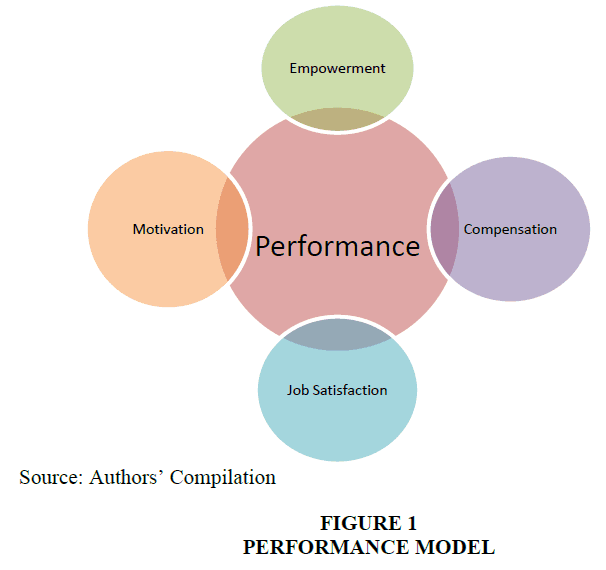
Strategic Analysis of the Motivation on Employees Productivity: A Compensation Benefits ... View original
Is this image relevant?
An Analysis of the Impact of Remuneration on Employee Motivation: A Case Study on Unilever ... View original
Is this image relevant?
Compensation and Motivation | Boundless Management View original
Is this image relevant?
Strategic Analysis of the Motivation on Employees Productivity: A Compensation Benefits ... View original
Is this image relevant?
Pay-for-Performance Strategies
Pay-for-performance ties compensation directly to an employee's output or results. Common forms include commissions, bonuses, and merit-based pay increases. The core logic is straightforward: when employees see a clear link between effort and reward, they're more likely to push harder and produce more.
These strategies also serve as a recognition tool. High performers feel valued when their extra effort shows up in their paycheck, which strengthens engagement.
There are real drawbacks to watch for, though:
- Unhealthy competition can develop if employees see each other as obstacles to their own rewards
- Short-term thinking can take over when people optimize for whatever metric earns the bonus, sometimes at the expense of long-term goals
- Perceived unfairness undermines the whole system. If employees don't trust that the metrics are clear and consistently applied, pay-for-performance can actually decrease motivation
For these strategies to work, performance metrics need to be specific, measurable, and transparent to everyone involved.

Components of a Total Rewards Strategy
Total rewards goes beyond the paycheck. It's the full package an organization offers to attract, retain, and motivate employees. A strong total rewards strategy addresses diverse employee needs, which is why it covers several categories:
- Compensation: base pay, variable pay (bonuses, commissions), and equity (stock options)
- Benefits: health insurance, retirement plans, and paid time off
- Work-life balance: flexible schedules, remote work options, and wellness programs
- Performance and recognition: formal reviews, spot bonuses, and awards that acknowledge contributions
- Development and career opportunities: training programs, mentoring relationships, and clear promotion paths
The reason total rewards matters is that different employees value different things. A recent graduate might prioritize development opportunities, while a working parent might value schedule flexibility most. By offering a broad mix, organizations signal genuine investment in their people and create an environment where more employees feel supported and motivated.

Four Drives of Employee Motivation
This model (from Lawrence and Nohria) identifies four fundamental drives that shape workplace motivation. Effective managers find ways to address all four, not just one or two.
Drive to Acquire: the desire to obtain scarce goods, including intangible things like status and influence.
- Address it by offering competitive compensation, meaningful rewards, and public recognition for strong performance.
Drive to Bond: the need to form connections with other people and groups.
- Address it by fostering a positive team culture, encouraging collaboration, and creating opportunities for social interaction (team events, cross-functional projects).
Drive to Comprehend: the urge to satisfy curiosity and make sense of the world around us.
- Address it by assigning challenging work, providing learning and development opportunities, and communicating clearly about organizational goals so employees understand how their work fits in.
Drive to Defend: the instinct to protect against threats and promote justice.
- Address it by ensuring fair treatment, providing reasonable job security, and maintaining transparency in decision-making processes.
The key takeaway is that focusing on just one drive (say, compensation alone) leaves the others unmet. A workforce that's well-paid but feels disconnected, unchallenged, or treated unfairly will still struggle with motivation.
Theories of Motivation
Several established theories help explain why people are motivated in different ways:
- Maslow's Hierarchy of Needs: People fulfill needs in a rough order, starting with basic physiological needs (food, shelter), then safety, social belonging, esteem, and finally self-actualization. An employee worried about job security (safety level) won't be motivated by a creative challenge (self-actualization level) until that lower need feels met.
- Goal-Setting Theory: Specific, challenging goals produce higher performance than vague ones like "do your best." Goals work best when employees receive feedback on their progress.
- Expectancy Theory: Motivation depends on three beliefs: that effort will lead to good performance, that good performance will lead to a desired outcome, and that the outcome is actually valuable to the employee. If any link in that chain breaks, motivation drops.
- Equity Theory: Employees compare their own input-to-outcome ratio against what others receive. If someone feels they're working harder but getting less than a coworker, they'll perceive inequity and become demotivated, even if their pay is objectively good.
- Job Design Theory: The structure of the job itself affects motivation. Jobs that offer variety, autonomy, and meaningful tasks tend to produce higher satisfaction than narrow, repetitive roles.
Types of Motivation
- Intrinsic motivation comes from within. The person finds the task itself interesting, enjoyable, or personally meaningful. An employee who genuinely loves solving complex problems is intrinsically motivated.
- Extrinsic motivation comes from external factors: pay raises, bonuses, recognition, or even avoiding negative consequences like a poor review.
Both types matter in the workplace. The strongest motivation often comes when extrinsic rewards support intrinsic interest rather than replace it. For example, recognizing someone's creative solution (extrinsic) reinforces their natural curiosity (intrinsic). Problems arise when extrinsic rewards become the only reason someone does the work, because motivation disappears the moment the reward does.
See Fiveable more often in Google
Mark Fiveable as a preferred source and Google is more likely to show you our guides in Top Stories, with a "preferred" badge in AI Mode and AI Overviews.