15.2 Team Development Over Time

👔Principles of Management Unit 15 Review
15.2 Team Development Over Time
👔 Principles of Management
Stages of Team Development
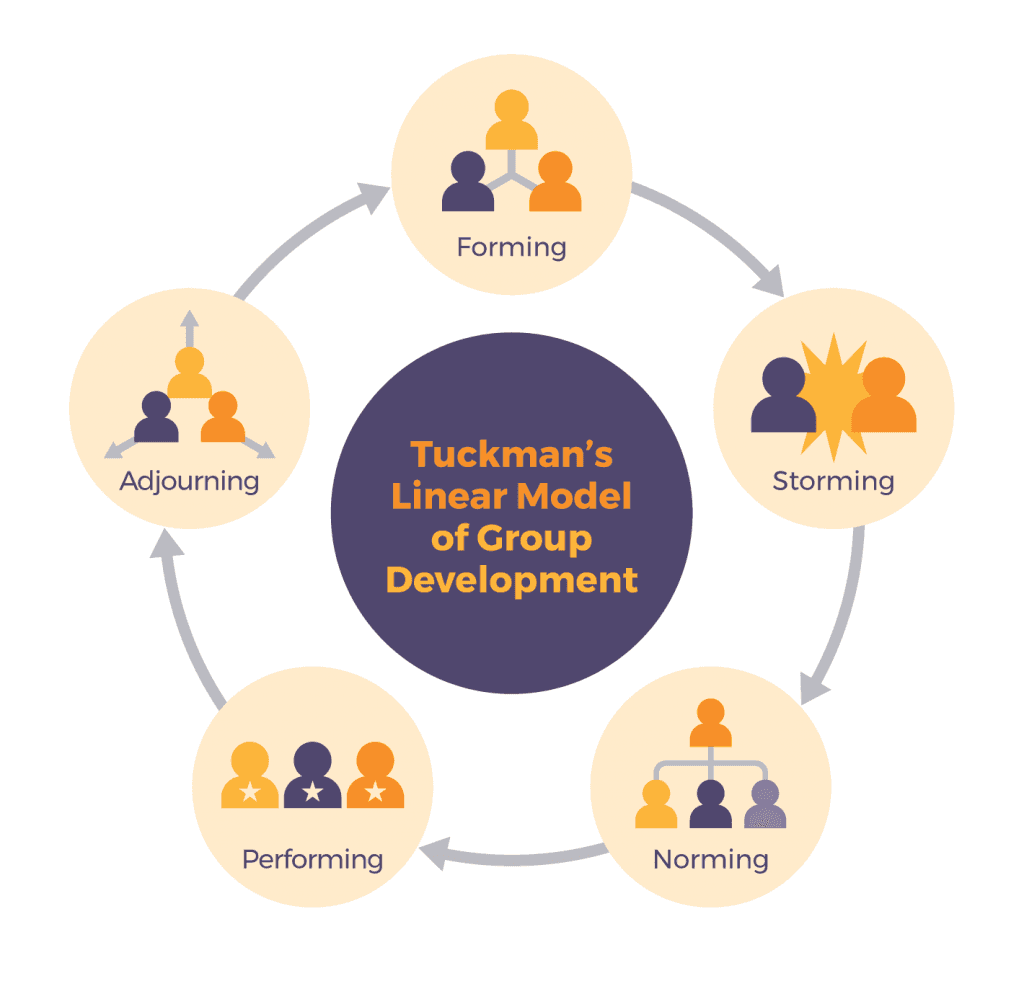
Teams evolve through distinct stages, from initial formation to high performance. Understanding these stages helps managers guide teams effectively and anticipate problems before they derail progress. Tuckman's model outlines how teams progress, highlighting the challenges and opportunities at each phase.
As groups move through development stages, team dynamics shift in predictable ways. Managers need to adapt their approach at each stage, sometimes stepping in to resolve conflicts and other times stepping back to let the team self-manage. Factors like changes in team composition or goals can cause a team to regress to an earlier stage, which means leaders have to recognize the signs and respond accordingly.

Top images from around the web for Stages of Tuckman's team model
The Five Stages of Team Development | Principles of Management View original
Is this image relevant?
Group Life Cycles and Member Roles – Communication for Business Professionals View original
Is this image relevant?
To Be Productive (aka 2bProductive Blog): Leadership in Stages of Team Development View original
Is this image relevant?
The Five Stages of Team Development | Principles of Management View original
Is this image relevant?
Group Life Cycles and Member Roles – Communication for Business Professionals View original
Is this image relevant?
Stages of Tuckman's Model
Forming
This is the "getting to know you" stage. Team members are learning about the team's purpose, figuring out where they fit, and sizing each other up. People tend to be polite, cautious, and conflict-avoidant. There's often uncertainty and anxiety beneath the surface because no one is quite sure how things will work yet.
- Members rely heavily on the leader for direction and structure
- Conversations stay surface-level and task-focused (think first team meetings, introductions, reviewing the project brief)
- Productivity is low because the team is still orienting itself

Storming
Conflict and disagreement emerge as members start expressing their real opinions. Differences in work styles, personalities, and expectations create interpersonal tension. Subgroups and cliques may form, and power struggles over roles or decision-making are common.
- Debates over project direction and task allocation are typical
- Some members may push back against the leader's authority or challenge each other's ideas
- This stage feels uncomfortable, but it's a necessary part of development. Teams that skip or suppress storming often have deeper problems later
Norming
The team starts resolving its conflicts and building real cohesion. Members develop shared expectations about how to work together, clarify roles and responsibilities, and establish group norms that guide behavior and communication.
- Trust and cooperation increase noticeably
- The team may create artifacts like a team charter or agree on communication protocols
- Members develop a genuine sense of belonging and shared purpose
- Communication becomes more open, honest, and constructive

Performing
The team is now fully functional and focused on achieving its goals. Members are committed, collaborative, and supportive. They take on roles that maximize their individual strengths and contribute to the team's success.
- Team effectiveness peaks at this stage, with members working together seamlessly
- Productivity, quality of work, and member satisfaction are all high
- The team can handle problems and make decisions with minimal leader intervention
- Examples include consistently meeting project milestones and delivering high-quality work
Not every team reaches the performing stage. Some get stuck in storming or norming, especially without strong leadership or clear goals.
Team Dynamics Across Development Stages
Each transition between stages involves a noticeable shift in how team members interact:
Forming → Storming: The initial "honeymoon period" ends. Politeness gives way to open expression of opinions and disagreements. Interpersonal conflicts surface as members challenge each other's ideas and work styles for the first time.
Storming → Norming: Conflict resolution leads to increased understanding and acceptance of differences. The team develops a shared sense of purpose and agrees on behavioral norms. Interpersonal relationships strengthen as members work through their disagreements rather than avoiding them.
Norming → Performing: The cohesion and trust built during norming enable the team to shift its energy toward goal achievement. Collaboration and mutual support become the default, and group cohesion reaches its highest level. The team "hits its stride" and operates with minimal friction.
Factors That Cause Stage Regression
Teams don't always move forward in a straight line. Several factors can push a team back to an earlier stage:
- Changes in team composition: Adding or removing members disrupts established dynamics. A new hire, for example, means the team has to revisit forming (building relationships) and possibly storming (renegotiating roles). The same applies when a key member leaves or teams are restructured.
- Shifts in goals or priorities: A significant change in project scope or strategic direction creates uncertainty. The team may need to renegotiate roles, norms, and strategies, which can trigger conflict.
- Unresolved conflicts: Lingering disputes or resentments that were never fully addressed can resurface under pressure. Old rivalries or grudges can undermine trust and push the team back into storming until the issues are dealt with directly.
- External pressures or crises: Tight deadlines, resource constraints, or organizational upheaval strain relationships and communication. Stress can cause members to revert to earlier, less collaborative behaviors.
- Lack of leadership or support: Ineffective or absent leadership leaves the team without direction. Similarly, insufficient resources or budget cuts can hinder progress and erode morale, stalling development.
Team Leadership and Roles
The leader's role changes at each stage of development. During forming, the team needs clear direction and structure. During storming, the leader's conflict resolution skills become critical. By norming and performing, effective leaders shift toward a more facilitative role, empowering the team to self-manage.
Team roles may be formally assigned or emerge naturally as the group develops. Either way, clarity about who does what reduces confusion and conflict. The most effective teams have members whose roles align with their strengths and who understand how their contributions fit the bigger picture.
Strong conflict resolution skills matter for everyone on the team, not just the leader. Teams where all members can navigate disagreements constructively move through storming faster and are more resilient when regression occurs.
See Fiveable more often in Google
Mark Fiveable as a preferred source and Google is more likely to show you our guides in Top Stories, with a "preferred" badge in AI Mode and AI Overviews.