9.3 Mobile Marketing and Apps

📣Intro to Marketing Unit 9 Review
9.3 Mobile Marketing and Apps
📣 Intro to Marketing
Mobile marketing and apps have changed how brands reach consumers. Because smartphones go everywhere with people, marketers can deliver personalized, location-aware experiences that weren't possible with desktop-only strategies.
This section covers how mobile devices shape consumer behavior and the customer journey, what makes a campaign mobile-friendly, how branded apps drive engagement, and how location-based marketing differs from standard mobile advertising.
Mobile Devices and Consumer Behavior

Top images from around the web for Ubiquity and Impact of Mobile Devices
Easy methods to Make Content King With Cell Marketing - site to web View original
Is this image relevant?
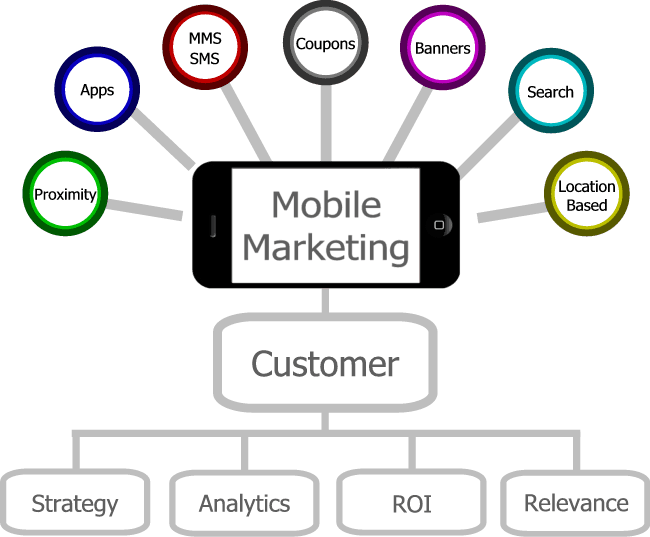
Bri Clark the "belle" of Boise: How to use Mobile Marketing for Coaches and Speakers View original
Is this image relevant?
Mobile Retail Marketing to Reach $55 Billion by 2015 View original
Is this image relevant?
Easy methods to Make Content King With Cell Marketing - site to web View original
Is this image relevant?
Bri Clark the "belle" of Boise: How to use Mobile Marketing for Coaches and Speakers View original
Is this image relevant?
Ubiquity and Impact of Mobile Devices
Smartphones and tablets are woven into daily life. Most consumers check their phones dozens of times per day, and that constant access has fundamentally shifted how people discover, evaluate, and buy products.
For marketers, mobile devices open up features that desktops simply don't have:
- Geolocation (GPS tracking) lets brands deliver offers based on where a user physically is
- Push notifications reach users even when they aren't actively browsing
- Camera access enables features like QR code scanning, AR try-ons, and visual search
Consumer behavior also looks different on mobile compared to desktop. Mobile users tend to have shorter attention spans, expect faster load times, and prefer visual, interactive content over long blocks of text. Designing for these habits is a core challenge of mobile marketing.
Mobile Devices and the Customer Journey
Mobile devices have compressed and reshaped the customer journey. Consumers now research, compare, and purchase products on-the-go, fueling the growth of mobile commerce (m-commerce).
A typical mobile-influenced journey might look like this:
- A consumer sees a product on social media (awareness)
- They search for reviews and compare prices across retailers like Amazon or Best Buy (consideration)
- They complete the purchase using a mobile payment option like Apple Pay or Google Wallet (conversion)
One-click ordering and stored payment info reduce friction at checkout, which directly increases conversion rates. Mobile also supports omnichannel experiences, where a consumer might research on their phone during a commute and then complete the purchase on a laptop at home. The journey isn't confined to a single device anymore.
Mobile-Friendly Marketing Campaigns

Optimizing for Mobile Devices
A campaign that looks great on a desktop monitor can be unreadable on a phone screen. Mobile optimization isn't optional; it's the baseline expectation.
Key principles for mobile-friendly campaigns:
- Responsive design ensures content automatically adjusts to fit different screen sizes, from large tablets to small smartphones
- Fast load times matter even more on mobile, where users may be on slower connections or limited data plans. Lightweight images and minimal code help pages load quickly
- Email campaigns should use concise subject lines, large touch-friendly buttons, and clear calls-to-action (CTAs) since most emails are now opened on phones
- Landing pages should be streamlined with minimal form fields (name, email, maybe one more). Every extra field you add increases the chance a mobile user abandons the form
Leveraging Mobile-Specific Features
Mobile devices have capabilities that desktop browsers don't, and smart campaigns take advantage of them:
- Click-to-call buttons let users tap once to dial a business directly, removing the friction of copying and pasting a phone number
- Embedded maps and directions help users find nearby stores or events, driving foot traffic to physical locations
- SMS marketing delivers short, timely text messages (promotional offers, appointment reminders) straight to opted-in users. Because text messages have extremely high open rates, SMS can be more effective than email for time-sensitive promotions
- Mobile video, especially in vertical formats built for platforms like Instagram Stories and TikTok, captures attention quickly and fits how people naturally hold their phones
Mobile Apps for Brand Engagement

Enhancing Customer Relationships
A branded app gives a company a direct, always-available channel to its customers. Unlike a website visit that ends when the browser closes, an app sits on the user's home screen and can re-engage them over time.
Apps strengthen customer relationships in several ways:
- Exclusive content and personalized recommendations reward users for downloading the app and give them reasons to keep opening it
- Loyalty rewards (points, discounts, early access) incentivize repeat purchases and make switching to a competitor feel costly
- Push notifications deliver timely, relevant messages that keep the brand top-of-mind, though overusing them risks annoying users into disabling notifications or deleting the app
- In-app messaging and chat provide real-time customer support, which improves satisfaction and lets brands gather feedback without forcing users to leave the app
Gamification and Data Collection
Apps also serve as powerful tools for engagement and data gathering.
Gamification adds game-like elements to the app experience to encourage specific behaviors. Think challenges, badges, progress bars, and leaderboards. These features tap into users' desire for achievement and competition, making routine actions (like making a purchase or sharing content) feel more rewarding.
On the data side, apps collect valuable first-party data on user preferences, browsing patterns, and purchase history. This data belongs to the brand (unlike third-party data from ad platforms) and can fuel more targeted marketing.
A strong example is Starbucks Rewards: the app tracks purchases, rewards frequent customers with free drinks, and gives Starbucks detailed insight into buying habits, all of which inform future promotions and product decisions. In-app surveys and feedback tools add another layer, letting brands hear directly from users about what's working and what isn't.
Location-Based Marketing vs. Mobile Advertising
These two strategies overlap but work differently. Location-based marketing targets users based on where they are. Mobile advertising targets users based on who they are (demographics, interests, behaviors) and can optionally layer in location data.
Location-Based Marketing Strategies
Location-based marketing uses a device's GPS or Bluetooth signal to deliver messages tied to a user's real-time physical location.
Two key technologies to know:
- Geofencing creates a virtual boundary around a specific area (a shopping mall, a competitor's store, a downtown district). When a user's device crosses that boundary, it triggers an action like a push notification with a promotional offer
- Beacon/proximity marketing uses small Bluetooth transmitters (beacons) placed inside a physical space like a retail store or event venue. When a user's phone comes within range, the beacon can send a personalized message or coupon
The strength of location-based marketing is context. A coffee shop coupon is far more compelling when it reaches you as you walk past the store than when it arrives randomly at 10 PM.
Mobile Advertising Formats and Targeting
Mobile advertising refers to paid ads served on mobile devices through platforms like Google Ads and Meta (Facebook/Instagram) Ads.
Common mobile ad formats include:
- Banner ads that appear at the top or bottom of a screen
- Interstitials, which are full-screen ads that appear between content (like between levels in a game)
- Native ads, which are sponsored content designed to blend in with the surrounding feed or app experience
These platforms offer granular targeting options: age, gender, device type, app usage, browsing history, and more. Retargeting is especially powerful on mobile. If a user visited your website or added something to their cart without buying, you can serve them ads on their phone to bring them back.
Both location-based marketing and mobile advertising must prioritize user privacy. Regulations like GDPR (in Europe) and CCPA (in California) require clear opt-in/opt-out mechanisms. Violating these rules damages consumer trust and can result in significant fines. Always give users transparent control over how their data and location are used.
See Fiveable more often in Google
Mark Fiveable as a preferred source and Google is more likely to show you our guides in Top Stories, with a "preferred" badge in AI Mode and AI Overviews.