7.3 Retailing and Wholesaling

📣Intro to Marketing Unit 7 Review
7.3 Retailing and Wholesaling
📣 Intro to Marketing
Retailing vs Wholesaling
Retailers and wholesalers serve different but complementary roles in getting products from manufacturers to the people who use them. Understanding the distinction between these two is foundational to understanding how distribution channels work.

Top images from around the web for Roles in the Distribution Process
The Retail Mix | Retail Management View original
Is this image relevant?
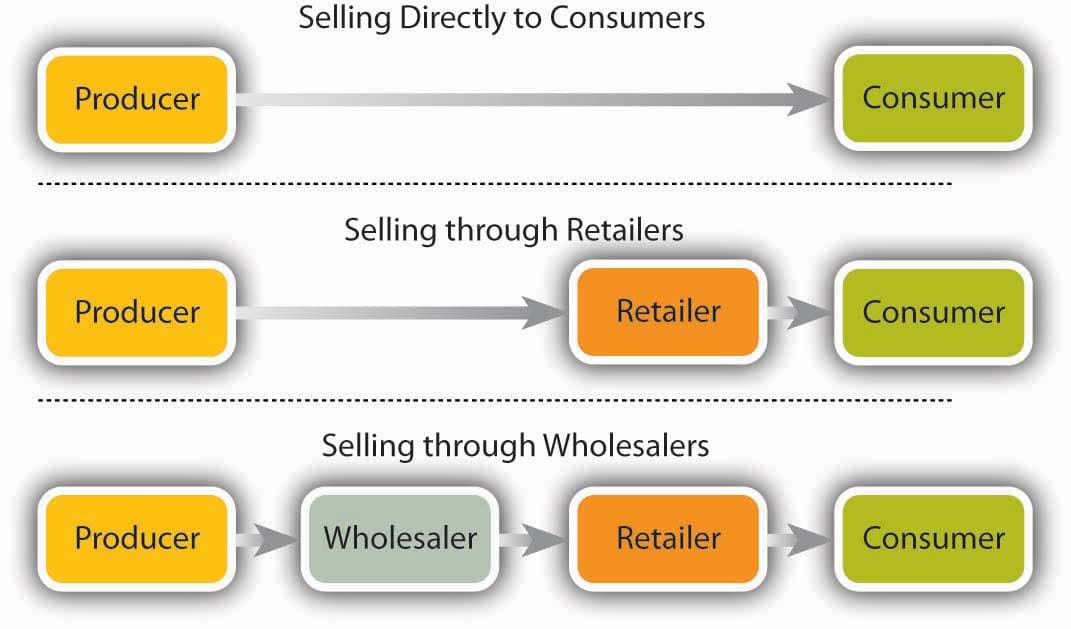
9.5 Placing a Product – Foundations of Business View original
Is this image relevant?
The Nature and Functions of Distribution (Place) | OpenStax Intro to Business View original
Is this image relevant?
The Retail Mix | Retail Management View original
Is this image relevant?
9.5 Placing a Product – Foundations of Business View original
Is this image relevant?
Roles in the Distribution Process
Retailers sell goods or services directly to end consumers for personal use. Think clothing stores, grocery stores, or an online shop like Amazon. They typically purchase products from wholesalers or manufacturers, then sell them individually to shoppers.
Wholesalers sell goods in bulk to other businesses, retailers, or institutions for resale or business use. A food distributor that supplies restaurants or a pharmaceutical wholesaler that stocks pharmacies are both examples. They buy large quantities from manufacturers and break them down into smaller lots for their business customers.
Focus and Services Provided
Because they serve different customers, retailers and wholesalers offer different kinds of value:
- Retailers focus on meeting the needs and wants of individual consumers. They provide services like customer support, product demonstrations (in-store samples, tutorials), and after-sales service (returns, exchanges, warranties).
- Wholesalers focus on efficiently supplying specific products or product lines to businesses. Their services center on product storage, transportation, and credit facilities (such as 30-day payment terms and bulk discounts).
Retail Formats and Characteristics
Not all retailers look the same. Retail formats vary widely depending on what's being sold, who the target customer is, and how the shopping experience is structured.
Store-Based Retail Formats
- Department stores are large establishments offering products across multiple categories (clothing, home goods, electronics), typically organized into separate departments.
- Specialty stores focus on a single product category or niche and provide deep assortment plus expert knowledge. Sporting goods stores, pet stores, and beauty supply stores are common examples.
- Supermarkets are large, self-service stores that primarily sell food and household items at competitive prices. Kroger, Safeway, and Publix fall into this category.
- Convenience stores are small outlets stocking a limited range of high-turnover products, often with extended hours in easily accessible locations (7-Eleven, Circle K, gas station stores).
- Discount stores sell products at lower prices than traditional retailers by focusing on high-volume sales and minimal customer service. Walmart, Target, and Dollar Tree are well-known examples.

Non-Store Retail Formats
Retail doesn't have to happen in a physical store. Several formats bypass the traditional storefront entirely:
- Online retailers (e-tailers) sell through the internet, giving customers the convenience of shopping from home and access to a huge product selection. Amazon, Wayfair, and Etsy each represent different e-tailing models.
- Direct selling involves individual salespeople selling products directly to consumers, often outside a traditional retail setting. Avon, Mary Kay, and Tupperware use this approach.
- Vending machines are automated retail outlets dispensing snacks, beverages, and small goods in exchange for payment.
- Mail order and catalog retailing involves selling through catalogs sent to consumers, with orders placed by mail, phone, or online. L.L.Bean and Lands' End are classic examples, though most catalog retailers now also operate online.
Retail Management Strategies
Running a retail operation involves juggling several strategic decisions at once. Location, merchandise, pricing, customer service, and inventory all need to work together.
Location and Merchandise Management
Location selection is one of the most consequential decisions a retailer makes. The right location attracts target customers and drives foot traffic; a poor one leads to low sales and high operating costs.
Merchandise management is the process of planning, buying, and controlling store inventory so the right products are available in the right quantities at the right time. Two approaches worth knowing:
- Category management treats each product category (like a grocery store's dairy section or a clothing store's outerwear department) as its own mini business unit, with separate strategies, goals, and performance metrics.
- Visual merchandising is the design and arrangement of retail displays to attract customers and encourage purchases. Window displays, in-store product arrangements, and signage all fall under this umbrella.
Pricing and Customer Service
Retailers use different pricing strategies depending on their target market and competitive position:
- Everyday low pricing (EDLP): Consistently low prices across all products (Walmart's core approach)
- High-low pricing: Regular prices punctuated by periodic discounts and sales events
- Promotional pricing: Temporary price reductions designed to drive short-term sales volume
Customer service helps differentiate a retailer from competitors and builds loyalty. Two specific tactics to know:
- Personalized service tailors the shopping experience to individual customers based on their preferences and purchase history, such as product recommendations or customized promotions.
- Customer loyalty programs reward repeat purchases and engagement through points-based systems, exclusive discounts, or early access to sales.

Inventory Management and Seasonality
Retailers constantly balance having enough stock to meet demand against the cost of holding excess inventory. Two inventory strategies show up frequently in marketing courses:
- Just-in-time (JIT) inventory minimizes holding costs by receiving goods as close to the time of sale as possible. Fast fashion retailers and stores selling perishable goods often use this approach.
- Vendor-managed inventory (VMI) shifts responsibility to suppliers, who manage the inventory of their own products at the retailer's location. This is common for consumer packaged goods and electronics.
Retail seasonality adds another layer of complexity. Demand fluctuates throughout the year (holiday shopping, back-to-school, summer clearance), and retailers must adjust their merchandise, staffing, and promotions accordingly.
Technology's Impact on Retailing and Wholesaling
Technology has reshaped both retailing and wholesaling, from how customers shop to how products move through the supply chain.
E-commerce and Online Marketplaces
E-commerce allows retailers to reach a wider audience, offer broader product selections, and let customers shop anytime from anywhere. Online marketplaces like Amazon and eBay have disrupted traditional retail by connecting buyers and sellers on a global scale across countless product categories.
Dropshipping is an e-commerce fulfillment method where the retailer never holds inventory. Instead, when a customer places an order, the retailer forwards it to the manufacturer or wholesaler, who ships directly to the customer. Print-on-demand services and many niche online retailers use this model because it eliminates warehousing costs.
Mobile Commerce and Omnichannel Retailing
Mobile commerce (m-commerce) has grown rapidly with smartphone adoption. Retailers engage customers through mobile apps, location-based services, and personalized marketing. Mobile payment solutions like Apple Pay and Google Wallet let customers make purchases with their phones both online and in-store.
Omnichannel retailing integrates online and offline channels into a seamless experience. A customer might browse products on a phone, order on a laptop, and pick up in-store. Common omnichannel features include buy-online-pick-up-in-store (BOPIS) and in-store returns for online purchases.
Beacon technology uses Bluetooth Low Energy (BLE) devices placed throughout a store to send targeted messages and promotions to nearby customers' smartphones, such as personalized offers or product information relevant to the aisle they're standing in.
Supply Chain Technology and Data Analytics
Several technologies have improved how retailers and wholesalers track inventory, reduce costs, and increase transparency:
- RFID (radio-frequency identification) tags are small wireless devices attached to products or packaging that enable real-time tracking throughout the supply chain. They improve inventory accuracy and help prevent theft.
- Blockchain technology creates a secure, decentralized ledger of supply chain transactions. This improves traceability (where did this product come from?), enables smart contracts, and helps prevent fraud.
Data analytics and AI give retailers and wholesalers deeper insight into customer behavior, allowing them to optimize pricing, tailor promotions, and personalize shopping experiences. Predictive analytics specifically uses historical data and machine learning to forecast future trends, helping with demand forecasting, price optimization, and customer segmentation.
See Fiveable more often in Google
Mark Fiveable as a preferred source and Google is more likely to show you our guides in Top Stories, with a "preferred" badge in AI Mode and AI Overviews.