7.4 Logistics and Supply Chain Management

📣Intro to Marketing Unit 7 Review
7.4 Logistics and Supply Chain Management
📣 Intro to Marketing
Logistics and supply chain management are how products actually get from manufacturers to consumers. These functions coordinate transportation, warehousing, inventory, and information flow to ensure efficient delivery and customer satisfaction.
Supply chain management goes beyond logistics by integrating key business processes across the entire chain. It covers everything from sourcing raw materials to delivering finished goods, with the goal of optimizing operations and adding value for both customers and stakeholders.
Logistics and Supply Chain Management

Top images from around the web for Logistics Definition and Components
THE GRANDMA'S LOGBOOK ---: LOGISTICS, HOW TO ORGANIZE COMPLEX OPERATIONS View original
Is this image relevant?
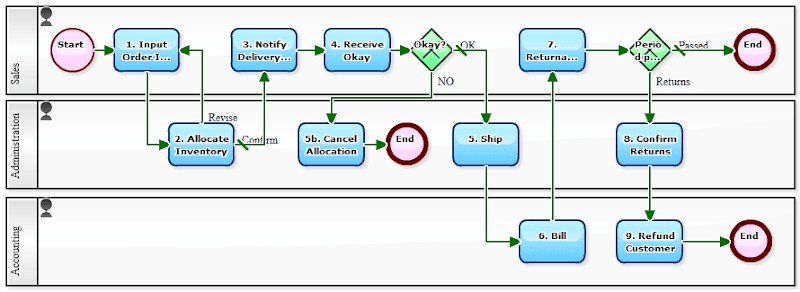
Workflow Sample: Order Processing Differs According to the Very First Task View original
Is this image relevant?
File:Stockbridge system flowchart example.jpg - Wikimedia Commons View original
Is this image relevant?
THE GRANDMA'S LOGBOOK ---: LOGISTICS, HOW TO ORGANIZE COMPLEX OPERATIONS View original
Is this image relevant?
Workflow Sample: Order Processing Differs According to the Very First Task View original
Is this image relevant?
Logistics Definition and Components
Logistics is the planning, implementation, and control of the efficient flow and storage of goods, services, and related information from origin to consumption. Think of it as the "how do we move and store stuff" function.
The main components of logistics are:
- Transportation — selecting carriers, planning routes, and getting goods where they need to go
- Warehousing — receiving, storing, and dispatching goods from facilities
- Inventory management — maintaining the right stock levels so you don't run out or overstock
- Order processing — the sequence of order entry, credit checking, picking, packing, and shipping
- Information systems — capturing, processing, and sharing data so everyone in the chain stays coordinated
Supply Chain Management (SCM) Definition and Activities
Supply chain management (SCM) is broader than logistics. It's the integration and coordination of key business processes across the entire supply chain, from raw materials to end customers, to provide products, services, and information that add value.
SCM encompasses several interconnected activities:
- Sourcing — selecting suppliers and negotiating contracts
- Procurement — purchasing raw materials, components, or finished goods
- Production planning — optimizing manufacturing processes to meet demand
- Inventory control — balancing supply and demand across the chain
- Distribution — delivering goods to customers through the right channels
- Customer service — ensuring satisfaction after the sale
The overarching goal of both logistics and SCM is to optimize the entire supply chain: minimize costs, improve efficiency, and keep customers happy.
Flow of Goods and Information
Procurement and Production Planning
Procurement involves selecting suppliers, negotiating contracts, and purchasing the raw materials, components, or finished goods a company needs. Strong procurement decisions directly affect product quality and cost.
Production planning and scheduling ensure that manufacturing processes are optimized to meet customer demand while minimizing inventory and production costs. Two common approaches here are just-in-time (JIT) manufacturing, which times material arrivals to when they're actually needed, and lean production, which systematically eliminates waste from the process.

Inventory Management and Warehousing
Inventory management focuses on maintaining optimal stock levels to balance supply and demand. The challenge is minimizing holding costs (the expense of storing unsold goods) while preventing stockouts (running out of product when customers want it). Tools like economic order quantity (EOQ) calculations and safety stock buffers help companies strike this balance.
Warehousing involves the efficient management of storage facilities. Two techniques worth knowing: cross-docking, where incoming goods are transferred directly to outbound trucks with minimal storage time, and automated storage and retrieval systems (AS/RS), which use technology to speed up warehouse operations.
Transportation and Order Fulfillment
Transportation management covers carrier selection, route planning, shipment consolidation, and tracking. Companies often use third-party logistics (3PL) providers to handle transportation rather than managing their own fleets. Intermodal transportation combines multiple modes (truck, rail, ship) to optimize cost and speed.
Order processing and fulfillment is the sequence that turns a customer's order into a delivered product: order entry, credit checking, picking items from the warehouse, packing, and shipping. Order management systems and automated picking systems help companies handle this accurately at scale.
Information Management and Technology
Information management uses technology to capture, process, and share data across the supply chain so partners can make better decisions together. Enterprise resource planning (ERP) systems are a common backbone for this.
Key technologies in supply chain information management include:
- Electronic data interchange (EDI) — standardized digital document exchange between companies
- Supply chain visibility platforms — real-time tracking of goods as they move through the chain
- Radio-frequency identification (RFID) — tags that allow automatic identification and tracking of products
- Blockchain — secure, transparent transaction records that multiple parties can trust
Supply Chain Integration and Collaboration

Types of Supply Chain Integration
Supply chain integration is the alignment of processes, systems, and strategies across supply chain partners to optimize performance and create value. There are two main directions this can take.
Vertical integration means a company merges with or acquires upstream suppliers or downstream customers. This gives the company more control over its supply chain and reduces transaction costs. Apple's integration of both hardware and software design is a well-known example.
Horizontal integration involves collaboration or mergers between companies at the same level of the supply chain. The goal is typically economies of scale, expanded market reach, or shared resources. Airline alliances (like Star Alliance) and retail cooperatives are common examples.
Collaborative Strategies and Benefits
Beyond formal integration, companies can collaborate in less structural ways:
- Collaborative planning, forecasting, and replenishment (CPFR) is a joint process where supply chain partners share information to develop demand forecasts and replenishment plans together. Walmart and Procter & Gamble pioneered this approach, sharing point-of-sale data so P&G could better predict what Walmart stores would need.
- Vendor-managed inventory (VMI) is an arrangement where suppliers take responsibility for managing inventory at the customer's location, using shared data and agreed-upon targets. Dell has used VMI programs with its suppliers to keep component inventory lean.
The benefits of integration and collaboration include improved operational efficiency, reduced costs, shorter lead times, better quality, and increased responsiveness to customer needs. But these benefits require trust, transparency, and a willingness to share both risks and rewards among partners.
Logistics Strategies for Different Markets
Lean and Agile Supply Chain Strategies
Not every supply chain should work the same way. The right strategy depends on your market conditions.
A lean supply chain strategy focuses on eliminating waste, reducing inventory, and improving efficiency through continuous improvement and JIT practices. This works best in industries with stable, predictable demand and low product variety. The classic example is the Toyota Production System in the automotive industry, where standardized processes and minimal waste keep costs down.
An agile supply chain strategy emphasizes flexibility, responsiveness, and the ability to adapt quickly to changing customer needs. This fits industries with volatile demand, short product life cycles, and high product variety. Zara's fast fashion model is the go-to example: Zara can design, produce, and deliver new styles to stores in just a few weeks, responding rapidly to trends.
Hybrid and Postponement Strategies
A hybrid supply chain strategy combines lean and agile elements. Companies use lean practices for the stable, predictable parts of their operations and agile practices where demand is uncertain. Unilever, for instance, uses lean approaches for its staple products while staying agile for seasonal or promotional items.
A postponement strategy delays the final configuration or customization of products until the last possible moment. This reduces the risk of building the wrong product mix. Dell's build-to-order model is the classic case: rather than stocking pre-configured computers, Dell assembles each machine after the customer orders it, keeping inventory low and customization high.
Risk Management and Sustainability Strategies
Risk management strategies help companies prepare for supply chain disruptions. Common approaches include diversifying suppliers, multi-sourcing critical components (Apple sources key parts from multiple suppliers across different regions), and using risk-sharing contracts. These strategies ensure business continuity when one link in the chain breaks.
Sustainability strategies focus on minimizing the environmental impact of logistics activities. Green logistics reduces emissions and energy use in transportation and warehousing. Reverse logistics manages the return and recycling of products. Closed-loop supply chains design products so materials can be recovered and reused. Patagonia's program for recycling worn-out garments back into new materials is a strong example.
The effectiveness of any logistics strategy depends on industry characteristics, market dynamics, customer requirements, and what the organization is actually capable of executing. Companies need to regularly evaluate and adapt their strategies as conditions change.
See Fiveable more often in Google
Mark Fiveable as a preferred source and Google is more likely to show you our guides in Top Stories, with a "preferred" badge in AI Mode and AI Overviews.