3.4 Market Segmentation and Targeting

📣Intro to Marketing Unit 3 Review
3.4 Market Segmentation and Targeting
📣 Intro to Marketing
Market segmentation is the process of dividing a broad market into smaller groups of consumers who share similar needs or characteristics. It's one of the most fundamental concepts in marketing because it drives nearly every decision a company makes about products, pricing, and promotion. Without segmentation, companies would be guessing about who to sell to and how.
This guide covers the four main bases for segmentation, how companies evaluate and select target markets, and how positioning ties it all together.
Market Segmentation: Concept and Importance

Top images from around the web for Definition and Process
Putting It Together: Marketing Function | Principles of Marketing View original
Is this image relevant?
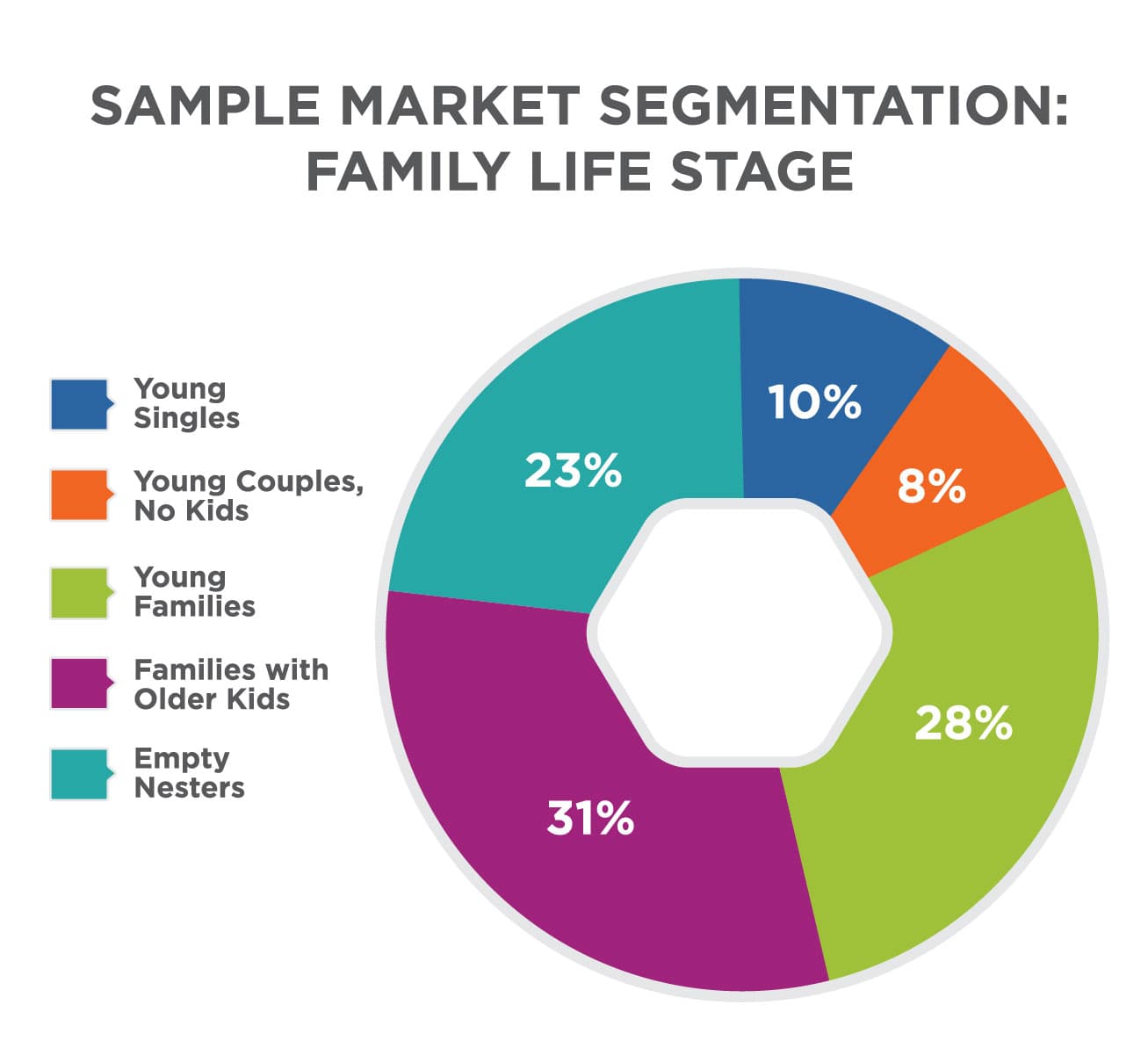
The Purpose of Market Segmentation and Targeting | Principles of Marketing View original
Is this image relevant?
The Marketing Mix | Introduction to Business MC View original
Is this image relevant?
Putting It Together: Marketing Function | Principles of Marketing View original
Is this image relevant?
The Purpose of Market Segmentation and Targeting | Principles of Marketing View original
Is this image relevant?
Definition and Process
Market segmentation is the process of dividing a market into distinct groups of buyers with different needs, characteristics, or behaviors who might require separate products or marketing mixes. A company selling running shoes, for example, might segment its market into casual joggers, competitive runners, and trail runners, since each group wants different features.
The process allows companies to tailor their product offerings, prices, distribution channels, and promotional efforts to the specific requirements of each segment rather than trying to appeal to everyone with a single approach.
Benefits and Outcomes
- Increased customer satisfaction and loyalty: When products and messaging match what a specific group actually wants, those customers are more likely to buy and come back.
- Discovering underserved markets: Segmentation helps companies spot gaps. A company might find that left-handed guitar players have few affordable options, revealing a profitable niche.
- More efficient resource allocation: Instead of spreading a marketing budget across an entire population, a company can focus spending on the segments most likely to convert, leading to better returns on investment.
- Reduced marketing waste: Targeted campaigns reach the right people with the right message, so fewer dollars go toward ads that don't resonate.
Bases for Market Segmentation
Geographic and Demographic Segmentation
Geographic segmentation divides the market based on location: nations, states, regions, cities, or neighborhoods. Climate, population density, and cultural preferences all play a role. A snow gear company would focus on colder regions, while a surfboard brand targets coastal areas.
Demographic segmentation divides the market using measurable population characteristics like age, gender, income, education, occupation, family size, and family life cycle stage. This is the most commonly used segmentation base because demographic data is relatively easy to collect and strongly correlates with purchasing behavior.
Common demographic segments include:
- Generational groups like baby boomers (born 1946–1964) or millennials (born 1981–1996), who tend to have distinct media habits and spending priorities
- Income brackets such as high-income households, which may respond to premium product positioning
- Life cycle stages like new parents, who suddenly need an entirely different set of products

Psychographic and Behavioral Segmentation
Psychographic segmentation groups buyers based on social class, lifestyle, personality, attitudes, values, and interests. Two people with identical demographics (same age, same income) might have completely different buying habits because one values sustainability while the other prioritizes convenience. That's where psychographics fill in the picture.
Examples include environmentally conscious consumers, luxury seekers, and adventure enthusiasts.
Behavioral segmentation groups buyers based on how they actually interact with a product: their knowledge of it, attitudes toward it, usage patterns, and responses to it. Key behavioral variables include:
- Usage rate: Heavy users vs. light users. A coffee chain might create a loyalty program specifically to retain its heaviest buyers.
- Benefits sought: Some toothpaste buyers want whitening, others want cavity protection. Same product category, different segments.
- Loyalty status: Brand loyalists vs. switchers vs. first-time buyers each require different marketing approaches.
- Occasion: Some products are purchased for specific situations, like greeting cards for holidays or champagne for celebrations.
Target Market Selection Process
Evaluating and Selecting Market Segments
Once segments are identified, a company needs to decide which ones to pursue. Evaluation involves assessing each segment on factors like:
- Size and growth potential: Is the segment large enough to be profitable, and is it growing?
- Structural attractiveness: How intense is the competition? Are there powerful buyers or suppliers that could squeeze margins?
- Company fit: Does the segment align with the company's objectives, resources, and capabilities?
After evaluation, the company selects one or more segments to enter based on where it can create the most value and compete effectively.
Targeting Strategies
There are three main targeting strategies:
-
Undifferentiated (mass) marketing: The company ignores segment differences and targets the entire market with one offer. This can be cost-effective for products with near-universal appeal (like basic table salt), but it risks not fully satisfying any particular group.
-
Differentiated (segmented) marketing: The company targets several segments and designs separate offers for each. Toyota does this by selling economy cars (Corolla), family SUVs (Highlander), and luxury vehicles (Lexus). This approach can generate more total sales but increases production and marketing costs.
-
Concentrated (niche) marketing: The company focuses on capturing a large share of one or a few small segments. A company like Rolls-Royce targets only the ultra-luxury segment. This can be highly profitable because the company develops deep expertise in serving that niche, but it carries higher risk since the company depends on a narrow market.

Positioning Strategies for Target Markets
Positioning Concept and Requirements
Positioning is the act of designing a company's offering and image to occupy a distinctive place in the minds of the target market. It's not about what you do to the product; it's about what you do to the perception of the product in the consumer's mind.
Effective positioning requires a clear understanding of three things: what the target market values, how competitors are perceived, and what genuinely differentiates your offering.
A company can position its product based on:
- Product attributes: Volvo positions on safety
- Benefits: Crest positions on cavity prevention
- Usage occasion: Gatorade positions as the drink for athletic performance
- Competitor comparison: Pepsi has historically positioned against Coca-Cola
Perceptual Mapping and Positioning Statements
A perceptual map is a visual tool that plots brands on a graph based on two dimensions that matter to consumers (for example, price vs. quality, or traditional vs. modern). This helps a company see where competitors sit and identify open spaces in the market where it could position itself.
A positioning statement is an internal tool that guides all marketing decisions. It follows a general format:
For [target market], [brand] is the [product category] that [key benefit] because [reason to believe].
For example: For health-conscious millennials, Brand X is the snack bar that delivers sustained energy because it uses only whole-food ingredients with no added sugar.
Repositioning
Sometimes a company needs to change its positioning in response to shifting market conditions, new competitors, or evolving customer preferences. This is called repositioning.
Repositioning may require changes to the product itself, its price, its distribution, or its promotion. Examples include:
- Old Spice shifted from being seen as a product for older men to targeting younger consumers through humorous advertising
- A budget brand moving upmarket to compete on quality rather than price
- A product emphasizing new benefits (like a cleaning product repositioning around eco-friendliness)
Repositioning is risky because it can confuse existing customers, so companies need to weigh the potential gains against the cost of alienating their current base.
See Fiveable more often in Google
Mark Fiveable as a preferred source and Google is more likely to show you our guides in Top Stories, with a "preferred" badge in AI Mode and AI Overviews.