4.1 The Role of Marketing Research

📣Intro to Marketing Unit 4 Review
4.1 The Role of Marketing Research
📣 Intro to Marketing
Marketing Research for Informed Decisions
Marketing research is the systematic process of collecting, analyzing, and interpreting data about a market, product, service, or customer to support business decision-making. Without it, companies are guessing. With it, they can make strategic choices grounded in evidence rather than intuition.

Top images from around the web for Systematic Process and Benefits
Reading: The Marketing Research Process | Introduction to Marketing View original
Is this image relevant?
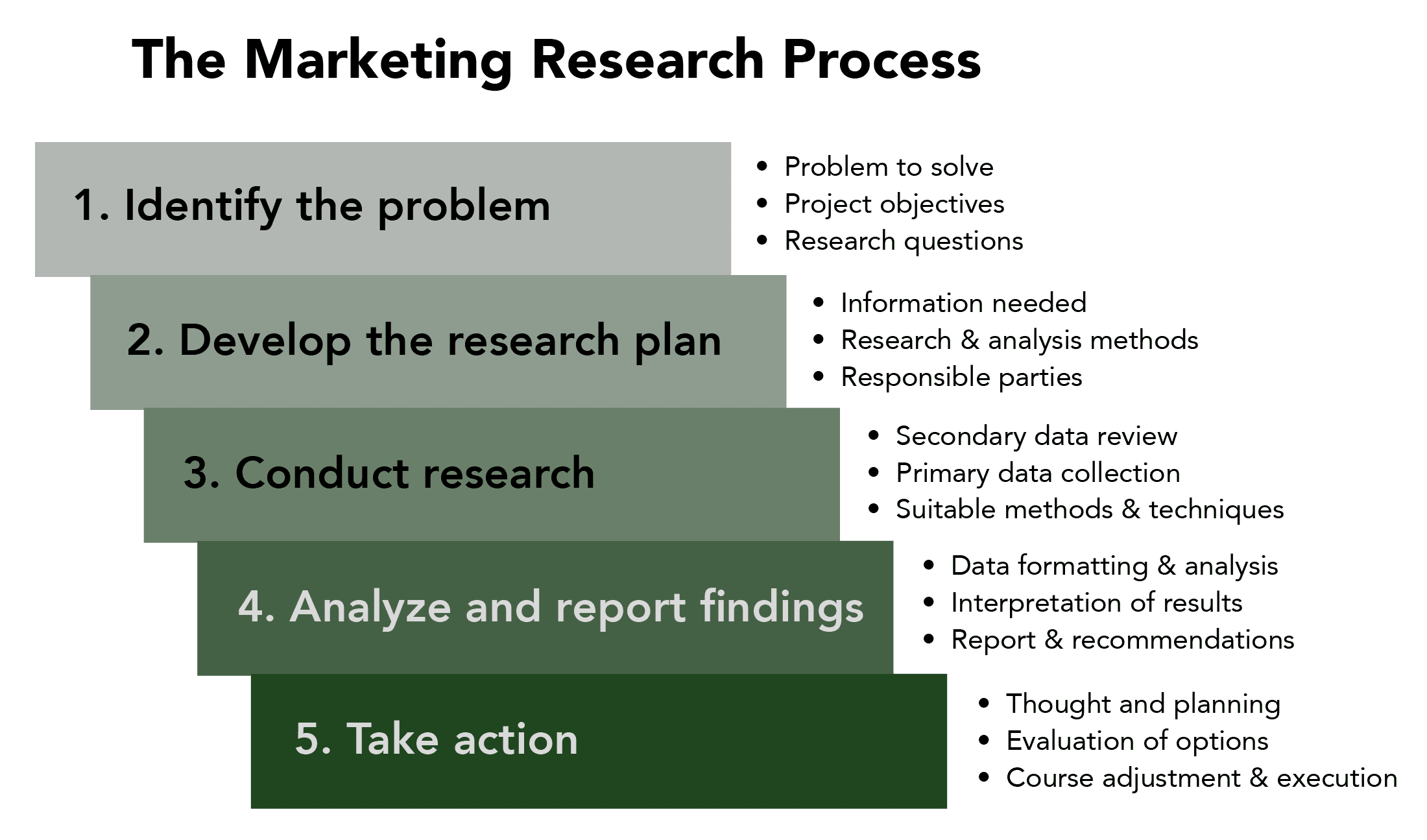
The Marketing Research Process | Introduction to Business View original
Is this image relevant?
Reading: The Role of the Marketing Plan | Principles of Marketing View original
Is this image relevant?
Reading: The Marketing Research Process | Introduction to Marketing View original
Is this image relevant?
The Marketing Research Process | Introduction to Business View original
Is this image relevant?
Systematic Process and Benefits
Effective marketing research helps companies identify customer needs, preferences, and behaviors. This allows them to develop targeted strategies and minimize the risks that come with launching new products or entering new markets. For example, a company might run focus groups before a product launch to learn which features matter most to potential buyers.
Beyond understanding customers, marketing research enables businesses to:
- Monitor market trends and assess competitive landscapes to spot opportunities for growth (e.g., analyzing market share data to find underserved segments)
- Optimize the marketing mix by using data to refine product features, pricing strategies, distribution channels, and promotional campaigns
- Reduce uncertainty in decision-making by replacing assumptions with evidence
A technique like conjoint analysis, for instance, helps companies figure out which combination of product features and price points customers value most. That kind of insight directly shapes what gets built and how it gets sold.
Supporting Product Life Cycle Stages
Marketing research isn't a one-time activity. It plays a role at every stage of the product life cycle:
- Concept testing — Research validates product ideas early. Surveys and prototype feedback help determine whether consumers are actually interested before the company invests heavily in development.
- Product launch — Research identifies the right target audience, informs positioning, and shapes go-to-market strategy. This includes analyzing competitor offerings and current market trends.
- Brand management — Once a product is in the market, research tracks brand health by measuring awareness, perception, and loyalty over time through brand tracking studies.
- Customer retention — Research uncovers what drives satisfaction and loyalty, helping companies reduce churn and increase customer lifetime value. Tools like Net Promoter Score (NPS) surveys gauge how likely customers are to recommend the brand.

Applications of Marketing Research
Market Segmentation and Product Development
- Market segmentation and targeting: Research identifies distinct customer groups based on demographics, psychographics, behaviors, and needs. Techniques like cluster analysis group customers with similar characteristics so marketing efforts can be tailored to each segment.
- Product development and innovation: Research insights guide product design and feature prioritization. Usability testing, for example, helps optimize the user experience before a full launch.
- Pricing strategies: Research reveals how sensitive customers are to price changes and what they're willing to pay. One common tool is Van Westendorp's Price Sensitivity Meter, which surveys consumers to determine the range of prices they consider acceptable for a given product.

Brand Management and Customer Experience
- Brand management: Studies that track brand awareness, perception, and equity over time help companies adjust their positioning and messaging. These are often called brand tracking studies.
- Customer satisfaction and loyalty: Feedback surveys identify pain points in the customer experience and highlight what's working well, so companies know where to focus improvement efforts.
- Advertising and promotional effectiveness: Post-campaign surveys measure things like ad recall and brand lift to evaluate whether an advertising campaign actually changed customer awareness or purchase behavior.
- Distribution channel analysis: Sales data across channels (retail stores, e-commerce, direct sales) reveals which distribution methods are most effective at reaching target customers, helping companies allocate resources accordingly.
Limitations and Ethics in Marketing Research
Biases and Constraints
Research is powerful, but it has real limitations you should understand:
- Sampling bias occurs when the selected sample doesn't accurately represent the target population. If you accidentally oversample one demographic group, your conclusions will be skewed.
- Response bias distorts findings when participants don't answer honestly. Social desirability bias is a common form: respondents give answers they think are "acceptable" rather than truthful. Acquiescence bias happens when respondents tend to agree with statements regardless of content.
- Time and budget constraints force trade-offs. A company might use cheaper online surveys instead of in-person focus groups, which saves money but may sacrifice depth of insight.
- Rapidly changing conditions can make research findings outdated quickly. Consumer preferences shift, competitors launch new products, and economic conditions change. This is why many companies run frequent pulse surveys to keep a real-time read on customer sentiment.
Ethical Considerations and Compliance
Marketing researchers have a responsibility to conduct their work ethically. Core ethical principles include:
- Informed consent: Participants must understand the research purpose and how their data will be used before agreeing to take part.
- Privacy and confidentiality: Data should be anonymized where possible, and secure storage practices must be in place.
- Transparency: Researchers should not use deceptive practices or misrepresent the purpose of a study.
- Minimizing harm: Research design should account for sensitive topics and vulnerable populations to avoid causing discomfort.
- Honest reporting: Findings must be presented accurately, including negative results, without bias or manipulation.
Compliance with legal requirements matters too. Data protection laws like the GDPR (General Data Protection Regulation) in Europe set strict rules for how personal data can be collected, stored, and processed. Violating these regulations can result in significant fines, so researchers need to understand the legal landscape wherever they operate.
See Fiveable more often in Google
Mark Fiveable as a preferred source and Google is more likely to show you our guides in Top Stories, with a "preferred" badge in AI Mode and AI Overviews.