7.2 Channel Design and Management

📣Intro to Marketing Unit 7 Review
7.2 Channel Design and Management
📣 Intro to Marketing
Designing Effective Distribution Channels

Top images from around the web for Aligning Channel Design with Marketing Strategy
Distribution Channels | Boundless Business View original
Is this image relevant?
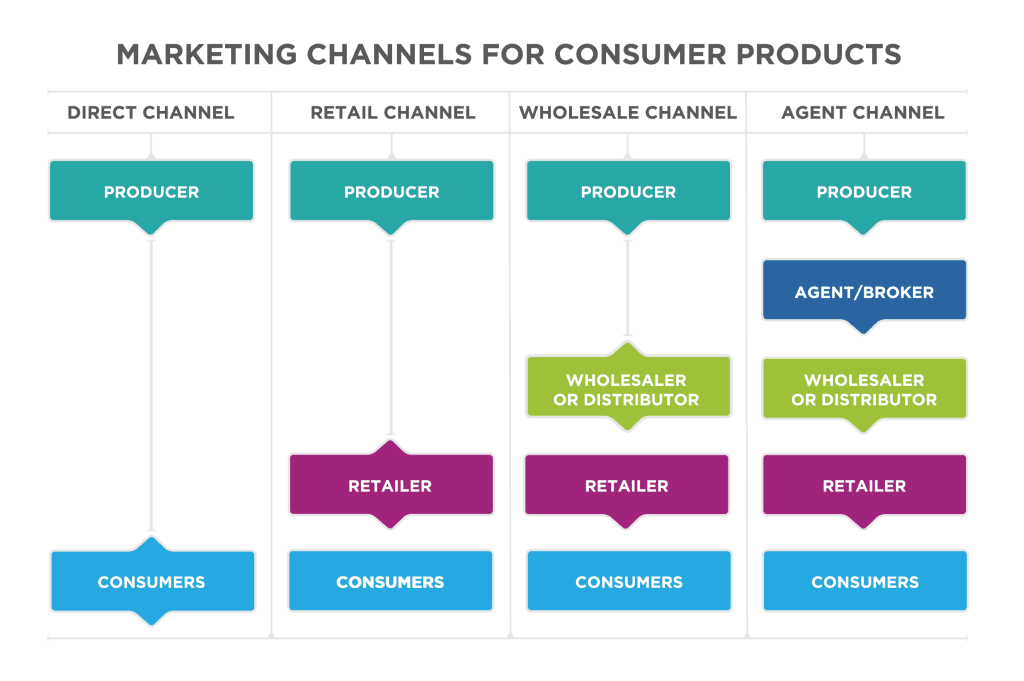
Putting It Together: Place: Distribution Channels | Principles of Marketing View original
Is this image relevant?
Putting It Together: Marketing Function | Principles of Marketing View original
Is this image relevant?
Distribution Channels | Boundless Business View original
Is this image relevant?
Putting It Together: Place: Distribution Channels | Principles of Marketing View original
Is this image relevant?
Aligning Channel Design with Marketing Strategy
Channel design is about choosing the right intermediaries (wholesalers, retailers, etc.) to get your product to the right customers at a reasonable cost. These decisions don't happen in a vacuum. They need to fit your broader marketing strategy.
Three factors should drive your channel design:
- Target market: Who are your customers, where do they shop, and what do they expect? A teen buying earbuds has different channel expectations than a hospital purchasing surgical equipment.
- Product characteristics: Perishable goods need short, fast channels. Complex products often need direct sales with hands-on support. Simple, low-cost items can flow through longer channels with more intermediaries.
- Competitive landscape: What channels are your competitors using? You might match them for coverage or deliberately choose different channels to stand out.
One of the biggest channel decisions is distribution intensity, which determines how many intermediaries carry your product:
- Intensive distribution puts the product in as many outlets as possible. Think of how Coca-Cola is available in grocery stores, gas stations, vending machines, and restaurants. This works for everyday, low-cost products where convenience drives purchases.
- Selective distribution uses a limited number of intermediaries. A brand like Samsung sells TVs through Best Buy and Target but not every corner store. This gives the company more control over how the product is presented while still reaching a broad audience.
- Exclusive distribution restricts sales to one or very few intermediaries in a given area. Rolex, for example, sells only through authorized dealers. This protects the brand's premium image and gives the retailer strong incentive to invest in the selling experience.
Optimizing Channel Structure and Relationships
Channel length refers to how many intermediary levels sit between the manufacturer and the consumer. A direct channel (manufacturer sells straight to consumer) is the shortest. An indirect channel might go from manufacturer to wholesaler to retailer to consumer. Shorter channels give you more control; longer channels extend your reach but add cost and complexity.
Companies also organize their channels through different system structures:
- Vertical marketing systems (VMS) integrate channel members to reduce friction. A corporate VMS means one company owns multiple levels of the channel (e.g., Apple owns its own retail stores). A contractual VMS uses formal agreements to coordinate members (franchises like McDonald's are a classic example). An administered VMS relies on the dominance of one powerful member to coordinate the others, without formal ownership or contracts.
- Horizontal marketing systems involve cooperation between companies at the same channel level. Two competing grocery chains might share a distribution warehouse to cut logistics costs.
- Multichannel and omnichannel strategies use multiple distribution paths (physical stores, e-commerce, mobile apps) to reach customers wherever they prefer to shop. The difference: multichannel means you're present in several channels, while omnichannel means those channels are fully integrated so the customer experience feels seamless. A customer might browse on their phone, order online, and pick up in-store without any friction.
Channel Management Stages and Processes
Designing and Selecting Channel Partners
Channel management is the ongoing work of choosing, supporting, and evaluating your intermediaries. It starts with the design stage:
- Define channel objectives. What level of market coverage do you need? What customer service standards must the channel meet?
- Identify potential intermediaries. Evaluate them based on capabilities, reputation, financial stability, and geographic reach.
- Determine the optimal structure. Decide on channel length and distribution intensity based on your strategy.
- Recruit and select partners. Choose intermediaries that have the logistics infrastructure, sales force, technology, and customer access you need.

Supporting and Coordinating Channel Members
Once partners are in place, you need to keep them motivated and aligned. This means providing:
- Incentives such as volume discounts, promotional allowances, or co-op advertising funds
- Training on product knowledge, selling techniques, and brand positioning
- Resources like marketing materials, technical support, and dedicated account managers
Coordination across channel members is just as important. Without it, you get misaligned pricing, inconsistent messaging, and frustrated partners. Effective coordination includes:
- Regular meetings and transparent information sharing between all parties
- Joint planning and demand forecasting so supply matches actual market needs
- Consistent pricing and promotional strategies that prevent channel members from undercutting each other
Monitoring and Adapting Channel Performance
You can't manage what you don't measure. Ongoing evaluation keeps your channels healthy:
- Financial metrics: Track sales volume, market share, and profitability for each channel partner and compare across regions or time periods.
- Customer metrics: Monitor satisfaction scores, retention rates, and direct feedback to see whether the channel is actually serving customers well.
Markets shift, and your channels need to shift with them. If consumer preferences change, an intermediary underperforms, or a new technology creates opportunity, you may need to adjust. That could mean adding or dropping intermediaries, reallocating resources, or restructuring the channel mix entirely.
Channel Conflicts and Resolution Strategies
Types and Causes of Channel Conflicts
Channel conflict happens when one member's actions or goals clash with another's. It's common and, if unmanaged, can seriously hurt overall channel performance. There are three main types:
- Vertical conflict occurs between members at different levels. A manufacturer might want a retailer to discount aggressively to move volume, while the retailer wants to protect its margins. Disputes over pricing, territory, or promotional expectations are typical triggers.
- Horizontal conflict occurs between members at the same level. Two authorized retailers in the same city might fight over customers, promotional support, or shelf space.
- Multichannel conflict arises when a company's own channels compete with each other. A common example: a brand's online store undercuts the prices at its brick-and-mortar retail partners, creating resentment and lost trust.

Strategies for Resolving Channel Conflicts
No single fix works for every conflict, but several strategies help:
- Open communication: Regular meetings and structured feedback mechanisms keep small issues from becoming big problems.
- Clear roles and expectations: Define each member's responsibilities, territories, and performance targets upfront.
- Fair pricing and incentives: Consistent margins and rewards for cooperation reduce the feeling that one partner is being favored over another.
- Joint problem-solving: Collaborative decision-making that aims for win-win outcomes builds long-term trust.
Power dynamics matter here. A dominant player often sets the tone for the channel. Manufacturers with strong brand equity (like Nike) can assert leadership through product innovation and marketing support. Large retailers (like Walmart) can leverage their massive customer base and control over shelf space. Neither approach is inherently better; what matters is that leadership is used to align the channel, not just to extract concessions.
Contractual agreements can also prevent conflicts before they start. Franchise agreements, exclusive distribution rights, and territory protections establish clear terms around pricing, boundaries, and performance requirements.
Distribution Channel Performance Evaluation
Key Metrics for Assessing Channel Performance
Evaluating your channels means looking at whether they're meeting your marketing objectives and delivering value to customers. The core financial metrics include:
- Sales volume and market share: Are your channels generating the revenue and market presence you planned for? Comparing performance across channels, regions, and time periods reveals where growth is happening and where it's stalling.
- Profitability: Gross margin (revenue minus cost of goods sold) and return on investment (ROI) tell you whether a channel is financially viable. Analyzing profitability at the product, customer, or channel level helps you allocate resources more effectively.
Customer-Centric Performance Indicators
Financial results only tell part of the story. Customer-focused metrics reveal how well your channels serve the people actually buying your products:
- Customer satisfaction and loyalty: Metrics like Net Promoter Score (NPS) and customer retention rates show whether channels meet expectations. Surveys, feedback forms, and social media monitoring all provide useful data. Tracking customer lifetime value (CLV) helps you prioritize channels that attract and keep your most valuable customers.
- Inventory turnover: Calculated as sales divided by average inventory, this measures how efficiently a channel manages stock. High turnover generally means strong sales and good inventory management. Low turnover may signal overstocking or slow-moving products.
- Stockout rates: The percentage of orders that can't be filled due to lack of inventory. Frequent stockouts mean lost sales and unhappy customers, pointing to problems with demand forecasting or inventory planning.
Benchmarking and Continuous Improvement
To know whether your channel performance is actually good, you need a point of comparison:
- Channel coverage metrics like distribution intensity (number of outlets per market) and market reach (percentage of target market served) show how thoroughly you're covering your target market. Comparing these across regions, segments, or against competitors highlights gaps and expansion opportunities.
- External benchmarking compares your performance against industry averages or best-in-class competitors.
- Internal benchmarking compares performance across your own channels, products, or time periods to spot internal inconsistencies.
The best-performing companies treat channel evaluation as a continuous cycle: measure, analyze, adjust, repeat. Regular performance reviews and data-driven feedback loops let you catch problems early. Building a culture of continuous improvement across your channel partners keeps the entire distribution system competitive and responsive to changing market conditions.
See Fiveable more often in Google
Mark Fiveable as a preferred source and Google is more likely to show you our guides in Top Stories, with a "preferred" badge in AI Mode and AI Overviews.