1.2 The Marketing Concept and Orientation

📣Intro to Marketing Unit 1 Review
1.2 The Marketing Concept and Orientation
📣 Intro to Marketing
Marketing orientations have evolved from production to sales to marketing, and now to holistic marketing. This shift reflects a growing focus on customer needs and market dynamics, moving away from internal processes.
The marketing concept puts customers at the center of business decisions. It emphasizes understanding and meeting customer needs through coordinated efforts across all departments, aiming for long-term success and customer satisfaction.
Evolution of Marketing Orientations
Marketing didn't always revolve around the customer. Over the past century, the dominant philosophy guiding business decisions has shifted through four major stages:
- Production orientation (early 1900s): The focus was on making products efficiently and getting them distributed widely. The assumption was simple: if it's available and affordable, people will buy it. Think of Henry Ford's Model T, famously offered in "any color so long as it is black." Efficiency was king.
- Sales orientation (1920s–1950s): Companies realized that just making products wasn't enough. This era emphasized aggressive selling and promotion to push products out the door, often without much concern for what customers actually wanted. Door-to-door sales and high-pressure tactics were common.
- Marketing orientation (1950s onward): Businesses began asking, What does the customer actually need? Instead of making a product and then figuring out how to sell it, companies started with market research and segmentation to design offerings around customer demand.
- Holistic marketing orientation (contemporary): This broadens the lens even further. It considers not just the customer, but all stakeholders and the wider impact of marketing activities, including corporate social responsibility, sustainability, and ethics.
The key takeaway from this progression: businesses moved from an inward focus ("How do we make and sell this?") to an outward focus ("What do customers and society need from us?"). Adopting a customer-centric, market-oriented approach has become essential for organizations to remain competitive.

Top images from around the web for Progression of Marketing Orientations
Products and Marketing Mix | Principles of Marketing View original
Is this image relevant?
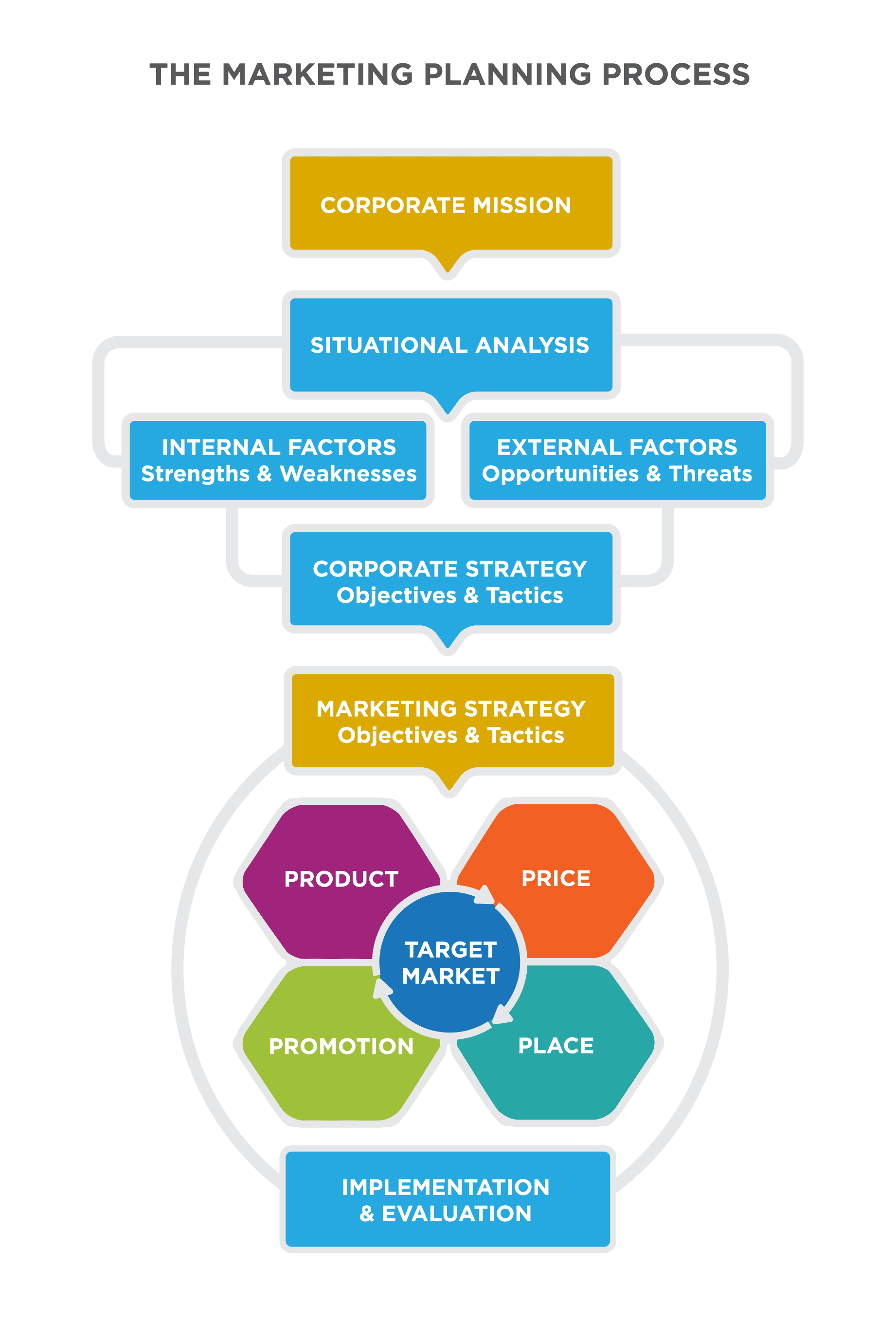
Reading: The Role of the Marketing Plan | Principles of Marketing View original
Is this image relevant?
Putting It Together: Marketing Function | Principles of Marketing View original
Is this image relevant?
Products and Marketing Mix | Principles of Marketing View original
Is this image relevant?
Reading: The Role of the Marketing Plan | Principles of Marketing View original
Is this image relevant?
Product vs. Sales vs. Market Orientations
These three orientations represent fundamentally different assumptions about what drives business success. Understanding the differences is a common exam topic.
Product Orientation
A product-oriented company believes that a superior product will sell itself. The priority is quality, innovation, and features. Apple's relentless focus on product design is a classic example.
- Heavy investment in R&D to create cutting-edge offerings
- Assumes customers will seek out products based on quality alone
- The risk: companies can fall in love with their own product and ignore what the market actually wants. A technically brilliant product that nobody needs is still a failure.
Sales Orientation
A sales-oriented company assumes customers won't buy enough on their own and need to be persuaded. Revenue comes from pushing products through aggressive tactics like telemarketing or high-pressure pitches.
- Focus is on the transaction, not the relationship
- Can generate short-term revenue, but often leads to buyer's remorse, customer dissatisfaction, and negative word-of-mouth
- The core assumption is that customers are reluctant buyers who need convincing

Market Orientation
A market-oriented company starts with the customer and works backward. The goal is to understand customer needs first, then develop products and experiences to meet them.
- Uses tools like market research, customer feedback, and CRM systems to stay close to the customer
- Emphasizes creating value that meets or exceeds expectations
- Requires coordination across all departments, not just the marketing team
- Builds lasting relationships rather than chasing one-time sales
Comparison to remember: Product orientation asks, "Can we build something great?" Sales orientation asks, "Can we convince people to buy?" Market orientation asks, "What do people actually need, and how do we deliver it?"
Customer-Centric Focus of the Marketing Concept
The marketing concept is the philosophy behind market orientation. It's the idea that the path to achieving organizational goals runs through understanding and satisfying customer needs better than competitors do.
Core Principles
- The customer is the starting point for all business decisions
- Success comes from identifying what your target market needs, then delivering on that, not from pushing whatever you happen to make
- This requires deep knowledge of your customers: their demographics, psychographics (values, lifestyles, attitudes), behaviors, and preferences. Tools like market segmentation and buyer personas help organize this knowledge.
- Organizations create value through a clear value proposition, the specific benefit a customer gets from choosing your product over alternatives

Putting It Into Practice
Adopting the marketing concept isn't just a strategy change; it's a culture change. Here's what implementation looks like:
- Conduct ongoing research. Use surveys, focus groups, and data analytics to understand what customers need and how those needs are shifting.
- Align all departments. Product development, pricing, distribution, and promotion should all be informed by customer insights, not just the marketing team.
- Monitor and adapt. Customer needs, market trends, and competitors change constantly. A one-time study isn't enough.
- Shift the internal culture. Every employee, from the front desk to the C-suite, needs to understand why customer-centricity matters. Internal marketing and employee training help make this real.
- Leverage technology. CRM systems and analytics tools help gather customer data at scale and personalize the experience.
Elements of a Market-Oriented Organization
A truly market-oriented organization isn't just one with a good marketing department. It has specific characteristics woven into how the whole company operates.
Customer Focus and Market Intelligence
- Customer focus means the organization continuously seeks to understand and respond to customer needs, through feedback loops, responsive customer service, and regular engagement.
- Market intelligence means actively collecting and analyzing information about customers, competitors, and the broader market. This includes competitive analysis, trend monitoring, and ongoing research.
- That intelligence only matters if it's shared. Market-oriented organizations build systems for distributing insights across departments, through cross-functional teams, shared dashboards, and regular briefings.
- Together, customer focus and market intelligence help organizations spot opportunities, anticipate shifts in demand, and stay ahead of competitors.
Coordinated Marketing and Responsiveness
- Coordinated marketing means every department works together to create, communicate, and deliver value consistently. This shows up as integrated marketing communications and cross-functional collaboration, so the customer gets a unified experience.
- Responsiveness is the ability to adapt quickly when customer needs or market conditions change. Agile marketing approaches and rapid prototyping are examples.
- Both require clear communication, shared goals, and a willingness to change course when the data says so.
Profitability and Long-Term Perspective
Customer satisfaction is the priority, but it has to be sustainable. A market-oriented organization balances two things:
- Profitability: Satisfying customers is the goal, but the organization still needs to be financially viable. Metrics like customer lifetime value (the total revenue a customer generates over the entire relationship) and return on marketing investment help measure whether customer-focused efforts are paying off.
- Long-term perspective: The focus is on building lasting relationships, not maximizing next quarter's numbers. Customer loyalty programs and strategic partnerships reflect this mindset. Sometimes this means short-term sacrifices (like investing in service improvements that don't immediately boost revenue) that lead to sustainable growth over time.
See Fiveable more often in Google
Mark Fiveable as a preferred source and Google is more likely to show you our guides in Top Stories, with a "preferred" badge in AI Mode and AI Overviews.