7.1 Distribution Channels and Intermediaries

📣Intro to Marketing Unit 7 Review
7.1 Distribution Channels and Intermediaries
📣 Intro to Marketing
Distribution Channels and Functions
Distribution channels are the paths products travel from the manufacturer to the buyer. Understanding these paths matters because the channel a company chooses directly affects pricing, customer experience, and how much control the manufacturer keeps over its product. This section covers channel types, the role intermediaries play, and how companies decide which strategy fits best.

Top images from around the web for Types of Distribution Channels
Marketing Mix Introduction | Introduction to Business View original
Is this image relevant?
Putting It Together: Place: Distribution Channels | Principles of Marketing View original
Is this image relevant?
9.5 Placing a Product – Foundations of Business View original
Is this image relevant?
Marketing Mix Introduction | Introduction to Business View original
Is this image relevant?
Putting It Together: Place: Distribution Channels | Principles of Marketing View original
Is this image relevant?
Types of Distribution Channels
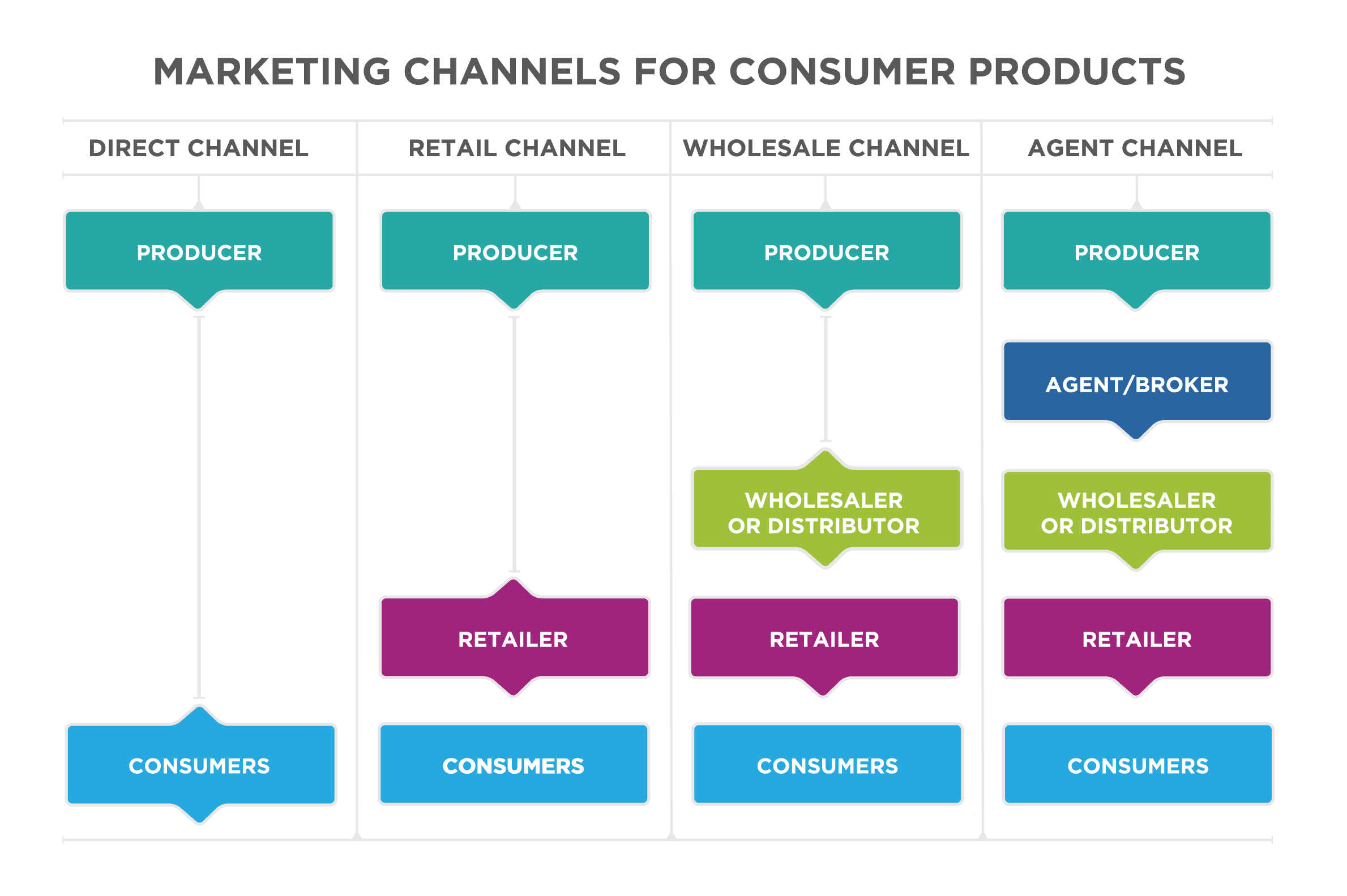
Direct distribution means the manufacturer sells straight to the end consumer with no middlemen involved. Think of a company selling through its own website, its own retail stores, or even door-to-door sales. The manufacturer keeps full control but also handles all the work.
Indirect distribution adds one or more intermediaries between the manufacturer and the consumer. The more intermediaries, the "longer" the channel:
- One-level channel: Manufacturer → Retailer → Consumer
- Two-level channel: Manufacturer → Wholesaler → Retailer → Consumer
- Three-level channel: Manufacturer → Agent → Wholesaler → Retailer → Consumer
Hybrid distribution combines direct and indirect approaches. A clothing brand might sell through its own website and through department stores. This lets companies reach different customer segments through different pathways.
Functions of Distribution Channels
Channels do more than just move boxes from Point A to Point B. They perform several functions that keep the whole system running:
- Buying and reselling products along the chain
- Selling to end consumers and providing customer service
- Transporting products from manufacturers to the next stop in the chain
- Storing products in warehouses or retail locations until they're sold
- Grading products by quality, size, or other characteristics to match what customers expect
- Financing the process by extending credit to buyers or holding inventory
- Absorbing risk tied to product ownership, damage, or products becoming obsolete
- Gathering market information and feeding it back to manufacturers about consumer preferences, trends, and competitor activity
Roles of Intermediaries
Intermediaries are the businesses that sit between the manufacturer and the final buyer. They exist because they create value that would be expensive or impractical for manufacturers to provide on their own.
Types of Intermediaries
Wholesalers buy products in bulk from manufacturers and resell them to retailers or other businesses. A grocery wholesaler, for example, might purchase thousands of cases of canned goods and distribute them to hundreds of local grocery stores. Wholesalers help manufacturers reach a wider market, reduce costs through economies of scale, and provide storage and transportation services.
Retailers buy from wholesalers or directly from manufacturers and sell to the end consumer. They provide convenience, product variety, and customer service. Retailers also pass valuable market feedback up the chain, telling manufacturers what's selling and what isn't.
Agents (including brokers and sales representatives) facilitate transactions between manufacturers and buyers without ever taking ownership of the products. A real estate broker works this way: they connect buyer and seller and earn a commission, but they never own the property. Agents help manufacturers expand their reach and reduce direct selling costs while bringing market expertise to the table.
Value Added by Intermediaries
- Bridge the gap between manufacturers and consumers by making products more accessible in more locations
- Reduce transaction costs by consolidating purchases, providing credit, and managing logistics
- Provide specialized services like product assembly, packaging, or installation that make the overall system more efficient
- Offer market intelligence and customer insights that help manufacturers adapt to shifting consumer needs
Without intermediaries, a manufacturer would need to handle every sale, every delivery, and every customer interaction on its own. That's why even large companies still rely on intermediaries for much of their distribution.

Factors for Channel Selection
Choosing the right channel isn't one-size-fits-all. Several factors push a company toward shorter or longer channels.
Product Characteristics
The nature of the product itself matters a lot. Perishable goods (fresh produce), bulky items (furniture), and high-value products (luxury jewelry) typically need shorter, more direct channels because they require careful handling, fast delivery, or a controlled buying experience. Standardized, low-value, easily transported products (snack foods, office supplies) work well in longer, indirect channels because they don't need special treatment.
Target Market Characteristics
Geographic location, buying habits, and service expectations all shape channel choice. A company targeting rural customers may need different intermediaries than one focused on urban markets. Similarly, customers who expect hands-on service (like trying on high-end shoes) need a different channel than customers happy to order commodity products online.
Manufacturer Characteristics
A manufacturer's financial strength, production capacity, market coverage goals, and desired level of control all play a role. A small startup with limited resources will likely rely on intermediaries to get products to market. A large corporation like Apple can afford to operate its own retail stores alongside selling through third-party retailers.
Competitive and Environmental Factors
What competitors are doing can force channel decisions. If every rival brand is available on a major e-commerce platform, staying off that platform could mean losing visibility.
Beyond competition, broader forces shape channel options too: economic conditions, new technology (the rise of e-commerce being the obvious example), legal regulations, international trade agreements, and cultural norms around sustainability or shopping preferences.

Distribution Strategies: Effectiveness vs Products
Once a company picks its channel structure, it still needs to decide how widely to distribute. There are three core strategies, plus a modern hybrid approach.
Intensive Distribution
This means making the product available through as many outlets as possible. Coca-Cola uses intensive distribution: you can find it in grocery stores, gas stations, vending machines, restaurants, and movie theaters. This strategy works best for convenience goods, impulse purchases, and products with strong brand loyalty (soft drinks, snacks, toothpaste). The goal is maximum market coverage and easy consumer access.
Selective Distribution
Here, the company limits the number of intermediaries to keep more control over how the product is presented and sold. Consumer electronics brands often use selective distribution, choosing retailers that can provide knowledgeable staff and proper product displays. This approach fits shopping goods and specialty products (electronics, sporting goods, higher-end beauty products) where service quality and brand image matter.
Exclusive Distribution
This grants distribution rights to a single intermediary in a specific geographic area. Rolex, for instance, carefully selects authorized dealers rather than selling through every jewelry store. Exclusive distribution works for luxury goods, high-end products, and items requiring specialized knowledge (premium watches, designer fashion, industrial equipment). It enhances brand prestige and builds closer manufacturer-intermediary relationships.
Multichannel Distribution
Most companies today use some form of multichannel distribution, reaching customers through brick-and-mortar stores, e-commerce sites, mobile apps, and social media simultaneously. This lets manufacturers adapt to different consumer preferences and increase overall market coverage. The key challenge is creating a seamless experience across channels so that a customer who browses online and buys in-store (or vice versa) has a consistent interaction with the brand.
Evaluating Distribution Strategy Effectiveness
To judge whether a distribution strategy is working, companies look at several criteria:
- Can it deliver the right product, in the right quantity, at the right time, to the right place?
- Does it align with the company's overall marketing objectives and target market needs?
- Is it cost-effective when you factor in distribution expenses, inventory management, and customer acquisition?
- Is it flexible enough to adapt to market shifts, competitive pressure, and new technologies?
No single strategy is permanently "correct." As markets evolve and consumer behavior changes, companies regularly reassess and adjust their distribution approach.
See Fiveable more often in Google
Mark Fiveable as a preferred source and Google is more likely to show you our guides in Top Stories, with a "preferred" badge in AI Mode and AI Overviews.