11.3 Cause-Related Marketing and Social Marketing

📣Intro to Marketing Unit 11 Review
11.3 Cause-Related Marketing and Social Marketing
📣 Intro to Marketing
Cause-Related vs Social Marketing
Cause-related marketing (CRM) and social marketing both aim to create positive change, but they work in fundamentally different ways. CRM pairs a business with a non-profit to boost the company's image while supporting a cause. Social marketing borrows commercial marketing techniques to change people's behavior for the public good. Knowing the difference matters because confusing the two can lead to poorly designed campaigns and accusations of insincerity.

Top images from around the web for Defining Cause-Related Marketing (CRM)
What is Corporate Social Responsibility? | Human Resources Management View original
Is this image relevant?
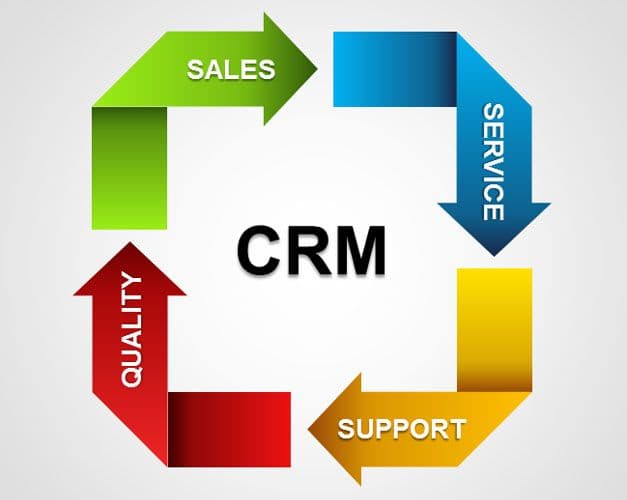
CRM Circular Squared PowerPoint Diagram with Arrows View original
Is this image relevant?
What is Corporate Social Responsibility? | Human Resources Management View original
Is this image relevant?
CRM Circular Squared PowerPoint Diagram with Arrows View original
Is this image relevant?
Defining Cause-Related Marketing (CRM)
Cause-related marketing is a commercial activity where a business partners with a non-profit organization or supports a social cause as part of a marketing campaign. The business benefits from an enhanced image and stronger consumer engagement, while the cause receives funding or visibility.
CRM campaigns tend to be short-term and transaction-based. A common structure: "For every product you buy, we'll donate $1 to [cause]." The customer feels good about the purchase, the company moves more product, and the non-profit gets funding.
- Drives sales and brand loyalty for the business
- Generates funds and awareness for the non-profit partner
- Works best when the cause naturally aligns with the brand's identity and values
Understanding Social Marketing
Social marketing applies commercial marketing principles to influence behaviors that benefit individuals and communities. Unlike CRM, the primary goal isn't selling a product. It's getting people to adopt healthier, safer, or more socially beneficial behaviors.
These campaigns are typically long-term and sustained because changing deeply rooted behaviors takes time. Think anti-smoking campaigns or public health initiatives promoting handwashing.
- Can be run by governments, non-profits, or social enterprises, not just corporations
- Targets voluntary behavior change rather than purchases
- Addresses complex social issues like public health, environmental conservation, or road safety
Key distinction: CRM is a business strategy that supports a cause. Social marketing is a behavior-change strategy that uses marketing tools. CRM asks, "How can supporting this cause help our brand?" Social marketing asks, "How can marketing techniques help solve this social problem?"
Effectiveness of Cause-Related Marketing
Measuring the Impact of CRM Campaigns
Evaluating a CRM campaign means looking at both the business side and the social side. A campaign that boosts sales but raises no meaningful awareness for the cause isn't truly effective, and vice versa.
Business outcomes to track:
- Sales lift during the campaign period
- Brand preference and loyalty changes
- Employee engagement and morale
- Social media engagement and reach
Social outcomes to track:
- Awareness of the cause among the target audience
- Funds raised for the non-profit partner
- Behavior change among consumers (e.g., did people actually learn something or act differently?)
Strategies for Evaluating CRM Effectiveness
To get a clear picture of how well a CRM campaign performed, marketers typically combine several methods:
- Pre- and post-campaign surveys to measure shifts in brand perception and cause awareness
- Sales data analysis to quantify any revenue lift tied to the campaign
- Media coverage tracking to gauge earned publicity and public conversation
Successful CRM campaigns share a few traits: the cause genuinely aligns with the brand's values, the messaging connects with customers emotionally, and the company communicates the impact transparently. Vague promises like "a portion of proceeds goes to charity" tend to underperform because consumers can't see the real impact.
Notable examples:
- American Express and Share Our Strength partnered to combat childhood hunger, tying card usage directly to donations. The cause fit naturally with a brand built around community participation.
- Dove's "Real Beauty" campaign promoted body positivity and self-esteem. While often cited as CRM, this campaign blurred the line into social marketing because it aimed to shift cultural attitudes, not just raise funds.
Principles of Social Marketing

Systematic, Research-Driven Approach
Social marketing programs follow a structured process rather than relying on gut instinct. The goal is always voluntary behavior change for the social good.
The typical process looks like this:
- Define the social problem clearly (e.g., rising rates of teen vaping)
- Identify the target audience most affected or most likely to change
- Set specific behavior-change objectives (e.g., reduce vaping initiation among 13-17 year olds by 15%)
- Conduct formative research to understand the audience's attitudes, beliefs, and barriers to change
- Develop a marketing mix tailored to those findings
That formative research step is critical. Without understanding why people engage in a harmful behavior, you can't design a campaign that actually shifts it. Surveys, focus groups, and interviews with the target audience inform every strategic decision that follows.
Segmentation, Targeting, and the Marketing Mix
Just like commercial marketing, social marketing uses segmentation and targeting to focus resources on the audience groups most likely to change and where change would have the greatest impact. Not everyone is equally ready to adopt a new behavior, so prioritizing matters.
The marketing mix in social marketing maps onto the traditional 4 Ps, but with different meanings:
| Traditional Marketing | Social Marketing Equivalent |
|---|---|
| Product | The desired behavior (e.g., quitting smoking) |
| Price | The barriers and costs of adopting the behavior (e.g., nicotine withdrawal, social pressure) |
| Place | The channels and settings where the behavior is promoted (e.g., schools, clinics, apps) |
| Promotion | The communication strategies used to persuade the audience (e.g., ads, peer education, social media) |
Effective programs also draw on behavioral theories to guide their design. The Health Belief Model, for instance, suggests people are more likely to change when they believe they're personally at risk and that the benefits of changing outweigh the costs. The Theory of Planned Behavior adds that perceived social norms and a person's confidence in their ability to change also matter.
Monitoring and Evaluation
Ongoing monitoring is built into social marketing from the start, not tacked on at the end. Because these campaigns run long-term, marketers need to track progress continuously and make data-driven adjustments along the way.
Examples of successful social marketing campaigns:
- Truth Initiative's anti-smoking campaign targeted youth with edgy, peer-driven messaging that reframed not smoking as an act of rebellion rather than obedience. It's credited with contributing to significant declines in youth smoking rates.
- The UK's "Change4Life" campaign promoted healthy eating and physical activity through family-friendly messaging, using segmentation to reach low-income households most at risk for obesity-related health problems.
Case Studies in Marketing Initiatives
Analyzing Real-World CRM Examples
Studying real campaigns reveals patterns that separate effective CRM from hollow efforts. When analyzing a case study, consider these factors:
- Context: What was happening in the market and culture when the campaign launched?
- Alignment: Does the cause naturally connect to the brand, or does it feel forced?
- Emotional appeal: Does the campaign create a genuine emotional connection, or does it come across as exploitative?
- Call-to-action clarity: Does the consumer know exactly what happens when they participate?
- Transparency: Can customers see the measurable impact of their contribution?
Campaigns that fail often suffer from poor alignment (a fast-food chain promoting heart health, for example) or vague commitments that invite skepticism.
Evaluating Social Marketing Components
When reviewing social marketing case studies, pay attention to how well each stage of the process was executed: the quality of the research, the precision of the segmentation, the fit of the marketing mix, and the rigor of the evaluation.
Notable case studies worth examining:
- Patagonia's "Don't Buy This Jacket" campaign urged consumers to reduce consumption for environmental sustainability. This is an interesting hybrid: it's a for-profit company using social marketing techniques. The campaign reinforced Patagonia's brand identity while genuinely promoting reduced consumption.
- Coca-Cola's "Share a Coke" campaign personalized bottles with common names to foster personal connections. This is primarily a commercial campaign, not a social marketing effort. Including it in this category highlights an important skill: being able to distinguish between campaigns that create social good and campaigns that simply generate positive feelings about a brand.
Comparing case studies across industries like healthcare, environmental conservation, and social justice shows how adaptable both CRM and social marketing strategies can be. The common thread in successful campaigns is authentic commitment, clear objectives, and honest communication about impact.
See Fiveable more often in Google
Mark Fiveable as a preferred source and Google is more likely to show you our guides in Top Stories, with a "preferred" badge in AI Mode and AI Overviews.