4.3 Pteridophytes

🥀Intro to Botany Unit 4 Review
4.3 Pteridophytes
🥀 Intro to Botany
Pteridophytes are the group of vascular plants that reproduce by spores rather than seeds. This group includes ferns, horsetails, and club mosses. They sit at a key point in plant evolution: more complex than bryophytes (mosses and liverworts) because they have true vascular tissue, but less complex than seed plants because they still depend on spores and water for reproduction. Understanding pteridophytes helps you see how plants gradually evolved the traits needed to dominate land.
Characteristics of pteridophytes
Pteridophytes share three defining features: they have vascular tissue (xylem and phloem), they reproduce via spores, and they lack seeds and flowers. Within those shared traits, the group shows a wide range of forms, from tiny filmy ferns to tree ferns several meters tall.
Top images from around the web for Vascular tissue in pteridophytes
Seedless Vascular Plants | Biology for Non-Majors II View original
Is this image relevant?
Seedless Vascular Plants | Boundless Biology View original
Is this image relevant?
Pholem and Xylem Diagrams | Biology II View original
Is this image relevant?
Seedless Vascular Plants | Biology for Non-Majors II View original
Is this image relevant?
Seedless Vascular Plants | Boundless Biology View original
Is this image relevant?
Vascular tissue in pteridophytes
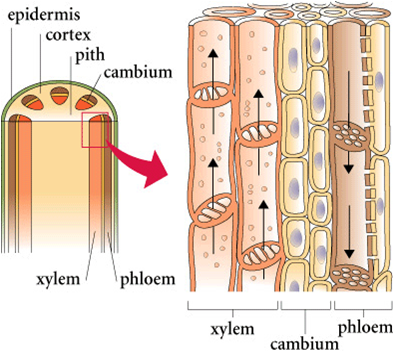
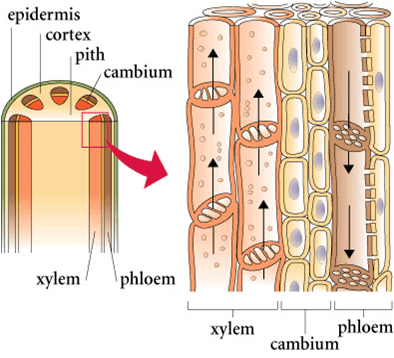
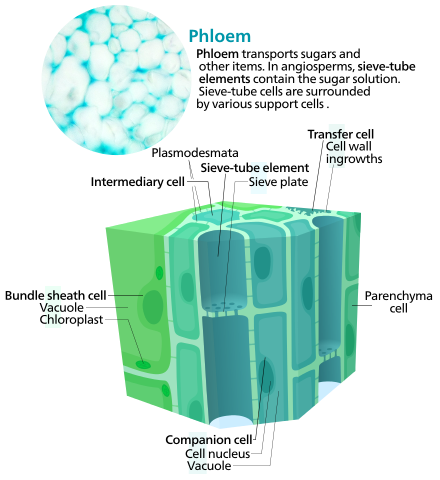
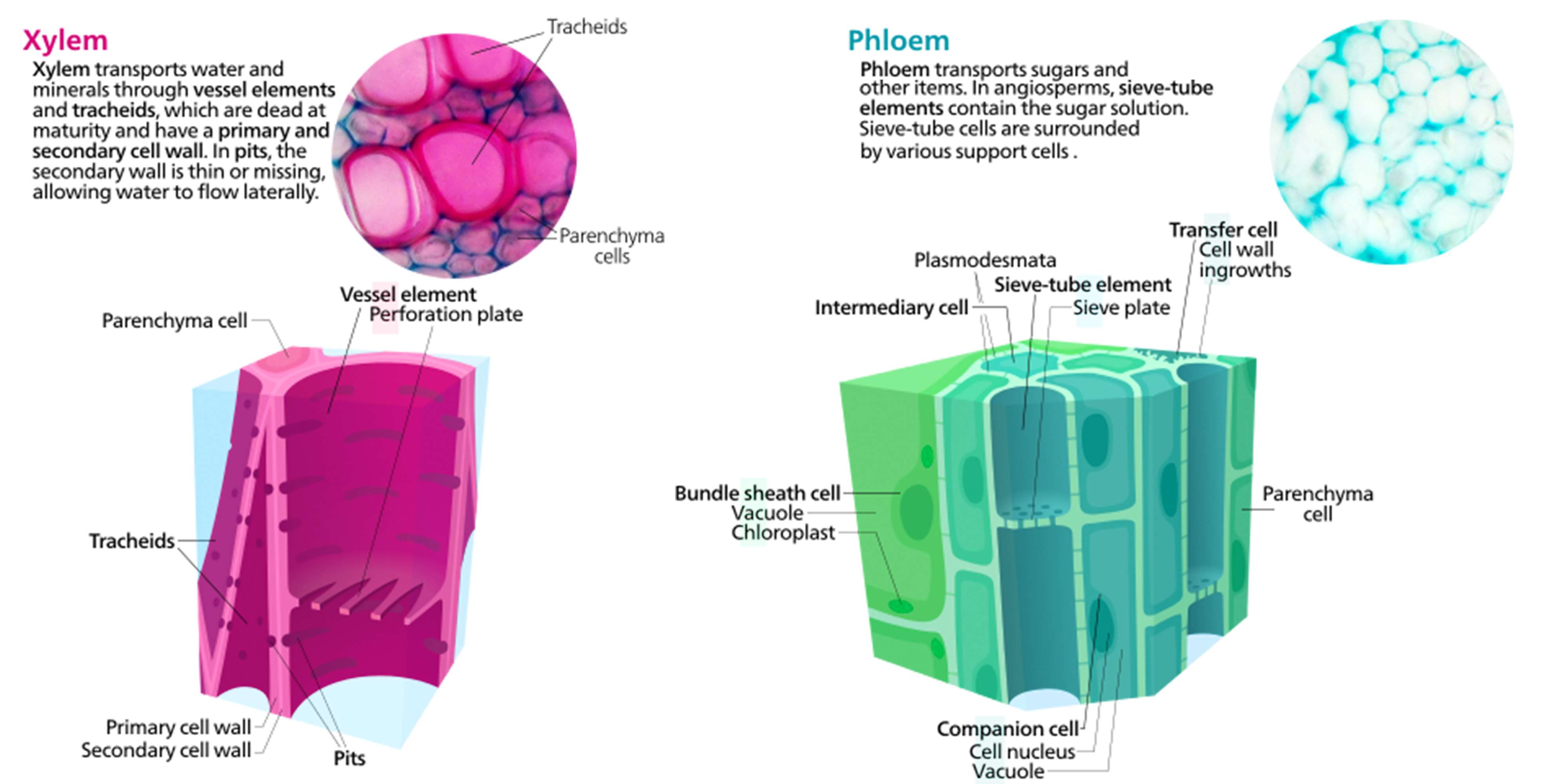
The vascular system is what separates pteridophytes from simpler plants like mosses. It has two components:
- Xylem contains tracheids (and sometimes vessel elements) that transport water and dissolved minerals upward from the roots.
- Phloem contains sieve cells and companion cells that distribute sugars produced by photosynthesis to the rest of the plant.
Having vascular tissue is a big deal. It lets pteridophytes grow much taller than bryophytes and colonize a wider range of habitats, because they can move water and nutrients efficiently over longer distances.
Leaves and fronds
Pteridophyte leaves vary depending on the lineage:
- Ferns have true leaves called fronds, which are often divided into smaller leaflets called pinnae. Fronds typically have a distinct midrib and branching veins that are part of the vascular system. They can be simple (undivided) or compound (divided multiple times).
- Horsetails have tiny, reduced leaves called microphylls arranged in whorls around the stem. Most photosynthesis in horsetails actually happens in the green stem.
- Club mosses also bear microphylls, which are small leaves with only a single vein.
The distinction between microphylls (one vein, simple) and megaphylls (multiple veins, often compound) turns out to be important for classification, as you'll see below.
Roots and rhizomes
- Pteridophytes have true roots that anchor the plant and absorb water and minerals from the soil.
- Many species grow from rhizomes, which are horizontal underground stems. Rhizomes store food reserves and send up new shoots and roots, allowing the plant to spread vegetatively.
- Bracken fern is a good example: its extensive rhizome network lets it form dense colonies that can cover large areas.
Spore-bearing structures
Since pteridophytes don't make seeds, spores are their reproductive units. Here's how the structures are organized:
- Sporangia are the capsules where spores are produced.
- In most ferns, sporangia are clustered into groups called sori (singular: sorus), typically found on the underside of fronds. Sori are sometimes covered by a flap of tissue called an indusium.
- In horsetails and club mosses, sporangia are borne on specialized leaves called sporophylls, which are often grouped into cone-like structures called strobili.
- The pattern, shape, and position of sori are key features used to identify and classify fern species.
Life cycle of pteridophytes
Alternation of generations
Like all land plants, pteridophytes alternate between two generations, but the balance between them is very different from what you see in bryophytes:
- The sporophyte (diploid, ) is the large, dominant plant you'd recognize as a fern or horsetail.
- The gametophyte (haploid, ) is a tiny, often overlooked structure that produces sex cells.
This is the opposite of bryophytes, where the gametophyte is dominant. In pteridophytes, the sporophyte runs the show.
Sporophyte stage
The sporophyte is the familiar, long-lived plant with roots, stems, and fronds. Here's what happens during this stage:
- The mature sporophyte develops sporangia on its fronds or sporophylls.
- Inside the sporangia, spore mother cells undergo meiosis to produce haploid spores.
- When conditions are right, the sporangia open and release the spores into the environment.
The sporophyte can live for many years, producing new rounds of spores each growing season.
Gametophyte stage
The gametophyte is small and short-lived, but it's essential for sexual reproduction:
- A spore lands in a suitable moist location and germinates.
- It first grows into a filamentous structure called a protonema, which then develops into the mature gametophyte, called a prothallus. In ferns, the prothallus is typically heart-shaped and only a few millimeters across.
- The prothallus is photosynthetic and has tiny root-like structures called rhizoids for anchorage and water absorption.
- It produces sex organs: antheridia (male, producing flagellated sperm) and archegonia (female, each containing one egg).
- Water is required for fertilization. Sperm must swim through a film of water to reach the egg in the archegonium.
- The sperm and egg fuse to form a diploid zygote, which grows into a new sporophyte while still attached to the prothallus.
This water requirement for fertilization is a major limitation. It's one reason pteridophytes are most common in moist habitats, and it's the reproductive bottleneck that seed plants eventually overcame.
Spore dispersal and germination
- Spores are mostly wind-dispersed, though some aquatic species use water.
- They have a tough protective coat and can remain dormant for long periods, germinating only when moisture and light conditions are favorable.
- Successful dispersal and germination are critical for pteridophytes to colonize new areas.
Classification of pteridophytes
Lycophytes vs. monilophytes
Pteridophytes are divided into two major lineages that are not as closely related as they might seem:
- Lycophytes include club mosses (Lycopodium), spike mosses (Selaginella), and quillworts (Isoetes). They have microphylls: small, simple leaves with a single unbranched vein.
- Monilophytes include true ferns and horsetails. They have megaphylls: larger leaves with complex, branching venation.
These two groups also differ in vascular anatomy and reproductive structures. Molecular evidence shows that lycophytes diverged very early in vascular plant evolution, while ferns are actually more closely related to seed plants than they are to lycophytes.
Major orders and families
Lycophyte orders:
- Lycopodiales (club mosses)
- Selaginellales (spike mosses)
- Isoetales (quillworts)
Monilophyte orders:
- Equisetales (horsetails)
- Ophioglossales (adder's tongue ferns)
- Marattiales (marattioid ferns)
- Polypodiales (leptosporangiate ferns)
Polypodiales is by far the largest order, containing over 80% of living fern species. Major families within it include Polypodiaceae, Pteridaceae, and Dryopteridaceae. Classification relies on a combination of morphological features (sori arrangement, spore structure) and molecular phylogenetic data.
Extinct pteridophyte groups
The fossil record shows that pteridophytes were once far more diverse and dominant than they are today:
- Cladoxylopsids were large, tree-like plants that dominated forests during the Devonian and Carboniferous periods. Their remains contributed to coal deposits.
- Zygopterids were ferns with unusual lobed rhizomes and complex frond architecture.
- Sphenopsids were horsetail relatives that ranged from small herbs to giant trees like Calamites, which reached heights of 20+ meters during the Carboniferous.
Studying these extinct groups helps us understand how vascular plants diversified and what ancient ecosystems looked like.
Ecology of pteridophytes
Habitat preferences
Pteridophytes are found across a wide range of environments, but they're most diverse in moist, shaded habitats. This makes sense given their need for water during fertilization.
- Forest understories, stream banks, and rock crevices are classic pteridophyte habitats, offering humidity and shade.
- Some ferns are adapted to drier or more exposed conditions, tolerating higher light and lower moisture.
- Epiphytic ferns grow on other plants (not as parasites, just using them for support), especially in tropical rainforests where they contribute significantly to canopy biodiversity.
- Aquatic pteridophytes like Azolla and Salvinia float on the surface of ponds and slow-moving water.
Adaptations for survival
- Many ferns have thin, broad fronds with large surface area to maximize light capture in dim forest understories.
- Horsetails have a waxy cuticle and sunken stomata that reduce water loss, helping them tolerate drier conditions.
- Rhizomes store water and nutrients and allow plants to regenerate after disturbances like fire or grazing.
- Some ferns produce toxic compounds or have tough, leathery fronds that deter herbivores.
Interactions with other organisms
- Many ferns form mycorrhizal associations with fungi that colonize their roots and help with nutrient and water uptake.
- Azolla ferns harbor nitrogen-fixing cyanobacteria (Anabaena) in specialized leaf cavities. This partnership lets Azolla thrive in nutrient-poor water and has been used in rice paddies as a natural fertilizer for centuries.
- Pteridophytes support diverse communities of herbivorous insects and other arthropods.
- Bracken fern can be toxic to livestock and is an aggressive competitor that sometimes dominates plant communities at the expense of other species.
Economic importance of pteridophytes
Ornamental and horticultural uses
Ferns are among the most popular ornamental plants, valued for their graceful fronds and ability to thrive in shade. Common examples include:
- Maidenhair ferns (Adiantum) with their delicate, fan-shaped leaflets
- Boston ferns (Nephrolepis), a staple of hanging baskets and indoor gardens
- Staghorn ferns (Platycerium), mounted on walls for their dramatic antler-shaped fronds
Pteridophytes are also used in landscaping for ground cover, erosion control, and adding texture to shaded garden areas.
Medicinal and ethnobotanical uses
Pteridophytes have a long history in traditional medicine across many cultures:
- Ferns contain various bioactive compounds, including flavonoids, tannins, and alkaloids.
- Rhizomes of Dryopteris (male fern) were historically used as anthelmintics (treatments to expel intestinal worms).
- Equisetum (horsetail) has been used as a diuretic and anti-inflammatory in herbal medicine.
- In some cultures, certain ferns hold ritual or symbolic significance.
Role in ecosystem services
- As primary producers, pteridophytes contribute to carbon sequestration and nutrient cycling.
- They often act as pioneer species, colonizing disturbed areas (landslides, burned ground) and stabilizing soil so other plants can establish.
- Aquatic species like Azolla and Salvinia can absorb excess nutrients and heavy metals, helping regulate water quality.
- Pteridophyte-dominated communities (fern glades, horsetail marshes) provide habitat for many animal species.
Evolution of pteridophytes
Fossil record and early origins
- The oldest known vascular plant fossils, including Cooksonia, date to the Silurian-Devonian boundary (roughly 420 million years ago). These were small, simple plants with basic vascular tissue and terminal sporangia.
- By the Carboniferous period (about 360-300 million years ago), tree-like lycophytes such as Lepidodendron and Sigillaria formed vast swamp forests. The compressed remains of these forests became the coal deposits we mine today.
- Fern diversity expanded significantly during the Mesozoic, and ferns were among the first plants to recolonize landscapes after the end-Cretaceous mass extinction.
Key evolutionary innovations
Several innovations drove pteridophyte success:
- Vascular tissue allowed taller growth and more efficient resource transport, opening up terrestrial habitats that bryophytes couldn't exploit.
- Megaphylls (in ferns and horsetails) increased photosynthetic surface area and gas exchange capacity compared to microphylls.
- Heterospory, the production of two spore sizes (microspores and megaspores), evolved independently in several pteridophyte lineages. This was a stepping stone toward seed evolution in later plant groups.
- The annulus, a ring of specialized cells on leptosporangiate fern sporangia, acts like a catapult to fling spores into the air, greatly improving dispersal distance.
Relationship to other plant groups
- Pteridophytes belong to the Tracheophyta (vascular plants), along with gymnosperms and angiosperms.
- Lycophytes are the earliest-diverging lineage of living vascular plants, splitting from the ancestor of all other vascular plants over 400 million years ago.
- Ferns (monilophytes) are more closely related to seed plants than to lycophytes. This means the traditional grouping of "ferns and fern allies" doesn't reflect a single evolutionary lineage.
- Studying pteridophytes helps us understand how key adaptations like vascular tissue, leaves, and eventually seeds evolved step by step as plants colonized land.
See Fiveable more often in Google
Mark Fiveable as a preferred source and Google is more likely to show you our guides in Top Stories, with a "preferred" badge in AI Mode and AI Overviews.